Rachakonda Fort

Rachakonda Fort

Rachakonda Fort Latest News

Rachakonda Fort, which is a 90-minute drive from Hyderabad, failed to realise its potential because of the negligence shown by successive governments.

About Rachakonda Fort

  • It is a medieval hill fort located in Rachakonda village, Yadadri Bhuvanagiri district, Telangana.  

Rachakonda Fort History

  • The fort is closely associated with the Recherla Nayaks, who established Rachakonda as an important political and military centre after the decline of Kakatiya power. 
  • Recherla Singama Nayak is traditionally credited with establishing the Rachakonda stronghold in the 14th century. 
  • Rachakonda was taken by the Bahmani Sultanate in 1433 CE during its expansion in the Deccan.  

Rachakonda Fort Architecture

  • It is a good example of medieval Hindu fort architecture.
  • The fort is built on a hill and covers an area of about 6 sq.km.
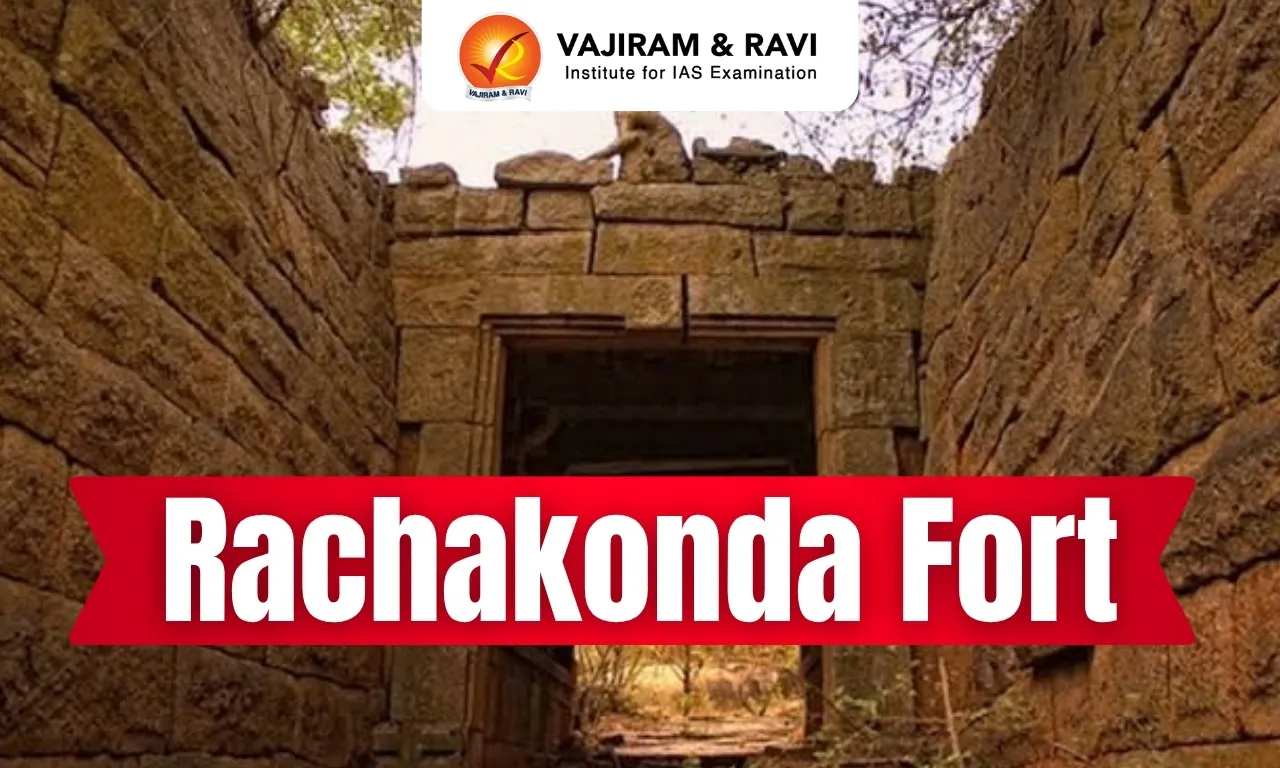
  • The fort is particularly noted for its large stone fortifications and cyclopean masonry, in which massive irregular stones were fitted together without conventional mortar.  
  • The complex contains gateways, stone structures, temples, water-retaining structures, and extensive ruins spread across a rocky hill.  
  • The fort has two concentric walls, with four gates on each side.  
  • Among the structures reported at the site are historic Sri Rama temples and several Shaiva shrines, including structures locally identified with Shiva and Veerabhadra worship. 
  • The fort is largely in ruins, and vegetation has grown around portions of the remains.

News: DC

Rachakonda Fort FAQs

Q1: Where is Rachakonda Fort located?

Ans: It is located in Rachakonda village of Yadadri Bhuvanagiri district, Telangana.

Q2: Which dynasty is closely associated with Rachakonda Fort?

Ans: The fort is closely associated with the Recherla Nayaks.

Q3: Who is traditionally credited with establishing the Rachakonda stronghold?

Ans: Recherla Singama Nayak is traditionally credited with establishing the Rachakonda stronghold.

Q4: What type of masonry is Rachakonda Fort particularly known for?

Ans: It is particularly known for cyclopean masonry, in which massive irregular stones were fitted together without conventional mortar.


Fleet Support Ship-1 (FSS-1)

Fleet Support Ship-1

Fleet Support Ship-1 Latest News

Defence Minister will soon launch the Indian Navy’s first Fleet Support Ship, FSS-1, at Hindustan Shipyard Limited in Visakhapatnam, marking a milestone in India’s indigenous shipbuilding programme.

About Fleet Support Ship-1 

  • It is the first of five Fleet Support Ships being built for the Indian Navy.  
  • FSSs are being developed by Hindustan Shipyard Limited (HSL), Visakhapatnam, a state-owned shipbuilding company. 
  • The ships are the first of their kind being constructed in India. 

Fleet Support Ship-1 Purpose

  • The FSS will supply ships at sea with fuel, water, ammunition, and supplies, allowing the Indian Naval fleet to stay at sea for longer periods.
  • Additionally, the vessels can transfer all types of stores, victuals, and personnel to naval vessels while they are at sea. 
  • They will also be capable of handling multirole helicopters.
  • Furthermore, the vessels will be utilised for evacuating individuals and providing human assistance during disaster relief operations and delivering relief supplies quickly during natural disasters.  

Fleet Support Ship-1 Features

  • The vessel will be equipped with diesel propulsion utilising a single-shaft configuration and a controllable pitch propeller. 
  • It has an overall length of 200 m, a breadth of 25 m, and a draft of 10 m. 
  • It has a displacement of 44,000 tonnes and a speed of 20 knots. 
  • Its complement is approximately 190 personnel.
  • The ship will feature a double bottom and double hull in the cargo hold areas to enhance the range and duration of naval combat missions.

News: DDN

Fleet Support Ship-1 FAQs

Q1: What is Fleet Support Ship-1 (FSS-1)?

Ans: FSS-1 is the first of five Fleet Support Ships being built for the Indian Navy.

Q2: Which company is developing the Fleet Support Ships for the Indian Navy?

Ans: Hindustan Shipyard Limited (HSL) is developing the Fleet Support Ships.

Q3: Why are Fleet Support Ships important for the Indian Navy?

Ans: They enable naval vessels to remain at sea for longer periods by supplying fuel, water, ammunition and other essential supplies.

Uranium Corporation of India Limited (UCIL)

Uranium Corporation of India Limited (UCIL)

Uranium Corporation of India Limited Latest News

Senior officers, scientists, engineers, technical personnel, and other employees of Uranium Corporation of India Limited (UCIL) celebrated the PSU’s diamond jubilee in Jaduguda recently.

About Uranium Corporation of India Limited 

  • It is a Central Public Sector Enterprise (CPSE) under the Department of Atomic Energy.
  • It was established on October 4, 1967. 
  • UCIL is the main organization that mines and processes uranium ore to meet the fuel needs of India’s nuclear power program. 
  • It plays an important role in the country’s nuclear power cycle and provides uranium for Pressurized Heavy Water Reactors. 
  • Over the past six decades, the corporation has developed expertise across underground and open-cast mining, ore processing, technology development, occupational safety, radiation protection, and environmental management. 
  • The company operates six underground mines (Bagjata, Jaduguda, Bhatin, Narwapahar, Turamdih, and Mohuldih) and one open pit (Banduhurang) in the state of Jharkhand.  
  • The ore produced from these mines is processed at two processing plants located in Jaduguda and Turamdih. 
  • UCIL also operates an underground mine and processing plant in Tummalapalli, Andhra Pradesh.

News: TOI

Uranium Corporation of India Limited FAQs

Q1: What is Uranium Corporation of India Limited (UCIL)?

Ans: UCIL is a Central Public Sector Enterprise (CPSE) under the Department of Atomic Energy.

Q2: When was Uranium Corporation of India Limited established?

Ans: UCIL was established on October 4, 1967.

Q3: What is the primary function of UCIL?

Ans: Its primary function is to mine and process uranium ore to meet the fuel requirements of India's nuclear power programme.

Q4: How many underground uranium mines does UCIL operate in Jharkhand?

Ans: UCIL operates six underground mines in Jharkhand.

Jumping Genes

Jumping Genes

Jumping Genes Latest News

Ants branched into thousands of new species after the dinosaurs died, and a new study links that burst to jumping genes in their DNA.

About Jumping Genes

  • Jumping genes, scientifically called transposable elements (TEs) or transposons, are DNA sequences that move from one location on the genome to another. 
  • They are widespread in both prokaryotes and eukaryotes, often making up significant portions of an organism's genetic material.  
  • In humans, for instance, transposons account for approximately 50% of the genome, whereas in corn, they account for up to 90%. 
  • Types: Transposons can be grouped into distinct types based on 2 main criteria: their mechanism of movement and their independence. 
    • They are classified as retrotransposons or DNA transposons, depending on how they move within the genome.
    • They are classified as autonomous or non-autonomous, based on whether they require other transposons for their mobility. 
  • Transposons have a dual nature as both a threat to genome stability and a driver of genetic diversity. 
    • On the harmful side, they can inactivate genes or disrupt gene expression patterns by inserting into regulatory or coding regions, leading to diseases such as hemophilia, hypercholesterolemia and various cancers. 
    • However, transposons also play a key part in evolution. 
    • For instance, in plants, environmental stresses like climate change can trigger increased transposon activity, potentially giving rise to adaptive mutations that enhance survival. 
  • To counter the potentially damaging effects of transposons, most organisms have evolved epigenetic mechanisms to regulate their activity. 
    • In humans, for example, regions of the genome rich in transposons are often tightly condensed so that the transcription machinery cannot access them. 
    • This densely packed DNA is called heterochromatin, and it is formed through histone modifications (changes to the histone proteins around which the DNA is wound) and DNA methylation (the addition of methyl groups to cytosine bases). 
  • Other silencing mechanisms are based on RNAi or small RNAs, such as piRNAs, miRNAs, or siRNAs, to specifically target and inactivate transposons. 
  • While most TEs are located far away from genes in areas of the chromosome that can be thought of as gene deserts, some are located near genes and even target gene-rich regions. 
  • Transposons can also be useful tools in the lab, with applications in mutagenesis, transgenesis, and gene therapy.

News: EAR

Jumping Genes FAQs

Q1: What are jumping genes?

Ans: Jumping genes are DNA sequences that can move from one location on the genome to another.

Q2: What are jumping genes scientifically called?

Ans: Jumping genes are scientifically called transposable elements (TEs) or transposons.

Q3: Approximately what proportion of the human genome is made up of transposons?

Ans: Approximately 50% of the human genome consists of transposons.

Q4: What is the dual nature of transposons?

Ans: Transposons can be both a threat to genome stability and a driver of genetic diversity.

Exercise Mountain Guardian 2026

Exercise Mountain Guardian 2026

Exercise Mountain Guardian 2026 Latest News

The Exercise Mountain Guardian 2026 commenced at the Foreign Training Node, Chaubatia, Uttarakhand.

About Exercise Mountain Guardian 2026

  • It is a joint military exercise conducted between India and UAE.
  • Aim: It aims to enhance interoperability, mutual understanding and cooperation, with a focus on Mountain Warfare.
  • Participating Contingent: The Indian Army contingent comprises troops from a Bhairav Battalion, women officers and combatants from both Armies are also participating in the exercise across specialist roles.
  • During the exercise, troops will undertake joint planning, tactical drills, firing practices, establishment of surveillance grids, drone operations, physical endurance training, rock climbing, obstacle training and integrated field exercises.
  • The training will also incorporate technology-enabled operations and exchange of tactics, techniques and procedures relevant to operations in challenging mountainous terrain.
  • Significance: The exercise will further strengthen military-to-military cooperation between India and the UAE and reinforce the bonds of friendship and trust between the two nations.

Source: PIB

Exercise Mountain Guardian 2026 FAQs

Q1: Exercise Mountain Guardian is conducted between which two countries?

Ans: India and UAE

Q2: What is the aim of Exercise Mountain Guardian 2026 ?

Ans: It aims to enhance interoperability, mutual understanding and cooperation, with a focus on Mountain Warfare.

Plague

Plague

Plague Latest News

A suspected case of pneumonic plague in Siberia has triggered heightened public-health precautions after a 28-year-old laboratory worker at an anti-plague research institute died following severe pneumonia. 

About Plague

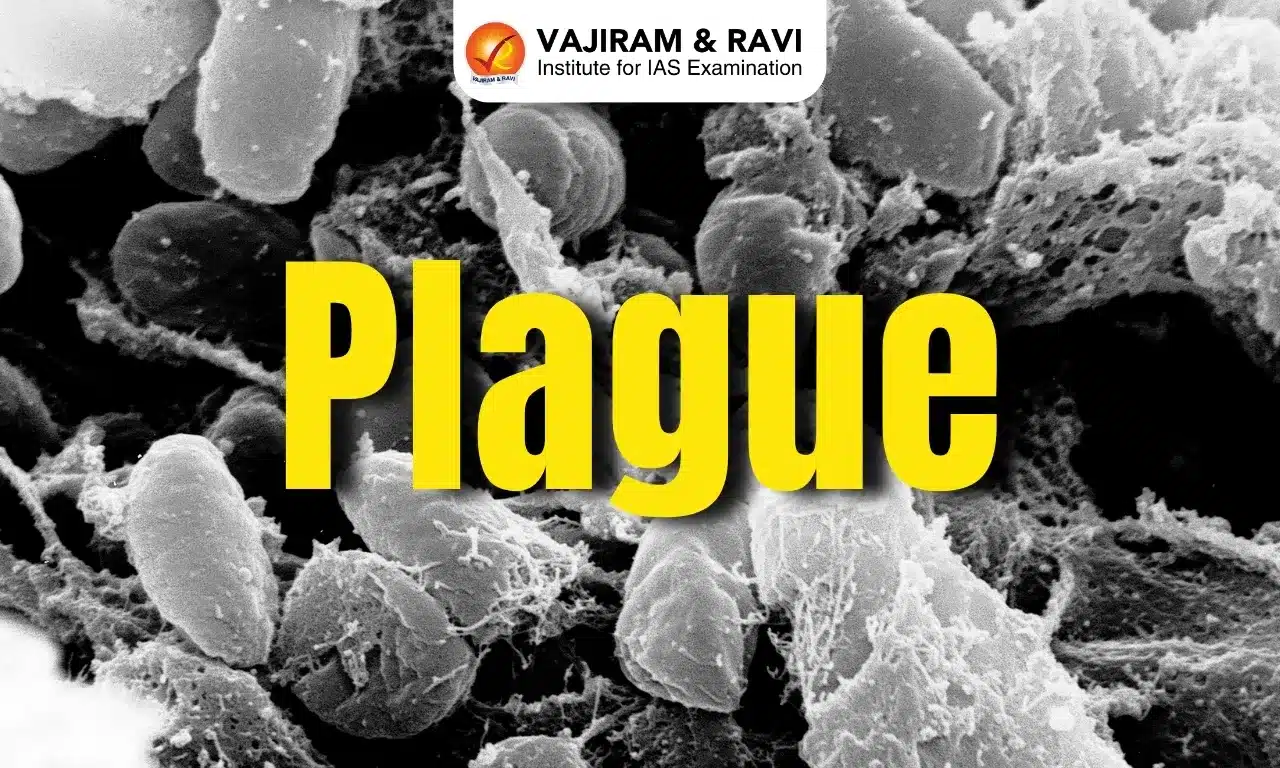
  • Plague is an infectious disease caused by the bacteria Yersinia pestis, usually found in small mammals and their fleas.
  • Transmission
    • It is transmitted between animals through fleas.
    • Humans can be infected through: infected flea bites, contact with infected animal tissues or fluids and in the case of pneumonic plague inhalation of respiratory particles from an infected person or animal.

Types of Plague

  • Bubonic Plague
    • It is the most common form of plague and is caused by the bite of an infected flea.
    • Plague bacillus, Y. pestis, enters at the bite and travels through the lymphatic system to the nearest lymph node where it replicates itself.
    • The lymph node then becomes inflamed, tense and painful, and is called a ‘bubo’.
    • At advanced stages of the infection, the inflamed lymph nodes can turn into open sores
    • Symptoms: Sudden onset fever, chills, head and body aches and weakness, vomiting and nausea. Painful and inflamed lymph nodes can also appear.
  • Pneumonic Plague
    • It is the most virulent form of plague.
    • Transmission: It transmits through respiratory droplets or particles from an infected person that can infect another person, particularly during close and sustained contact.
    • Symptoms: Its symptoms can appear very rapidly, sometimes within 24 hours of infection.
    • It includes high fever, chills, cough, shortness of breath and blood-stained sputum.
  • Septicaemic plague
    • It occurs when Y. pestis multiplies rapidly in the bloodstream.
    • It can develop from any other form of plague.
    • Symptoms: Bleeding under the skin and, in some cases, a bluish discoloration of the skin (cyanosis) and tissue death (necrosis) of the extremities.

Treatment For Plague

  • There is no routinely recommended plague vaccination for the general public.
  • Antibiotics and supportive therapy are effective against plague if patients are diagnosed in time.

Source: IE

Plague FAQs

Q1: What is Plague?

Ans: It is an infectious disease caused by the bacteria Yersinia pestis, usually found in small mammals and their fleas.

Q2: What are the types of Plague?

Ans: Bubonic Plague, Pneumonic Plague and Septicaemic plague

Southern Right Whale

Southern Right Whale

Southern Right Whale Latest News

Recently, dozens of southern right whale calves have been found dead on Argentina's Patagonian coast and scientists are probing a possible bacterial infection after an unusually deadly season. 

About Southern Right Whale

  • The Southern right whale (Eubalaena australis) is a baleen whale, one of three species classified as right whales.
  • Appearance
    • It is readily distinguished from others by the callosities on its head, a broad back without a dorsal fin, and a long arching mouth that begins above the eye.
    • Its skin is very dark grey or black, occasionally with some white patches on the belly. 
  • Distribution
    • They live across the Southern Hemisphere, generally ranging between 20°S and 60°S latitude.
    • They usually live in sheltered bays, but in summer they can be found in the cold water around Antarctica. 
    • Southern right whales visit the South African coast from May to November each year.
  • Characteristics
    • They feed just beneath the water's surface, holding their mouths partly open and skimming water continuously while swimming.
    • They strain the water out through their long baleen plates to capture their prey.
    • Diet: They are carnivores (plankrivores) and eat small plankton, including copepods, and pelagic larval crustaceans.
  • Conservation Status: IUCN Red List: Least Concern

Source: TH

Southern Right Whale FAQs

Q1: Where do we find Southern Right Whale ?

Ans: They live across the Southern Hemisphere, generally ranging between 20°S and 60°S latitude.

Q2: What is the IUCN status of Southern Right Whale?

Ans: Least Concern

Debrigarh Wildlife Sanctuary

Debrigarh Wildlife Sanctuary

Debrigarh Wildlife Sanctuary Latest News

Odisha Forest, Environment and Climate Change minister virtually inaugurated new accommodation and visitor facilities at Debrigarh Wildlife Sanctuary as part of the ongoing expansion of its community-managed ecotourism infrastructure.

About Debrigarh Wildlife Sanctuary

  • It is situated in the Bargarh district of Odisha.
  • It is located near Hirakud Dam (the longest dam in India and the longest earthen dam in the world) on the Mahanadi River.
  • It is spread over an area of 347 sq.km. 
  • It finds a special mention because of the state’s noted freedom fighter, Veer Surendra Sai. 
    • During his rebellion against the British, his base at Barapathara was located within the sanctuary.
  • Vegetation: Most of the plant sanctuary is covered with mixed and dry deciduous forest. 
  • Flora: Major trees found here are Sal, Asana, Bija, Aanla, Dhaura, etc.
  • Fauna:
    • Indian leopards, sloth bears, chousingha (four-horned antelope), sambar deer, gaurs (Indian bison), wild boars, and Indian wild dogs (dholes) are among the notable animal residents.
    • It is one of the most flocked wintering grounds of migratory birds like crested serpent eagle, Flower Peckers, red-vented bulbul, tree pie, drongo, and white-eye oriental.

News: NIE

Debrigarh Wildlife Sanctuary FAQs

Q1: Where is Debrigarh Wildlife Sanctuary located?

Ans: Bargarh district, Odisha.

Q2: Near which major dam is Debrigarh Wildlife Sanctuary located?

Ans: Hirakud Dam.

Q3: Which freedom fighter is closely associated with Debrigarh Wildlife Sanctuary?

Ans: Veer Surendra Sai.

Q4: What type of forests are predominantly found in Debrigarh Wildlife Sanctuary?

Ans: Mixed and dry deciduous forests.

Great Indian Bustard

Great Indian Bustard

Great Indian Bustard Latest News

In a major milestone for the conservation of the Great Indian Bustard (GIB), the Union Environment Minister recently released two captive-bred male GIBs into the wild at Sam in the Desert National Park, Jaisalmer, Rajasthan.

About Great Indian Bustard

  • Known locally as Godawan, it is a large terrestrial bird endemic to the Indian subcontinent.
  • It is one of the heaviest flying birds in the world.

Great Indian Bustard Habitat and Distribution

  • It is endemic to the Indian subcontinent, with its remaining population concentrated mainly in India. 
  • Its core population survives in the Thar Desert, mainly in Jaisalmer and Barmer districts of Rajasthan.
  • Other important habitats occur in Gujarat, Maharashtra, Karnataka and Andhra Pradesh. 
  • The bird is primarily found in dry grasslands and scrublands, which are rapidly declining due to agricultural expansion and development.

Great Indian Bustard Features

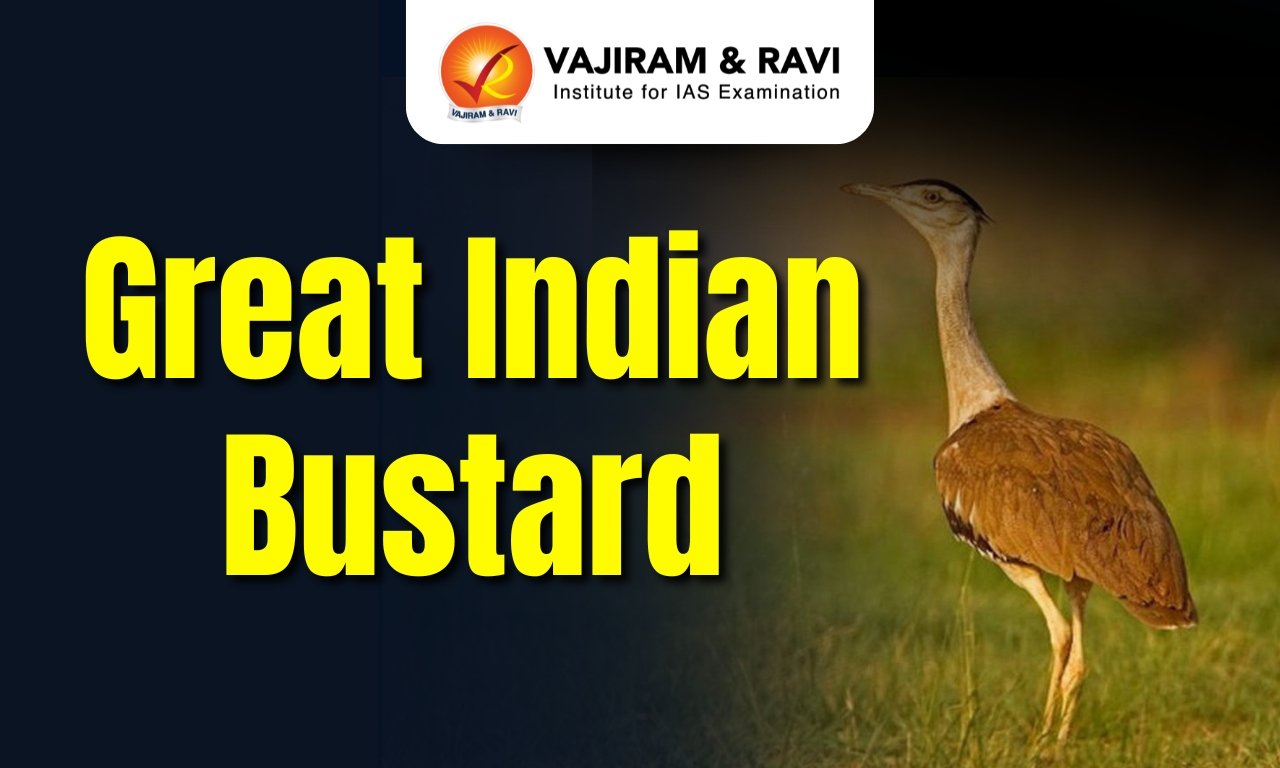
  • It has a horizontal body posture, long bare legs, and resembles an ostrich in appearance.
  • Both sexes are similar in size, with the heaviest individuals reaching up to 15 kg.
  • It can easily be distinguished by its black crown on the forehead contrasting with the pale neck and head. 
  • The body is brownish and the wings are marked with black, brown and grey.
  • Males have larger black crowns and a black band across the breast.
  • Life Span: The bird has a lifespan of 12–15 years.
  • Diet: These birds are opportunist eaters. Their diet ranges widely depending on the seasonal availability of food. They feed on grass seeds, insects like grasshoppers and beetles, and sometimes even small rodents and reptiles.

Great Indian Bustard Conservation Status

It is classified as 'Critically Endangered' under the IUCN Red List.

News: DD

Great Indian Bustard FAQs

Q1: What type of bird is the Great Indian Bustard?

Ans: A large terrestrial bird.

Q2: Where is the Great Indian Bustard endemic to?

Ans: The Indian subcontinent.

Q3: Which desert is the core habitat of the Great Indian Bustard?

Ans: The Thar Desert.

Q4: What type of habitat is primarily preferred by the Great Indian Bustard?

Ans: Dry grasslands and scrublands.

Q5: What is the IUCN Red List status of the Great Indian Bustard?

Ans: Critically Endangered.

Enquire Now