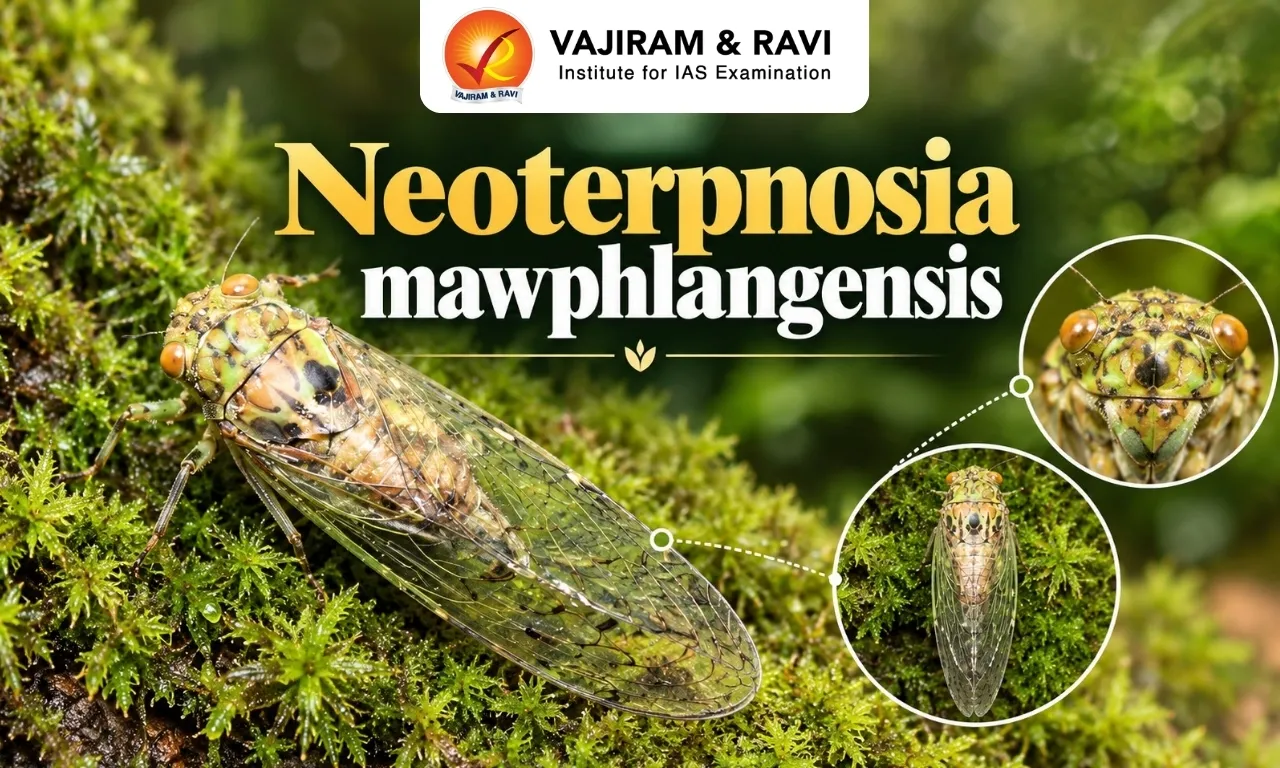
Allocaecilius Nilgiriensis: Scientists Discover New Insect Species in Western Ghats

Allocaecilius Nilgiriensis

Allocaecilius Nilgiriensis Latest news

Scientists from the Zoological Survey of India have discovered and described a new insect species and named it as Allocaecilius nilgiriensis.

About Allocaecilius Nilgiriensis

  • It is a new barklice species, discovered in Nilgiri Hills.
  • It is only the second time a member of this unique barklouse genus has ever been recorded in the country. It brings the total number of known Allocaecilius species worldwide to thirteen.
  • Distribution: It is found across the lush landscapes of the Southern Western Ghats in Tamil Nadu and Keralam.
  • Habitat: These tiny barklice are specialised inhabitants restricted to the damp, shaded canopies and understories of high-altitude shola and evergreen rainforests in the southern Western Ghats.
  • Barklice are a vital microscopic clean-up crew, grazing harmlessly on the surface of tree bark, feeding on mould, fungi, algae, lichens, and dead organic debris
  • Appearance
    • It has distinctive brown patches located in specific distal of its forewings, alongside specialised thumb-like structures on the male's lower abdomen (hypandrium) and a deeply indented subgenital plate in females.

Source: RM

Allocaecilius Nilgiriensis FAQs

Q1: What is Allocaecilius Nilgiriensis?

Ans: It is a new barklice species.

Q2: Where did scientist find Allocaecilius Nilgiriensis?

Ans: Nilgiri Hills

National Startup Awards 6.0 Launched with ₹25 Lakh Prizes Across 20 Sectors

National Startup Awards

National Startup Awards Latest News

The Department for Promotion of Industry and Internal Trade (DPIIT), Ministry of Commerce and Industry, Government of India, has launched the 6th Edition of the National Startup Awards (NSA 6.0) 

About National Startup Awards

  • It is a flagship initiative launched in 2019 under the Startup India initiative to recognise innovation and entrepreneurship and strengthen India’s startup ecosystem.
  • It provides a national platform to recognise entrepreneurial excellence and showcase innovative solutions addressing critical challenges across sectors.
  • It recognises startups demonstrating outstanding performance in innovation, scalability, sustainability and socio-economic impact.
  • Nodal Ministry: Ministry of Commerce and Industry

National Startup Awards 6.0

  • NSA 6.0 edition aims to encourage participation from startups across States and Union Territories, including emerging entrepreneurial ecosystems in Tier-2 and Tier-3 cities.
  • It will recognise innovation, entrepreneurship and excellence across 20 sectoral categories and three special award categories,
  • This edition introduces 12 new sectoral categories:
    • Biomanufacturing; Consumer Industries; Defence & Security; Rural Economy, Traditional Industries & Livelihoods; Education & Skilling; Electronics, Semiconductors & Advanced Manufacturing; Sports, Fitness & Sports-Tech; Future Mobility & Automotive; Ocean & Blue Economy; Space-Tech, Drones & Aerospace; Telecom, Connectivity & Digital Infrastructure; and Travel, Tourism & Hospitality.
  • The three special award categories are
    • Women-Led Startups
    • Startups from the North-Eastern Region
    • Student Innovator / Aspiring Entrepreneur
  • Award Money
    • Winning startups across the 20 sectoral categories and the two startup-focused special categories will be eligible for a cash prize of ₹25 lakh per category.
    • The Student Innovator / Aspiring Entrepreneur Award will carry a total prize pool of ₹25 lakh across four sub-categories.
  • In addition this award seeks to facilitate mentorship, investor engagement, market access, industry partnerships and enhanced visibility within India’s startup ecosystem.

Source: PIB

National Startup Awards FAQs

Q1: What are National Startup Awards?

Ans: It is a flagship initiative launched in 2019 under the Startup India initiative to recognise innovation and entrepreneurship and strengthen India’s startup ecosystem.

Q2: What is the aim of National Startup Awards ?

Ans: It recognises startups demonstrating outstanding performance in innovation, scalability, sustainability and socio-economic impact.

Orange Oakleaf Butterfly Set to Become Chhattisgarh’s First State Butterfly

Orange Oakleaf Butterfly

Orange Oakleaf Butterfly Latest News    

Chhattisgarh is set to get its first official state butterfly, with the Orange Oakleaf (Kallima inachus) emerging as the winner of a public online poll.

About Orange Oakleaf Butterfly  

  • It is a nymphalid butterfly found in Tropical Asia from India to Japan.
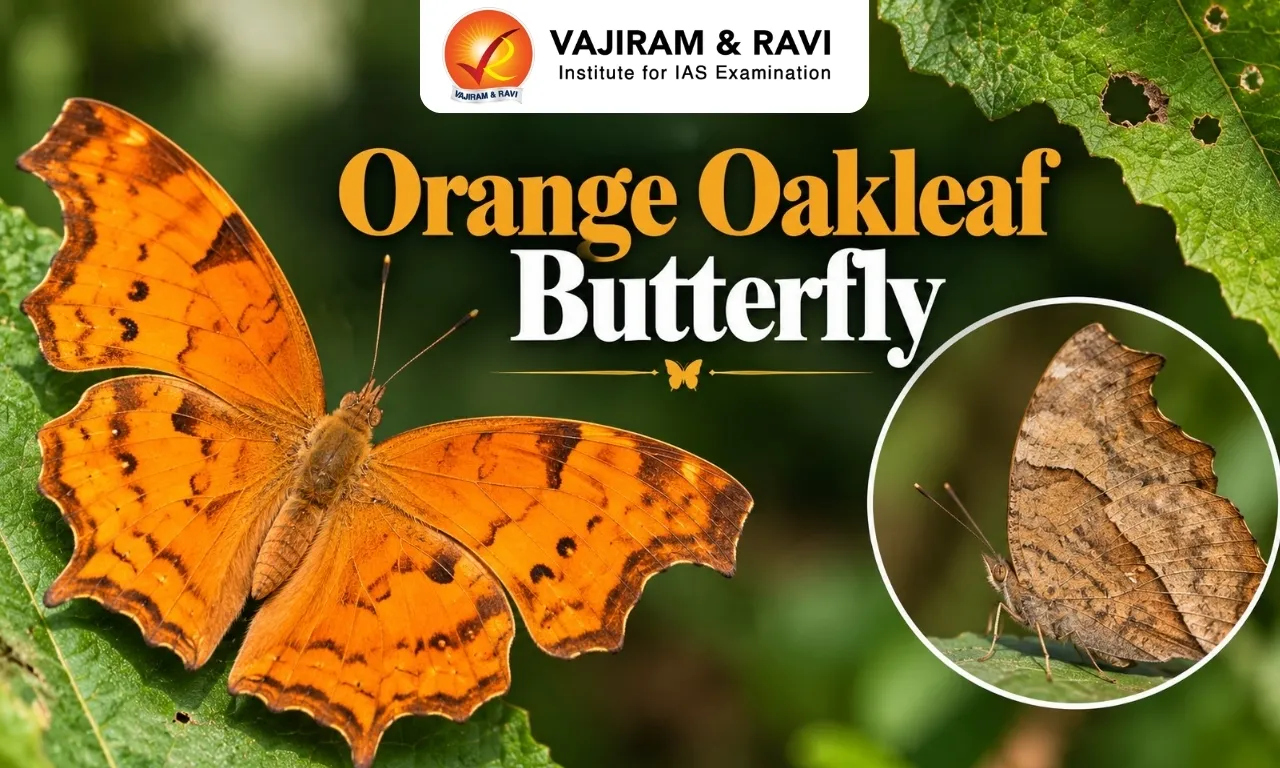
  • Appearance: It is known for its remarkable camouflage. With its wings folded, it closely resembles a dry, withered leaf. When it spreads its wings, it reveals bright orange, jet-black and deep velvety blue colours.
  • Habitat
    • It is commonly found in subtropical and temperate forest zones, especially in areas with dense undergrowth and ample leaf litter.
    • It thrives in altitudes ranging from 500 to 2000 meters and is often spotted near riverbanks, shaded forest trails, and damp patches where it feeds on fermenting fruit and tree sap.
  • It is also known to mud-puddle.
  • Unlike many butterflies, the Orange Oakleaf is not drawn to flowers. Instead, it is attracted to rotting fruit and tree sap.
  • Ecological Significance: It acts as a pollinator and Its presence also signifies healthy forest habitats, as it relies on dense vegetation and leaf litter for survival.

Source: NIE

Orange Oakleaf Butterfly FAQs

Q1: What is the distribution range of Orange Oakleaf Butterfly?

Ans: It is found in Tropical Asia from India to Japan.

Q2: In which type of habitat Orange Oakleaf Butterfly is found?

Ans: It is commonly found in subtropical and temperate forest zones, especially in areas with dense undergrowth and ample leaf litter.

Angioplasty: Kerala CM’s Remarks on Unnecessary Procedures Spark Medical Debate

Angioplasty

Angioplasty Latest News

Keralam Chief Minister’s recent remarks questioning “unnecessary” angioplasty procedures have drawn objections from medical organisations concerned that it could undermine public confidence in doctors.

About Angioplasty

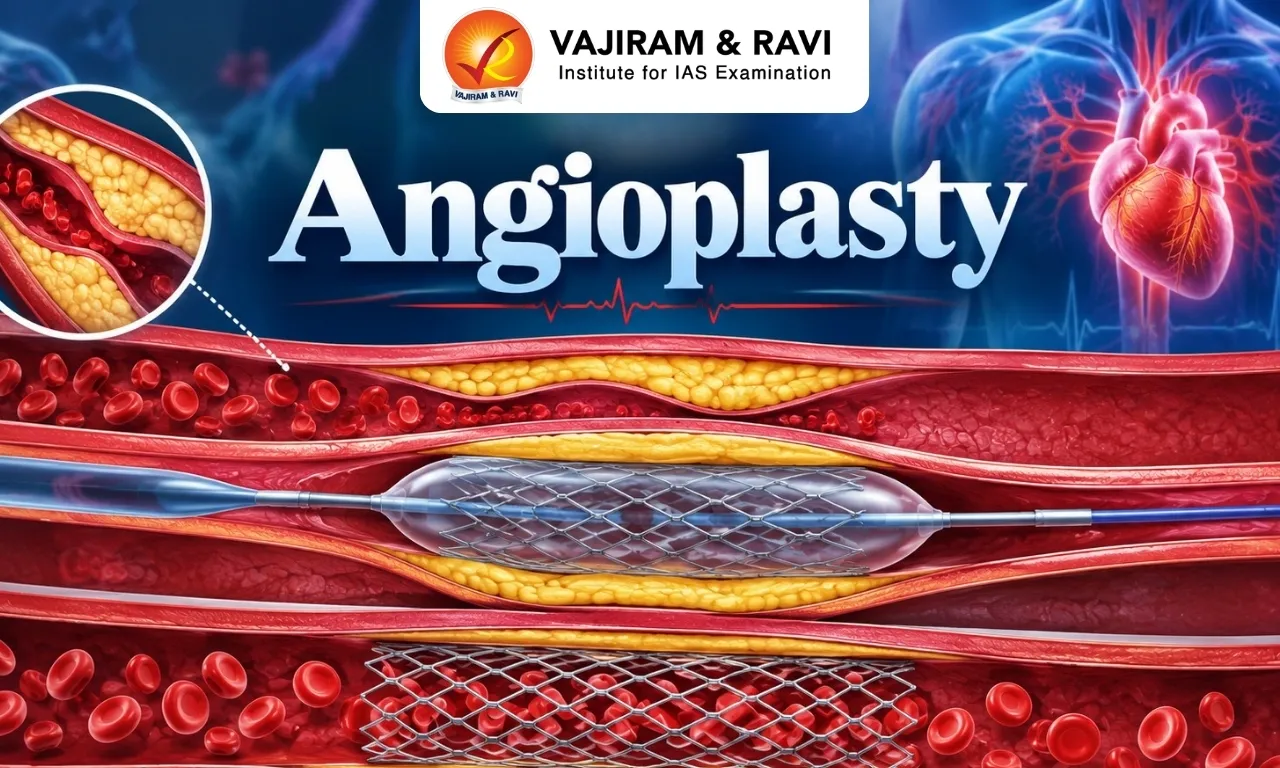
  • It is a minimally invasive procedure that opens arteries (large blood vessels) to let blood flow more easily. 
  • In the term angioplasty, “angio” means blood vessel, and “plasty” is opening up. 
  • It most commonly treats atherosclerosis (a collection of plaque made of fat and cholesterol) in your arteries. 
  • Angioplasties are often necessary to try to prevent serious complications of atherosclerosis, like heart attack and stroke. 
  • Angioplasties are generally safe procedures. They’re less invasive than other heart and vascular procedures, like bypass surgery.
  • Types of angioplasty: The two most common include: 
    • Coronary artery angioplasty. The coronary arteries are major blood vessels that supply blood to your heart. Another name for this procedure is percutaneous coronary intervention (PCI).
    • Peripheral artery angioplasty. Peripheral arteries are blood vessels that carry blood away from your heart to your extremities, like your legs and arms.
  • Different angioplasty techniques include:
    • Balloon Angioplasty. Most angioplasty procedures involve a tiny medical balloon to move the plaque out of the way and off to the side of the artery wall.
    • Angioplasty with or without stenting: Your provider may or may not place a permanent stent (a small tube) in the newly opened artery to help keep it open. Stent placement comes after most angioplasties.
    • Excimer laser coronary angioplasty (ELCA): This is an alternative to using a balloon to unblock a coronary artery. The laser destroys the plaque. It’s not as common as balloon angioplasty.

News: TH

Angioplasty FAQs

Q1: What is angioplasty?

Ans: Angioplasty is a minimally invasive medical procedure used to open narrowed or blocked arteries and improve blood flow.

Q2: Which condition is most commonly treated using angioplasty?

Ans: Angioplasty is commonly used to treat atherosclerosis, in which plaque builds up inside arteries.

Q3: What are the two most common types of angioplasty based on the arteries treated?

Ans: They are coronary artery angioplasty and peripheral artery angioplasty.

Q4: What is a stent in angioplasty?

Ans: A stent is a small tube placed inside an artery to help keep it open and maintain blood flow.

PM Modi Inaugurates ESTIC 2026 in Delhi, Focus on 12 Science and Technology Areas

Emerging Science, Technology, and Innovation Conclave (ESTIC) 2026

Emerging Science, Technology, and Innovation Conclave (ESTIC) Latest News

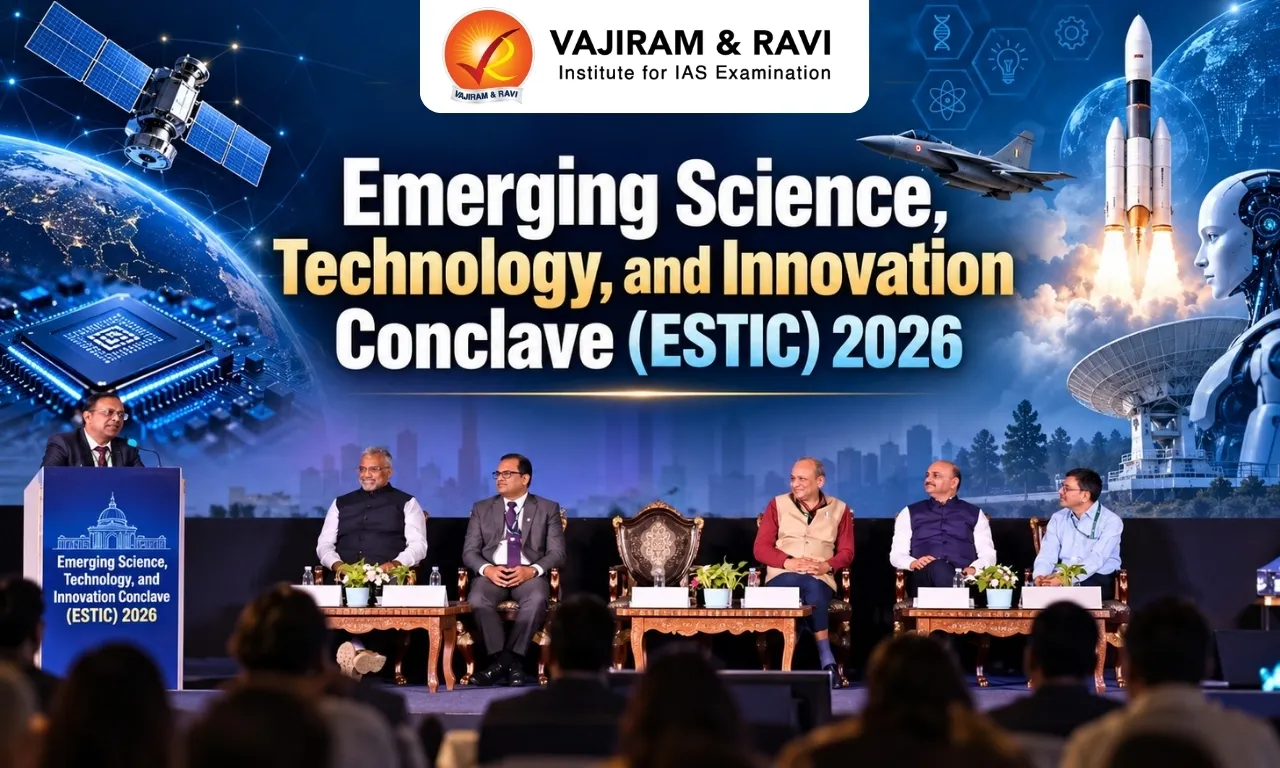
During his address at the inauguration of the Emerging Science, Technology and Innovation Conclave (ESTIC) 2026, PM called on India's scientists to create innovations that strengthen self-reliance and benefit humanity.

About Emerging Science, Technology, and Innovation Conclave 

  • It is India's premier STI platform, bringing together ministries, innovators, and global visionaries. 
  • A flagship annual event, ESTIC fosters collaboration, showcases disruptive innovation, and drives forward the vision of "Viksit Bharat 2047." 
  • It will showcase cutting-edge research, deep-tech breakthroughs, and thought-provoking discussions with Nobel Laureates, global experts, policymakers, and emerging leaders - igniting a new era of scientific leadership. 
  • ESTIC 2026:
    • Theme: “Creative Minds, Catalysing Science, Empowering Technologies.”  
    • Venue: Bharat Mandapam, New Delhi
    • It is organised by the Council of Scientific and Industrial Research (CSIR) under the guidance of the Office of the Principal Scientific Adviser to the Government of India.
    • The three-day programme  features plenary talks, thematic technical sessions, panel discussions, technology showcases, exhibitions, poster presentations, and opportunities for interaction between academia, industry, government, and startups.  
    • Its programme covers 12 thematic areas, including advanced manufacturing, energy technologies, synthetic biology, quantum communications, semiconductors, generative and autonomous AI, robotics, advanced healthcare, immersive technologies, agricultural technology, and space science. 
    • A key highlight will be the Global Connect Networking Event, which will bring together more than 300 invited participants from academic institutions, research organisations, and industries in India and abroad.

News: IT

Emerging Science Technology and Innovation Conclave FAQs

Q1: What is the Emerging Science, Technology, and Innovation Conclave (ESTIC)?

Ans: ESTIC is India’s premier Science, Technology, and Innovation (STI) platform that brings together ministries, innovators, and global experts.

Q2: What is the primary objective of Emerging Science, Technology, and Innovation Conclave (ESTIC)?

Ans: ESTIC aims to foster collaboration, showcase disruptive innovations, and advance the vision of Viksit Bharat 2047.

Q3: What is the theme of Emerging Science, Technology, and Innovation Conclave (ESTIC) 2026?

Ans: The theme is “Creative Minds, Catalysing Science, Empowering Technologies.”

Q4: Which organisation is organising Emerging Science, Technology, and Innovation Conclave (ESTIC) 2026?

Ans: It is organised by the Council of Scientific and Industrial Research (CSIR) under the guidance of the Office of the Principal Scientific Adviser.

Macrophages: Study Reveals How Ageing Immune Cells May Promote Lung Cancer

Macrophages

Macrophages Latest News

Emerging evidence indicates that macrophage behavior emerges from the coordinated integration of ontogenetic imprinting, environmental sensing, metabolic rewiring, and epigenetic remodeling.

About Macrophages

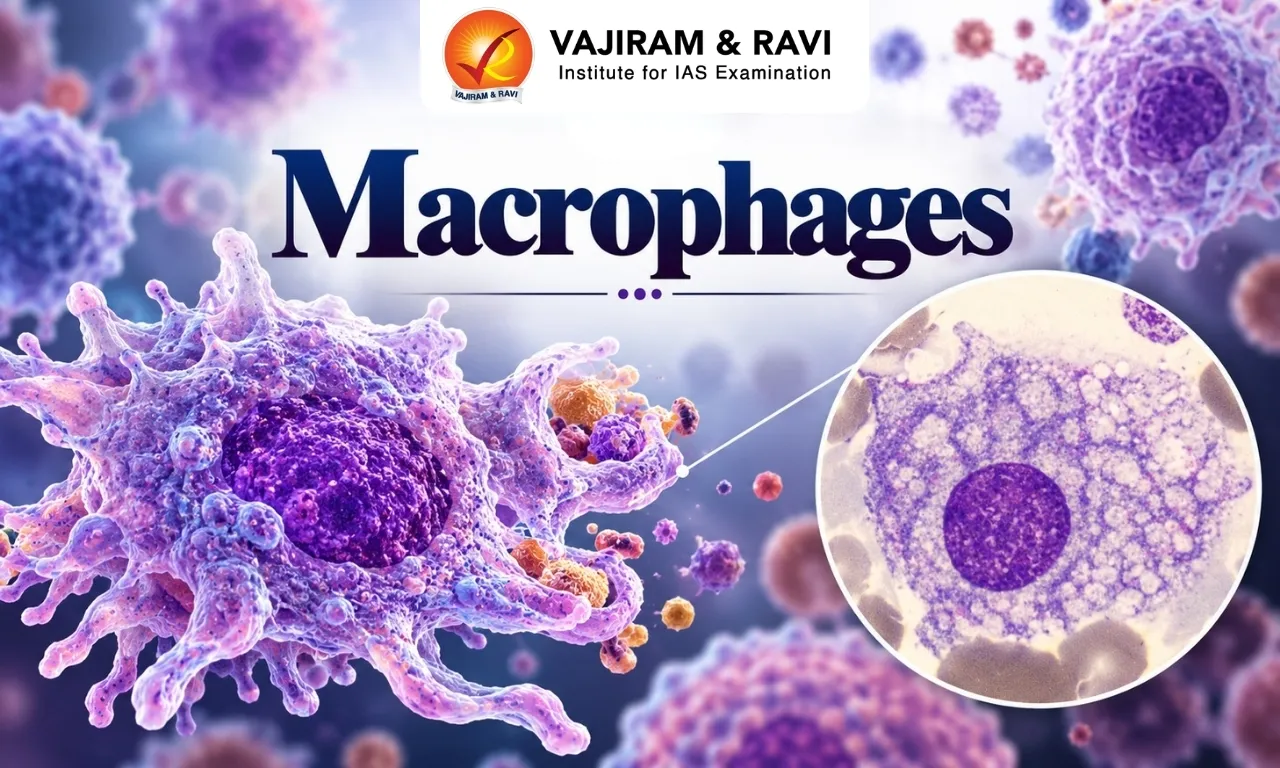
  • Macrophages are specialised white blood cells (WBCs) that play an important role in the body's immune system by engulfing and destroying pathogens, dead cells, and cellular debris. 
  • Most macrophages develop from monocytes, a type of WBC produced in the bone marrow. Some tissue-resident macrophages originate from embryonic cells. 
  • Macrophages do not travel through the blood. Instead, they remain in one part of the body, within specific tissues.
  • Macrophages are found in many organs and tissues, including the:
    • Brain
    • Breast tissue
    • Liver
    • Lung
    • Lymph nodes
    • Placenta
    • Spleen
    • Tonsils
  • They look for and destroy:
    • Viruses, bacteria, fungi, or other germs (pathogens)
    • Infected cells
    • Dead, aging, or damaged cells
    • Tumor cells
    • Bits of cells, or cellular debris
    • Inactive or less active synapses (the spaces between nerve cells)
  • Types:
    • Macrophages have two modes (phenotypes):
      • M1, or inflammatory mode: M1 macrophages destroy germs and cancer cells and alert immune cells to infections.
      • M2, or anti-inflammatory mode: M2 macrophages help with wound healing, clearing out dead cells, and tissue repair.
    • Macrophages can switch between M1 and M2 modes and can also be somewhere in between.
  • Macrophages are known for their ability to destroy foreign substances that get into your body. But that’s not all they do. Other macrophage job duties include:
    • Activating B cells and T cells, which helps them target pathogens.
    • Removing dead and damaged cells.
    • Destroying cancer cells.
    • Releasing proteins like cytokines that alert other immune cells to infections.
    • Repairing tissue, healing wounds, and reducing inflammation.
    • Reabsorbing minerals into bones.
    • Breaking down old red blood cells and recycling the iron.
    • Regulating fetal tissue development.
    • Regulating your organ function and maintaining homeostasis.
  • How do they work?
    • Macrophages have receptors on the outside that they use like antennae. These antennae get signals from substances in the environment around them. 
    • These could be signals from chemicals or proteins in your body (like cytokines or opsonins). Or they could be antigens, which are like labels on germs, allergens, and cancer cells.
    • If a macrophage detects something it should get rid of, it swallows or “eats” it (a process called phagocytosis, or “cell eating”). Then, it breaks it apart so your body can get rid of it. 
    • Macrophages can also display a germ’s antigen on themselves so that T cells and B cells can recognize it and become activated.
    • Signals might also cause macrophages to release chemicals that alert other immune cells to the area, reduce inflammation, or help regulate a body process.
  • Macrophages that aren’t working properly or that cause too much inflammation can lead to:
    • Osteoporosis
    • Autoimmune disorders, like lupus, rheumatoid arthritis (RA), scleroderma, and Type 1 diabetes
    • Alcohol-related liver diseases, like alcohol-induced hepatitis
    • Cancer
    • Cardiovascular disease, like atherosclerosis
    • Neurological diseases, like Alzheimer’s disease and multiple sclerosis (MS)
    • Macrophage activation syndrome, a complication of rheumatological diseases that causes uncontrolled inflammation
  • Macrophages also play a role in organ damage due to sepsis.

News: NAT

Macrophages FAQs

Q1: What are macrophages?

Ans: Macrophages are specialised white blood cells that engulf and destroy pathogens, dead cells, and cellular debris.

Q2: Where are macrophages primarily found in the body?

Ans: Macrophages are found within specific tissues and organs throughout the body.

Q3: Which types of cells can macrophages identify and destroy besides pathogens?

Ans: They can destroy infected cells, tumour cells, and dead, ageing, or damaged cells.

Q4: What is phagocytosis?

Ans: Phagocytosis is the process by which a cell engulfs and breaks down foreign substances, pathogens, or cellular debris.

Q5: How do macrophages recognise pathogens and damaged cells?

Ans: They use receptors on their surface to detect signals from pathogens, damaged cells, and substances such as cytokines and opsonins.

Karnataka Announces ₹40 Crore Freedom Park at Historic Kittur Fort

Kittur Fort

Kittur Fort Latest News

The Karnataka State government will build the Kittur Channamma Freedom Park in the Kittur Fort in the Belagavi district at a cost of ₹40 crore, the Chief Minister said recently.

About Kittur Fort

  • It is a historic fort located in Belagavi, Karnataka. 
  • History:
    • It was constructed by Allappa Gowda Sardesai, the fifth ruler of the Kittur dynasty during his rule between 1660 and 1691 AD. 
    • It became famous as the stronghold of Rani Chennamma, a brave queen who led one of India’s earliest armed rebellions against British rule in 1824, about 33 years before the 1857 revolt. 
    • Though the British eventually suppressed the uprising, it remains a significant event in India's struggle for freedom. 
  • Architecture:
    • The fort was constructed using black basalt and features Peshwa-Islamic architecture, with a three-storeyed palace inside.
    • The fort was equipped with secret water wells, a pole star viewing room, and a large palace hall for royal gatherings.
    • A museum within the fort houses weapons, sculptures, and relics from the era of Queen Kittur Chennamma’s rebellion.
    • The fort features well-preserved ruins, including the old palace, a watchtower, water cisterns, and ancient temples.

News: TH

Kittur Fort FAQs

Q1: Where is Kittur Fort located?

Ans: Kittur Fort is located in Belagavi district, Karnataka.

Q2: Who constructed Kittur Fort?

Ans: It was constructed by Allappa Gowda Sardesai, the fifth ruler of the Kittur dynasty.

Q3: Which historical queen is associated with Kittur Fort?

Ans: Rani Chennamma, a brave queen who led one of India’s earliest armed rebellions against British rule in 1824

Q4: Which architectural style is featured in Kittur Fort?

Ans: The fort features Peshwa-Islamic architecture.

New Cicada Species Neoterpnosia mawphlangensis Discovered in Meghalaya

Neoterpnosia mawphlangensis

Neoterpnosia mawphlangensis Latest News

A new species of the genus Neoterpnosia (Neoterpnosia mawphlangensis sp. nov.) was recently described from the semi-evergreen forests of Mawphlang Hills, Meghalaya, northeastern India.

About Neoterpnosia mawphlangensis

  • It is a new species of cicada.
  • It was discovered in forests of Mawphlang in Meghalaya’s East Khasi Hills at elevations of 1,378 to 1,605 metres.
  • It is distinguished by characteristic structures in the male reproductive organs, along with distinctive markings on its transparent wings.  
  • It is active mainly around dawn and calls from the upper branches and foliage of subtropical pine forests. 
  • Males typically begin singing at around 6 pm, often forming a chorus that can continue for about 30 minutes under suitable weather conditions. 
  • The insects were observed calling during misty and rainy weather but stopped during heavy rain. 
  • Researchers also noted that they are well camouflaged among moss and are not attracted to light. 

What are Cicadas?

  • They are a family of more than 3,000 species of sound-producing insects. 
  • They are known for their loud, complex and species-specific acoustic signals or songs.
  • They are found worldwide, with the highest diversity occurring in tropical regions. 
  • Lifecycle:
    • The cicada lifecycle begins with an adult female laying eggs in slits she created in tree branches or stems. 
    • Once the eggs hatch, the nymphs fall to the ground and burrow into the soil, feeding on plant sap for several years. 
    • Once the mature nymphs have emerged from the ground, they’ll firmly attach themselves to a tree branch or other natural element to molt and transform into an adult. 
    • From here, they’ll live for approximately four to six weeks. 
  • The lifespan of cicadas varies depending on the species and whether they are annual or periodical cicadas. 
    • Annual cicadas typically live for four to six weeks as adults.
    • Periodical cicadas have much longer lifespans due to their extended nymphal periods, which can last either 13 or 17 years, depending on the species.  Once they emerge, they also live for a few weeks.  
  • Male cicadas produce loud calls using specialised organs called tymbals, located on their abdomen, to attract females.

News: TAXA

Neoterpnosia mawphlangensis FAQs

Q1: What is Neoterpnosia mawphlangensis?

Ans: It is a newly discovered species of cicada.

Q2: Where was Neoterpnosia mawphlangensis discovered?

Ans: It was discovered in the forests of Mawphlang in Meghalaya’s East Khasi Hills.

Q3: When is Neoterpnosia mawphlangensis mainly active?

Ans: It is mainly active around dawn.

Q4: Which type of forest serves as the habitat of Neoterpnosia mawphlangensis?

Ans: It inhabits subtropical pine forests.

India Re-Elected Vice-Chair of UNESCO’s International Convention against Doping in Sport

International Convention against Doping

International Convention against Doping Latest News

The Union Minister of Youth Affairs & Sports chaired the third formal meeting of the COP10 Bureau and the fourth formal meeting of the Fund’s Approval Committee for 2026–27 under the UNESCO International Convention against Doping in Sport in New Delhi.

About International Convention against Doping

  • It is a UNESCO multilateral treaty by which States agree to adopt national and international measures to prevent and eliminate doping in sport.
  • The Convention was adopted during the 33rd session of UNESCO’s General Conference (19 October 2005) and entered into force on 1 February 2007.
  • It is the only legally binding international instrument committed to promoting integrity and eliminating doping in sport globally.
  • Members: It consists of 192 States Parties, making it UNESCO’s second most ratified treaty.
    • India is a signatory to the International Convention Against Doping in Sport, which was ratified by India on 07 November 2007. 
  • Aim: The Convention aims to harmonize anti-doping legislation, guidelines, regulations, and rules internationally in order to provide a level and safe playing environment for all athletes.
  • Governance: The Conference of Parties (COP) is the sovereign body of the Convention, meeting in ordinary session biennially.
  • It has overall responsibility for its implementation and evolution.

Features of International Convention against Doping in Sport

  • The convention allows governments to formally recognize the World Anti-Doping Agency (WADA) and the Code. 
  • It works under a positive implementation approach, providing guidance, financial support, skill-training and capacity-building to empower States Parties aiming to enhance their implementation of the Convention.
  • It also provides a global forum for public and private stakeholders of the sport integrity ecosystem.
  • Funding mechanism: Anti-Doping Fund was formed to create awareness about doping.

Source: PIB

International Convention against Doping FAQs

Q1: What is International Convention against Doping ?

Ans: It is a UNESCO multilateral treaty by which States agree to adopt national and international measures to prevent and eliminate doping in sport.

Q2: When did India join International Convention against Doping ?

Ans: 07 November 2007. 

Exercise Garuda Shakti: India and Indonesia Hold 10th Joint Special Forces Exercise

Exercise Garuda Shakti

Exercise Garuda Shakti Latest News

The 11th edition of the India-Indonesia joint Special Forces Exercise Garuda Shakti has commenced at Banyuwangi, Indonesia.

About Exercise Garuda Shakti     

  • It is the joint Special Forces exercise conducted between India– Indonesia.
  • Participating Troop: The Indian contingent comprises troops from the Parachute Regiment (Special Forces).
  • Aim: The exercise aims to strengthen mutual understanding, cooperation and interoperability between the Special Forces of the two nations.
  • Focus: It focuses on tactics, techniques and procedures for special operations in jungle environments, including obstacle crossing, combat marksmanship, mountaineering, air assault training and combat-hardening sessions.
    • It also includes the exchange of expertise and information on weapons, equipment and operational practices.
  • Objective: The joint training will culminate with a validation exercise designed to simulate realistic operational scenarios and assess the endurance, coordination and combat readiness of both contingents.
  • Significance: It will further strengthen defence cooperation and bilateral relations between India and Indonesia.

Source: PIB

Exercise Garuda Shakti FAQs

Q1: Exercise Garuda Shakti is conducted between which two countries?

Ans: India and Indonesia

Q2: Which contingent from India is participating in Exercise Garuda Shakti?

Ans: Indian contingent comprises troops from the Parachute Regiment (Special Forces).

Enquire Now