Macrophages Latest News
Emerging evidence indicates that macrophage behavior emerges from the coordinated integration of ontogenetic imprinting, environmental sensing, metabolic rewiring, and epigenetic remodeling.
About Macrophages
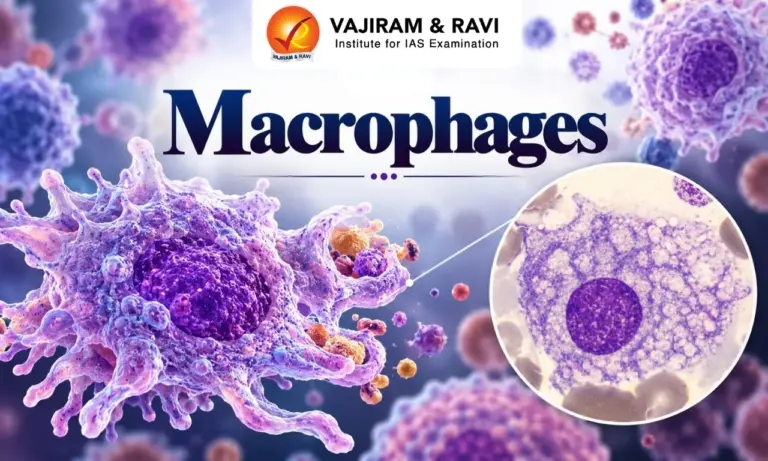
- Macrophages are specialised white blood cells (WBCs) that play an important role in the body’s immune system by engulfing and destroying pathogens, dead cells, and cellular debris.
- Most macrophages develop from monocytes, a type of WBC produced in the bone marrow. Some tissue-resident macrophages originate from embryonic cells.
- Macrophages do not travel through the blood. Instead, they remain in one part of the body, within specific tissues.
- Macrophages are found in many organs and tissues, including the:
- Brain
- Breast tissue
- Liver
- Lung
- Lymph nodes
- Placenta
- Spleen
- Tonsils
- They look for and destroy:
- Viruses, bacteria, fungi, or other germs (pathogens)
- Infected cells
- Dead, aging, or damaged cells
- Tumor cells
- Bits of cells, or cellular debris
- Inactive or less active synapses (the spaces between nerve cells)
- Types:
- Macrophages have two modes (phenotypes):
- M1, or inflammatory mode: M1 macrophages destroy germs and cancer cells and alert immune cells to infections.
- M2, or anti-inflammatory mode: M2 macrophages help with wound healing, clearing out dead cells, and tissue repair.
- Macrophages can switch between M1 and M2 modes and can also be somewhere in between.
- Macrophages have two modes (phenotypes):
- Macrophages are known for their ability to destroy foreign substances that get into your body. But that’s not all they do. Other macrophage job duties include:
- Activating B cells and T cells, which helps them target pathogens.
- Removing dead and damaged cells.
- Destroying cancer cells.
- Releasing proteins like cytokines that alert other immune cells to infections.
- Repairing tissue, healing wounds, and reducing inflammation.
- Reabsorbing minerals into bones.
- Breaking down old red blood cells and recycling the iron.
- Regulating fetal tissue development.
- Regulating your organ function and maintaining homeostasis.
- How do they work?
- Macrophages have receptors on the outside that they use like antennae. These antennae get signals from substances in the environment around them.
- These could be signals from chemicals or proteins in your body (like cytokines or opsonins). Or they could be antigens, which are like labels on germs, allergens, and cancer cells.
- If a macrophage detects something it should get rid of, it swallows or “eats” it (a process called phagocytosis, or “cell eating”). Then, it breaks it apart so your body can get rid of it.
- Macrophages can also display a germ’s antigen on themselves so that T cells and B cells can recognize it and become activated.
- Signals might also cause macrophages to release chemicals that alert other immune cells to the area, reduce inflammation, or help regulate a body process.
- Macrophages that aren’t working properly or that cause too much inflammation can lead to:
- Osteoporosis
- Autoimmune disorders, like lupus, rheumatoid arthritis (RA), scleroderma, and Type 1 diabetes
- Alcohol-related liver diseases, like alcohol-induced hepatitis
- Cancer
- Cardiovascular disease, like atherosclerosis
- Neurological diseases, like Alzheimer’s disease and multiple sclerosis (MS)
- Macrophage activation syndrome, a complication of rheumatological diseases that causes uncontrolled inflammation
- Macrophages also play a role in organ damage due to sepsis.
News: NAT


 Last updated on Oct, 2026
→ UPSC 2027 Notification will be released on 13 January 2027 at upsconline.nic.in.
→ Check Nobel Prize 2026 Winners List here.
→ Download PIB PRiSM Monthly Magazine 2026 here.
→ Check UPSC Monthly Current Affairs Magazine The Recitals here.
→ Check out the latest UPSC Syllabus here.
→ Download UPSC Model Answers for Mains 2026
→ UPSC Mains Question Paper 2026 is out now for Essay & GS Paper 1, 2, 3 & 4.
→ UPSC Calendar 2027 has been released.
→ Enroll in Vajiram & Ravi’s UPSC Mains Test Series 2027 for structured answer writing practice, expert evaluation, and exam-oriented feedback.
→ Join Vajiram & Ravi’s UPSC Mentorship Program 2027 for personalized guidance, strategy planning, and one-to-one support from experienced mentors.
→ Go through the UPSC Mains Previous Year Papers to enhance your preparation.
→ UPSC has released UPSC Toppers List 2025 with the Civil Services final result on its official website.
→ Also check Best UPSC Coaching in India
Macrophages FAQs
Q1. What are macrophages?+
Q2. Where are macrophages primarily found in the body?+
Q3. Which types of cells can macrophages identify and destroy besides pathogens?+
Q4. What is phagocytosis?+
Q5. How do macrophages recognise pathogens and damaged cells?+
Tags: macrophages