Himalayan Marmot Droppings Could Reveal Climate Change and Vegetation History in the Himalayas

Himalayan Marmot

Himalayan Marmot Latest News

Scientists have found that the faeces of Himalayan marmots could serve as a valuable biological archive for understanding climate change, vegetation patterns and environmental shifts in the higher Himalaya.

About Himalayan Marmot

  • It is a type of herbivorous mammal.
  • Appearance
    • Himalayan marmots are about the size of a large housecat.
    • They are closely related to the woodchuck, the Hoary marmot, and the Yellow-bellied marmot.
    • They have a dark chocolate-brown coat with contrasting yellow patches on their face and chest.
    • They have stout limbs and short tails. They have five toes on each hind foot and four toes on each forefoot with long concave claws adapted for burrowing.
  • Habitat: It inhabits alpine grasslands throughout the Himalayas and on the Tibetan Plateau.
  • Distribution: It is found in South Asia and in China
  • Characteristics
    • These are social creatures that live in colonies and excavate deep burrows which colony members share during hibernation.
    • These marmots are diurnal and are mostly active in the morning and late afternoon. They hibernate for 6-8 months during the coldest times of the year.
    • Diet: It relies on local vegetation for food and shelter.
    • The important plant groups in the diet of the marmot were Artemisia, Asteroideae, Caryophyllaceae, Poaceae, Cyperaceae and Chenopodiaceae.
  • Conservation Status
    • IUCN Red List: Least Concern

Source: PIB

Himalayan Marmot FAQs

Q1: What is Himalayan Marmot?

Ans: It is a type of herbivorous mammal.

Q2: Where do we find Himalayan Marmot?

Ans: It inhabits alpine grasslands throughout the Himalayas and on the Tibetan Plateau.

Enithares deccanensis: New Aquatic Insect Species Discovered in Eastern Ghats

Enithares deccanensis

Enithares deccanensis Latest News

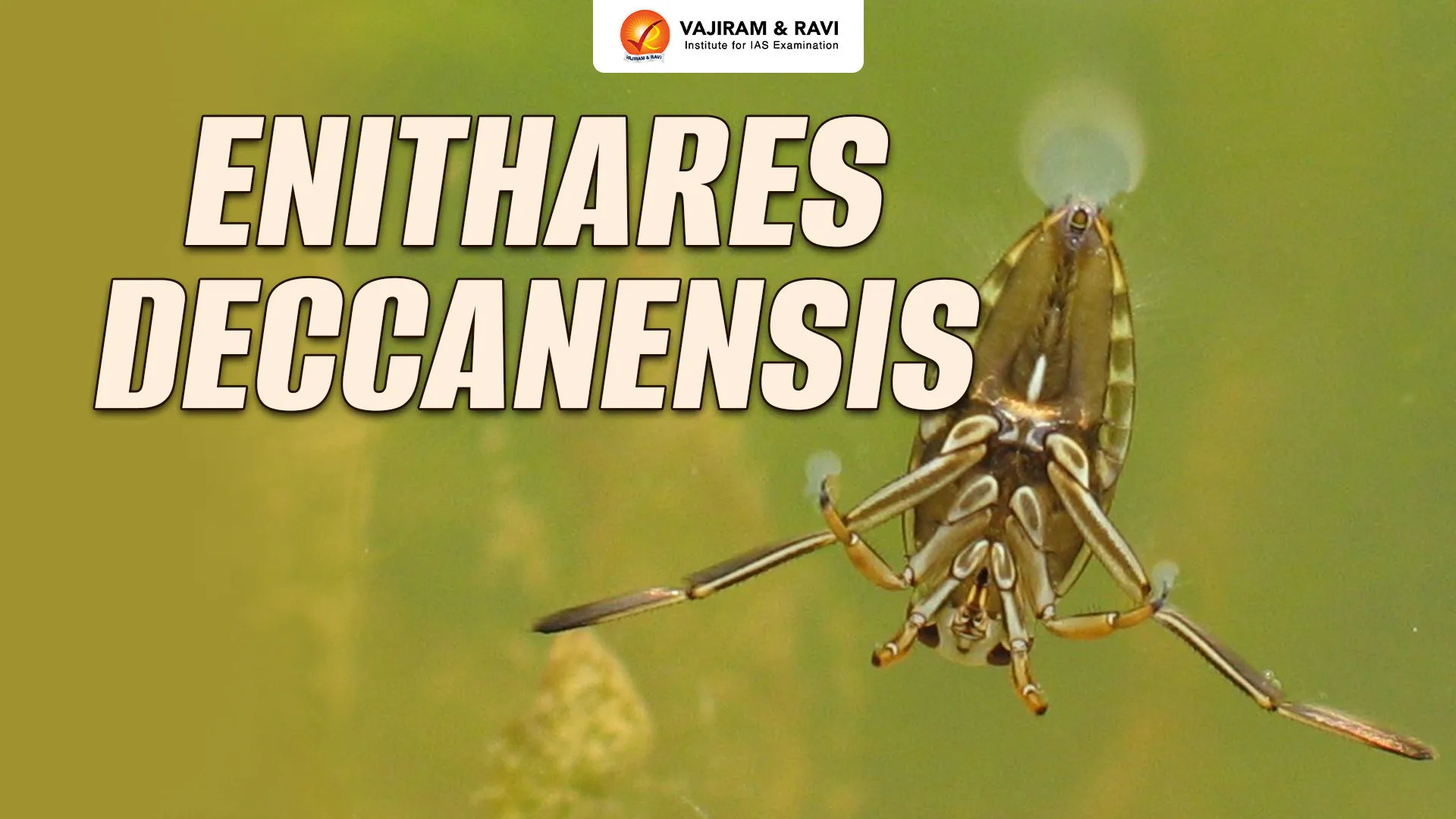
A new species of aquatic insect named Enithares deccanensis has been recently identified in the Eastern Ghats.

About Enithares deccanensis

  • It is a new species of aquatic insect discovered in the Eastern Ghats.
  • It was documented from freshwater habitats across the Seshachalam Biosphere Reserve in Andhra Pradesh and Amrabad Tiger Reserve in Telangana. 
  • It belongs to the family Notonectidae, commonly known as backswimmers. These predatory insects swim upside down beneath the water surface. 
  • It has an elongated, oval-shaped body and dark dorsal colouring. 
  • It possesses a distinctive combination of morphological features, including a dark, V-shaped marking on its wings, known as hemelytra,  and a characteristic sickle-shaped male reproductive structure. 
  • The specimens exhibited both light and dark colour forms, demonstrating colour polymorphism within the species.

News: DC

Enithares deccanensis FAQs

Q1: What is Enithares deccanensis?

Ans: It is a newly discovered species of aquatic insect found in the Eastern Ghats.

Q2: In which protected areas was Enithares deccanensis documented?

Ans: Seshachalam Biosphere Reserve in Andhra Pradesh and Amrabad Tiger Reserve in Telangana.

Q3: To which insect family does Enithares deccanensis belong?

Ans: It belongs to the family Notonectidae, commonly known as backswimmers.

Q4: What is the characteristic body shape of Enithares deccanensis?

Ans: It has an elongated, oval-shaped body with dark dorsal colouring.

Q5: What distinctive marking is present on the wings of Enithares deccanensis?

Ans: A dark, V-shaped marking on its wings, known as hemelytra.

Brown Shrike Spotted in Karnataka’s Vijayanagara After 6,000 km Migration from Siberia

Brown Shrike

Brown Shrike Latest News

A rare brown shrike bird, having travelled nearly 6,000 km from Siberia, recently made its seasonal appearance at Ulavatti village, Vijayanagara district, Karnataka. 

About Brown Shrike

  • It is a small songbird in the shrike family that is found mainly in Asia. 
  • Scientific Name: Lanius cristatus 
  • The genus name, Lanius, is derived from the Latin word for "butcher", and some shrikes are also known as "butcher birds" because of their feeding habits. 

Brown Shrike Habitat and Distribution

  • It breeds in northern Asia, from Mongolia to Siberia, and winters in South Asia, Myanmar, and the Malay Peninsula.  
  • It is among the commonest wintering shrikes in southern and eastern India and is also recorded in many other states during the cold months. 
  • It favors open or semi-open landscapes with a mixture of low vegetation and prominent hunting perches. 

Brown Shrike Features

  • It is about 18 to 20 cm in length, with a rounded, medium-long tail.
  • This shrike is mainly brown on the upper parts, and the tail is rounded. 
  • Like most other shrikes, it has a distinctive black "bandit-mask" through the eye.
  • The black mask can be paler in winter and has a white brow over it. 
  • The underside is creamy with rufous flanks and belly.  
  • The wings are brown and lack any white "mirror" patches. 
  • Females tend to have fine scalloping on the underside, and the mask is dark brown and not as well marked as in the male.  
  • Like other shrikes, the brown shrike has a strong bill with a hooked tip and a tooth-like notch that helps it kill prey with a bite to the neck. 

Brown Shrike Conservation Status

It is classified as 'Least Concern' under the IUCN Red List.

News: NIE

Brown Shrike FAQs

Q1: What is the Brown Shrike?

Ans: It is a small songbird belonging to the shrike family, found mainly in Asia.

Q2: Where does the Brown Shrike breed?

Ans: In northern Asia, extending from Mongolia to Siberia.

Q3: Where does the Brown Shrike migrate during winter?

Ans: South Asia, Myanmar and the Malay Peninsula.

Q4: What distinctive facial marking is found in the Brown Shrike?

Ans: A black bandit-like mask extending through the eye.

Q5: What is the IUCN conservation status of the Brown Shrike?

Ans: Least Concern (LC).

Ayush Quality Mark: Government Distributes Quality Certificates to Hospitals and Manufacturers

Ayush Quality Mark

Ayush Quality Mark Latest News

The Union Minister of State (Independent Charge), Ministry of Ayush and Minister of State, distributed ‘Ayush Quality Mark’ certificates to hospitals and manufacturers in New Delhi.

About Ayush Quality Mark

  • It was launched on 19th December, 2025 during the 2nd World Health Organization (WHO) Global Summit on Traditional Medicine.
  • It acts as a unified quality assurance framework to promote globally accepted standards for Ayush products and services.
  • Purpose: The primary purpose of the Ayush Quality Mark is to establish a reliable stamp of quality and authenticity for specific categories of Ayush products and services, which meet global standards, positioning it as a trusted benchmark.
  • Implementation: The implementation of the initiative has been entrusted to AYUSHEXCIL (Ayush Export Promotion Council) Ministry of Commerce and supported by the Ministry of Ayush.
  • It covers Ayush products, Ayush hospitals, day-care centres, clinics, wellness centres, Medical Value Travel Facilitators (MVTFs) and Ayush product testing laboratories.
  • Levels of Ayush Mark
    • Ayush Standard Mark for domestic assurance
    • Ayush Premium Mark for international markets 
  • Key Benefits of the Ayush Quality Mark
    • Enhanced Trust and Credibility: Provides consumers globally with a reliable symbol of verified quality and safety, as applicable.
    • Improved Market Access: Distinguishes high-quality offerings, making them more competitive in global markets.
    • Sector Standardization: Encourages all stakeholders to adhere to finalized, robust quality standards which match global standards.

Source: PIB

Ayush Quality Mark FAQs

Q1: What is Ayush Quality Mark?

Ans: It acts as a unified quality assurance framework to promote globally accepted standards for Ayush products and services.

Q2: What Ayush Quality Mark covers?

Ans: It covers Ayush products, Ayush hospitals, day-care centres, clinics, wellness centres, Medical Value Travel Facilitators (MVTFs) and Ayush product testing laboratories.

Awa Tribe: 20 Members of Isolated Amazon Community Seek Food Amid Growing Forest Threats

Awa Tribe

Awa Tribe Latest News

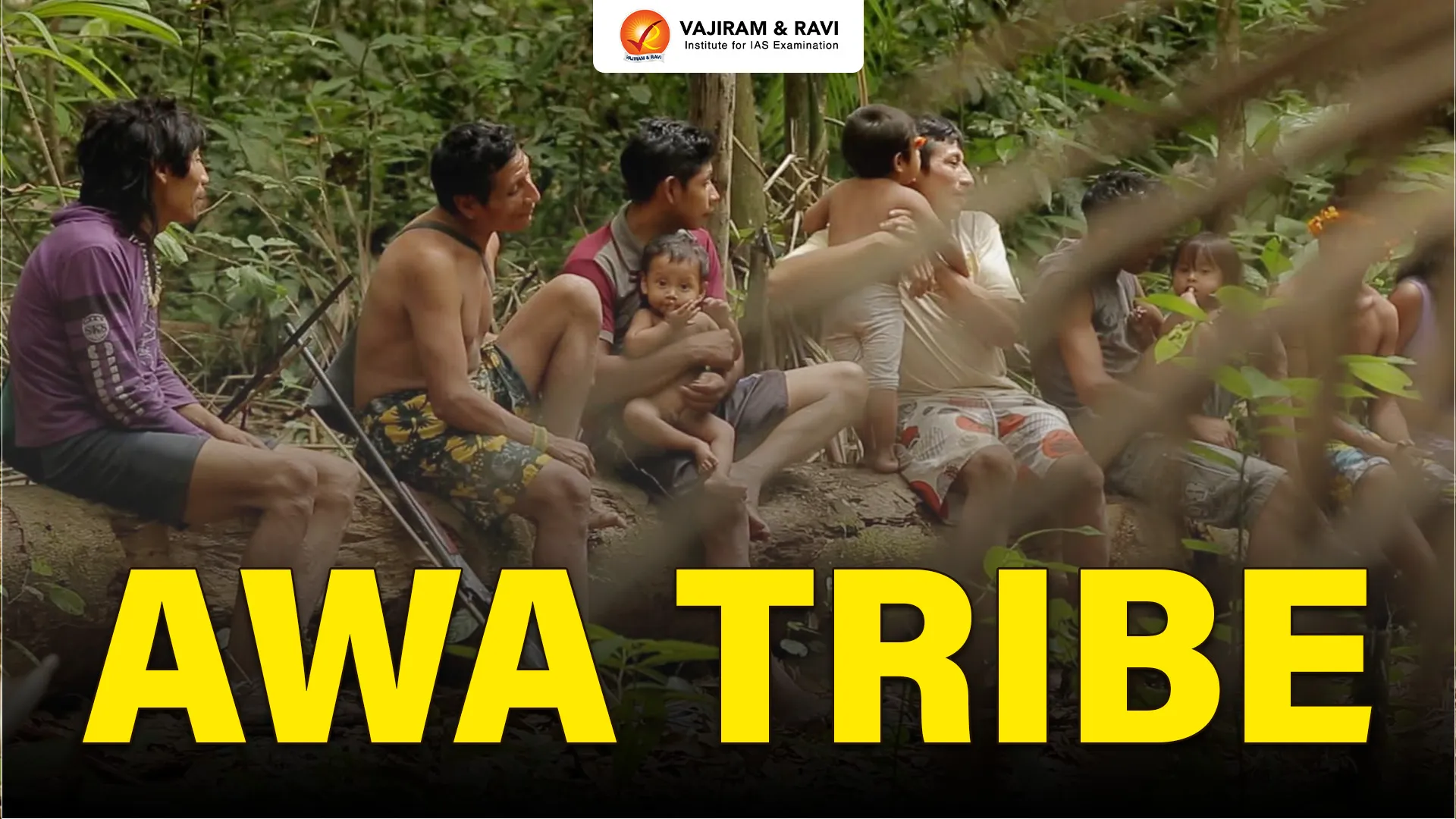
Around 20 members of the Awa tribe, which has avoided contact with outsiders for decades, recently approached a government team and asked for food – an interaction that advocates say may reflect the growing pressure on their forest home.

About Awa Tribe

  • The Awa, also known as the Awá-Guajá, are one of the most endangered Indigenous groups in the world. 
  • They live in the eastern Amazon rainforest, primarily in the Brazilian state of Maranhão.  
  • They speak the Awá (Guajá) language, belonging to the Tupi-Guarani language family. 
  • Traditionally nomadic hunter-gatherers, the Awa have deep spiritual and cultural ties to the rainforest, relying on it for food, medicine, and identity. 
  • They have chosen to remain isolated from mainstream society, making their own decisions about how they live and whom they interact with. 
  • They are one of the world’s last uncontacted Indigenous tribes.  But their isolation does not mean they are untouched by the outside world.  
  • The Awá have faced invasions of their territory for generations. 
  • European settlers began encroaching on their lands during the 19th century, pushing many members towards a nomadic lifestyle to escape outside threats. 
  • Brazil finally supplied the Awá with settlement areas during the mid-1980s.
  • However, numerous deadly interactions with loggers, farmers, and other illegal intruders had reduced the Awá community to barely 300 people. 
  • Fires, deforestation and climate change are adding to the pressure, disturbing the balance of a landscape that has sustained them for centuries.

News: IT

Awa Tribe FAQs

Q1: Who are the Awá people?

Ans: The Awá, also known as the Awá-Guajá, are one of the most endangered Indigenous groups in the world.

Q2: Where do the Awá people live?

Ans: In the eastern Amazon rainforest, primarily in the Brazilian state of Maranhão.

Q3: What is the traditional lifestyle of the Awá tribe?

Ans: They are traditionally nomadic hunter-gatherers.

Q4: Which activities and groups have threatened the traditional territories of the Awá tribe?

Ans: Illegal logging, farming and encroachment by other illegal intruders.

Q5: What is the approximate population of the Awá community?

Ans: Barely 300 people.

Multi Agency Centre (MAC): Amit Shah Inaugurates ₹500 Crore Upgraded Intelligence Network

Multi Agency Centre (MAC)

Multi-Agency Centre Latest News

The Multi-Agency Centre (MAC), a centralised intelligence-sharing platform, now tracks cybersecurity, narcotics, organised crime networks, and emerging radicalisation hotspots, the Union Home Minister said recently.

About Multi-Agency Centre 

  • It is a centralized intelligence-sharing body under India's Intelligence Bureau (IB).
  • It is the apex institutional mechanism through which the Government of India collates, stores, analyzes, and disseminates terrorism-related intelligence among its civilian, military, and police agencies. 
  • It was created in December 2001 in the aftermath of the Kargil conflict.
  • It has no independent statutory charter; its authority derives from executive sanction and the operational primacy of the IB in internal security matters. 
  • Its scope was significantly expanded after the November 2008 Mumbai attacks. 
  • The network was extended downward to the state and district level through Subsidiary Multi-Agency Centres (SMACs), situated in state capitals and connected to the central database.
  • As many as 28 organisations, including the IB, R&AW, the Defence Intelligence Agency, the three service intelligence directorates, the Central Bureau of Investigation, the Directorate of Revenue Intelligence, the National Investigation Agency, the Narcotics Control Bureau, central armed police forces and state police, are part of the system through which they share intelligence inputs.  
  • Procedurally, the MAC operates as a round-the-clock fusion centre. 
    • Designated agencies post liaison officers to the MAC headquarters in New Delhi, where raw and assessed intelligence inputs are uploaded to a shared database. 
    • The flow runs in two directions: agencies feed terrorism-related information into the centre, and the MAC in turn disseminates collated, deduplicated, and where possible corroborated inputs back to the relevant stakeholders, including state police forces. 
  • A new MAC network was inaugurated on 16 May 2025. 
    • It connects all police districts in the country through a secured network and has been built at a cost of ₹500 crore.
    • It incorporates futuristic capabilities such as embedded AI and machine learning techniques to harness the potential of the vast database with MAC and GIS services.
    • The upgraded network will enhance trend analysis, hotspot mapping, and predictive operations, offering more accurate and actionable outcomes.
    • The network spans the entire country, including island territories, insurgency-affected areas, and mountainous high-altitude regions, ensuring last-mile connectivity to district-level officials in remote areas through a secure and dedicated network.
    • It strengthens the country’s efforts to tackle serious threats like terrorism,  cybersecurity, narcotics, organised crime networks, and emerging radicalisation hotspots.

News: TH

Multi-Agency Centre FAQs

Q1: What is the Multi-Agency Centre (MAC)?

Ans: It is a centralised intelligence-sharing body under India's Intelligence Bureau (IB).

Q2: Under which organisation does the Multi-Agency Centre function?

Ans: The Intelligence Bureau (IB).

Q3: What is the primary function of the Multi-Agency Centre (MAC)?

Ans: To collate, store, analyse and disseminate terrorism-related intelligence among India's civilian, military and police agencies.

Q4: When was the Multi-Agency Centre established?

Ans: It was created in December 2001 in the aftermath of the Kargil conflict.

Q5: What are Subsidiary Multi-Agency Centres (SMACs)?

Ans: They are regional-level intelligence coordination centres that extend the MAC network to the state and district levels.

Bandipur Tiger Reserve: Forest Officials Rescue Tigress and Five Cubs in Karnataka

Bandipur Tiger Reserve (BTR)

Bandipur Tiger Reserve Latest News

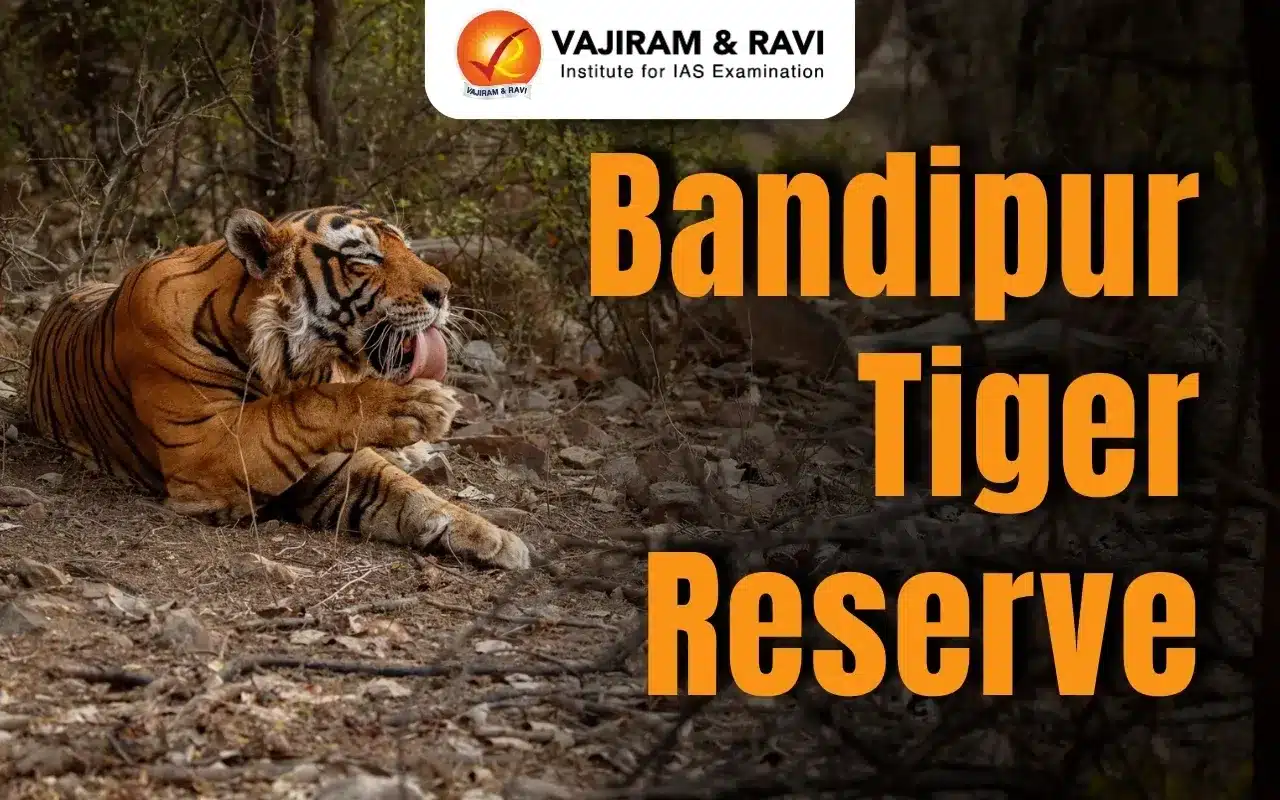
Recent photographs circulating on social media have sparked suspicion of an illegal safari in the eco-sensitive zone (ESZ) of the Bandipur Tiger Reserve (BTR).

About Bandipur Tiger Reserve     

  • Location: It is situated in the Mysore and Chamarajanagar revenue districts of southern Karnataka. 
  • It is located at the tri-junction area of the States of Karnataka, Tamil Nadu, and Kerala.
  • Geographically, it is an “ecological confluence” of the Western and Eastern Ghats.
  • It is part of the larger Nilgiri Biosphere Reserve, which is recognized as a UNESCO World Heritage Site.
  • It is surrounded by: 
    • Nagarahole Tiger Reserve in the North West (Kabini Reservoir separates the two).
    • Mudumalai Tiger Reserve (Tamil Nadu) in the South.
    • Wayanad Wildlife Sanctuary (Kerala) in the South West.
  • Rivers: It is surrounded by River Kabini in its north and River Moyar in its south. The Nugu River runs through the reserve. 
  • Highest Point: Himavad Gopalaswamy Betta Hill is the highest point in the park. 
  • Climate: It has a typical tropical climate with distinct wet and dry seasons.
  • Vegetation: The Park has various biomes, including dry deciduous forests, moist deciduous forests, and shrublands. 
  • Flora: It supports teak wood, rosewood, sandalwood, and a variety of bamboo. 
  • Fauna: It is home to Bengal tiger, gaur, sloth bear, golden jackal, dhole, four-horned antelope, etc.
    • It is a shelter for the largest population of wild Asian elephants in South Asia.

Source: DH

Bandipur Tiger Reserve FAQs

Q1: Where is Bandipur Tiger Reserve located?

Ans: Karnataka

Q2: Which rivers runs through Bandipur Tiger Reserve?

Ans: The Nugu River runs through the reserve. 

Deendayal Port in Gujarat Prepares to Handle 22 Ships in Just 72 Hours

Deendayal Port

Deendayal Port Latest News

Deendayal Port Authority (DPA), Kandla, recently received the ‘Major Port of the Year’ award at the 13th Samudra Manthan Awards, organised by Bhandarkar Publications in Mumbai.

About Deendayal Port

  • Deendayal Port (previously called Kandla Port) is one of India’s major ports, located in the Kutch District of Gujarat.
  • It is an all-weather natural tidal port situated in Kandla Creek, at the inner end of the Gulf of Kutch. 
  • It was constructed in the 1950s as the chief seaport serving western India after the partition of India from Pakistan left the port of Karachi in Pakistan. 
  • It is 256 nautical miles southeast of the Port of Karachi in Pakistan and over 430 nautical miles north-northwest of the Port of Mumbai.
  • It was declared a major port on 8 April 1955. 
  • It is administered by the Deendayal Port Authority (DPA) under the Ministry of Ports, Shipping and Waterways, Government of India. 
  • It serves as the vital maritime conduit for Gujarat, Rajasthan, Haryana, Punjab, and the National Capital Region (NCR). 
  • The port handles a wide range of cargo, including bulk, liquid, and containers. 
  • It features 18 berths, including 12 dry cargo berths and 6 oil jetties, handling a wide range of cargo such as petroleum, chemicals, iron ore, salt, and containers.
  • On 31 March 2016, Deendayal Port created history by handling 100 Million Metric Tonnes of cargo in a single year—becoming the first major port in India to achieve this milestone.
  • During the year 2025-26, Deendayal Port achieved the milestone of 150+ MMT of cargo.
  • It remains India’s biggest state-owned cargo handler by volume, but it has steadily lost market share to privately owned Mundra Port (India’s largest private port), 60 km to the southwest.

News: NM

Deendayal Port FAQs

Q1: What was the former name of Deendayal Port?

Ans: Kandla Port.

Q2: Where is Deendayal Port located?

Ans: In Kutch district of Gujarat.

Q3: What type of port is Deendayal Port?

Ans: An all-weather natural tidal port.

Q4: Which authority administers Deendayal Port?

Ans: It is administered by the Deendayal Port Authority (DPA) under the Ministry of Ports, Shipping and Waterways, Government of India.

Indira Gandhi Peace Prize 2025 Awarded to Mozambican Humanitarian Graça Machel

Indira Gandhi Peace Prize

Indira Gandhi Peace Prize Latest News

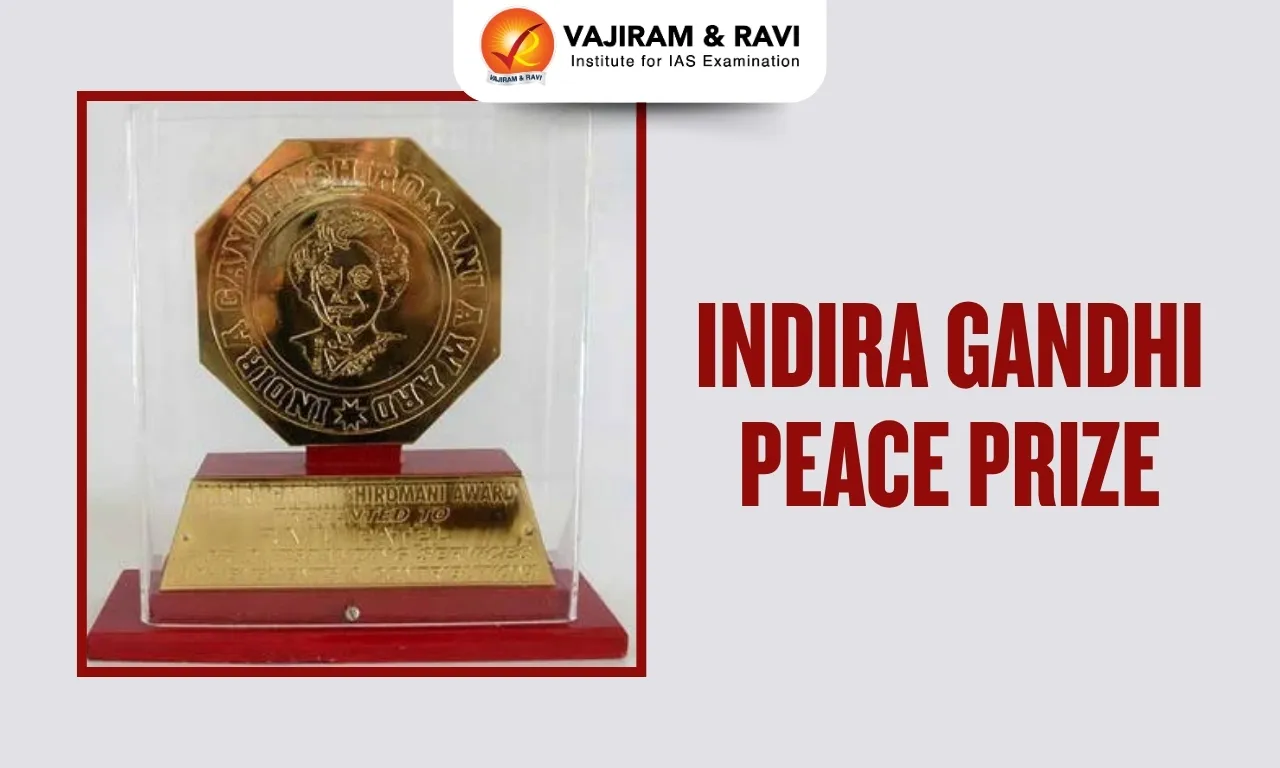
Recently, Mozambican politician and women’s rights advocate Graca Machel was conferred the 2025 Indira Gandhi Prize for Peace, Disarmament and Development.

About Indira Gandhi Peace Prize

  • It was instituted in the memory of the former Prime Minister Indira Gandhi by a trust in her name in 1986.
  • It is also known as the Indira Gandhi Prize for Peace, Disarmament, and Development,
  • It consists of a monetary award of 25 lakh rupees along with a citation.
  • It is awarded annually by the Indira Gandhi Memorial Trust  to a person or organization without any distinction of nationality, race or religion, in recognition of creative efforts towards:
    • Promoting international peace and disarmament, racial equality, and goodwill and harmony among nations;
    • Securing economic co-operation and promoting a new international economic order;
    • Accelerating the all-round advancement of developing nations;
    • Ensuring that the discoveries of science and modern knowledge are used for the larger good of the human race; and
    • Enlarging the scope of freedom and enriching the human spirit.

Source: TH

Indira Gandhi Peace Prize FAQs

Q1: What is the cash award given under Indira Gandhi Peace Prize ?

Ans: It consists of a monetary award of 25 lakh rupees along with a citation.

Q2: Who is eligible for Indira Gandhi Peace Prize?

Ans: It is awarded annually by the Indira Gandhi Memorial Trust  to a person or organization without any distinction of nationality, race or religion,

Enquire Now