New Micro-Moth Species

New Micro-Moth Species

New Micro-Moth Species Latest News

Scientists recently identified a new micro moth species, Glyphipterix brevimucronata, near Hollongapar Gibbon Sanctuary in Assam.

About Glyphipterix brevimucronata

  • It is a new species of micro moth.
  • It was discovered near Hollongapar Gibbon Sanctuary in Assam.  
  • The 6.5 mm moth has distinctive brown forewings with a yellowish metallic sheen and characteristic white markings. 
  • Its scientific name, brevimucronata, refers to a distinctive short, pointed structure in its reproductive anatomy. 
  • Scientifically classified under the family Glyphipterigidae, sedge moths comprise more than 530 described species worldwide.  However, researchers have documented only 25 species in India.
  • The genus Glyphipterix has an especially limited history of documentation in the country. 
    • Except for one species, British entomologist Edward Meyrick described all Indian species belonging to this genus between 1907 and 1923.
  • This discovery is India’s first addition to the sedge moth family in almost 100 years.

Key Facts about Hollongapar Gibbon Sanctuary

  • It is located in the Jorhat district of Assam.
  • It is named after the Hoolock Gibbon, the only ape species found in India. It has the thickest gibbon populations in Assam. 
  • River: The Bhogdoi River creates a waterlogged region dominated by semi-hydrophytic plants along the border of the sanctuary.
  • Vegetation: Most of the vegetation is evergreen in character and is composed of several canopy layers. 
  • Flora: The tall hollong trees form the upper canopy, the Nahar trees form the middle canopy and the shrubs form the lower canopy. 
  • Fauna: 
    • It is home to the only nocturnal primate found in the northeast Indian states, the Bengal slow loris. 
    • Other primates include the stump-tailed macaque, northern pig-tailed macaque, eastern Assamese macaque, rhesus macaque, and capped langur. 
    • Also found at the sanctuary are Indian elephants, tigers, leopards, jungle cats, wild boar, three types of civet, four types of squirrel, etc.
    • The sanctuary is home to over 200 species of birds, including several rare and endangered species, such as the white-winged wood duck, the Bengal florican, and the great hornbill.

News: IT

New Micro-Moth Species FAQs

Q1: What is Glyphipterix brevimucronata?

Ans: It is a newly discovered species of micro moth.

Q2: Where was Glyphipterix brevimucronata discovered?

Ans: Near Hollongapar Gibbon Sanctuary in Assam.

Q3: What are the distinctive physical features of Glyphipterix brevimucronata?

Ans: It has brown forewings with a yellowish metallic sheen and characteristic white markings.

Q4: What is the significance of the discovery of Glyphipterix brevimucronata?

Ans: It marks India's first addition to the sedge moth family in almost 100 years.

Biotechnology Research and Innovation Council

Biotechnology Research and Innovation Council

Biotechnology Research and Innovation Council Latest News

Recently, the Union Minister said that the Biotechnology Research and Innovation Council (BRIC) aims at a USD 300 billion Indian bioeconomy by 2030 and a USD 1 trillion bioeconomy by 2047.

About Biotechnology Research and Innovation Council

  • It is an apex autonomous body established as a registered Society.
  • It was formed by subsuming 14 autonomous institutes of the Department of Biotechnology (DBT). 
  • Aim: BRIC aims to provide a centralized and unified governance mechanism for the administration of its research institutions through intra-mural core grants.
  • It emphasizes multi-disciplinary research support from basic discovery to application in areas of strength within the DBT institutions.
  • BRIC seeks to nurture the next generation of scientific leaders by enabling the pursuit of knowledge and innovation in globally competitive and nationally relevant ecosystems.
  • Objectives of BRIC
    • Promoting cutting-edge research in biotechnology aligned with national priorities
    • Fostering innovation and translation across institutional boundaries
    • Developing indigenous technologies and capabilities in line with the principles of Atmanirbhar Bharat
  • Nodal Ministry: Ministry of Science and Technology.

Source: PIB

Biotechnology Research and Innovation Council FAQs

Q1: What is Biotechnology Research and Innovation Council ?

Ans: It is an apex autonomous body established as a registered Society.

Q2: Which ic the nodal ministry of Biotechnology Research and Innovation Council ?

Ans: Ministry of Science and Technology

Canada

Key Facts about Canada

Canada Latest News

Recently, the sixth round of negotiations for the India-Canada Comprehensive Economic Partnership Agreement (CEPA) was held in New Delhi.

About Canada

  • Location: It is located in North America.
  • It is the second largest country in the world in area (after Russia).
  • Bordered by: It shares borders with Alaska, a non-contiguous US state, to the northwest, and 12 other US states to the south.
  • The border of Canada with the US is the longest bi-national land border in the world.
  • Maritime Borders: It is bounded by the Arctic Ocean to the north, by the Atlantic Ocean to the east and the Pacific Ocean to the west.
  • Capital City: Ottawa

Geographical Features of Canada

  • Climate: It has seven climatic regions or zones: the Arctic, Subarctic, Prairie, Great Lakes, Cordilleran, plus the East and West Coasts. 
  • Major Mountains: ​Rocky Mountain, the St. Elias Mountains and the Laurentian Mountains.
  • Major Rivers:  Mackenzie River, Yukon River, Saint Lawrence River
  • Lakes: The five Great Lakes namely Superior, Michigan, Huron, Ontario, and Erie form a natural boundary between Canada and the United States. (Amongst these five, only Lake Michigan lies entirely within the US).
  • Natural Resources: It mainly consists of Bauxite, Iron ore, Nickel, Zinc, copper, gold, lead, uranium, rare earth elements, potash, diamonds etc.

Source: PIB

Canada FAQs

Q1: What is the capital city of Canada?

Ans: Ottawa

Q2: What are the major mountain ranges of Canada?

Ans: Rocky Mountain, the St. Elias Mountains and the Laurentian Mountains.

Bagheera AT1

What is Bagheera AT1

Bagheera AT1 Latest News

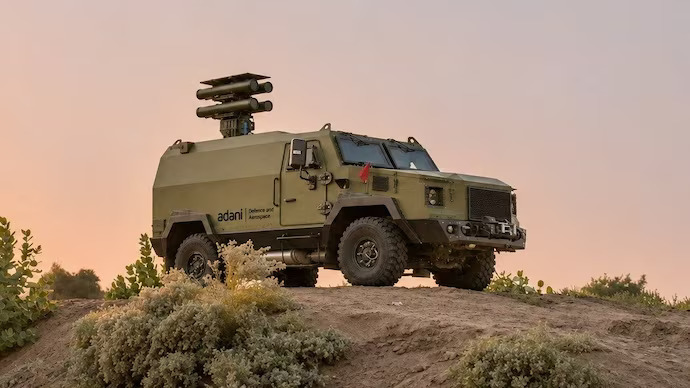
Adani Defence & Aerospace successfully demonstrated its vehicle-mounted anti-tank guided missile (ATGM) system ‘Bagheera AT1’ at the Pokhran Field Firing Ranges in Rajasthan recently.

About Bagheera AT1

  • It is a vehicle-mounted anti-tank guided missile (ATGM) system.
  • It is indigenously developed and integrated by Adani Defence & Aerospace, a subsidiary of the Adani Group. 
  • It can target both enemy tanks as well as armoured vehicles.  

Bagheera AT1 Features

  • It combines a guided missile, an automated launcher, day-and-night targeting sights and a high-mobility armoured vehicle. 
  • It can engage targets up to 8 km. This is approximately twice the 4-km range of conventional ground-launched anti-tank missiles. 
  • The missile uses laser beam-riding guidance instead of depending on a radio communication link.  This makes the system highly resistant to electronic jamming.
  • One of the missile’s key features is its ability to counter active protection systems (APS). 
    • An APS detects an incoming missile and fires a countermeasure to destroy or deflect it. 
  • It can fire two missiles in quick succession along the same beam at a single target. 
    • The first engages the tank’s APS, while the second is designed to penetrate its defences, such as armour. 
  • Each Bagheera AT1 vehicle carries a total of 12 missiles: four kept ready-to-fire on the automated launcher, and eight stored onboard as additional reloads. 
  • The system is equipped with a television camera to identify targets during daylight and a thermal imaging system for operations at night. 
  • The platform features a critical "shoot-and-move" capability, allowing crews to fire from protected cover and rapidly relocate before the enemy can trace their position and retaliate.

News: TP

Bagheera AT1 FAQs

Q1: What is Bagheera AT1?

Ans: It is a vehicle-mounted Anti-Tank Guided Missile (ATGM) system.

Q2: Who developed and integrated Bagheera AT1?

Ans: Adani Defence & Aerospace, a subsidiary of the Adani Group.

Q3: What is the maximum engagement range of Bagheera AT1?

Ans: Up to 8 km.

Q4: What type of guidance technology does the Bagheera AT1 missile u

Ans: Laser beam-riding guidance.

Candida albicans

What is Candida albicans

Candida albicans Latest News

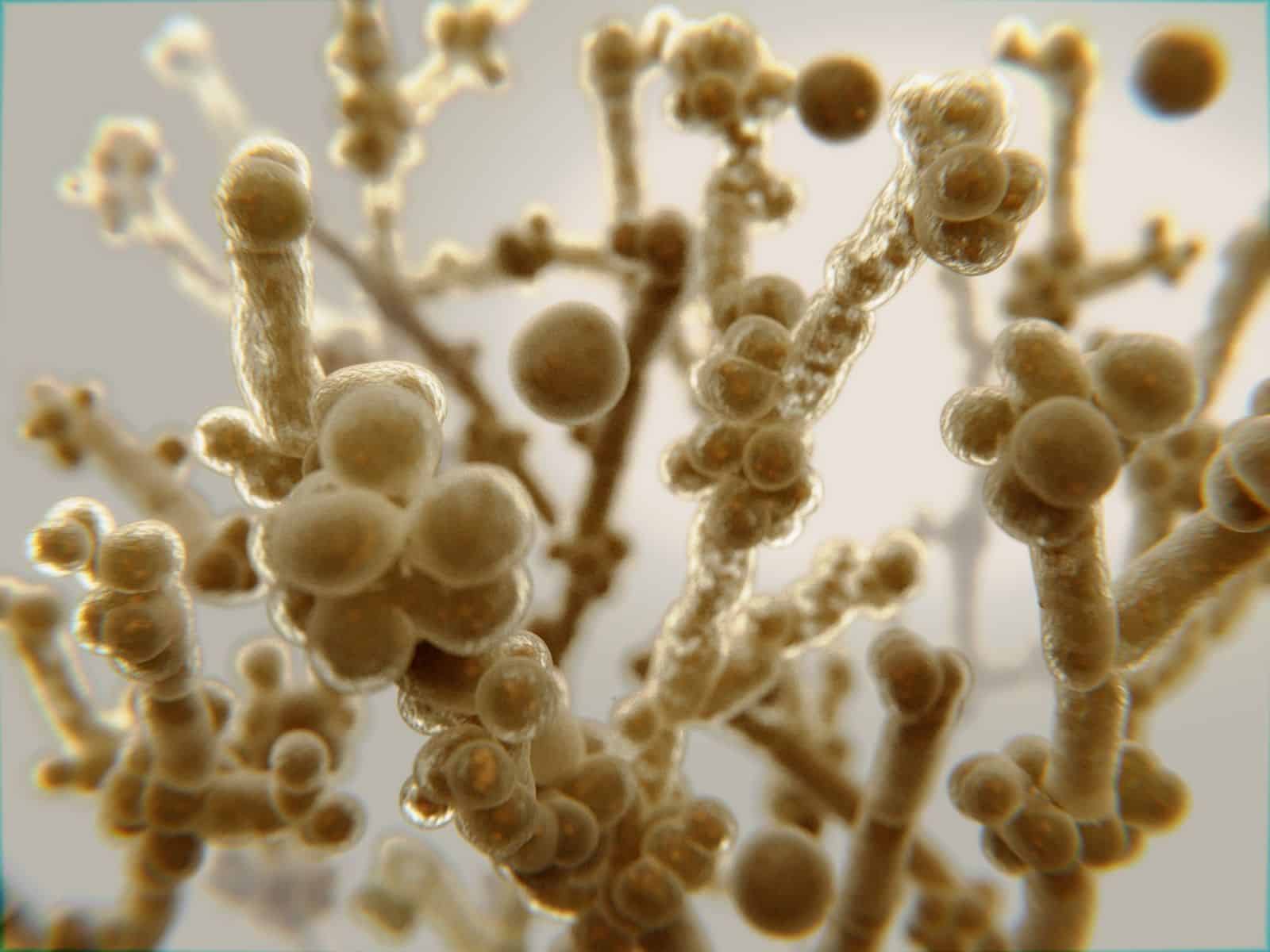
Scientists at CSIR-Centre for Cellular and Molecular Biology (CCMB) recently identified two compounds that prevent Candida albicans from changing into its infection-associated filamentous form without stopping its growth.

About Candida albicans

  • Candida albicans, a type of yeast, is a fungus that naturally lives in and on your body. 
  • It’s typically found in small amounts on your skin and in your mouth and intestines. 
  • It is the most common species of Candida yeast. 
  • Normally, healthy bacteria in your body (your microbiome) control the balance of Candida albicans. 
  • But, if something disrupts the balance of healthy bacteria, the yeast can overgrow and cause a fungal infection. 
  • A fungal infection caused by an overgrowth of yeast is called candidiasis. 
  • Candida albicans can cause different types of infection, depending on where it affects your body. Types include:
    • Cutaneous (skin) candidiasis: Yeast grows in the folds of your skin, like under your breasts or near your buttocks (diaper rash). It causes raised, red patches.
    • Candidal paronychia: Yeast collects in your nail folds or cuticles. It causes skin discoloration, pain and swelling around your nails.
    • Thrush: An overgrowth of yeast forms inside your mouth and throat. It causes raised, white bumps that are painful and irritating.
    • Vaginal yeast infection: Yeast multiplies inside your vagina. It causes redness, itching and burning, as well as abnormal vaginal discharge.
  • Symptoms:
    • In normal situations, Candida albicans won’t cause any symptoms. 
    • Symptoms will only develop if you have an overgrowth of yeast.
    • Depending on the location of the infection, symptoms may include:
      • Skin rash
      • Itching
      • Blisters
      • Small, raised bumps or patches
      • Pain, soreness or discomfort
      • Burning sensation
      • Abnormal vaginal discharge
      • Loss of taste (ageusia)
      • Difficulty swallowing (dysphagia)
  • Is Candida albicans contagious?
    • Normally, yeast infections aren’t contagious. 
    • But Candida albicans can spread if you have a weakened immune system or you’re taking certain medications. 
    • If you’re healthy, it’s unlikely Candida albicans will spread to you.
  • Treatment: If you have an infection, Candida albicans treatment involves antifungal medication.

News: TOI

Candida albicans FAQs

Q1: What is Candida albicans?

Ans: Candida albicans is a type of yeast (fungus) that naturally lives in and on the human body.

Q2: Where is Candida albicans normally found in the human body?

Ans: It is normally found in small amounts on the skin, in the mouth and in the intestines.

Q3: What normally controls the growth of Candida albicans in the human body?

Ans: Healthy bacteria in the body's microbiome help maintain the balance of Candida albicans.

Q4: What are the common symptoms of Candida albicans infection?

Ans: Skin rash, itching, blisters, raised bumps or patches, pain, soreness, discomfort and burning sensations.

Q5: How is Candida albicans infection treated?

Ans: It is treated using antifungal medications.

Gulf of Finland

Gulf of Finland

Gulf of Finland Latest News

A Russian cargo vessel bound for the country’s Baltic exclave Kaliningrad has been recently hit by a drone attack in the eastern Gulf of Finland. 

About Gulf of Finland

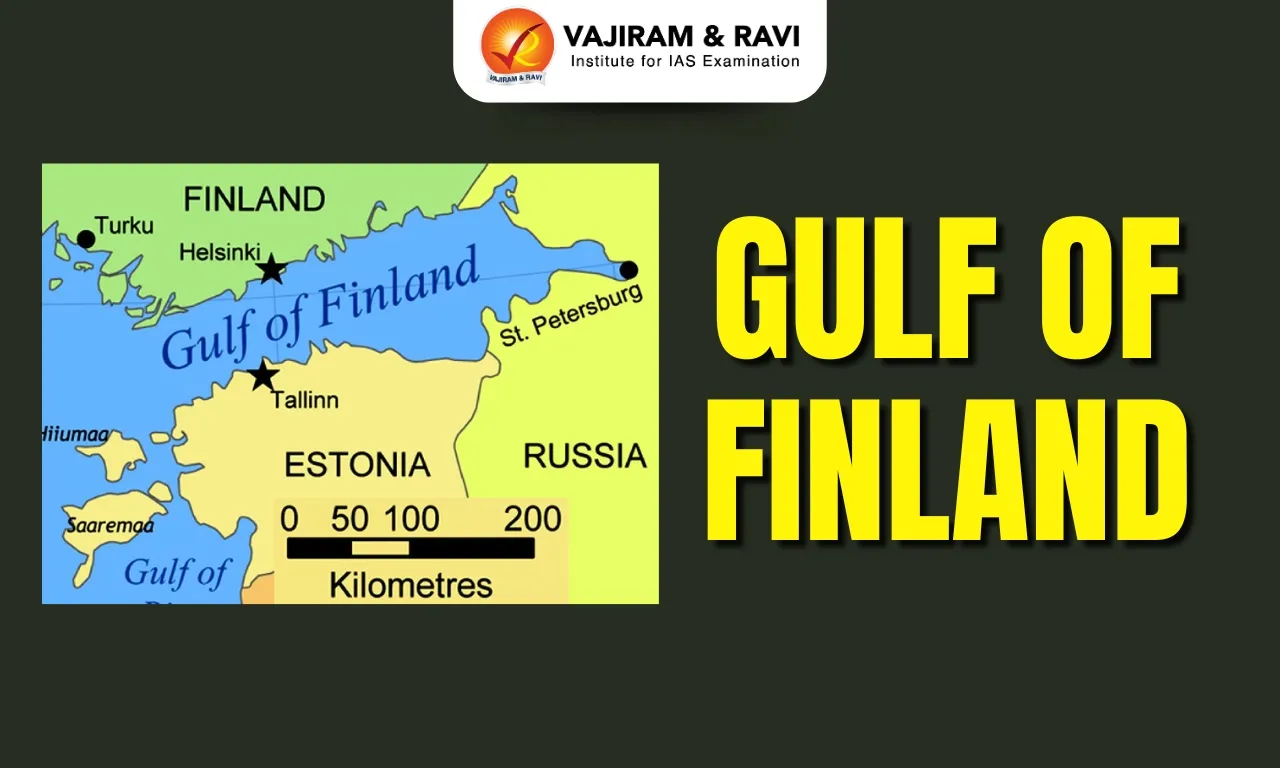
  • It is the easternmost extension of the Baltic Sea, located in Northern Europe.
  • It covers an area of 30,000 sq.km. It is one of the largest bodies of brackish water in the world.
  • The gulf extends for 400 km from east to west but only 19 to 130 km from north to south.
  • It is bordered by Finland in the north, Russia in the east, and Estonia in the south.
  • Both the Finnish capital city, Helsinki, and the Estonian capital, Tallinn, are located right on the shores of the Gulf of Finland. 
  • At the very eastern end of the gulf is the Russian city of St. Petersburg.
  • The Gulf is relatively shallow, with an estimated average depth of 38 m.
  • It has relatively low salinity because of substantial freshwater inflow from rivers and limited exchange with the more saline waters of the North Sea.
  • Major river: The Neva River flows into the Gulf of Finland near Saint Petersburg.
  • During cold winters, the Gulf of Finland can freeze over completely.  
    • This happens because the water is not as salty as the ocean, and less salty water freezes more easily. 
  • The gulf is also connected to the Saimaa Lake (Finland's largest lake) via the Saimaa Canal. 
  • The gulf faces a humid continental climate with hot summers and relatively harsh winters. 
  • The gulf contains numerous banks, skerries, and islands. The largest include Kotlin Island with the city of Kronstadt (population 42,800), Beryozovye Islands, Lisiy Island, Maly Vysotsky Island, and many others.

News: NOA

Gulf of Finland FAQs

Q1: Where is the Gulf of Finland located?

Ans: It is the easternmost extension of the Baltic Sea, located in Northern Europe.

Q2: Which countries border the Gulf of Finland?

Ans: Finland in the north, Russia in the east and Estonia in the south.

Q3: Why does the Gulf of Finland have relatively low salinity?

Ans: Due to substantial freshwater inflow from rivers and limited exchange with the more saline waters of the North Sea.

Q4: Which major river flows into the Gulf of Finland near Saint Petersburg?

Ans: The Neva River.

Q5: Which two national capitals are located on the shores of the Gulf of Finland?

Ans: Helsinki (Finland) and Tallinn (Estonia).

Pichwai Painting

Pichwai Painting

Pichwai Painting Latest News

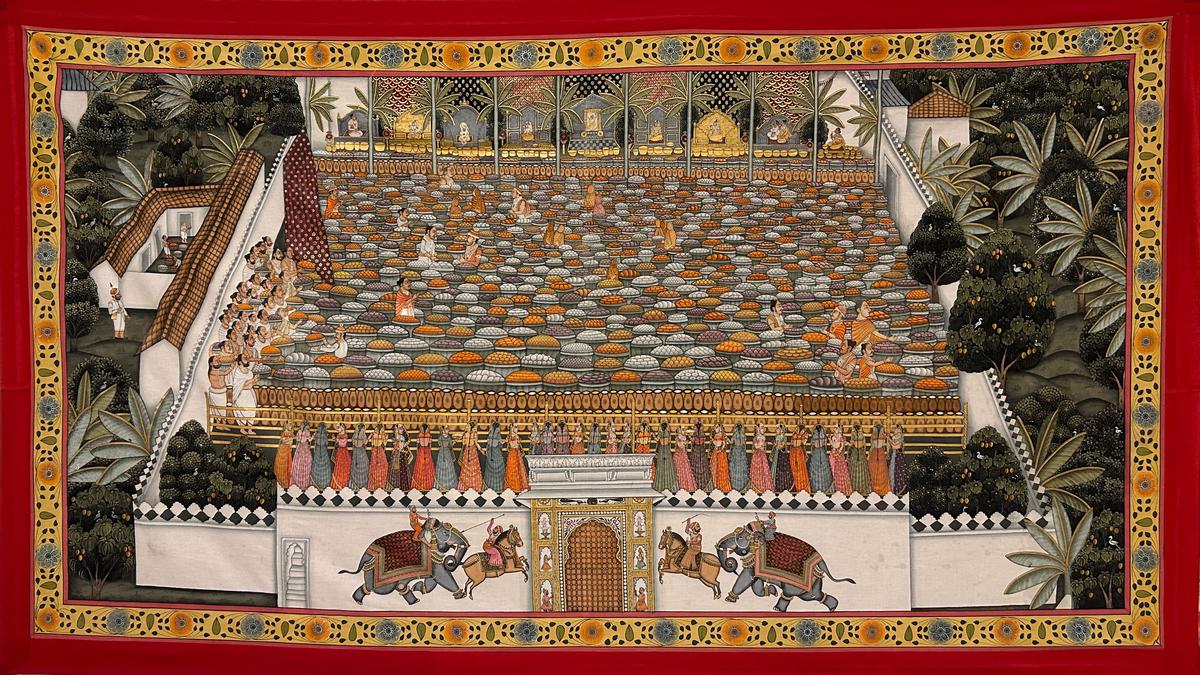
Recently, the Prime Minister of India presented a Golden Pichwai painting from Nathdwara, Rajasthan, to the US President.

About Pichwai Painting

  • It is a traditional style of painting that originated in the state of Rajasthan in India. 
  • Time Period: The history of this art form can be traced back to the 17th century.
  • Origin: It is believed to have originated in the town of Nathdwara in Rajasthan.
  • Theme: It mainly features the various stages of Lord Krishna’s life.
  • Material used: The artists use stone pigments, especially for gold and silver tones. The brighter orange, red, chrome yellow and kesari colours come from vegetable dyes
  • Other schools of Pichwai — Nathdwara, Kishangarh and Bundi in Rajasthan and Deccan school
  • They are often used to decorate the backdrops of Hindu temples, where they serve as a visual representation of the stories associated with Lord Krishna. 
  • Features
    • These paintings have distinct features of a heavier body and large elongated eyes, with a broad nose of Shrinathji, similar to the features of the idol at the temple. 
    • Patterns: The paintings are often filled with details, such as flowers, animals, and geometric patterns, which are arranged in a symmetrical and balanced composition. 
  • Famous Pishwai Paintings are
    • Shrinathji in Black & Gold
    • Ras Leela – Krishna with Radha
    • Giriraja Pichwai – depicting Lord Krishna carrying Govardhana mountain on his little finger.

Source: IT

Pichwai Painting FAQs

Q1: What is Pichwai Painting?

Ans: It is a traditional style of painting that originated in the state of Rajasthan in India. 

Q2: What is the theme of Pichwai Painting ?

Ans: It mainly features the various stages of Lord Krishna’s life.

DSC A21

NCG VISHWAS

DSC A21 Latest News

DSC A21 of the Diving Support Craft (DSC) project, was delivered to the Indian Navy today at Naval Dockyard in Mumbai. 

About DSC A21

  • It is an indigenously designed and built Diving Support Craft delivered to the Indian Navy.
  • It has been indigenously designed and constructed by M/s Titagarh Rail Systems Limited (TRSL), Kolkata.
  • Key Features
    • It has a catamaran-hull form and is equipped with state-of-the-art diving equipment.
    • Its superior design offers enhanced stability, enlarged deck area and improved sea-keeping characteristics, which makes it suitable for its specialist role.
    • The ship is indigenously designed and built under relevant Naval Rules and Regulations of Indian Register of Shipping (IRS).
  • Potential Applications: With induction of these ships, the Indian Navy’s capabilities in diving support, underwater inspection, salvage assistance and coastal operational deployment will be augmented.
  • Significance: DSC A21 is a proud flag bearer of Make in India initiative of Government of India (GoI)/ Ministry of Defence (MoD).

Source: PIB

DSC A21 FAQs

Q1: What is DSC A21 ?

Ans: It is an indigenously designed and built Diving Support Craft delivered to the Indian Navy.

Q2: Who built the DSC A21?

Ans: It has been indigenously designed and constructed by M/s Titagarh Rail Systems Limited (TRSL), Kolkata.

NCG VISHWAS

NCG VISHWAS

NCG VISHWAS Latest News

Recently, the union Health Secretary launched the National Cancer Grid  VISHWAS.

About NCG VISHWAS

  • NCG VISHWAS (Videos to Support Health, Wellness, Awareness and Self-care) is an AI-enabled patient education initiative covering breast, cervical and oral cancers.
  • It provides information in Hindi, Marathi, Tamil and English.
  • The videos cover prevention, diagnosis, treatment and long-term care, helping patients and caregivers access reliable information and make informed decisions.
  • The initiative will be disseminated through the National Cancer Grid’s network of hospitals and healthcare partners.
  • It can support cancer awareness through Ayushman Arogya Shivirs, ASHA and Anganwadi workers.
  • These videos could also be made available through platforms such as the Ayushman Bharat Digital Mission (ABDM) and Swasth Bharat portals, enabling greater access to reliable cancer-related information.

What is the National Cancer Grid? 

  • It was formed in August 2012.
  • It is funded by the Government of India through the Department of Atomic Energy,
  • It is a network of more than 400 cancer centres, research institutions and patient groups working towards improving cancer care through standardised protocols, quality assurance, capacity building and collaborative research.

Source: PIB

NCG VISHWAS FAQs

Q1: What is NCG VISHWAS?

Ans: NCG VISHWAS (Videos to Support Health, Wellness, Awareness and Self-care) is an AI-enabled patient education initiative covering breast, cervical and oral cancers

Q2: NCG VISHWAS provides information in how many languages?

Ans: It provides information in Hindi, Marathi, Tamil and English.

Membranous Nephropathy

What is Membranous Nephropathy

Membranous Nephropathy Latest News

An 18-year-old girl from Keralam recently developed a serious kidney ailment named Membranous Nephropathy, allegedly after using a fairness cream — promoted through social media — that contained dangerously high levels of mercury for nearly a year.

About Membranous Nephropathy (MN)

  • It is a kidney disorder that causes your immune system to attack glomeruli, the tiny filters in your kidneys. 
  • Your kidneys have thousands of glomeruli. These filters clean waste products from your blood. 
  • If you have MN, your glomeruli become inflamed. 
  • MN can cause your kidneys to stop filtering waste as well as they should. 
  • This may lead to problems with kidney function. 
  • There are two types of MN:
    • Primary MN (idiopathic): This is a condition that directly affects your kidneys. It’s usually due to an autoimmune condition. Up to 75% of people have this type.
    • Secondary MN: This type happens when another health condition or treatment affects your kidneys. About 25% of people have this type.
  • The following increase your risk for MN:
    • Cancers, especially lung and colon cancer
    • Exposure to toxins, including gold and mercury
    • Infections, including hepatitis B, malaria, syphilis, and endocarditis
    • Medicines, including penicillamine, trimethadione, and skin-lightening creams
    • Systemic lupus erythematosus, rheumatoid arthritis, Graves disease, and other autoimmune disorders
  • Symptoms:
    • The main symptoms of MN are from excess protein in your pee due to kidney damage. 
    • This leads to water retention and other symptoms. Together, these symptoms are called nephrotic syndrome. 
    • Other than edema (swelling), other signs can include: 
      • Proteinuria (foamy-looking pee due to high levels of protein in your pee).
      • High cholesterol.
      • Peeing more or less than usual.
      • Weight gain (people usually gain water weight because of the swelling).
      • Fatigue (tiredness).
      • High blood pressure.
      • Trouble breathing or shortness of breath.
    • Health issues and complications from membranous nephropathy can include:
      • High cholesterol (higher than average levels of fat in your blood).
      • High blood pressure.
      • Severe swelling.
      • Kidney disease.
      • Kidney failure.
      • Deep vein thrombosis (DVT).
      • Pulmonary embolism (PE).
  • Treatment:
    • No, there isn’t a cure for membranous nephropathy. 
    • There’s only treatment to manage your symptoms and stop the disease from progressing. 
    • Controlling blood pressure is the most important way to delay kidney damage. 
    • High blood cholesterol and triglyceride levels should be treated to reduce the risk for atherosclerosis.

News: NIE

Membranous Nephropathy FAQs

Q1: What is Membranous Nephropathy?

Ans: It is a kidney disorder in which the immune system attacks the glomeruli, the tiny filtering units of the kidneys.

Q2: How does Membranous Nephropathy affect kidney function?

Ans: It damages the kidney's filtration system, reducing its ability to filter waste products effectively.

Q3: What is the primary symptom of Membranous Nephropathy?

Ans: Excessive protein loss through urine (proteinuria) due to damage to the kidney's filtration barrier.

Q4: What are the common symptoms of Membranous Nephropathy?

Ans: Swelling (oedema), proteinuria, high cholesterol, changes in urination, weight gain, fatigue, high blood pressure and shortness of breath.

Enquire Now