US Waiver of Russian Sanctions Latest News
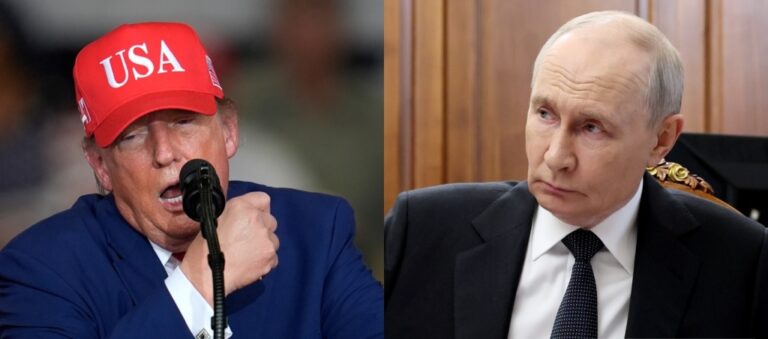
- US President Donald Trump has waived sanctions, restrictions and duties under Lindsey O. Graham Sanctioning Russia and Iran Act, 2026, citing US national interest as the basis for the waiver.
- This has temporarily eased the threat of punitive measures against major buyers of Russian oil, including India and China.
- The waiver is significant for India because it imports over 88% of its crude oil requirements, while Russia has emerged as its largest crude supplier.
Russia-From Peripheral to India’s Largest Oil Supplier
- India’s dependence on Russian crude increased sharply after Russia’s invasion of Ukraine in February 2022.
- As Western sanctions restricted Russian energy markets, Moscow offered discounted crude to willing buyers, and Indian refiners expanded purchases.
- India imported around 1.9 million barrels per day (bpd) of Russian crude in September 2026, accounting for more than 35% of its oil imports. Russian supplies had reached a record 2.8 million bpd in July.
- Russia displaced traditional West Asian suppliers to become India’s largest source of crude.
- This relationship has become particularly important because disruptions in supplies through the Strait of Hormuz have increased the risks associated with excessive dependence on West Asian energy sources.


What the Graham Act Meant
- The Graham Act authorised wide-ranging sanctions and restrictions against Russia and countries purchasing Russian oil and gas.
- It provided for potentially steep duties—including 100% tariffs on goods from major importers of Russian crude or natural gas under specified conditions. The Act also targeted countries allegedly facilitating sanctions evasion.
- However, Section 115 empowered the US President to waive such measures if he certified that doing so was in the national interest of the United States.
Why did Trump Waive the Measures?
- The decision reflects the tension between geopolitical sanctions and domestic energy security.
- Higher fuel prices have become politically sensitive in the US ahead of the midterm elections.
- The administration has simultaneously sought greater Russian diesel supplies, highlighting the contradiction between sanctioning Russian energy purchases and seeking Russian fuel to moderate domestic prices.
- The waiver therefore demonstrates how energy security, inflation and electoral considerations can influence sanctions policy.
Positive Implications for India
- Immediate energy-security relief:
- The waiver reduces the immediate risk that punitive US tariffs would make Russian crude economically unattractive for Indian refiners.
- Losing Russian supplies suddenly could have increased India’s import bill and intensified inflationary pressures.
- Russia also provides India with an important source of supply diversification, particularly when geopolitical tensions disrupt West Asian supplies.
- India-US trade negotiations:
- The Russian-oil issue had become a major point of friction in India-US trade negotiations.
- With the immediate tariff threat receding, the two countries may have greater room to advance a bilateral trade agreement.
Challenges for India
- EU remains a concern:
- The easing of US pressure does not eliminate India’s exposure to Western sanctions.
- The European Union has separately targeted entities involved in facilitating Russia-related sanctions evasion, creating compliance risks for Indian companies.
- Thus, Indian refiners and financial institutions must continue to carefully manage secondary sanctions, sanctions compliance and access to Western markets.
- Competition from China:
- The US waiver does not guarantee abundant Russian crude.
- Chinese refiners have increased purchases amid disruptions in Middle Eastern supplies and have reportedly been willing to book Russian cargoes in advance and pay higher prices.
- As a result, Russian crude available to Indian refiners could become tighter and more expensive.
- This highlights an important limitation: India’s energy security cannot depend excessively on one discounted supplier, even if that supplier currently offers economic advantages.
- Inflationary dimension:
-
- The issue has direct domestic macroeconomic implications.
- India’s retail inflation increased from 4.83% in August to 5.54% in September 2026, while food inflation rose sharply to 7.74%.
- Higher global crude prices can raise transportation, logistics, fertiliser and production costs, thereby generating cost-push inflation and worsening the current-account burden.
Way Forward for India
- India should pursue strategic diversification rather than dependence by –
- Maintaining diversified crude sourcing from Russia, West Asia, the US and other suppliers.
- Expanding strategic petroleum reserves.
- Increasing renewable energy, electric mobility and energy efficiency.
- Strengthening domestic refining and storage capacity.
- Developing resilient payment and shipping mechanisms compatible with international sanctions.
- Using diplomatic engagement to prevent energy trade from becoming a major source of India-US friction.
- The episode illustrates the broader principle of “strategic autonomy”.
Conclusion
- The US waiver provides India short-term relief on energy security, inflation and trade negotiations, but it does not eliminate longer-term vulnerabilities.
- India’s sustainable strategy should therefore combine diversified energy sourcing, strategic reserves, renewable transition and pragmatic diplomacy rather than excessive dependence on any single geopolitical partner.

 Last updated on Oct, 2026
→ UPSC 2027 Notification will be released on 13 January 2027 at upsconline.nic.in.
→ Check Nobel Prize 2026 Winners List here.
→ Download PIB PRiSM Monthly Magazine 2026 here.
→ Check UPSC Monthly Current Affairs Magazine The Recitals here.
→ Check out the latest UPSC Syllabus here.
→ Download UPSC Model Answers for Mains 2026
→ UPSC Mains Question Paper 2026 is out now for Essay & GS Paper 1, 2, 3 & 4.
→ UPSC Calendar 2027 has been released.
→ Enroll in Vajiram & Ravi’s UPSC Mains Test Series 2027 for structured answer writing practice, expert evaluation, and exam-oriented feedback.
→ Join Vajiram & Ravi’s UPSC Mentorship Program 2027 for personalized guidance, strategy planning, and one-to-one support from experienced mentors.
→ Go through the UPSC Mains Previous Year Papers to enhance your preparation.
→ UPSC has released UPSC Toppers List 2025 with the Civil Services final result on its official website.
→ Also check Best UPSC Coaching in India
US Waiver of Russia Sanctions FAQs
Q1. Why has Russian crude become important for India’s energy security?+
Q2. What is the significance of the US waiver of Russia-related sanctions for India?+
Q3. Why does the US waiver not completely eliminate India’s concerns?+
Q4. How can excessive dependence on imported crude threaten India’s macroeconomic stability?+
Q5. How can India balance energy security with geopolitical pressures?+
Tags: US Waiver of Russian Sanctions