About Vampire Viruses
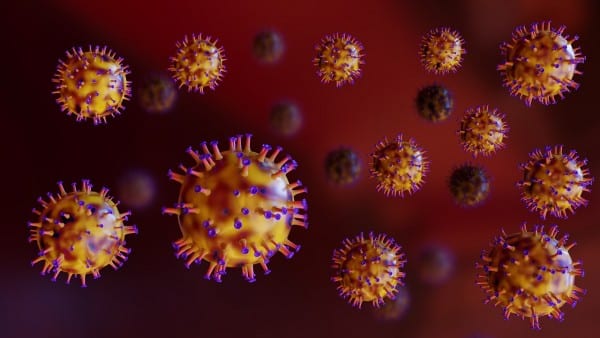
- They are pathogens that latch onto other viruses in order to replicate themselves.
- They emerge when a bacteriophage attaches to a soil-based virus, utilising its “life” for independent survival.
- This viral relationship between two pathogens is called a satellite and a helper.
- The satellite is the infectious strand that relies on the helper for support through its life cycle.
- Satellites depend on both their host organism and helper virus to complete its life cycle.
- The satellite virus depends on the helper virus to build the protective shell that covers its genetic material, called a capsid or to help it replicate its DNA.
- Most satellite viruses contain a gene that allows them to integrate into the host cell’s genetic material after they enter the cell.
- This enables the satellite to reproduce whenever a helper enters the cell from then on.
- The host cell also copies the satellite’s DNA and its own when it divides.
What is a Bacteriophage?
- Bacteriophages (BPs) are viruses that can infect and kill bacteria without any negative effect on human or animal cells.
- For this reason, it is supposed that they can be used, alone or in combination with antibiotics, to treat bacterial infections.
- They are comprised of a protein capsule around an RNA or DNA genome.
- The bacteriophage structure may include various features for infecting the host cell. Many bacteriophages have a central shaft and leglike appendages.
- The legs attach to the bacteria, and genetic material is injected through the shaft into the host cell cytoplasm, where it replicates and reassembles into progeny.
- Thousands of varieties of phages exist, each of which may infect only one type or a few types of bacteria or archaea.
Q1) What is a Virus?
A virus is an infectious microbe consisting of a segment of nucleic acid (either DNA or RNA) surrounded by a protein coat. A virus cannot replicate alone; instead, it must infect cells and use components of the host cell to make copies of itself. Often, a virus ends up killing the host cell in the process, causing damage to the host organism. Well-known examples of viruses causing human disease include AIDS, COVID-19, measles and smallpox.


 Last updated on Oct, 2026
→ UPSC 2027 Notification will be released on 13 January 2027 at upsconline.nic.in.
→ Check Nobel Prize 2026 Winners List here.
→ Download PIB PRiSM Monthly Magazine 2026 here.
→ Check UPSC Monthly Current Affairs Magazine The Recitals here.
→ Check out the latest UPSC Syllabus here.
→ Download UPSC Model Answers for Mains 2026
→ UPSC Mains Question Paper 2026 is out now for Essay & GS Paper 1, 2, 3 & 4.
→ UPSC Calendar 2027 has been released.
→ Enroll in Vajiram & Ravi’s UPSC Mains Test Series 2027 for structured answer writing practice, expert evaluation, and exam-oriented feedback.
→ Join Vajiram & Ravi’s UPSC Mentorship Program 2027 for personalized guidance, strategy planning, and one-to-one support from experienced mentors.
→ Go through the UPSC Mains Previous Year Papers to enhance your preparation.
→ UPSC has released UPSC Toppers List 2025 with the Civil Services final result on its official website.
→ Also check Best UPSC Coaching in India