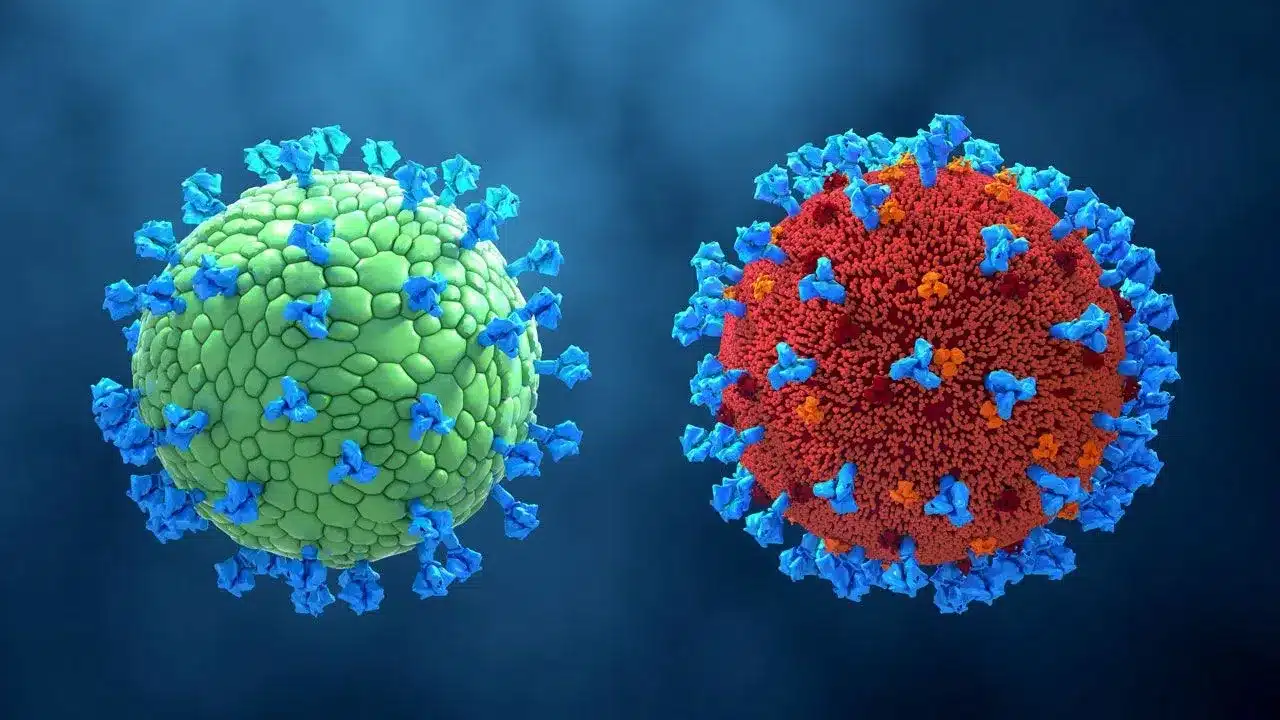
About Virus-like Particles (VLPs):
- VLPs are molecules that resemble viruses but lack infectivity because of the absence of viral genetic material.
- They are a very effective way of creating vaccines against diseases such as human papillomavirus (HPV), hepatitis B, malaria, and more.
- As they are very similar to real viral molecules, introducing a VLP into the body will trigger an immune response, but a person will not experience any symptoms of the virus they are being vaccinated against.
- Once the body has had an immune response to the VLP, it will recognize the virus and prevent infection in the future, giving people immunity to that particular virus.
- Structure:
- VLPs are very small, with a particle radius of approximately 20 to 200 nm. This means that they can easily enter the lymph nodes, where the immune system is activated in the case of an infection.
- A VLP consists of one or more structural proteins that can be arranged in multiple layers.
- They can also contain an outer lipid envelope, which is the outermost layer that covers a large number of different viruses. This outer layer protects the genetic material inside the virus particle.
- Creating a VLPvaccinecan use bacterial, yeast, insect, or mammalian cells.
- When used as a vaccine, VLPs cause a robust immunogenic response due to their high-density display of epitopes and the capacity to present multiple proteins to the immune system.
- Most recently, VLPs have been employed as nanomachines to deliver pharmaceutically active products to specific sites and into specific cells in the body.
Key Facts about Nipah Virus:
- Nipah virus (NiV) is a zoonotic virus (it is transmitted from animals to humans) and can also be transmitted through contaminated food or directly between people.
- In infected people, it causes a range of illnesses, from asymptomatic (subclinical) infection to acute respiratory illness and fatal encephalitis.
- The virus can also cause severe disease in animals, such as pigs, resulting in significant economic losses for farmers.
- It first broke out in Malaysia and Singapore in 1998 and 1999.
- Treatment:
- There are currently no drugs or vaccines specific for Nipah virus infection.
- Intensive supportive careis recommended to treat severe respiratory and neurologic complications.
Q1: What is a Virus?
A virus is an infectious microbe consisting of a segment of nucleic acid (either DNA or RNA) surrounded by a protein coat. A virus cannot replicate alone; instead, it must infect cells and use components of the host cell to make copies of itself. Often, a virus ends up killing the host cell in the process, causing damage to the host organism. Well-known examples of viruses causing human disease include AIDS, COVID-19, measles and smallpox.
Source: New method to generate virus-like particles, to help with developing antibodies against Nipah


 Last updated on Oct, 2026
→ UPSC 2027 Notification will be released on 13 January 2027 at upsconline.nic.in.
→ Asian Games 2026 are being held in Aichi-Nagoya, Japan, from 19 September to 4 October.
→ Check Nobel Prize 2026 Winners List here.
→ Download PIB PRiSM Monthly Magazine 2026 here.
→ Check UPSC Monthly Current Affairs Magazine The Recitals here.
→ Check out the latest UPSC Syllabus here.
→ Download UPSC Model Answers for Mains 2026
→ UPSC Mains Question Paper 2026 is out now for Essay & GS Paper 1, 2, 3 & 4.
→ UPSC Calendar 2027 has been released.
→ Enroll in Vajiram & Ravi’s UPSC Mains Test Series 2027 for structured answer writing practice, expert evaluation, and exam-oriented feedback.
→ Join Vajiram & Ravi’s UPSC Mentorship Program 2027 for personalized guidance, strategy planning, and one-to-one support from experienced mentors.
→ Go through the UPSC Mains Previous Year Papers to enhance your preparation.
→ UPSC has released UPSC Toppers List 2025 with the Civil Services final result on its official website.
→ Also check Best UPSC Coaching in India