


Vitamin A Latest News
Higher levels of vitamin A were significantly associated with better lung function in children and adults with asthma.
About Vitamin A
- It is a fat-soluble vitamin primarily stored in the liver.
- Although vitamin A is often considered a single nutrient, it is actually a group of fat-soluble compounds, including retinol, retinal, and retinyl esters.
- There are two types of vitamin A that are found in the diet.
- Preformed vitamin A is found in animal products such as meat, fish, poultry, and dairy foods.
- Precursors to vitamin A, also known as provitamin A, are found in plant-based foods such as fruits and vegetables. The most common type of provitamin A is beta-carotene.
- In order to use these two types of vitamin A, the body must convert them into the active forms of the vitamin, retinal and retinoic acid.
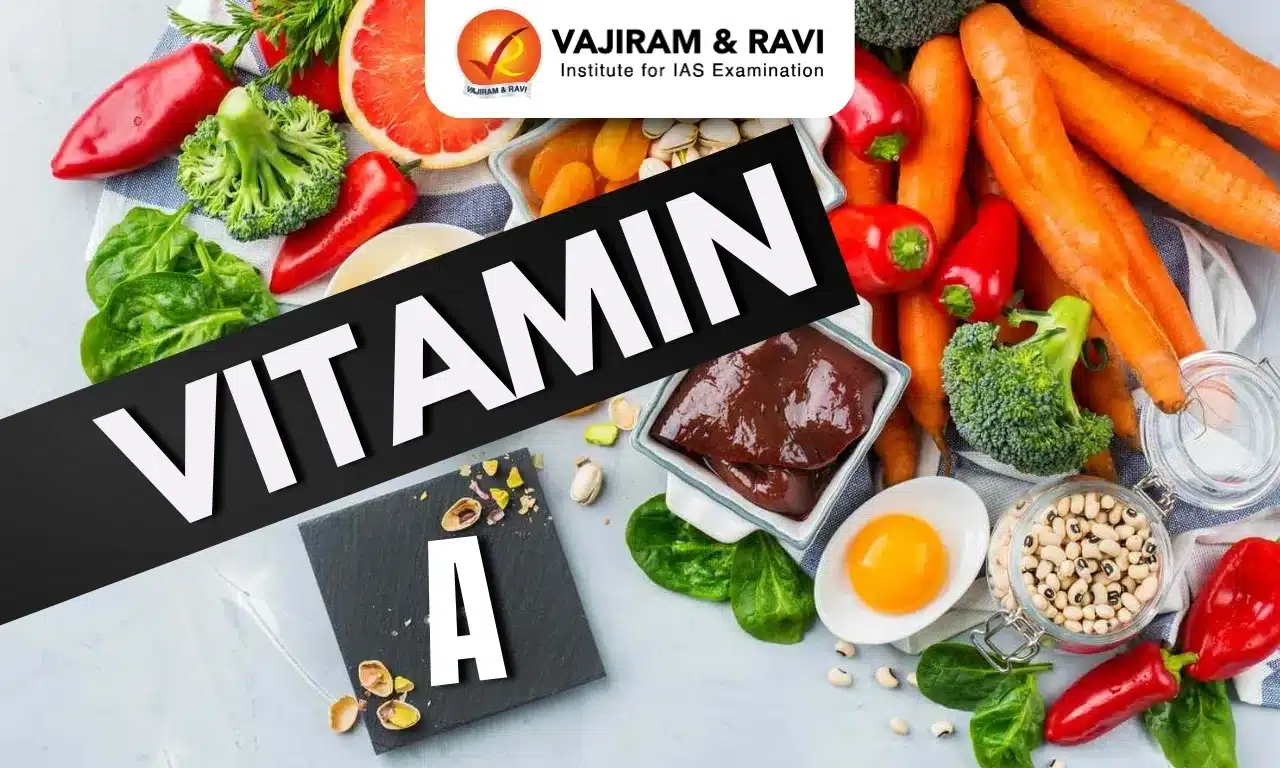
- Foods with the highest levels of vitamin A include:
- Beef liver and other organ meats
- Some types of fish such as herring and salmon and cod fish oil
- Eggs
- Dairy products such as cheese and fortified milk
- Fortified breakfast cereals
- Orange and yellow vegetables and fruits, such as carrots, sweet potatoes, mangos, and cantaloupe
- Broccoli, spinach, and most dark green, leafy vegetables.
- Function:
- It supports cell growth, immune function, fetal development, and vision.
- One of the best-known functions of vitamin A is its role in vision and eye health.
- It is also known as retinol because it produces the pigments in the retina of the eye.
- Vitamin A promotes good eyesight, especially in low light.
- Vitamin A helps protect surface tissues such as the skin, intestines, lungs, bladder, and inner ear.
- It supports immune function by promoting the growth and distribution of T cells, a type of white blood cell that protects the body from infection.
- Vitamin A supports male and female reproductive health and fetal development.
- If you do not get enough vitamin A, you have more risk of eye problems such as:
- Reversible night blindness
- Non-reversible corneal damage known as xerophthalmia
- It can also lead to hyperkeratosis or dry, scaly skin.
- Vitamin A deficiency can be treated with vitamin A supplements.
- Just as vitamin A deficiency can negatively affect health, taking too much can also be dangerous.
- Taking too much vitamin A can cause serious side effects and can even be fatal if consumed in extremely high doses.
News: MED


 Last updated on Oct, 2026
→ UPSC 2027 Notification will be released on 13 January 2027 at upsconline.nic.in.
→ Check Nobel Prize 2026 Winners List here.
→ Download PIB PRiSM Monthly Magazine 2026 here.
→ Check UPSC Monthly Current Affairs Magazine The Recitals here.
→ Check out the latest UPSC Syllabus here.
→ Download UPSC Model Answers for Mains 2026
→ UPSC Mains Question Paper 2026 is out now for Essay & GS Paper 1, 2, 3 & 4.
→ UPSC Calendar 2027 has been released.
→ Enroll in Vajiram & Ravi’s UPSC Mains Test Series 2027 for structured answer writing practice, expert evaluation, and exam-oriented feedback.
→ Join Vajiram & Ravi’s UPSC Mentorship Program 2027 for personalized guidance, strategy planning, and one-to-one support from experienced mentors.
→ Go through the UPSC Mains Previous Year Papers to enhance your preparation.
→ UPSC has released UPSC Toppers List 2025 with the Civil Services final result on its official website.
→ Also check Best UPSC Coaching in India
Vitamin A FAQs
Q1. What type of vitamin is Vitamin A?+
Q2. Where is Vitamin A primarily stored in the body?+
Q3. What are the major functions of Vitamin A?+
Q4. Why is Vitamin A also known as retinol?+
Q5. Can excessive intake of Vitamin A be harmful?+
Tags: prelims pointers upsc current affairs upsc prelims current affairs vitamin a








