


Vitamin K Latest News
A 347% increase has been witnessed in the number of newborns suffering from the Vitamin K Deficiency Bleeding (VKDB) in the US between 2017 and 2025, a new study has found.
About Vitamin K
- It is a fat-soluble vitamin that comes in two forms.
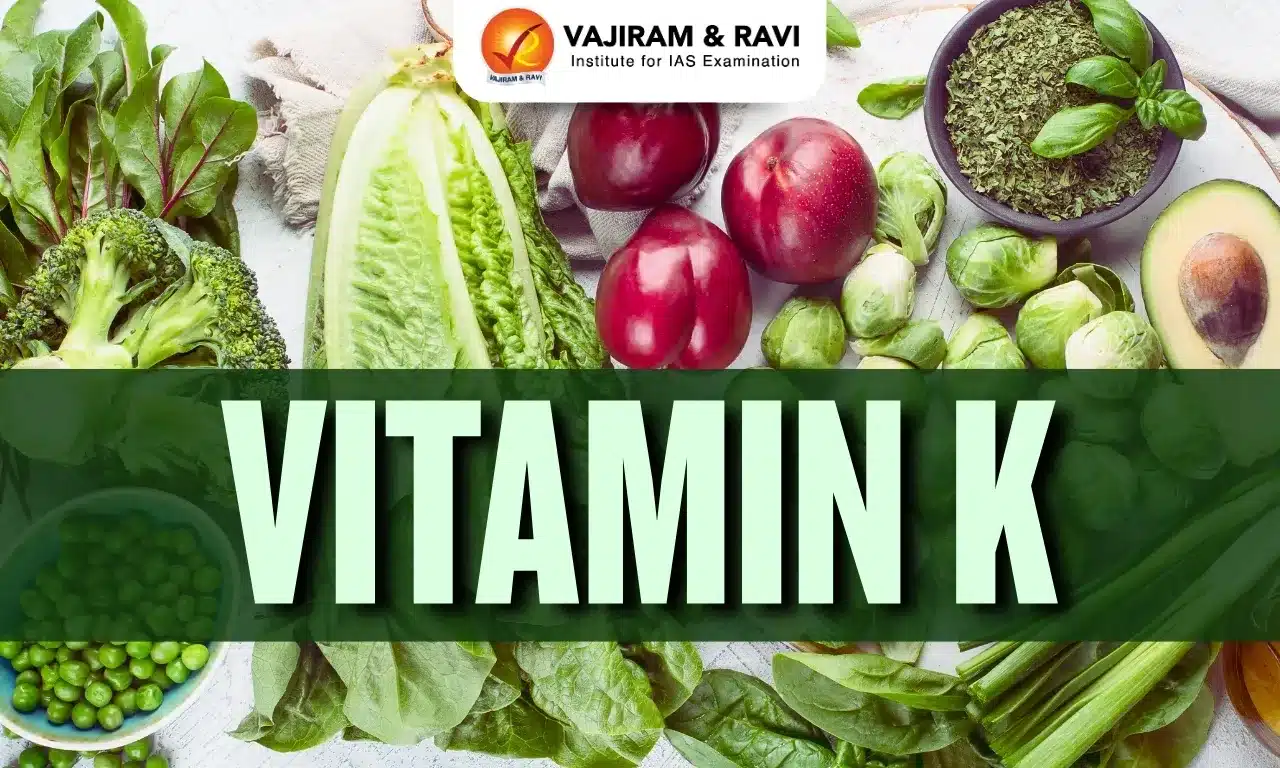
- The main type is called phylloquinone (Vitamin K1), found in green leafy vegetables like collard greens, kale, and spinach.
- The other type, menaquinones (Vitamin K2), are found in some animal foods and fermented foods.
- Menaquinones can also be produced by bacteria in the human body.
- Function:
- Vitamin K is known as the clotting vitamin.
- The body needs vitamin K to make certain proteins in the liver that cause blood to clot. These proteins are called clotting factors.
- Prothrombin is a vitamin K-dependent protein directly involved with blood clotting.
- Vitamin K helps maintain strong bones in older adults. Osteocalcin is a protein that requires vitamin K to produce healthy bone tissue.
- Researchers suggest that this vitamin has other benefits too, such as easing morning sickness and protecting cognitive functions, including thinking, memory, learning, and organizing skills.
- It may also help protect heart health.
- Your body stores vitamin K in the liver and other body tissues, including the brain, heart, pancreas, and bone.
- It is broken down very quickly and excreted in urine or stool.
- Because of this, it rarely reaches toxic levels in the body even with high intakes, as may sometimes occur with other fat-soluble vitamins.
- Vitamin K deficiency in adults is rare but may occur in people taking medications that block vitamin K metabolism, such as antibiotics, or in those with conditions that cause malabsorption of food and nutrients.


What is Vitamin K Deficiency Bleeding (VKDB)?
- It is also known as haemorrhagic disease of the newborn.
- This is a bleeding disorder caused in babies when they don’t have enough vitamin K to help their blood to clot.
- Newborns have low levels of vitamin K due to low amounts being transferred across the placenta during pregnancy, low amounts in breast milk, and not having enough gut bacteria to create vitamin K initially.
- The limited amount of blood clotting proteins at birth increases the risk of bleeding in infants if they are not given vitamin K supplements.
- The bleeding can occur anywhere on the inside or outside of the body. When the bleeding occurs inside the body, it can be difficult to notice.
- Commonly, a baby with VKDB will have bleeding into their intestines or into their brain, which can lead to brain damage and even death.
- Infants who do not receive the vitamin K shot at birth can develop VKDB at any time up to 6 months of age.
News: ET

 Last updated on Nov, 2026
→ UPSC 2027 Notification will be released on 13 January 2027 at upsconline.nic.in.
→ Check Nobel Prize 2026 Winners List here.
→ Download PIB PRiSM Monthly Magazine 2026 here.
→ Check UPSC Monthly Current Affairs Magazine The Recitals here.
→ Check out the latest UPSC Syllabus here.
→ Download UPSC Model Answers for Mains 2026
→ UPSC Mains Question Paper 2026 is out now for Essay & GS Paper 1, 2, 3 & 4.
→ UPSC Calendar 2027 has been released.
→ Enroll in Vajiram & Ravi’s UPSC Mains Test Series 2027 for structured answer writing practice, expert evaluation, and exam-oriented feedback.
→ Join Vajiram & Ravi’s UPSC Mentorship Program 2027 for personalized guidance, strategy planning, and one-to-one support from experienced mentors.
→ Go through the UPSC Mains Previous Year Papers to enhance your preparation.
→ UPSC has released UPSC Toppers List 2025 with the Civil Services final result on its official website.
→ Also check Best UPSC Coaching in India
Vitamin K FAQs
Q1. What type of vitamin is Vitamin K?+
Q2. What are the two main forms of Vitamin K?+
Q3. Why is Vitamin K commonly known as the clotting vitamin?+
Q4. In which organs and tissues does the body store Vitamin K?+
Q5. Is Vitamin K deficiency common in adults?+
Tags: prelims pointers upsc current affairs upsc prelims current affairs








