About Global Greenhouse Gas Watch (GGGW):
- It is a new greenhouse gas (GHG) monitoring initiative of the World Meteorological Organisation (WMO).
- GGGW will fill critical information gaps, providing an integrated, operational framework under all space-based and surface-based observing systems under one roof, along with modelling and data assimilation capabilities.
- It will build on WMO’s experience in coordinating international collaboration in predicting the weather and analysing climate on long-standing activities in greenhouse gas monitoring and research under the guidance of the Global Atmosphere Watch, established in 1989.
- GGW predicts a top-down approach to the flux evaluation, which builds on existing capabilities in surface- and space-based observations and modelling, ensuring the timely exchange of all observations and data.
- The GGGW will consist of four main components:
- Comprehensive, sustained, global surface- and satellite-based observations of CO2, methane, and nitrous oxide concentrations, partial column amounts, total column amounts, vertical profiles, and fluxes supporting oceanic, meteorological, and terrestrial variables, internationally exchanged as rapidly as possible.
- Prior estimates of the GHG emissions based on the activity data and process-based models.
- Global high-resolution Earth system models representing GHG cycles.
- Data assimilation systems combining the observations with model calculations to generate products of higher accuracy.
Key facts about World Meteorological Organisation (WMO):
- It is a specialized agency of the United Nations (UN).
- It is the UN system’s authoritative voice on the state and behavior of the Earth’s atmosphere, its interaction with the oceans, the climate it produces, and the resulting distribution of water resources.
- It originated from the International Meteorological Organization (IMO), which was founded in 1873.
- Established in 1950, WMO became the specialized agency of the UN for meteorology (weather and climate), operational hydrology and related geophysical sciences.
- Headquarters: Geneva, Switzerland.
- Currently it has a membership of 187 countries.
- Governance Structure:
- Its supreme body is the World Meteorological Congress, which consists of representatives of all members. It meets at least every four years to set general policy and adopt regulations.
- A 36-member Executive Council meets annually and implements policy.
Q1) What are Greenhouse Gases?
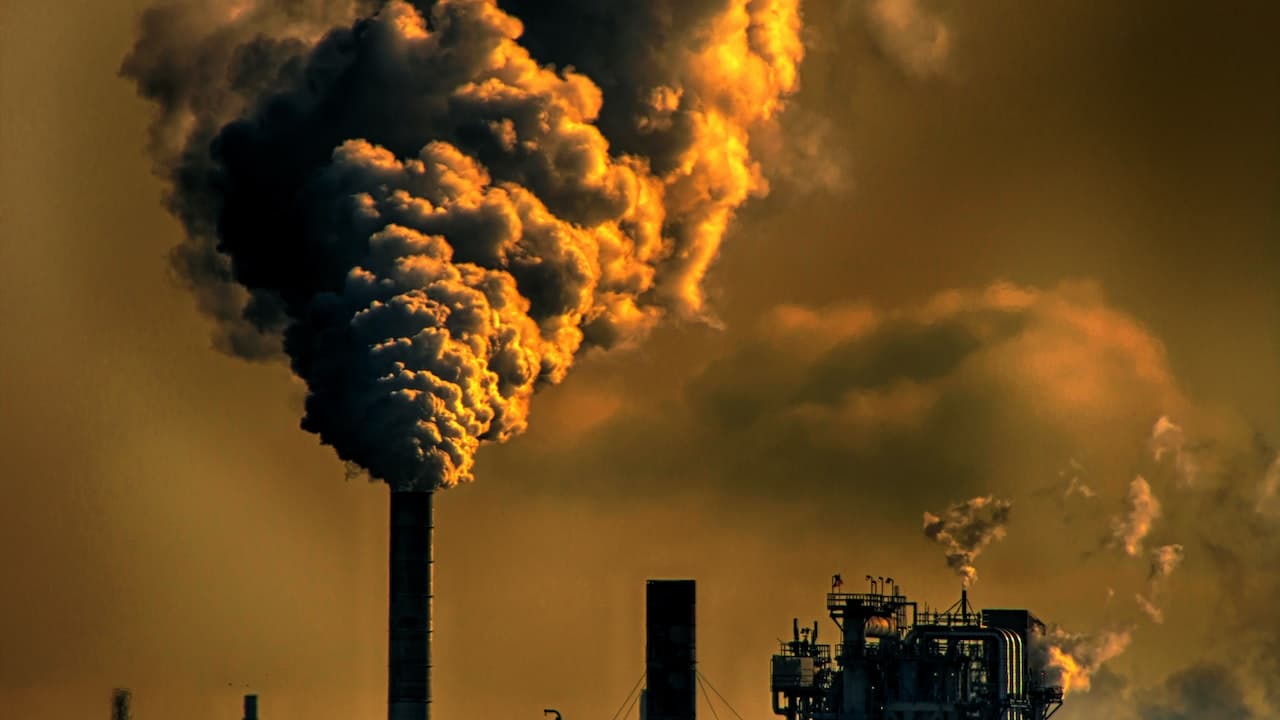
Greenhouse gases are gases in Earth’s atmosphere that trap heat. They let sunlight pass through the atmosphere, but they prevent the heat that the sunlight brings from leaving the atmosphere. The main greenhouse gases are Water vapor, Carbon dioxide, Methane, Ozone, Nitrous oxide and Chlorofluorocarbons
Source: WMO approves a global tracker for greenhouse gas emissions


 Last updated on Oct, 2026
→ UPSC 2027 Notification will be released on 13 January 2027 at upsconline.nic.in.
→ Asian Games 2026 are being held in Aichi-Nagoya, Japan, from 19 September to 4 October.
→ Check Nobel Prize 2026 Winners List here.
→ Download PIB PRiSM Monthly Magazine 2026 here.
→ Check UPSC Monthly Current Affairs Magazine The Recitals here.
→ Check out the latest UPSC Syllabus here.
→ Download UPSC Model Answers for Mains 2026
→ UPSC Mains Question Paper 2026 is out now for Essay & GS Paper 1, 2, 3 & 4.
→ UPSC Calendar 2027 has been released.
→ Enroll in Vajiram & Ravi’s UPSC Mains Test Series 2027 for structured answer writing practice, expert evaluation, and exam-oriented feedback.
→ Join Vajiram & Ravi’s UPSC Mentorship Program 2027 for personalized guidance, strategy planning, and one-to-one support from experienced mentors.
→ Go through the UPSC Mains Previous Year Papers to enhance your preparation.
→ UPSC has released UPSC Toppers List 2025 with the Civil Services final result on its official website.
→ Also check Best UPSC Coaching in India