


About Hygroelectricity:
- Hygroelectricity is the generation of electricity from the humidity of the air.
- It is a type of renewable energy that has the potential to be a major source of power in the future.
- How it works?
- The key to harvesting electricity from humid air lies in a tiny device comprising two electrodes and a thin layer of material filled with nanopores.
- These nanopores, each less than 100 nanometers in diameter, allow water molecules from the air to pass through the device.
- As these molecules move from an upper chamber to a lower chamber, they interact with the edges of the nanopores, leading to a buildup of electric charge imbalances between the chambers.
- This process effectively transforms the device into a miniature battery, generating continuous electricity.
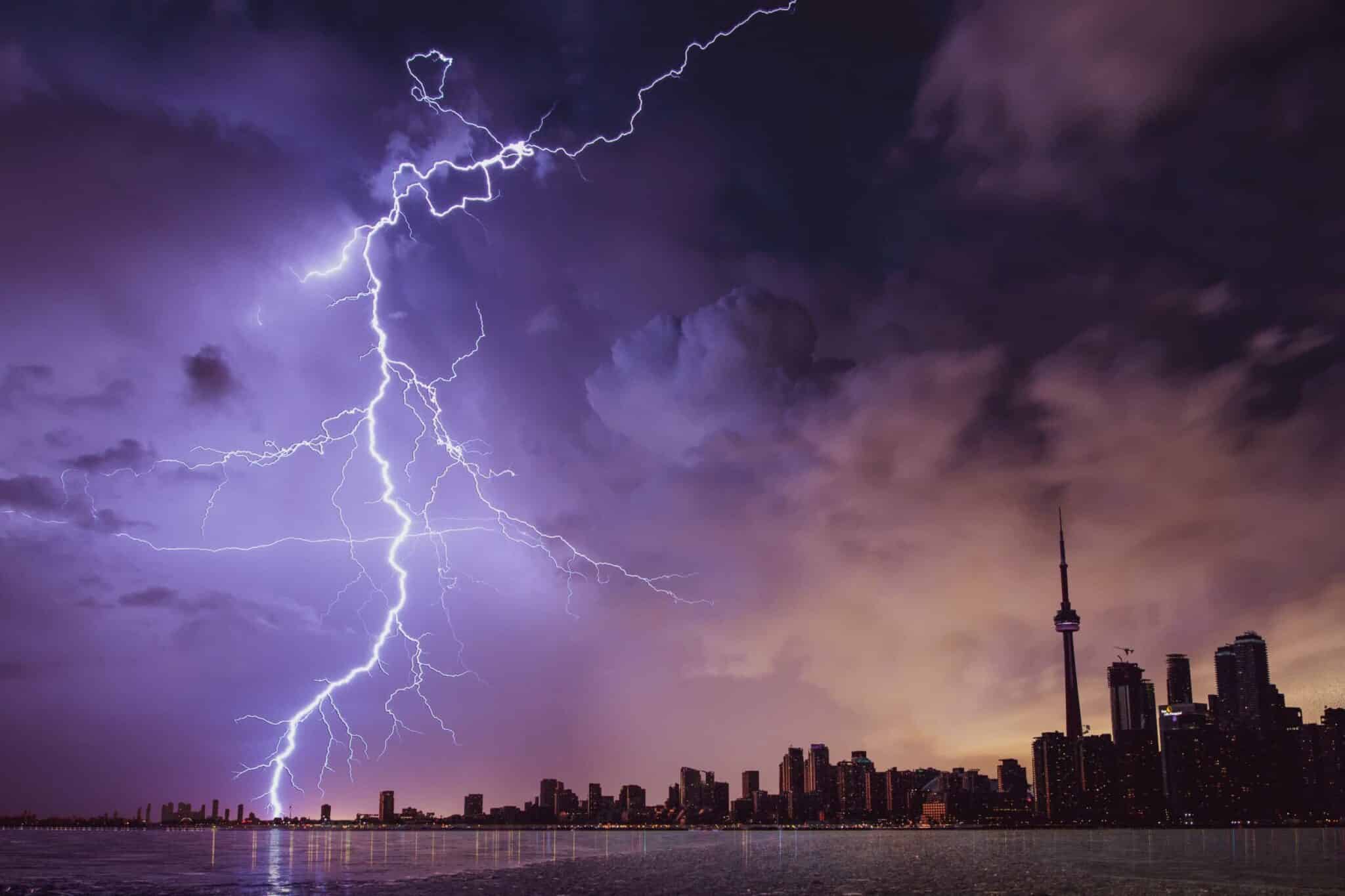
- Just as clouds create electrical charges and give rise to lightning bolts during storms, this revolutionary device converts air humidity into usable electricity.
- Advantage of Hygroelectricity: Unlike other renewable energy sources such as solar and wind, air humidity is continuously available, making it a sustainable reservoir of energy.
- Challenges:
- Currently, the fingernail-sized device can only produce electricity equivalent to a fraction of a volt.
- Scaling up the technology to meet practical energy demands is a significant hurdle.
What is an electrode?
- An electrode is a solid conductor that conducts electricity to and from an electrolyte, which is an electrically conductive solution or molten salt.
- Electrodes are used in many different applications, including batteries, electrochemical cells, and electroplating.
- There are two main types of electrodes: anode and cathode.
- The anode is the electrode where oxidation occurs, and the cathode is the electrode where reduction occurs. Oxidation is the loss of electrons, and reduction is the gain of electrons.
- In a battery, the anode is the negative terminal, and the cathode is the positive terminal.
- When the battery is connected to a circuit, electrons flow from the anode to the cathode. This flow of electrons creates an electric current.
What are nanopores?
- Nanopores are tiny holes that are typically on the order of a few nanometers in diameter.
- They can be found in a variety of materials, including biological cells, synthetic membranes, and even graphene.
Q1) How are clouds formed?
Clouds are formed when water vapor in the air condenses on tiny particles, such as dust, salt, or smoke. These particles are called condensation nuclei. When the air is saturated, meaning it can’t hold any more water vapor, the water vapor condenses on the condensation nuclei and forms tiny droplets of water. These droplets are so small that they are able to stay suspended in the air.
Source: Scientists unveil method to power devices using air humidity!


 Last updated on Oct, 2026
→ UPSC 2027 Notification will be released on 13 January 2027 at upsconline.nic.in.
→ Check Nobel Prize 2026 Winners List here.
→ Download PIB PRiSM Monthly Magazine 2026 here.
→ Check UPSC Monthly Current Affairs Magazine The Recitals here.
→ Check out the latest UPSC Syllabus here.
→ Download UPSC Model Answers for Mains 2026
→ UPSC Mains Question Paper 2026 is out now for Essay & GS Paper 1, 2, 3 & 4.
→ UPSC Calendar 2027 has been released.
→ Enroll in Vajiram & Ravi’s UPSC Mains Test Series 2027 for structured answer writing practice, expert evaluation, and exam-oriented feedback.
→ Join Vajiram & Ravi’s UPSC Mentorship Program 2027 for personalized guidance, strategy planning, and one-to-one support from experienced mentors.
→ Go through the UPSC Mains Previous Year Papers to enhance your preparation.
→ UPSC has released UPSC Toppers List 2025 with the Civil Services final result on its official website.
→ Also check Best UPSC Coaching in India








