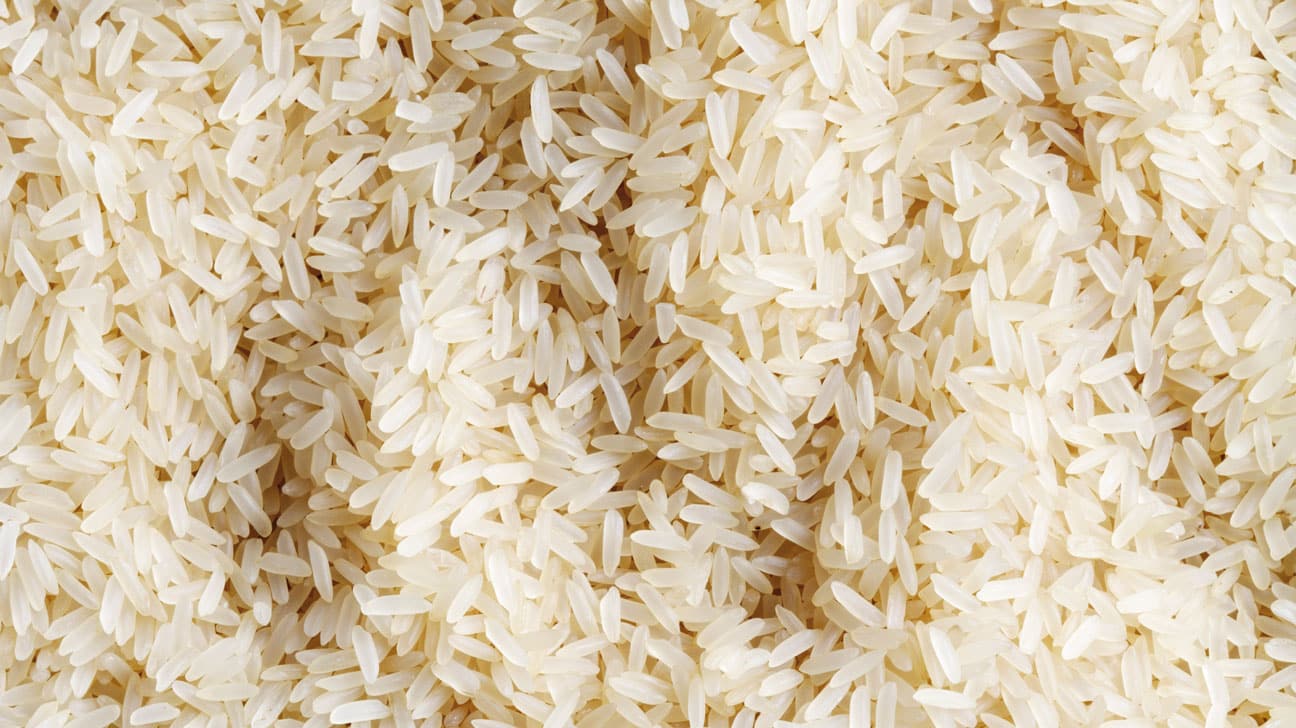
About Parboiled Rice:
- Parboiled rice, also called converted rice, is partially precooked in its inedible husk before being processed for eating.
- It happens before rice is milled, that is before the inedible outer husk is removed to yield brown rice but before brown rice is refined to make white rice.
- In some Asian and African countries, people have been parboiling rice since ancient times as it makes the husks easier to remove by hand.
- The main steps of parboiling are
- Soaking. Raw, unhusked rice, also called paddy rice, is soaked in warm water to increase the moisture content.
- Steaming. The rice is steamed until the starch converts into a gel. The heat of this process also helps kill bacteria and other microbes.
- Drying. The rice is slowly dried to reduce the moisture content so that it can be milled.
- Husking: The dried, partially cooked rice is then milled to remove the outer husk. The result is parboiled rice.
- Parboiling changes the color of rice to a light yellow or amber, which differs from the pale, white color of regular rice.
- During parboiling, some water-soluble nutrients move from the bran of the rice kernel into the starchy endosperm. This minimizes some of the nutrient loss that normally happens during refining when making white rice.
- Benefits:
- Parboiling rice improves its texture, increases its shelf life, and provides health benefits.
- Parboiled rice is higher in fiber and protein than white rice.
- Parboiling reduces the stickiness of rice so it yields fluffy and separate kernels once cooked.
- Additionally, parboiling inactivates the enzymes that break down the fat in rice. This helps prevent rancidity and off-flavors, increasing shelf-life
- Notably, parboiled rice has significantly more thiamine and niacin than white rice. These nutrients are important for energy production.
- Potential downsides:
- It’s less nutritious than brown rice.
- It takes a little longer to cook.
Q1) What is starch?
Starch is a carbohydrate, specifically a polysaccharide, composed of glucose molecules linked together through chemical bonds. It is one of the most abundant carbohy.
Source: Govt imposes 20% export duty on parboiled rice; MEP on on basmati coming


 Last updated on Oct, 2026
→ UPSC 2027 Notification will be released on 13 January 2027 at upsconline.nic.in.
→ Asian Games 2026 are being held in Aichi-Nagoya, Japan, from 19 September to 4 October.
→ Check Nobel Prize 2026 Winners List here.
→ Download PIB PRiSM Monthly Magazine 2026 here.
→ Check UPSC Monthly Current Affairs Magazine The Recitals here.
→ Check out the latest UPSC Syllabus here.
→ Download UPSC Model Answers for Mains 2026
→ UPSC Mains Question Paper 2026 is out now for Essay & GS Paper 1, 2, 3 & 4.
→ UPSC Calendar 2027 has been released.
→ Enroll in Vajiram & Ravi’s UPSC Mains Test Series 2027 for structured answer writing practice, expert evaluation, and exam-oriented feedback.
→ Join Vajiram & Ravi’s UPSC Mentorship Program 2027 for personalized guidance, strategy planning, and one-to-one support from experienced mentors.
→ Go through the UPSC Mains Previous Year Papers to enhance your preparation.
→ UPSC has released UPSC Toppers List 2025 with the Civil Services final result on its official website.
→ Also check Best UPSC Coaching in India