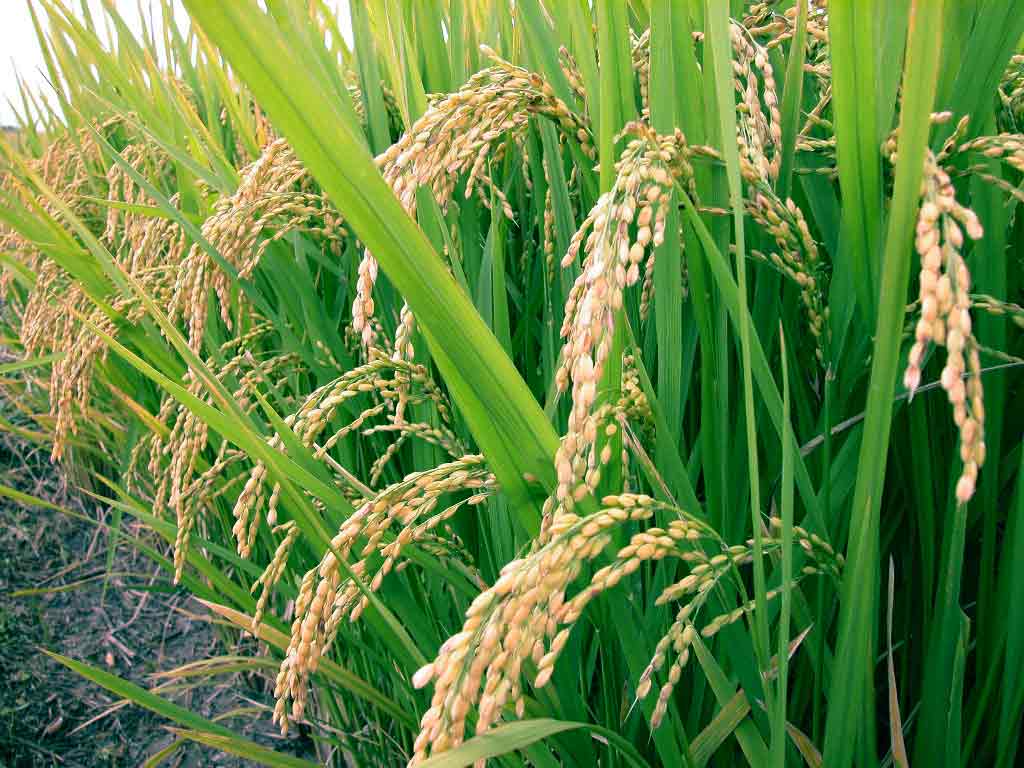
About PUSA-44
- It is a paddy variety which was developed in 1993 by the Indian Council of Agricultural Research (ICAR).
- By the end of 2010s, it had gained widespread popularity among farmers across the Punjab, covering approximately 70 to 80% of the area under paddy cultivation.
- Farmers claim that PUSA-44 yields nearly 85 to 100 mann (34 to 40 quintals) per acre, while other varieties’ yield average is 28 to 30 quintals per acre.
- Concerns
- It is a long-duration variety, taking around 160 days to mature.
- This is around 35 to 40 days more than other varieties, requiring 5-6 extra cycles of irrigation.
- With Punjab facing severe groundwater depletion and the availability of short-duration paddy varieties, the government aims to conserve one month of irrigation water by banning the variety.
- Moreover, this variety is also known to exacerbate the long-running issue of stubble burning in the state.
- This variety generates around 2 per cent more stubble than short varieties, which becomes a significant concern when cultivated on a large scale.
Key facts about the ICAR
- It is an autonomous organisation under the Department of Agricultural Research and Education (DARE), Ministry of Agriculture and Farmers Welfare , Government of India.
- It was formerly known as the Imperial Council of Agricultural Research.
- It was established on 16 July 1929 as a registered society under the Societies Registration Act,1860 in pursuance of the report of the Royal Commission on Agriculture.
- The Council is the apex body for co-ordinating, guiding and managing research and education in agriculture including horticulture, fisheries and animal sciences in the entire country.
- With 113 ICAR institutes and 71 agricultural universities spread across the country this is one of the largest national agricultural systems in the world.
- Headquarters: New Delhi.
Q1: What is Stubble burning?
It is also known as crop residue burning or agricultural residue burning, refers to the practice of intentionally setting fire to the leftover plant material (crop residues) in agricultural fields after harvesting crops like rice, wheat, maize, and sugarcane. This practice is prevalent in many parts of the world, including India, parts of North America, and other agricultural regions.
Source: Why Punjab wants to ban the cultivation of PUSA-44 paddy variety


 Last updated on Oct, 2026
→ UPSC 2027 Notification will be released on 13 January 2027 at upsconline.nic.in.
→ Check Nobel Prize 2026 Winners List here.
→ Download PIB PRiSM Monthly Magazine 2026 here.
→ Check UPSC Monthly Current Affairs Magazine The Recitals here.
→ Check out the latest UPSC Syllabus here.
→ Download UPSC Model Answers for Mains 2026
→ UPSC Mains Question Paper 2026 is out now for Essay & GS Paper 1, 2, 3 & 4.
→ UPSC Calendar 2027 has been released.
→ Enroll in Vajiram & Ravi’s UPSC Mains Test Series 2027 for structured answer writing practice, expert evaluation, and exam-oriented feedback.
→ Join Vajiram & Ravi’s UPSC Mentorship Program 2027 for personalized guidance, strategy planning, and one-to-one support from experienced mentors.
→ Go through the UPSC Mains Previous Year Papers to enhance your preparation.
→ UPSC has released UPSC Toppers List 2025 with the Civil Services final result on its official website.
→ Also check Best UPSC Coaching in India