About Moment Magnitude Scale:
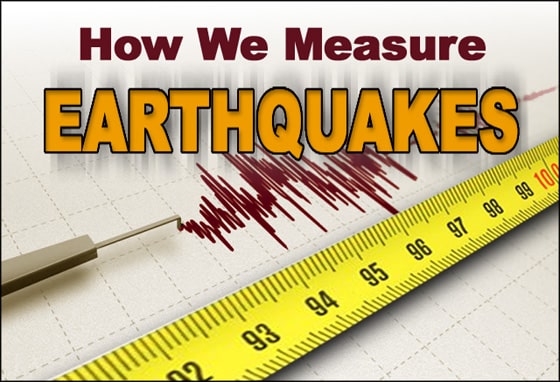
- It is a logarithmic scale that measures the total amount of energy released by an earthquake.
- It is the only scale capable of reliably measuring the magnitudes of the largest, most destructive earthquakes (that is, greater than magnitude 8).
- It was developed in the 1970s by Japanese seismologist Hiroo Kanamori and American seismologist Thomas C. Hanks.
- How is it calculated?
- The moment magnitude scale is based on the total moment release of the earthquake.
- Moment is a product of the distance a fault moved and the force required to move it.
- It is derived from modeling recordings of the earthquake at multiple stations.
- Moment magnitude estimates are about the same as Richter magnitudes for small to large earthquakes. But only the moment magnitude scale is capable of measuring M8 (read “magnitude 8”) and greater events accurately.
What is the Richter scale?
- It was invented in 1935 by Charles F. Richter as a mathematical device to compare the size of earthquakes.
- The Richter scale is used to rate the magnitude of an earthquake, that is, the amount of energy released during an earthquake.
- The Richter scale is a base-10 logarithmic scale, meaning each order of magnitude is 10 times more intensive than the last one.
- It is most effective for regional earthquakes no greater than magnitude 5.
- How is it calculated?
- The Richter scale involves measuring the amplitude (height) of the largest recorded wave at a specific distance from the seismic source.
- Adjustments are included for the variation in the distance between the various seismographs and the epicenter of the earthquakes.
- The Richter scale doesn’t measure quake damage.
Q1) What is a logarithmic scale?
A logarithmic scale is a nonlinear scale often used when analyzing a large range of quantities. Instead of increasing in equal increments, each interval is increased by a factor of the base of the logarithm. Typically, a base ten and base e scale are used.
Source: Turkey-Syria Earthquakes: A Seismologist Explains What Happened


 Last updated on Oct, 2026
→ UPSC 2027 Notification will be released on 13 January 2027 at upsconline.nic.in.
→ Check Nobel Prize 2026 Winners List here.
→ Download PIB PRiSM Monthly Magazine 2026 here.
→ Check UPSC Monthly Current Affairs Magazine The Recitals here.
→ Check out the latest UPSC Syllabus here.
→ Download UPSC Model Answers for Mains 2026
→ UPSC Mains Question Paper 2026 is out now for Essay & GS Paper 1, 2, 3 & 4.
→ UPSC Calendar 2027 has been released.
→ Enroll in Vajiram & Ravi’s UPSC Mains Test Series 2027 for structured answer writing practice, expert evaluation, and exam-oriented feedback.
→ Join Vajiram & Ravi’s UPSC Mentorship Program 2027 for personalized guidance, strategy planning, and one-to-one support from experienced mentors.
→ Go through the UPSC Mains Previous Year Papers to enhance your preparation.
→ UPSC has released UPSC Toppers List 2025 with the Civil Services final result on its official website.
→ Also check Best UPSC Coaching in India