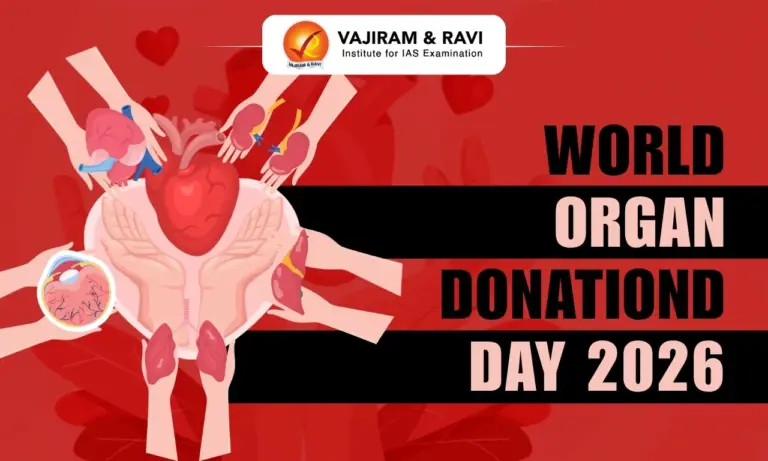
World Organ Donation Day is observed every year on 13 August to raise awareness about organ and tissue donation, encourage voluntary donor pledges, and highlight the life-saving role of organ transplantation. The observance reminds people that a single donor can save multiple lives and seeks to bridge the gap between the growing demand for organs and their limited availability through greater public awareness and ethical donation practices.
About World Organ Donation Day 2026
World Organ Donation Day is a global awareness observance dedicated to promoting voluntary organ and tissue donation and encouraging people to discuss their donation wishes with their families.
- It is observed annually on 13 August across many countries.
- It aims to educate people about the importance of organ donation and transplantation.
- It honours organ donors and their families for giving others a second chance at life.
- It encourages voluntary donor registration and supports ethical organ donation practices.
- Unlike India’s National Organ Donation Day (3 August), it is not an officially designated observance of the United Nations (UN) or the World Health Organization (WHO).
World Organ Donation Day 2026 History
World Organ Donation Day originated as a voluntary awareness initiative of healthcare institutions and transplant organisations to address the widening gap between the demand for donor organs and their availability. With advances in transplantation and growing global support for deceased organ donation, the observance gradually evolved into an annual campaign that encourages donor pledges, recognises the contribution of organ donors and transplant professionals, and promotes public participation in organ donation


World Organ Donation Day 2026 Significance
World Organ Donation Day highlights the importance of organ donation in saving lives and improving the quality of life of patients suffering from end-stage organ failure.
- Raises awareness about the critical shortage of donor organs worldwide.
- Encourages voluntary organ donor registration and informed family consent.
- Promotes deceased organ donation, which has the potential to save multiple lives.
- Helps dispel myths and misconceptions surrounding organ donation.
- Encourages ethical, transparent and equitable organ transplantation systems.
- Supports governments and healthcare institutions in strengthening organ donation programmes.
What is Organ Donation?
Organ donation is the voluntary process of donating healthy organs or tissues from a living or deceased person for transplantation into a patient suffering from organ failure or severe tissue damage.
Organ transplantation is often the only effective treatment for patients with irreversible failure of organs such as the heart, liver, kidneys or lungs. Besides saving lives, tissue donation helps restore vision, repair damaged tissues and improve the quality of life of recipients.
Types of Organ Donation
Organ donation is broadly classified into three categories.
- Living Organ Donation: A healthy individual voluntarily donates one kidney or part of the liver and, in selected cases, part of the lung, pancreas or intestine.
- Deceased Organ Donation: Organs are donated after a person is declared brain-stem dead in accordance with prescribed medical and legal procedures. One deceased donor can potentially save several lives through transplantation of multiple organs.
- Tissue Donation: Tissues can be donated after death even when organ donation is not possible. Common tissues donated include corneas, skin, bones, tendons and heart valves.
Organs and Tissues That Can Be Donated
Several organs and tissues can be transplanted to save or improve lives.
Organs: Heart, Kidneys, Liver, Lungs, Pancreas, Intestine.
Tissues: Corneas, Skin, Bone, Tendons, Heart valves
Organ Donation in India
- India performed over 20,000 organ transplants in 2025, crossing the milestone for the first time and marking nearly a four-fold increase from fewer than 5,000 transplants in 2013.
- According to NOTTO, around 20,019 organ transplants were performed in 2025.
- As of 3 March 2026, nearly 89,839 patients were on the national waiting list for major organ transplants, highlighting the persistent gap between demand and supply.
- India has recorded more than 5 lakh organ donation pledges, reflecting growing public awareness and participation in voluntary donation.
Despite this progress, deceased donor organs account for only around 18% of all organ transplants, indicating India’s continued dependence on living donors.
India has established a comprehensive legal and institutional framework to promote ethical organ donation, regulate transplantation and prevent commercial exploitation while ensuring equitable access to transplant services.
Legal Framework
The Transplantation of Human Organs and Tissues Act (THOTA), 1994 is the principal legislation governing organ donation and transplantation in India.
- It regulates the removal, storage and transplantation of human organs and tissues for therapeutic purposes.
- It legally recognises brain-stem death, enabling deceased organ donation.
- It prohibits the commercial trade of human organs and prescribes penalties for organ trafficking.
- It provides procedures for living and deceased organ donation based on informed consent.
- The Transplantation of Human Organs and Tissues (Amendment) Act, 2011 expanded the law to include tissues, strengthened safeguards against commercialisation and simplified organ donation procedures.
- The Transplantation of Human Organs and Tissues Rules, 2014 prescribe operational guidelines for hospitals, transplant centres and authorisation committees
Institutional Framework
India follows a three-tier institutional mechanism for coordinating organ donation and transplantation.
- National Organ and Tissue Transplant Organisation (NOTTO) functions as the apex body under the Ministry of Health and Family Welfare for policy coordination, the national waiting list, organ allocation and awareness.
- Regional Organ and Tissue Transplant Organisations (ROTTOs) coordinate organ sharing among groups of States and Union Territories.
- State Organ and Tissue Transplant Organisations (SOTTOs) manage organ donation, allocation and awareness programmes within individual States.
- India also observes National Organ Donation Day on 3 August to promote awareness and recognise the contribution of organ donors.
National Organ Transplant Programme (NOTP)
The Government of India implements the National Organ Transplant Programme (NOTP) to strengthen organ donation and transplantation services across the country.
Its major objectives include:
- Strengthening transplant infrastructure in government hospitals.
- Establishing NOTTO, ROTTOs and SOTTOs.
- Maintaining a national waiting list and transparent organ allocation system.
- Promoting deceased organ donation through awareness campaigns.
- Training transplant coordinators and healthcare professionals.
- Supporting retrieval centres and organ preservation facilities.
Challenges
Despite significant progress, India continues to face major structural and social challenges.
- Huge demand-supply gap: Nearly 90,000 patients are waiting for organ transplants, while only a fraction receive organs each year.
- Low deceased organ donation: Most transplants rely on living donors, whereas deceased donation remains underutilised.
- Limited awareness of brain-stem death: Many families are unfamiliar with the legal concept of brain-stem death, resulting in refusal to donate.
- Family consent barriers: Even when individuals pledge their organs, transplantation often depends on family consent after death.
- Regional disparities: States such as Tamil Nadu, Telangana, Maharashtra, Karnataka and Gujarat perform substantially better than many other States due to stronger institutional networks.
- Infrastructure constraints: Many districts lack organ retrieval centres, transplant coordinators and intensive care facilities.
- Data reporting gaps: In 2025, 217 of 804 registered transplant hospitals failed to upload mandatory transplant data to the National Registry, affecting monitoring and transparency.
- Illegal organ trafficking: Preventing commercial exploitation and ensuring ethical transplantation remain continuing regulatory challenges.
Way Forward
- Increase deceased organ donation by improving awareness about brain-stem death.
- Integrate organ donation counselling into intensive care units of major hospitals.
- Strengthen NOTTO, ROTTOs and SOTTOs through greater financial and technical support.
- Improve digital integration of transplant waiting lists and organ allocation systems.
- Ensure timely reporting of transplant data by all registered hospitals.
- Expand organ retrieval centres and green corridor mechanisms for rapid organ transport.
- Encourage schools, colleges and workplaces to conduct voluntary donor pledge campaigns.
- Continue public awareness initiatives through the National Organ Transplant Programme (NOTP) and nationwide campaign.

 Last updated on Oct, 2026
→ UPSC 2027 Notification will be released on 13 January 2027 at upsconline.nic.in.
→ Check Nobel Prize 2026 Winners List here.
→ Download PIB PRiSM Monthly Magazine 2026 here.
→ Check UPSC Monthly Current Affairs Magazine The Recitals here.
→ Check out the latest UPSC Syllabus here.
→ Download UPSC Model Answers for Mains 2026
→ UPSC Mains Question Paper 2026 is out now for Essay & GS Paper 1, 2, 3 & 4.
→ UPSC Calendar 2027 has been released.
→ Enroll in Vajiram & Ravi’s UPSC Mains Test Series 2027 for structured answer writing practice, expert evaluation, and exam-oriented feedback.
→ Join Vajiram & Ravi’s UPSC Mentorship Program 2027 for personalized guidance, strategy planning, and one-to-one support from experienced mentors.
→ Go through the UPSC Mains Previous Year Papers to enhance your preparation.
→ UPSC has released UPSC Toppers List 2025 with the Civil Services final result on its official website.
→ Also check Best UPSC Coaching in India
World Organ Donation Day FAQs
Q1. When is World Organ Donation Day observed?+
Q2. What is the objective of World Organ Donation Day?+
Q3. What is the main law governing organ donation in India?+
Q4. Which organisation is responsible for organ donation in India?+
Q5. Why is deceased organ donation important?+