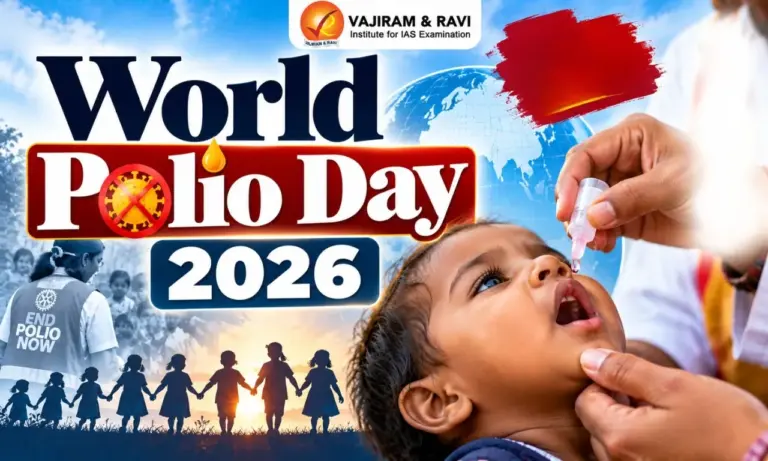
World Polio Day 2026 will be observed on October 24, 2026, to spread awareness about polio prevention and the importance of vaccination. The theme for this year is “Together, We End Polio”, which highlights the need for global cooperation to eliminate polio completely. The day recognises the efforts of healthcare workers, governments and international organisations working to protect children from this preventable disease.
World Polio Day 2026 Key Details
The key highlights related to the World Polio Day 2026 have been discussed below.
- Date: October 24, 2026
- Theme: Together, We End Polio
- Main Objective: To eliminate polio through vaccination, public awareness and international cooperation.
- Major Organisations: World Health Organization (WHO), Rotary International, UNICEF and the Global Polio Eradication Initiative (GPEI).
- India’s Status: India was certified polio-free in 2014.
- Global Status: Afghanistan and Pakistan remain the two countries where wild poliovirus is endemic.
- Campaign Focus: Vaccinating every child, preventing the spread of poliovirus and addressing misinformation about vaccines.
What Is World Polio Day?
World Polio Day is observed every year on October 24 to raise awareness about poliomyelitis, commonly known as polio. It highlights the importance of vaccination and the need to protect children from this highly infectious disease.
Polio mainly affects children under five years of age. It can damage the nervous system and cause permanent paralysis. In severe cases, it can also affect the muscles used for breathing.
There is no specific cure for polio, but vaccination can prevent the disease. World Polio Day encourages parents to vaccinate their children and supports global efforts to eliminate the virus.


World Polio Day 2026 Theme
The theme of World Polio Day 2026 is “Together, We End Polio.” The theme highlights the importance of working together to achieve a polio-free world. Although many countries have eliminated polio, the virus continues to circulate in some regions. Therefore, vaccination and disease surveillance must continue.
Why Is World Polio Day Celebrated?
World Polio Day is celebrated to maintain awareness about polio and encourage people to participate in vaccination programmes. It also recognises the efforts of health workers and organisations working to eliminate the disease.
The major objectives of the day include:
- Promoting Vaccination: Encouraging parents to ensure that their children receive all recommended polio vaccine doses.
- Preventing Paralysis: Spreading awareness about the serious complications caused by poliovirus.
- Supporting Global Eradication: Helping stop the transmission of wild poliovirus worldwide.
- Fighting Misinformation: Addressing false claims and concerns about vaccines.
- Recognising Health Workers: Appreciating vaccinators and volunteers who reach children in difficult conditions.
- Strengthening Surveillance: Identifying infections early and taking steps to prevent outbreaks.
What Is Polio?
Polio, or poliomyelitis, is a highly infectious disease caused by the poliovirus. It mainly affects children under five years of age, but unvaccinated people of any age can also become infected.
The virus usually spreads through the faecal-oral route, often through contaminated food or water. It multiplies in the intestine and, in some cases, attacks the nervous system. This can cause muscle weakness and permanent paralysis.
Symptoms of Polio
Many people infected with poliovirus do not develop noticeable symptoms. However, some people may experience:
- Fever: A rise in body temperature.
- Headache: Pain or discomfort in the head.
- Fatigue: Unusual tiredness or weakness.
- Muscle Pain: Pain in the muscles, back or neck.
- Stiffness: Stiffness or discomfort in the neck and limbs.
- Paralysis: Severe infection can cause permanent muscle weakness or paralysis.
- Breathing Problems: In serious cases, the virus can affect the muscles needed for breathing.
There is no specific cure for polio. Treatment focuses on managing symptoms and complications. Vaccination is the most effective way to prevent the disease.
Global Status of Polio in 2026
The world has made significant progress in reducing polio cases through vaccination campaigns and international cooperation. However, wild poliovirus has not been eliminated worldwide.
- Afghanistan and Pakistan: These are the only two countries where wild poliovirus remains endemic.
- Cross-Border Spread: Movement of people between countries can contribute to the spread of the virus.
- Low Vaccination Coverage: Children who miss their vaccine doses remain at risk of infection.
- Conflict and Insecurity: Political instability and security problems can prevent vaccination teams from reaching children.
- Vaccine-Derived Poliovirus: In communities with low vaccination coverage, weakened virus strains used in oral vaccines can circulate and change over time, sometimes causing outbreaks.
- Need for Surveillance: Regular testing and monitoring help identify the virus and prevent its spread.
The Global Polio Eradication Initiative (GPEI) works with governments and international organisations to conduct vaccination campaigns, monitor infections and stop poliovirus transmission.
India’s Polio-Free Status
India was certified polio-free on March 27, 2014, by the World Health Organization’s South-East Asia Regional Certification Commission. This achievement was the result of years of vaccination campaigns, public awareness and cooperation between health workers, governments and communities.
India continues to conduct routine immunisation and supplementary vaccination campaigns to protect children from polio.
Important measures that helped India achieve polio-free status include:
- Pulse Polio Programme: Special vaccination campaigns helped reach children across the country.
- Routine Immunisation: Polio vaccines are provided to children through the national immunisation programme.
- National Immunisation Days: Campaigns help vaccinate children who may have missed routine doses.
- Disease Surveillance: Healthcare workers monitor suspected cases of acute flaccid paralysis to identify possible poliovirus infections.
- Community Participation: Parents, volunteers and local authorities help improve vaccination coverage.
- Cross-Border Monitoring: Surveillance and vaccination activities help reduce the risk of the virus entering India from affected regions.
Polio Vaccination in India
Vaccination is the most effective way to prevent polio. India uses two main types of polio vaccines.
1. Oral Polio Vaccine (OPV)
The Oral Polio Vaccine (OPV) is given as drops through the mouth. It is widely used during supplementary immunisation campaigns, including the Pulse Polio Programme.
2. Inactivated Polio Vaccine (IPV)
The Inactivated Polio Vaccine (IPV) is given by injection. It contains inactivated poliovirus and helps the body develop protection against the disease.
Both vaccines play an important role in preventing polio. Parents should follow the recommended immunisation schedule and the advice of healthcare professionals.
Role of International Organisations in Polio Eradication
International organisations play an important role in coordinating vaccination campaigns, providing technical support and spreading awareness about polio.
- World Health Organization (WHO): Provides technical guidance, supports disease surveillance and coordinates global health efforts.
- Rotary International: Supports vaccination campaigns, raises funds and spreads awareness about polio prevention.
- UNICEF: Helps provide vaccines, supports community awareness and works to reach children who have limited access to healthcare.
- Global Polio Eradication Initiative (GPEI): Coordinates international efforts to eliminate polio in cooperation with governments and partner organisations.
- National Governments: Implement vaccination programmes, strengthen healthcare systems and monitor possible infections.
- Frontline Health Workers: Administer vaccines, educate families and identify children who have missed vaccination.
Challenges in Eradicating Polio
Despite considerable progress, several challenges continue to affect global polio eradication efforts.
- Vaccine Hesitancy: Fear and misinformation about vaccines can prevent parents from vaccinating their children.
- Political Instability: Conflict and insecurity can make it difficult for health workers to reach certain areas.
- Missed Children: Children in remote locations and underserved communities may not receive all recommended doses.
- Cross-Border Transmission: Poliovirus can spread from one country to another through population movement.
- Funding Shortages: Vaccination campaigns and surveillance systems require continuous financial support.
- Weak Surveillance: Delays in identifying infections can allow the virus to spread before action is taken.
Overcoming these challenges requires strong vaccination programmes, public awareness, reliable healthcare services and international cooperation.
How Can We Help End Polio?
Individuals and communities can contribute to the global fight against polio through simple actions.
- Vaccinate Children: Ensure that children receive all recommended polio vaccine doses.
- Participate in Campaigns: Support government-led Pulse Polio and immunisation programmes.
- Spread Awareness: Share accurate information about polio prevention and vaccination.
- Avoid Misinformation: Do not spread unverified claims about vaccines.
- Support Health Workers: Help vaccination teams reach children in underserved communities.
- Promote Cooperation: Encourage families and communities to participate in public health initiatives.
The message of “Together, We End Polio” highlights that every vaccination, awareness campaign and community effort brings the world closer to eliminating polio.

 Last updated on Oct, 2026
→ UPSC 2027 Notification will be released on 13 January 2027 at upsconline.nic.in.
→ Check Nobel Prize 2026 Winners List here.
→ Download PIB PRiSM Monthly Magazine 2026 here.
→ Check UPSC Monthly Current Affairs Magazine The Recitals here.
→ Check out the latest UPSC Syllabus here.
→ Download UPSC Model Answers for Mains 2026
→ UPSC Mains Question Paper 2026 is out now for Essay & GS Paper 1, 2, 3 & 4.
→ UPSC Calendar 2027 has been released.
→ Enroll in Vajiram & Ravi’s UPSC Mains Test Series 2027 for structured answer writing practice, expert evaluation, and exam-oriented feedback.
→ Join Vajiram & Ravi’s UPSC Mentorship Program 2027 for personalized guidance, strategy planning, and one-to-one support from experienced mentors.
→ Go through the UPSC Mains Previous Year Papers to enhance your preparation.
→ UPSC has released UPSC Toppers List 2025 with the Civil Services final result on its official website.
→ Also check Best UPSC Coaching in India
World Polio Day 2026 FAQs
Q1. When is World Polio Day 2026 observed?+
Q2. What is the theme of World Polio Day 2026?+
Q3. Why is World Polio Day celebrated?+
Q4. What causes polio?+
Q5. Is there a cure for polio?+
Q6. Is India polio-free?+
Q7. Which countries still have endemic wild poliovirus?+
Q8. What are the two main types of polio vaccines?+
Q9. Which organisations work to eradicate polio?+
Q10. What is the main message of World Polio Day 2026?+
Tags: important day important day 2026 important days world polio day world polio day 2026