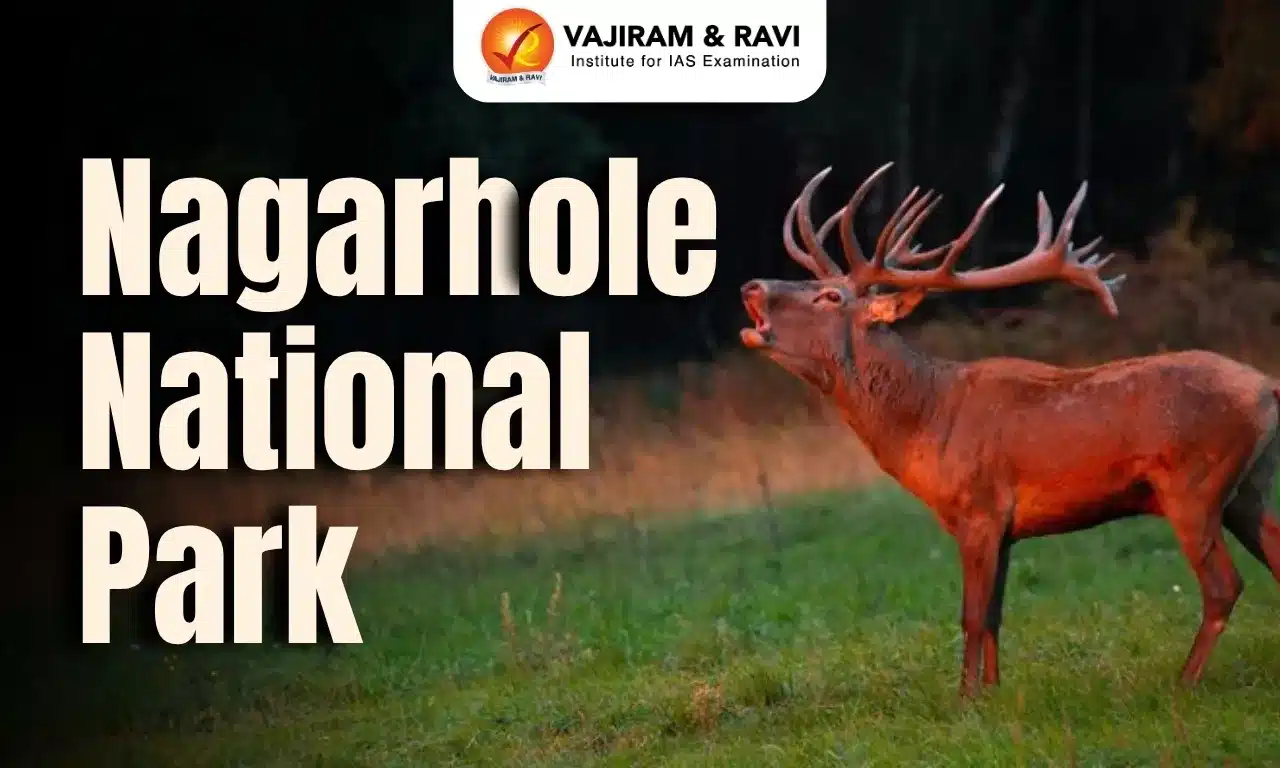
Nagarhole National Park is situated in Kodagu and Mysore districts of Karnataka, is a crucial part of the Nilgiri Biosphere Reserve, India's first biosphere reserve established in 1986. It is located to the northwest of Bandipur National Park and covers a core area of approximately 643 sq. km. The Kabini River and its reservoir act as a natural boundary between Nagarhole and Bandipur National Park. The Nagarhole River flows through the park before merging with the Kabini River. Together with Bandipur National Park, Mudumalai National Park (Tamil Nadu), and Wayanad Wildlife Sanctuary (Kerala), Nagarhole National Park forms Southern India’s largest protected area, spanning over 2183 sq. km.
Nagarhole Tiger Reserve
Nagarhole Tiger Reserve is also known as Rajiv Gandhi National Park which is a well known wildlife sanctuary in Karnataka, India. It is one of the country's premier tiger reserves and an essential part of the Nilgiri Biosphere Reserve. The reserve is home to diverse flora and fauna, with a particularly high density of tigers, making it one of India's top tiger habitats. It also provides habitat to Asian elephants, leopards, sloth bears, dholes (Indian wild dogs), and several species of deer and primates.
The Nagarhole Tiger Reserve consists of dense forests, riverine habitats, and open grasslands, providing an ideal ecosystem for wildlife.
Nagarhole National Park, along with Bandipur, Mudumalai, and Wayanad Wildlife Sanctuaries, forms Southern India’s largest protected wildlife corridor.
Nagarhole National Park History
Nagarhole National Park is a part of Nilgiri Biosphere Reserve which is India’s first biosphere reserve established in 1986. In 2000, Nagarhole National Park was included in the Mysore Elephant Reserve under Project Elephant due to its significant elephant population. In 2003, 71.84 sq. km was added to the area, bringing the park’s total area to 643.392 sq. km. Each summer, the Kabini backwaters attract 600 to 800 Asian elephants, making it the largest gathering of Asian elephants in a single location.


Nagarhole National Park Flora
The North Western Ghats are the moist deciduous forests that dominate the vegetation in Nagarhole National Park, with teak and rosewood being the most prominent in the southern regions. The primary tree species found in the Nagarhole Tiger Reserve include rosewood, teak, sandalwood, and silver oak, all of which have significant commercial value. Other tree species in the woodlands include Schleichera trijuga, various ficus species, kadam, cotton tree, and Lagerstroemia microcarpa (crepe myrtle).
Nagarhole National Park Fauna
The Bengal tiger, Indian leopard, dhole, sloth bear, and striped hyena are the primary predators in Nagarhole National Park. The park also hosts a rich population of herbivores, including chital, sambar deer, barking deer, four-horned antelope, gaur, wild pig, and Indian elephant. In addition to mammals, Nagarhole National Park is home to a diverse range of reptiles and over 250 bird species, making it a growing ecosystem in India.

 Last updated on Sep, 2026
→ UPSC 2027 Notification will be released on 13 January 2027 at upsconline.nic.in.
→ Check out the latest UPSC Syllabus here.
→ Download UPSC Model Answers for Mains 2026
→ UPSC Mains Question Paper 2026 is out now for Essay & GS Paper 1, 2, 3 & 4.
→ UPSC Calendar 2027 has been released.
→ Enroll in Vajiram & Ravi’s UPSC Mains Test Series 2027 for structured answer writing practice, expert evaluation, and exam-oriented feedback.
→ Join Vajiram & Ravi’s UPSC Mentorship Program 2027 for personalized guidance, strategy planning, and one-to-one support from experienced mentors.
→ Go through the UPSC Mains Previous Year Papers to enhance your preparation.
→ UPSC has released UPSC Toppers List 2025 with the Civil Services final result on its official website.
→ Also check Best UPSC Coaching in India
Nagarhole National Park FAQs
Q1. What is Nagarhole National Park famous for?+
Q2. How many tigers are in Nagarhole?+
Q3. What is the best time to visit Nagarhole National Park?+
Q4. Is there a black panther in Nagarhole?+
Q5. Which animal is famous in Nagarhole National Park?+
Tags: nagarhole tiger reserve