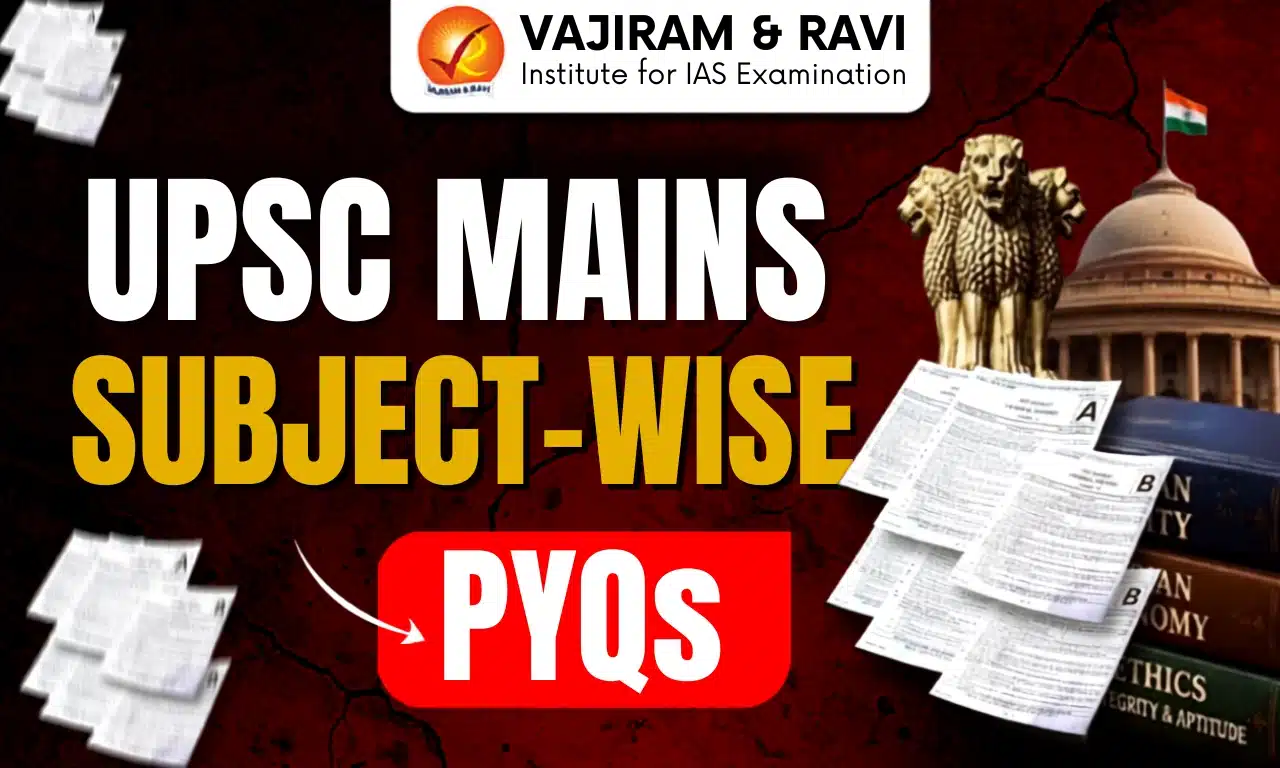
UPSC Mains Subject-Wise PYQs (2013-2025), GS Paper 1, 2, 3 & 4 provide a structured collection of previous year questions arranged according to the UPSC General Studies syllabus. They help aspirants understand the exam pattern, identify frequently asked topics, and improve analytical answer-writing skills. Regular practice of these PYQs enhances conceptual clarity and revision efficiency across all General Studies papers. It is one of the most effective resources for strategic and result-oriented UPSC Mains preparation.
UPSC Mains Modern History PYQs (2013-2025)
UPSC Mains Modern History PYQs (2013-2025) are an essential resource for understanding the trend, depth, and analytical nature of questions asked in General Studies Paper-I. These previous-year questions cover the advent of British rule, socio-religious reform movements, the Revolt of 1857, the Indian National Movement, the Gandhian era, tribal and peasant movements, and the contributions of important personalities. Practicing PYQs helps aspirants identify recurring themes, improve answer-writing skills, and prepare strategically for the UPSC Mains Examination.
UPSC Mains Post-Independence History PYQs (2013-2025)
UPSC Mains Post-Independence History PYQs (2013-2025) help aspirants understand the nature of questions asked on India's political, social, and economic developments after 1947. Solving these PYQs improves analytical skills and answer-writing techniques. They also highlight important themes repeatedly asked in the UPSC Mains examination. Regular practice increases confidence and conceptual clarity.


UPSC Mains Ancient History & Art & Culture PYQs (2013-2025)
UPSC Mains Art & Culture PYQs (2013-2025) provide insights into questions related to Indian heritage, architecture, literature, music, dance, and cultural traditions. They help candidates identify recurring topics and improve conceptual understanding. Practicing these questions strengthens answer presentation with relevant examples. It is an essential resource for scoring well in General Studies Paper-I.
UPSC Mains World History PYQs (2013-2025)
UPSC Mains World History PYQs (2013-2025) enable aspirants to analyze important global events, revolutions, wars, and political ideologies from a UPSC perspective. They reveal the depth and pattern of questions asked over the years. Solving PYQs enhances historical analysis and comparative understanding. Regular revision helps in writing balanced and well-structured answers.
UPSC Mains Indian Society PYQs (2013-2025)
UPSC Mains Indian Society PYQs (2013-2025) cover topics such as diversity, women, population, globalization, urbanization, and social issues. These previous year questions help aspirants understand the multidimensional approach expected by UPSC. They improve analytical thinking and answer-writing skills. Practicing them is crucial for mastering General Studies Paper-I.
UPSC Mains Geography PYQs (2013-2025)
UPSC Mains Geography PYQs (2013-2025) help candidates understand conceptual and application-based questions from physical, Indian, and world geography. They reveal frequently asked themes and changing trends in the examination. Regular practice improves map-based understanding and analytical writing. PYQs are valuable for effective preparation and revision.
UPSC Mains Polity PYQs (2013-2025)
UPSC Mains Polity PYQs (2013-2025) cover constitutional provisions, governance institutions, Parliament, judiciary, federalism, and important amendments. Solving these questions helps aspirants understand UPSC's analytical approach rather than rote learning. They also strengthen constitutional interpretation and answer structuring. Consistent practice enhances overall performance in General Studies Paper-II.
UPSC Mains Governance PYQs (2013-2025)
UPSC Mains Governance PYQs (2013-2025) focus on transparency, accountability, e-governance, citizen-centric administration, and public service delivery. These PYQs help candidates understand practical governance issues asked by UPSC. They improve answer quality by encouraging the use of examples and government initiatives. Regular revision makes preparation more effective.
UPSC Mains Social Justice PYQs (2013-2025)
UPSC Mains Social Justice PYQs (2013-2025) include questions on education, health, poverty, welfare schemes, vulnerable sections, and inclusive development. Practicing these PYQs helps aspirants understand policy-oriented and issue-based questions. They improve analytical and solution-oriented writing. These questions are highly useful for General Studies Paper-II preparation.
UPSC Mains International Relations PYQs (2013-2025)
UPSC Mains International Relations PYQs (2013-2025) provide valuable insights into India's foreign policy, international organizations, regional groupings, and global developments. They help candidates understand the evolving trend of UPSC questions. Solving previous year papers strengthens analytical ability and answer presentation. Regular practice improves current affairs integration.
UPSC Mains Economy PYQs (2013-2025)
UPSC Mains Economy PYQs (2013-2025) cover macroeconomics, budgeting, inflation, banking, taxation, growth, and economic reforms. These previous year questions help aspirants identify important economic themes frequently asked in UPSC Mains. They strengthen conceptual clarity and analytical writing. Practicing them regularly boosts confidence and exam readiness.
UPSC Mains Agriculture PYQs (2013-2025)
UPSC Mains Agriculture PYQs (2013-2025) focus on cropping patterns, irrigation, agricultural marketing, food security, allied sectors, and government schemes. They help candidates understand the practical and policy-oriented nature of UPSC questions. Solving these PYQs enhances answer quality with relevant examples. It is an important resource for General Studies Paper-III.
UPSC Mains Disaster Management PYQs (2013-2025)
UPSC Mains Disaster Management PYQs (2013-2025) help aspirants prepare topics related to disaster risk reduction, mitigation, preparedness, response, and resilience. These previous year questions reveal UPSC's focus on current disaster challenges and policy frameworks. Regular practice improves answer writing with case studies and examples. They are essential for effective GS Paper-III preparation.
UPSC Mains Environment PYQs (2013-2025)
UPSC Mains Environment PYQs (2013-2025) include biodiversity, climate change, conservation, environmental governance, pollution, and international conventions. They help candidates understand the interdisciplinary nature of environmental questions. Solving PYQs improves conceptual understanding and analytical presentation. Consistent practice strengthens preparation for General Studies Paper-III.
UPSC Mains Science & Technology PYQs (2013-2025)
UPSC Mains Science & Technology PYQs (2013-2025) cover emerging technologies, biotechnology, artificial intelligence, space technology, cybersecurity, and innovations. They help aspirants understand UPSC's application-oriented questioning style. Regular practice improves conceptual clarity and answer structuring. These PYQs are highly beneficial for mastering General Studies Paper-III.
UPSC Mains Internal Security PYQs (2013-2025)
UPSC Mains Internal Security PYQs (2013-2025) focus on terrorism, cybersecurity, border management, organized crime, left-wing extremism, and national security challenges. Solving these questions helps candidates develop balanced and analytical answers. They also improve understanding of contemporary security issues. Regular revision enhances preparation for GS Paper-III.
UPSC Mains Ethics PYQs (2013-2025)
UPSC Mains Ethics PYQs (2013-2025) help aspirants understand questions related to ethics, integrity, aptitude, emotional intelligence, and public service values. These previous year questions reveal the evolving expectations of UPSC in General Studies Paper-IV. Practicing them improves ethical reasoning and answer-writing skills. They are indispensable for scoring high marks in Ethics.
UPSC Mains Ethics Case Study PYQs (2013-2025)
UPSC Mains Ethics Case Study PYQs (2013-2025) provide practical administrative scenarios that test decision-making, integrity, accountability, empathy, and leadership. Solving these case studies helps candidates develop structured and balanced approaches to ethical dilemmas. They improve analytical thinking and answer presentation. Regular practice is essential for excelling in General Studies Paper-IV.

 Last updated on Sep, 2026
→ UPSC 2027 Notification will be released on 13 January 2027 at upsconline.nic.in.
→ Check out the latest UPSC Syllabus here.
→ Download UPSC Model Answers for Mains 2026
→ UPSC Mains Question Paper 2026 is out now for Essay & GS Paper 1, 2, 3 & 4.
→ UPSC Calendar 2027 has been released.
→ Enroll in Vajiram & Ravi’s UPSC Mains Test Series 2027 for structured answer writing practice, expert evaluation, and exam-oriented feedback.
→ Join Vajiram & Ravi’s UPSC Mentorship Program 2027 for personalized guidance, strategy planning, and one-to-one support from experienced mentors.
→ Go through the UPSC Mains Previous Year Papers to enhance your preparation.
→ UPSC has released UPSC Toppers List 2025 with the Civil Services final result on its official website.
→ Also check Best UPSC Coaching in India
UPSC Mains Subject-Wise PYQs FAQs
Q1. What are UPSC Mains Subject-wise PYQs?+
Q2. Why should I solve UPSC Mains Subject-Wise PYQs?+
Q3. Which years are covered in UPSC Mains Subject-wise PYQs (2013-2025)?+
Q4. Are subject-wise PYQs enough for UPSC Mains preparation?+
Q5. How many times should I revise UPSC Mains PYQs?+
Q6. Do UPSC Mains questions repeat from previous years?+
Q7. How can I use subject-wise PYQs effectively?+
Tags: upsc mains