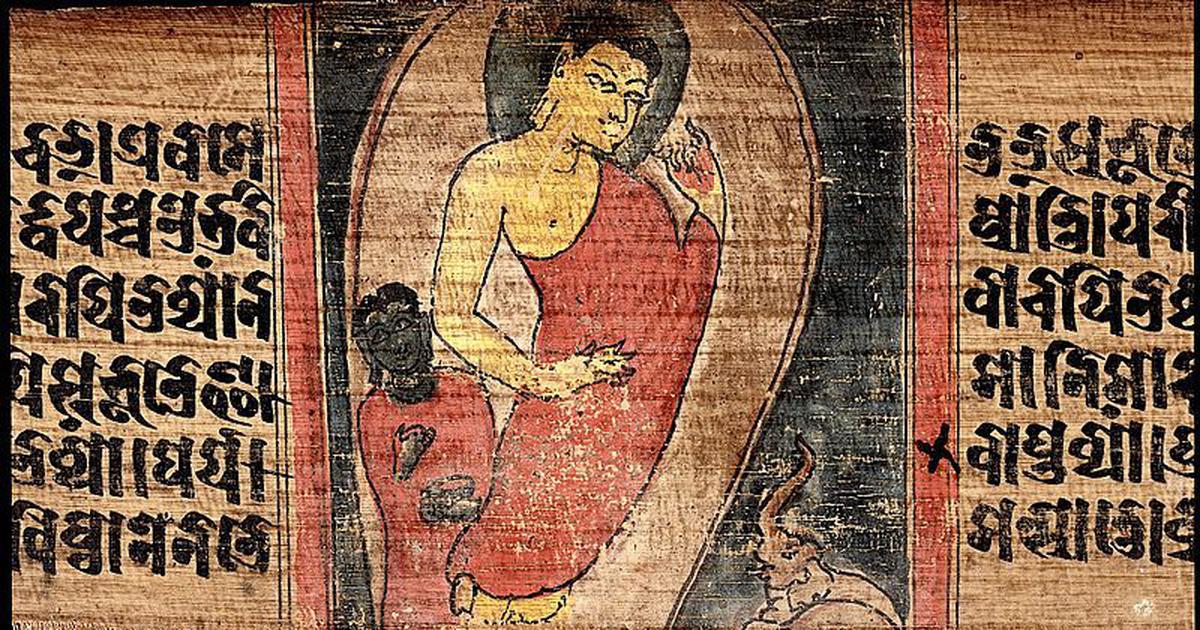
Buddhist literature represents one of the earliest organised collections in Indian history, with the Pali Tripitakas (Sutta Pitaka, Vinaya Pitaka, and Abhidhamma Pitaka) being the most systematic and complete collection of early sacred texts. These texts reflect the significance of monastic life, Buddha's discourses, and early scholasticism, composed primarily by learned monks.
Buddhist literature covers diverse themes, including the history of Buddha’s teachings, his life, his followers, and the Sangha, catering to both monks and the lay community. The earliest works were written in Pali, a language spoken in South Bihar and Magadha, preserving the spiritual and cultural heritage of Buddhism.
Buddhist Literature
Buddhist literature comprises one of the earliest collections of organised and written literary works in Indian history. The earliest systematic and most complete collection of early Buddhist sacred literature is the Pali Tripitakas (Sutta Pitaka, Vinaya Pitaka, Abhidhamma Pitaka).
- Its arrangement reflects the importance that the early followers attached to monastic life to the discourses of the Buddha and, subsequently, to the interest in scholasticism.
- The Buddhist texts were mainly composed by learned monks.
- The Buddhist literature covers a wide variety of themes, including the history of Buddha’s teachings, his life, his followers and the Sangha.
- These were intended both for the monks and the lay community.
- The earliest Buddhist works were written in Pali, which was spoken in Magadha and South Bihar.
Buddhist Literature Types
The Buddhist literature is made up of a wide range of texts. They serve as the foundation for the emergence of historical tradition. The Buddhist works are classified as canonical or non-canonical.
- Canonical Literature: Canonical Buddhist literature comprises the authoritative scriptures containing the Buddha’s teachings, monastic rules, and philosophical doctrines.
- Non-Canonical Literature: Non-canonical Buddhist literature includes texts outside the Tripitaka that discuss the life of the Buddha, Jataka stories, Buddhist philosophy, and historical traditions.
- Important works include Buddhacharita, Mahavastu, Lalitavistara, Milindapanho, Dipavamsa and Mahavamsa.


Buddhist Literature Tripitakas
The canonical Buddhist literature (texts that lay down the basic tenets and principles of Buddhism) is best represented by the “Tripitakas”, that is, three baskets: Abhidhamma Pitaka, Vinaya Pitaka, and Sutta Pitaka. The Tripitaka, also known as the Three Baskets/Collections, is available in Pali, Chinese, and Tibetan versions.
Vinaya Pitaka (Basket of Discipline)
The Vinaya Pitaka deals primarily with the rules and regulations governing the conduct of Buddhist monks and nuns. It also explains the organisation and functioning of the Sangha and is traditionally associated with the recitation of Upali at the First Buddhist Council.
- Suttavibhanga: Contains the Patimokkha, the basic code of monastic discipline, along with explanations of its rules. It includes Mahavibhanga for monks and Bhikkhunivibhanga for nuns.
- Khandaka: Consists of 22 chapters dealing with various aspects of monastic life, practices, and administration.
- Parivara: Provides a systematic analysis and classification of the rules contained in the Vinaya.
Sutta Pitaka (Basket of Discourses)
The Sutta Pitaka contains the principal discourses and teachings attributed to the Buddha and his chief disciples. It is traditionally associated with Ananda, who is said to have recited the Buddha's discourses at the First Buddhist Council.
- Digha Nikaya: Contains long discourses dealing with Buddhist teachings, ethics, and philosophy.
- Majjhima Nikaya: Contains middle-length discourses on the Buddha's teachings and spiritual practices.
- Samyutta Nikaya: Groups together connected discourses around particular themes, persons or doctrines.
- Anguttara Nikaya: Organises teachings according to numerical categories, making them easier to remember and study.
- Khuddaka Nikaya: A diverse collection containing shorter texts, poetry and teachings, including important works such as the Dhammapada and Sutta Nipata.
Abhidhamma Pitaka (Basket of Higher Doctrine)
The Abhidhamma Pitaka presents a systematic and analytical treatment of Buddhist teachings, particularly concerning mind, consciousness, ethical states, and phenomena. It is more philosophical and analytical in character than the Vinaya and Sutta Pitakas.
- Philosophical Approach: Examines Buddhist doctrines through detailed analysis of mental and physical phenomena.
- Seven Texts: Dhammasangani, Vibhanga, Dhatukatha, Puggalapannatti, Kathavatthu, Yamaka, and Patthana.
- Doctrinal Significance: Develops Buddhist teachings using an analytical framework concerned with the nature of reality, consciousness, and ethical processes.
- Composition: Unlike the Vinaya and Sutta Pitakas, the Abhidhamma texts are generally regarded as later developments within the Buddhist canonical tradition, rather than direct records of the Buddha's sermons.
Non-Canonical Buddhist Literature
Non-canonical Buddhist literature, primarily developed by Sri Lankan monks, includes commentaries like the Milinda-panha, Nettipakarana, and Petakopadesa. These texts elaborate on canonical scriptures without containing the Buddha's direct sayings. They encompass commentaries, Jataka tales about the Buddha's previous lives, historical accounts, and philosophical works, reflecting later interpretations of Buddhist teachings.
Dipavamsa
The Dipavamsa (Chronicle of the Island) is an early Pali historical chronicle of Sri Lanka, traditionally dated to around the 3rd–4th century CE.
- Language: Pali; associated with the Buddhist monastic tradition of Anuradhapura.
- Content: Records the early history of Buddhism in Sri Lanka and the island's political and religious traditions.
- Sangamitta: Gives an important account of Theri Sangamitta, daughter of Ashoka, and her role in bringing the Bodhi tree tradition to Sri Lanka.
- Theravada Tradition: Strongly reflects the traditions of the Mahavihara and Theravada Buddhism.
- Historical Value: Considered an important source for understanding the early development of Buddhism in Sri Lanka and the later Mahavamsa tradition.
Mahavamsa
The Mahavamsa (Great Chronicle) is a major Pali chronicle of Sri Lanka, composed around the 5th–6th century CE and traditionally attributed to Mahanama.
- Language: Pali.
- Content: Describes the history of Sri Lanka, its rulers, and the development of Buddhism on the island.
- Ashoka: Provides traditions concerning Emperor Ashoka, the Third Buddhist Council, and the Buddhist mission to Sri Lanka.
- Mahavihara: Describes the establishment and development of the Mahavihara tradition.
- Historical Value: Along with the Dipavamsa, it is an important source for reconstructing the religious and political history of early Sri Lanka.
- Culavamsa: The later continuation of the chronicle is known as the Culavamsa, which extends the historical narrative beyond the Mahavamsa.
Milindapanha
The Milindapanha (Questions of Milinda) records philosophical dialogues between the Indo-Greek king Menander I (Milinda) and the Buddhist monk Nagasena.
- Language: Pali.
- Period: Generally associated with the early centuries BCE/CE, though its exact date and composition are debated.
- Content: Discusses questions concerning Dhamma, karma, rebirth, the self, and Buddhist ethics.
- Dialogue Form: Nagasena explains complex Buddhist ideas through questions, analogies, and logical reasoning.
- Historical significance: Reflects the interaction between Indo-Greek political culture and Buddhism.
Nettipakarana
The Nettipakarana (Book of Guidance) is a Pali exegetical work dealing with methods for interpreting and explaining Buddhist teachings.
- Language: Pali.
- Tradition: Traditionally attributed to Mahakaccana, one of the Buddha's disciples, although its authorship and date are debated.
- Content: Provides methods for analysing and interpreting the teachings contained in the Buddhist scriptures.
- Structure: Traditionally divided into Sangahavara and Vibhagavara.
- Literary Importance: It is associated with the paracanonical/exegetical literature of the Theravada tradition.
Petakopadesa
The Petakopadesa (Instruction on the Pitaka) is an early Pali exegetical text concerned with methods of interpreting Buddhist teachings.
- Language: Pali.
- Authorship: Traditionally attributed to Mahakaccana, though the attribution is not historically certain.
- Content: Explains methods for interpreting and organising the teachings contained in the Buddhist scriptures.
- Literary Significance: It is closely associated with the Nettipakarana and forms part of the wider exegetical tradition of Theravada Buddhism.
Jatakas
The Jataka tales are narratives about the previous births of the Buddha, presenting moral lessons through stories of his successive lives.
- Language: Preserved prominently in the Pali tradition.
- Themes: Emphasise values such as compassion, generosity, truthfulness, and self-sacrifice.
- Historical Value: Provides glimpses into the social, economic, and political life of ancient India.
- Art and Architecture: Jataka scenes were depicted in early Buddhist monuments such as Sanchi and Bharhut.
- Cultural Influence: Their stories contributed significantly to the spread of Buddhist ethical ideas across Asia.
Buddhist Literature Sanskrit Texts
The Buddhacharita's author and one of the earliest Sanskrit dramatists, Asvaghosa, is thought to have been the first Buddhist to use classical Sanskrit for Buddhist literature. Treatises and other Sanskrit literary works on Buddhist philosophy, logic-epistemology, jatakas, epic poetry, and other subjects were also written by Indian Buddhist authors.
|
Authors |
Buddhist Sanskrit Texts |
||
|
Asvaghosa (80 AD-150 AD) |
- Buddha Charita: This is an epic poem written in the Sanskrit maha kavya style, detailing the life and teachings of Gautama Buddha. - Saundarananda: This kavya poem focuses on the conversion of Nanda, the Buddha’s half-brother, aiming for his salvation.
- Sariputra Prakaran: It deals with Sariputra, the disciple of Buddha. Sariputta had a key leadership role in the ministry of Buddha, and he frequently appeared in Mahayana sutras. - Vajra Suchi: It is a specimen of Buddhist polemical writing on the caste system advocated by the Vedic schools. |
||
|
Vasumitra |
- Mahavibhasa Shastra: It is an encyclopedic work on Abhidhamma, a scholastic Buddhist philosophy.
|
||
|
Nagarjuna (150 and 250 AD) |
- Madhyamika Karika: This is a key text for the Madhyamaka school of Mahayana Buddhist philosophy, serving as a comprehensive commentary on the Buddha’s “Discourse to Katyayana.”
|
||
|
Buddhaghosha |
- Visuddhimagga (path of Purification): It is a thorough summary of older Sinhala commentaries on Theravada teachings and practices. - Sumangalvasini - Atthakathayen |
Buddhist Literature Scholars
Buddhist scholarship has seen many influential figures. Asanga shaped Yogachara's thoughts, while his half-brother Vasubandhu integrated Mahayana ideas.
- Nagarjuna founded the Madhyamika school, exploring emptiness.
- Buddhaghosa wrote Visuddhimagga, a key Theravada text. Dharmakirti and Dignaga advanced Buddhist logic and epistemology. Chandrakirti further elaborated on Madhyamika philosophy.
Asanga (c. 4th Century CE)
Asanga was a major Mahayana Buddhist philosopher associated with the development of the Yogacara school.
- Background: Born in the region of present-day Peshawar, he was the elder brother of Vasubandhu.
- Philosophical Development: Initially associated with Sarvastivada, he later became an important exponent of Mahayana thought.
- Maitreya Tradition: The Buddhist tradition associates him with teachings attributed to Maitreya, which influenced his philosophical writings.
- Major Works: Mahayanasamgraha (Compendium of Mahayana), Bodhisattvabhumi and Abhidharmasamuccaya.
- Contribution: Played a major role in developing Yogacara philosophy, particularly its analysis of consciousness and the Bodhisattva path.
Dignaga (c. 5th–6th Century CE)
Dignaga was a prominent Buddhist philosopher who developed an influential system of logic and epistemology (theory of knowledge).
- Epistemology: Recognised perception (pratyaksha) and inference (anumana) as the principal means of valid knowledge.
- Inference: Developed systematic methods for establishing knowledge through reasoning and logical relations.
- Apohavada: His theory of exclusion (apoha) explained how words acquire meaning by distinguishing an object from what it is not.
- Major works: Pramanasamuccaya, Nyayamukha and Alambanapariksha.
- Contribution: His work laid an important foundation for the later development of Buddhist logic and epistemology in India.
Dharmakirti (c. 7th Century CE)
Dharmakirti was a leading Buddhist philosopher who further developed the logical and epistemological tradition established by Dignaga.
- Epistemology: Focused on perception and inference as valid means of knowledge.
- Metaphysics: Emphasised the reality of momentary particulars, while treating universals as conceptual constructions.
- Philosophical Association: His thought drew on Yogacara and Sautrantika traditions.
- Major Works: Pramanavarttika, Pramanaviniscaya and Sambandhapariksha.
- Contribution: His systematic treatment of reasoning and knowledge had a significant influence on Indian Buddhist philosophy and later Tibetan Buddhist thought.
Chandrakirti (c. 7th Century CE)
Chandrakirti was a major philosopher of the Madhyamaka school, particularly known for defending and explaining the ideas of Nagarjuna.
- Two Truths: Distinguished between conventional truth (samvriti-satya) and ultimate truth (paramartha-satya).
- Reasoning: Used the Prasanga (reductio ad absurdum) method to expose contradictions in opposing philosophical positions.
- Emptiness: Explained shunyata (emptiness) and the dependent nature of phenomena.
- Buddhahood: Discussed the philosophical path leading towards the attainment of Buddhahood.
- Major works: Prasannapada, Madhyamakavatara and Yuktishashtika-vritti.
Buddhist Literature Significance
Buddhist literature is significant not only for understanding Buddhist doctrines but also for reconstructing the social, political, economic, and cultural history of ancient India.
- Religious Thought: Preserved the teachings of Buddha on the Four Noble Truths, Eightfold Path, karma, rebirth, and nirvana, shaping the development of Buddhist philosophy.
- Historical Source: Texts such as the Dipavamsa and Mahavamsa provide information on the spread of Buddhism, Ashoka, Buddhist councils, and the development of Buddhist institutions.
- Social Life: Jataka stories and Vinaya literature offer glimpses of everyday life, social relations, occupations, and customs in ancient Indian society.
- Economic Insights: References to merchants, guilds, trade routes, markets and urban centres in Buddhist texts help reconstruct aspects of the ancient Indian economy.
- Art and Architecture: Jataka narratives and Buddhist traditions influenced the visual programmes of monuments such as Sanchi, Bharhut and Ajanta, linking literature with Buddhist art.
- Linguistic Contribution: The extensive use of Pali, Prakrit and Sanskrit helped develop Buddhist literary traditions and contributed to the wider evolution of Indian languages.
Buddhist Literature Decline
The decline of Buddhist literature in India was closely linked to the weakening of Buddhist institutions, monastic centres and royal patronage. From the early medieval period, Buddhism gradually lost its institutional base in many regions.
- Loss of Patronage: As political patronage increasingly shifted towards Brahmanical and other religious institutions, Buddhist monasteries lost an important source of financial support.
- Rise of Bhakti Traditions: The growing popularity of Shaiva, Vaishnava, and Bhakti traditions provided alternative religious institutions and devotional practices, contributing to the reduced social prominence of Buddhism.
- Internal Diversification: The emergence of numerous Buddhist schools and the development of increasingly complex philosophical and tantric traditions contributed to the fragmentation of the Buddhist institutional landscape.
- Decline of major learning centres: Buddhist universities and monasteries such as Nalanda and Vikramashila were important centres for preserving and producing Buddhist scholarship. Their destruction in the late medieval period severely disrupted this institutional tradition.
Buddhist Literature UPSC PYQs
Q1: With reference to ancient Indian History, consider the following parts: (UPSC Prelims 2023)
Literary work Author
- Devichandragupta: Bilhana
- Hammira-Mahakavya: Nayachandra Suri
- Milinda-panha: Nagarjuna
- Nitivakyamrita: Somadeva Suri
How many of the above pairs are correctly matched?
- Only one
- Only two
- Only three
- All four
Ans: (b)
Q2: With reference to Indian history, consider the following pairs: (UPSC Prelims 2022)
Historical person Known as
- Aryadeva Jaina scholar
- Dignaga Buddhist scholar
- Nathamuni Vaishnava scholar
How many pairs given above are correctly matched?
- None of the pairs
- Only one pair
- Only two pairs
- All three pairs
Ans: (c)

 Last updated on Nov, 2026
→ UPSC Mains Result 2026 has been declared on 05 November 2026 at the official website at upsc.gov.in.
→ UPSC 2027 Notification will be released on 13 January 2027 at upsconline.nic.in.
→ Check Nobel Prize 2026 Winners List here.
→ Download PIB PRiSM Monthly Magazine 2026 here.
→ Check UPSC Monthly Current Affairs Magazine The Recitals here.
→ Check out the latest UPSC Syllabus here.
→ Download UPSC Model Answers for Mains 2026
→ UPSC Mains Question Paper 2026 is out now for Essay & GS Paper 1, 2, 3 & 4.
→ UPSC Calendar 2027 has been released.
→ Enroll in Vajiram & Ravi’s UPSC Mains Test Series 2027 for structured answer writing practice, expert evaluation, and exam-oriented feedback.
→ Join Vajiram & Ravi’s UPSC Mentorship Program 2027 for personalized guidance, strategy planning, and one-to-one support from experienced mentors.
→ Go through the UPSC Mains Previous Year Papers to enhance your preparation.
→ UPSC has released UPSC Toppers List 2025 with the Civil Services final result on its official website.
→ Also check Best UPSC Coaching in India
Buddhist Literature FAQs
Q1. What is the main literature of Buddhism?+
Q2. What is Buddhist literature called?+
Q3. What are the most famous Buddhist books?+
Q4. Which country is 95% Buddhist?+
Q5. Which book is known as the Gita of Buddhism?+
Tags: buddhist literature quest UPSC Art and Culture Notes