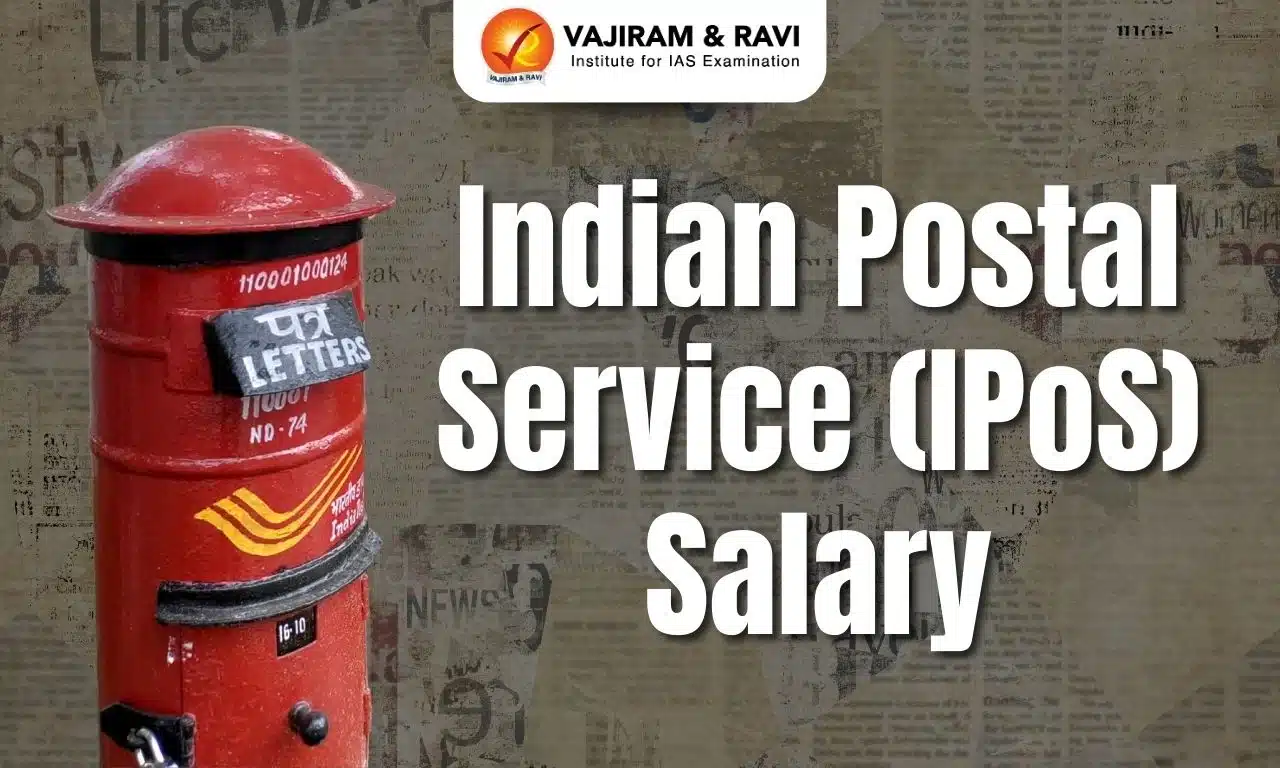
The Indian Postal Service (IPoS) established in 1948 is a prestigious Group ‘A’ Civil Service which looks at the functioning of India Post, the world's largest postal network. IPoS Officers are assigned with various responsibilities, including traditional postal services, banking, e-commerce, and social services like pension disbursement and MGNREGA wages. The service is divided into 22 Postal Circles, from which each circle is headed by a Chief Postmaster General.
Indian Postal Service Salary
UPSC CSE 2025 is the exam through which an aspirant can be assigned for the Indian Postal Service. The base job profile for the IPoS is SSRMs or Senior Superintendents of Post Offices (Senior Superintendent of Railway Mail Services) and the Indian Postal Service Salary Salary is determined according to the posts and grades of the employee according to the 7th Pay Commission.
Indian Postal Service Salary Structure
Indian Postal Service Officers begin their service with a pay scale of ₹ 56100. The highest grade in the team is Director-General of Post Offices on the pay scale of Rs.225000. For other grades, salary is the sum of grade pay and pay scale, detailed further in the table below.
|
Indian Postal Service Salary |
|
|
Rank |
Pay Level |
|
Director-General of Post Offices |
Rs.225000 |
|
Member Postal Services Board |
Rs.205400 |
|
Chief Postmaster General |
Rs.144200 |
|
Postmaster General |
Rs.131100 |
|
Director of Postal Services |
Rs. 78800 |
|
Assistant Director/Assistant Postmaster General |
Rs. 67700 |
|
SSPO/SSRM |
Rs. 56100 |


Indian Postal Service Salary Perks and Allowance
Indian Postal Service Officers have structured career growth with timely promotions. Each promotion brings an increase in their basic salary, alongside Indian Postal Service Salary Perks and Allowance:
- Travel Allowance for Official Duties: Officers often travel as part of their role, with the government covering all travel costs and providing a dedicated travel allowance.
- Housing Provision: The government provides accommodation in the designated district of service. Officers are expected to reside with their families in these quarters.
- Dearness Allowance (DA): This allowance is to offset the cost of living, adjusting to inflation and maintaining a steady financial balance.
- Household Assistance: Officers are eligible for a domestic helper and security personnel for household support.
- Medical Coverage: Full healthcare benefits are extended to the officer's family throughout their service.
- Additional Utilities: Government provides financial security and stability to retired officers such as Pension and Retirement Benefits.
| Other Related Posts of UPSC 2027 | |

 Last updated on Oct, 2026
→ UPSC 2027 Notification will be released on 13 January 2027 at upsconline.nic.in.
→ Check Nobel Prize 2026 Winners List here.
→ Download PIB PRiSM Monthly Magazine 2026 here.
→ Check UPSC Monthly Current Affairs Magazine The Recitals here.
→ Check out the latest UPSC Syllabus here.
→ Download UPSC Model Answers for Mains 2026
→ UPSC Mains Question Paper 2026 is out now for Essay & GS Paper 1, 2, 3 & 4.
→ UPSC Calendar 2027 has been released.
→ Enroll in Vajiram & Ravi’s UPSC Mains Test Series 2027 for structured answer writing practice, expert evaluation, and exam-oriented feedback.
→ Join Vajiram & Ravi’s UPSC Mentorship Program 2027 for personalized guidance, strategy planning, and one-to-one support from experienced mentors.
→ Go through the UPSC Mains Previous Year Papers to enhance your preparation.
→ UPSC has released UPSC Toppers List 2025 with the Civil Services final result on its official website.
→ Also check Best UPSC Coaching in India
Indian Postal Service Salary FAQs
Q1. What is the starting salary of an Indian post?+
Q2. What is the salary of an Indian Postal Service Officer?+
Q3. What is the highest salary in the postal service?+
Q4. Is gds a permanent job?+
Q5. What is the MTS salary?+
Tags: indian postal service salary ipos salary UPSC