Coffee Plantation in India, Regions, History, Requirements

Coffee Plantation in India

Coffee Plantation in India is a globally significant agricultural activity linking biodiversity conservation, tribal livelihoods, export earnings, and international trade. Coffee is the second most traded commodity worldwide after crude oil, with nearly 2.25 billion cups consumed daily across the world. India ranks seventh globally in coffee production and area under cultivation. Indian coffee is internationally valued for being shade-grown in ecologically sensitive regions, supporting sustainable farming, biodiversity preservation, and socio-economic development of remote hill communities.

Coffee Plantation in India

Coffee Plantation in India covers about 4.45 lakh hectares and contributes significantly to agricultural exports and rural employment. India cultivates both Arabica and Robusta coffee in nearly equal proportions, mainly in the Western and Eastern Ghats. Around 70% of India’s coffee output is exported, making it a major foreign exchange earner. Indian coffee enjoys a premium image globally due to shade-grown methods, mild acidity, rich aroma, and sustainable tribal cultivation practices.

Coffee Plantation in India Historical Development

The history of Coffee Plantation in India traces back to spiritual travel, colonial expansion, and commercial agriculture development.

  1. Baba Budan Introduction (1600 AD): Seven Mocha seeds planted at Baba Budan Giri, Karnataka, initiated Indian coffee cultivation.
  2. Ethiopian Origin: Coffee originated in Kaffa province of Ethiopia before spreading to Yemen and India.
  3. Arab Domestication: Arabs first domesticated coffee in Yemen, shaping early trade routes.
  4. British Commercial Expansion (18th Century): British planters established organized plantations in South India.
  5. Colonial Infrastructure: Roads, curing works, and export systems expanded coffee trade.
  6. Global Recognition: Indian coffee gained identity as high-quality shade-grown coffee worldwide.

Coffee Plantation in India Requirements

Coffee Plantation in India depends on specific pedo-climatic conditions ensuring quality yield and flavor.

  1. Soil Type: Deep, fertile, organic-rich, well-drained soils with slight acidity support coffee growth.
  2. Rainfall Needs: Annual rainfall between 1000-2500 mm ensures flowering and berry development.
  3. Temperature Range: Arabica prefers 15-25°C, while Robusta grows well at 20-30°C.
  4. Elevation: Arabica thrives at 1000-1500 meters, Robusta at 500-1000 meters.
  5. Shade Requirement: Thick natural shade protects plants and enhances bean quality.
  6. Humidity Levels: Relative humidity between 70-90% is essential for healthy plantations.

Coffee Plantation in India Regions

Coffee Plantation in India regions are classified into traditional, non-traditional and north-eastern zones based on climate and geography. The top 3 Coffee Producing States in India as of 2022-23 are: Karnataka, Kerala and Tamil Nadu collectively producing 96% of total coffee.

  1. Traditional Regions: features shade-grown coffee in the Western Ghats, include regions-
    • Karnataka: dominates over 70% of India’s coffee, led by Kodagu and Chikkamagaluru.
    • Kerala: Wayanad and Idukki are major Robusta-producing districts.
    • Tamil Nadu: Nilgiris, Dindigul, and Theni grow high-altitude Arabica coffee.
  2. Non-traditional Regions: known for organic, tribal-based cultivation in the Eastern Ghats.
    • Andhra Pradesh: Araku Valley and Alluri Sitharama Raju district promote tribal coffee farming.
    • Odisha: Koraput and Rayagada districts support organic coffee cultivation.
  3. North-East Pockets: small-scale plantations are emerging under suitable hill climates. Regions include-
    • Assam, Arunachal Pradesh, Manipur, Meghalaya, Mizoram, Nagaland and Tripura.

Coffee Board

The Coffee Board plays a central role in regulating, promoting, and expanding Coffee Plantation in India.

  1. Statutory Status: Established under the Coffee Act 1942, under the Ministry of Commerce and Industry.
  2. Headquarters Location: Based in Bengaluru, Karnataka, overseeing national coffee development.
  3. Functions: The major functions of the Coffee Board are:
    • Integrated Coffee Development Project: Focuses on yield improvement, replantation, and sustainability.
    • Non-Traditional Expansion: Identifies new cultivation zones using remote sensing and soil analysis.
    • Tribal Empowerment: Supports tribal farmers through training, finance, and market access.
    • Export Promotion: Enhances branding, quality certification, and international market presence.

Coffee Plantation in India Significance

The importance of Coffee Plantation in India can be discussed below:

  • India produces about 3.6 lakh tonnes of coffee annually, exporting nearly 70% to 128 countries, reflecting strong global demand for Indian coffee.
  • Consumption increased from 84,000 tonnes in 2012 to 91,000 tonnes in 2023, making plantation crucial in India.
  • Specialty coffees such as Monsooned Malabar AA, Mysore Nuggets Extra Bold, and Kaapi Royale are gaining global recognition and higher returns.
  • Initiatives like Flavour of India- Fine Cup Awards and Know Your Kaapi (KYK) highlight quality excellence, with Koraput Coffee emerging nationally.

Coffee Plantation in India Recent Developments

Recent developments have strengthened India’s global coffee profile through diplomacy, sustainability, and trade.

  1. 5th World Coffee Conference (2023): Hosted in Bengaluru with over 80 countries and 2,400 delegates. The theme focused on sustainability, circular economy, and regenerative agriculture.
  2. Araku Coffee at G20: Tribal-grown Araku coffee featured in G20 summit as a gift for leaders.
  3. GI Certification: India has secured GI tags for 7 coffees, including Coorg Arabica, Wayanad Robusta, Araku Valley Arabica, and Monsooned Malabar, boosting premium pricing.
  4. Export Surge: Coffee exports rose from USD 719 million in 2020-21 to about double as USD 1.29 billion in FY 2023-24 and USD 1.8 billion in FY 2024-25 (5th largest global exporter).
  5. GST Reduction: Reduction of GST to 5% on instant and processed coffee products.
  6. Trade Agreements: India-UK CETA and India-EFTA TEPA (2024) provide zero-duty access to key premium markets for Indian coffee.
  7. Tribal-led models: TDCCOL’s Koraput Coffee initiative ensures fair pricing, doorstep procurement, and sustainable livelihoods, supported by the Coffee Board.

Coffee Plantation in India FAQs

Q1: Where is Coffee Plantation in India carried out?

Ans: Coffee in India is mainly grown in Karnataka, Kerala, and Tamil Nadu, with emerging regions in Andhra Pradesh, Odisha, and the North-East.

Q2: Which type of Coffee is mostly Produced in India?

Ans: India produces both Arabica and Robusta coffee, with Robusta contributing a slightly higher share of total production.

Q3: Why is Indian coffee considered unique globally?

Ans: Indian coffee is globally valued for being shade-grown, hand-picked, and cultivated in biodiversity-rich Western and Eastern Ghats.

Q4: What percentage of Coffee Plantation in India is exported?

Ans: Around 70% of India’s coffee production is exported, making it an important agricultural export commodity.

Q5: Which institution regulates Coffee Plantation in India?

Ans: The Coffee Board of India, under the Ministry of Commerce and Industry, regulates and promotes coffee production and exports.

UPSC Daily Quiz 17 December 2025

UPSC Daily Quiz
[WpProQuiz 48]

UPSC Daily Quiz FAQs

Q1: What is the Daily UPSC Quiz?

Ans: The Daily UPSC Quiz is a set of practice questions based on current affairs, static subjects, and PYQs that help aspirants enhance retention and test conceptual clarity regularly.

Q2: How is the Daily Quiz useful for UPSC preparation?

Ans: Daily quizzes support learning, help in revision, improve time management, and boost accuracy for both UPSC Prelims and Mains through consistent practice.

Q3: Are the quiz questions based on the UPSC syllabus?

Ans: Yes, all questions are aligned with the UPSC Syllabus 2025, covering key areas like Polity, Economy, Environment, History, Geography, and Current Affairs.

Q4: Are solutions and explanations provided with the quiz?

Ans: Yes, each quiz includes detailed explanations and source references to enhance conceptual understanding and enable self-assessment.

Q5: Is the Daily UPSC Quiz suitable for both Prelims and Mains?

Ans: Primarily focused on Prelims (MCQ format), but it also indirectly helps in Mains by strengthening subject knowledge and factual clarity.

Liberalism in India, Meaning, Types, Criticism, Impact, Key Details

Liberalism

Liberalism is a philosophy that emphasizes freedom, equality, and individual rights. In India, it has influenced politics, economy, and social reforms, shaping modern governance and society. There are different types of liberalism, such as classical, social, economic, and political, each focusing on freedom in different ways. While liberalism has brought progress and democracy, it also faces criticisms like inequality and cultural conflicts, affecting its implementation.

What is Liberalism?

Liberalism is a political and social philosophy that emphasizes freedom, equality, and individual rights. It is based on the idea that every person should have the ability to make choices about their life without unnecessary restrictions from the state or society. 

Liberalism also advocates for rule of law, democracy, and protection of human rights, ensuring that individuals can live with dignity and fairness. It seeks a balance between personal freedom and social responsibility, promoting both individual growth and collective progress.

Types of Liberalism

Liberalism is not uniform; it has several branches that interpret freedom and equality differently. Each type focuses on certain aspects of social, political, or economic life, providing a framework for how governments and societies should operate.

Main Types of Liberalism:

  1. Classical Liberalism
    • Advocates for minimal government interference.
    • Supports free markets and private property.
    • Focuses on individual freedom over social equality.
  1. Social Liberalism
    • Balances freedom with social justice.
    • Supports welfare policies, education, and healthcare to reduce inequality.
    • Believes that the state should help people achieve equal opportunities.
  1. Economic Liberalism
    • Promotes capitalism, free trade, and entrepreneurship.
    • Encourages private ownership and competition.
    • Government’s role is limited to ensuring economic stability.
  1. Political Liberalism
    • Focuses on democratic governance and rule of law.
    • Ensures civil liberties, freedom of speech, and political rights.
    • Advocates for transparent and accountable governance.

Liberalism in India

Liberalism in India emphasizes individual freedom, democracy, and equality, as reflected in the Constitution. It has influenced political rights, social reforms, and economic policies, shaping modern India’s development.

  • Economic Liberalization: Policies since 1991 promoting privatization, foreign investment, and free markets.
  • Democratic Governance: Free elections, rule of law, and protection of civil liberties.
  • Social Reforms: Empowerment of women, education initiatives, and social justice programs.
  • Legal Framework: Fundamental rights guarantee equality, freedom of speech, and religious freedom.

Impact of Liberalism on Society and Politics

  1. Liberalism has strengthened democracy by promoting free and fair elections, citizen participation, and transparent governance.
  2. It ensures protection of rule of law, equality before law, and civil liberties like freedom of speech, press, and religion.
  3. Liberal economic policies encourage free markets, entrepreneurship, competition, and foreign investment, leading to overall growth.
  4. It advances social development through education, skill-building, gender equality, and empowerment of marginalized communities.
  5. Liberalism fosters cultural tolerance, secularism, and respect for diverse religions and opinions, promoting social harmony.
  6. Globally, liberal values influence human rights, international treaties, and cooperative governance, contributing to peace and global development.

Criticisms of Liberalism

  • Excessive Individualism: Focuses on personal freedom over community welfare.
  • Economic Inequality: Free-market policies may benefit the rich more than the poor.
  • Cultural Conflicts: Emphasis on freedom can clash with traditional or local values.
  • Over-reliance on Government: Social liberalism may lead to dependency on state welfare.
  • Fragmented Society: Prioritizing individual rights may weaken social cohesion.
  • Implementation Challenges: Liberal policies may not always reach marginalized groups effectively.

Conclusion

Liberalism is a philosophy that emphasizes freedom, equality, and social progress, shaping modern societies and governance. It has strengthened democracy, human rights, and economic growth while promoting education, equality, and cultural tolerance. Despite some criticisms, liberalism remains a key force for building inclusive and progressive communities.

Liberalism FAQs

Q1: What is the main aim of liberalism?

Ans: To promote individual freedom, equality, democracy, and protection of human rights.

Q2: Who are the major thinkers of liberalism?

Ans: John Locke, Adam Smith, John Stuart Mill, and T.H. Green are key contributors.

Q3: How does liberalism affect the economy?

Ans: Encourages free markets, private enterprise, entrepreneurship, and competition, Social liberalism supports government welfare programs to ensure equality of opportunity.

Q4: Is liberalism the same in all countries?

Ans: No, it adapts to cultural, political, and economic conditions of each country.

Q5: Can liberalism coexist with traditional values?

Ans: Yes, but it requires balancing personal freedom with respect for cultural norms and social cohesion.

Difference between Ethics and Morality, Meaning, Origin, Role

Difference between Ethics and Morality

The Difference between Ethics and Morality is embedded in origin, authority, scope, and application, even being closely related concepts that guide human behaviour. Ethics generally refers to systematic principles developed by institutions, professions, and philosophical traditions, while morality arises from personal beliefs, cultural traditions, religion, and social norms. 

Ethics is a formal branch of philosophy that evaluates right and wrong conduct using reason, whereas Morality reflects lived values shaped by society and upbringing. Understanding this distinction is essential in governance, law, public administration, medicine, and justice systems.

Difference between Ethics and Morality

Ethics and morality differ in source, authority, flexibility, universality, enforcement, and role in professional and public decision-making. The key Difference between Ethics and Morality has been tabulated below:

Difference between Ethics and Morality
Aspect Ethics Morality

Meaning

Ethics is a system of rational principles that define right and wrong conduct in specific contexts, especially professions and institutions.

Morality refers to personal or societal beliefs about right and wrong shaped by culture, religion, tradition, and family values.

Origin

Originates from philosophy, law, professional bodies, and formal reasoning traditions such as Aristotle’s Nicomachean Ethics and Kant’s Groundwork of the Metaphysics of Morals.

Emerges from social customs, religious teachings, community practices, and historical traditions passed across generations.

Authority

Authority comes from institutions, codes, constitutions, courts, and professional councils like medical or civil service bodies.

Authority lies in individual conscience, social approval, religious faith, and collective cultural acceptance.

Nature

Ethics is systematic, codified, written, and reason-based, designed to be applied consistently across cases.

Morality is informal, unwritten, intuitive, and emotionally driven, varying between individuals and societies.

Universality

Ethical principles aim for universality and consistency, such as human rights ethics under the Universal Declaration of Human Rights (1948).

Moral values differ across cultures, religions, regions, and time periods, making them relative rather than universal.

Flexibility

Ethics evolves through debate, judicial interpretation, scientific progress, and institutional reforms.

Morality changes slowly, often resisting reform due to deep emotional and cultural attachment.

Enforcement Mechanism

Enforced through formal mechanisms such as laws, disciplinary action, professional sanctions, and judicial penalties.

Enforced through social approval, guilt, praise, shame, or ostracism rather than legal punishment.

Application Area

Applied in governance, administration, medicine, business, research, law enforcement, and public policy decision-making.

Applied mainly in personal life, family relations, community behaviour, and religious observance.

Objective vs Subjective

Ethics strives for objectivity using logic, evidence, and shared standards to reduce bias.

Morality is subjective, shaped by individual experiences, upbringing, emotions, and faith.

Also Check Related Articles
Difference between NITI Aayog and Inter-State Council Difference Between Economic Survey and Union Budget
Difference Between Tropical Evergreen and Tropical Deciduous Forests Difference Between Ordinary Bill and Money Bill
Difference Between Legislative and Executive Difference between Himalayan and Peninsular Plateau
Difference Between Vedas and Upanishads Difference Between Scheduled and Non-Scheduled Banks
Difference Between Written and Unwritten Constitution Difference between NITI Aayog and Planning Commission
Difference between Colonialism and Imperialism Difference between Fundamental Rights and Directive Principles of State Policy
Difference between Procedure Established by Law and Due Process of Law Difference Between Democracy and Republic
Difference between Creamy Layer and Non-Creamy Layer of OBC Difference between Rajya Sabha and Vidhan Sabha
Difference Between Western Ghats and Eastern Ghats

Difference between Ethics and Morality FAQs

Q1: What is the basic difference between ethics and morality?

Ans: Ethics are institutional and rule-based principles, while morality is personal and culturally shaped beliefs about right and wrong.

Q2: Are Ethics and Morality the same across Societies?

Ans: Ethics aims for universal application, but morality varies widely across cultures, religions, and social traditions.

Q3: Who enforces Ethics and Morality?

Ans: Ethics is enforced by institutions, laws, and professional bodies, whereas morality is enforced by conscience and social norms.

Q4: Can Ethics override personal morality?

Ans: Yes, in public and professional roles, ethical codes can override personal moral beliefs to ensure fairness and accountability.

Q5: Why is Ethics important in governance and administration?

Ans: Ethics ensures consistency, transparency, and accountability in decision-making, which personal morality alone cannot guarantee.

Difference between Magistrate and Judge, Meaning, Role, Salary

Difference between Magistrate and Judge

The Difference between Magistrate and Judge lies in their level of authority, jurisdiction, appointment, and nature of cases handled within India’s judicial system. Magistrates primarily deal with minor criminal cases at the subordinate level, while Judges preside over higher courts and handle both civil and serious criminal matters. Their powers are defined by constitutional provisions and procedural laws such as the Bharatiya Nagarik Suraksha Sanhita (BNSS), and constitutional articles governing the judiciary. Understanding this distinction is essential for clarity on India’s criminal justice hierarchy.

Difference between Magistrate and Judge

Magistrates and Judges perform judicial functions but differ significantly in appointment method, powers, jurisdiction, court hierarchy, and types of cases handled.

Difference between Magistrate and Judge Comparison
Aspect Magistrate Judge

Meaning

A Magistrate is a judicial officer who handles minor criminal cases and oversees arrests, investigations, and preliminary trials.

A Judge is a senior judicial authority who decides serious civil, criminal, and constitutional cases in higher courts.

Legal Basis

Appointed under statutory law; functions governed mainly by BNSS (earlier CrPC)

Appointed under Articles 124, 125. 217, 233 and 244 of the Constitution of India

Level in Judiciary

Part of the subordinate judiciary

Belong to District Judiciary, High Courts, or Supreme Court

Appointment

Appointed by State Government in consultation with High Court

District Judges by Governor in consultation with High Court; HC and SC Judges by President of India

Types

Judicial Magistrate First Class (JMFC) & Second Class, Chief Judicial Magistrate (CJM), Metropolitan Magistrate, Special/ Sub-divisional Magistrate

Civil Judge (Junior/ Senior), District Judge, High Court Judge, Supreme Court Judge

Nature of Cases

Deals mainly with minor criminal cases like theft, assault, public order offences

Handles civil, criminal, constitutional, and appellate matters

Trial Powers

Conducts summary trials and warrant cases under BNSS

Conducts sessions trials, civil suits, writs, and constitutional cases

Punishment Powers

CJM can award imprisonment up to 7 years and fine (BNSS)

Supreme Court Judges can award life imprisonment or Capital Punishment

Court of First Instance

Often the first court where criminal cases are registered and heard

District Judges may act as trial and appellate courts

Jurisdiction

District Courts (for minor criminal offences), Metropolitan courts, and Specialized Lower Courts (family, labour, etc.)

District Courts, High Courts and Supreme Court

Independence Level

Judicially independent but administratively under High Court control through district judiciary

High constitutional independence with security of tenure

Appeals From Their Orders

Appeals lie before District Court or High Court

Appeals from District Judge go to High Court, from HC to Supreme Court

Qualification Requirement

Law degree (not always mandatory) with judicial service examination conducted by states

Minimum 3 years of judicial or legal practice for entry level, and 7-10 depending on further levels

Role in Criminal Procedure

Authorises arrest warrants, remand, search warrants, cognizance of offences

Conducts full-fledged trials, hears appeals, and interprets law

Salary

For JMFC: ₹77840 - ₹1,36,520 as per 2nd National Judicial Pay Commission

For Junior Civil Judge: ₹77840 - ₹1,36,520 as per 2nd National Judicial Pay Commission

Difference between Magistrate and Judge FAQs

Q1: What is the main Difference between Magistrate and Judge?

Ans: A Magistrate handles minor criminal cases, while a Judge deals with serious criminal, civil, and constitutional matters.

Q2: Who appoints a Magistrate and a Judge?

Ans: A Magistrate is appointed by the State Government, while Judges are appointed by the President or Governor.

Q3: Can a Magistrate hear civil cases?

Ans: No, a Magistrate deals only with criminal matters, whereas a Judge can hear both civil and criminal cases.

Q4: Who has higher punishment powers, Magistrate or Judge?

Ans: A Judge has higher powers, including life imprisonment or death penalty, unlike a Magistrate.

Q5: In which courts do Magistrates and Judges work?

Ans: Magistrates work in subordinate criminal courts, while Judges serve in District Courts, High Courts, and the Supreme Court.

Indian Tea Industry, History, Climatic Conditions, Government Policies

Indian Tea Industry

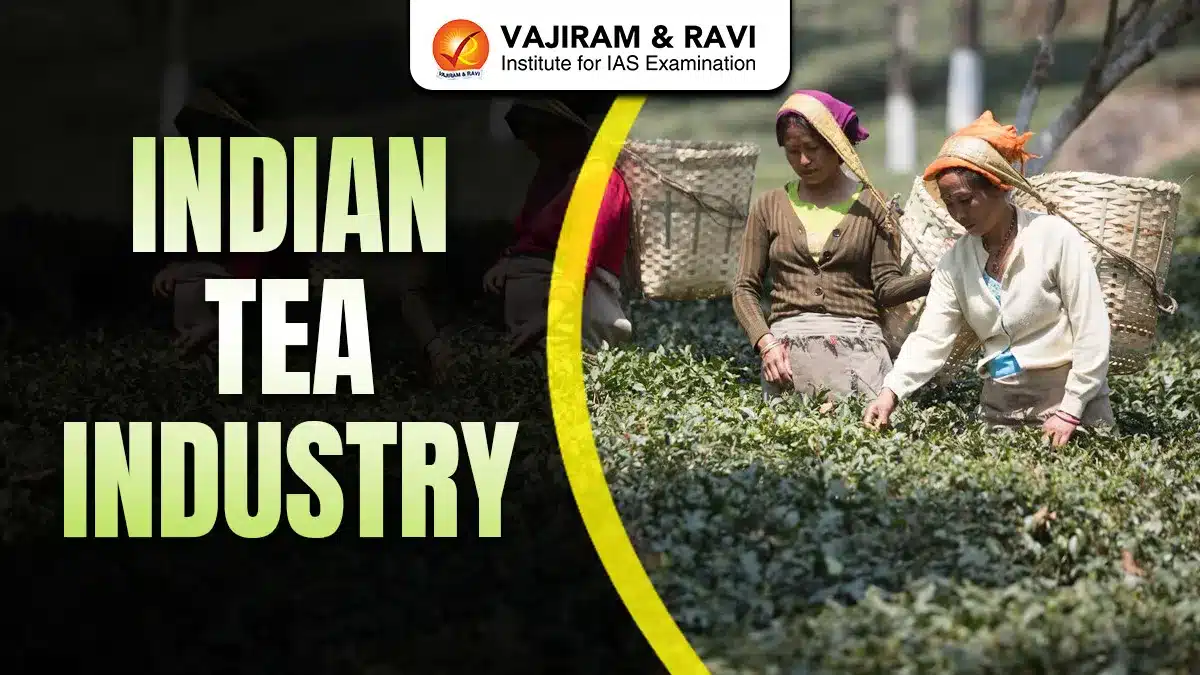
The Indian tea industry is one of the oldest and most important agro-based industries in the country, providing livelihood to millions of people. India is among the world’s largest producers and consumers of tea, with strong domestic demand and a steady export market. Tea cultivation depends heavily on specific climatic conditions such as temperature, rainfall, and soil quality. To support the sector, the government has introduced various policies and schemes to improve productivity, sustainability, and farmer welfare.

Historical Evolution of Tea Cultivation in India

Tea cultivation in India began in the early 19th century during British rule, after Robert Bruce discovered wild tea plants in Assam in 1823. The first Indian tea was exported from Assam to the United Kingdom in 1838, marking the start of India’s tea industry.

  • 1823: Discovery of Camellia sinensis in the Upper Brahmaputra Valley, Assam
  • Early plantations started in Assam and later in Saharanpur near Kumaon
  • 1833: Charter Act ended East India Company’s monopoly with China
  • 1834: Tea Committee set up under Governor-General William Bentinck
  • 1838: First Indian tea from Assam sent to the UK for public sale
  • 1850s: India emerged as one of the world’s leading tea producers
  • Post-independence: Growth of Indian tea brands and mass domestic consumption

Major Tea-Producing Regions of India

Tea cultivation in India is region-specific due to its dependence on climate and soil conditions. Nearly 96% of India’s tea production comes from a few key states.

Major tea-producing regions:

  • Assam: Assam Valley and Cachar; the largest producer, known for strong and malty tea
  • West Bengal: Darjeeling, Dooars, and Terai regions
  • Tamil Nadu: Nilgiri hills, famous for fragrant and smooth teas
  • Kerala: Produces high-range teas with bright liquor
  • Karnataka: Smaller but quality-focused production

Other states such as Tripura, Himachal Pradesh, Uttarakhand, Arunachal Pradesh, Sikkim, and Bihar produce tea on a smaller scale. The Kangra Valley in Himachal Pradesh is especially known for its green teas.

India ranks as the second-largest producer and consumer of tea in the world and is also the third-largest exporter. In comparison, Kenya, the world’s leading tea exporter, exports almost its entire production, while China stands as the second-largest tea exporter globally.

Climatic Conditions Required for Tea Cultivation

Tea is a climate-sensitive crop that thrives in tropical and sub-tropical regions. Any deviation in weather patterns directly affects yield and quality.

Ideal growing conditions for tea:

  • Temperature range of 15°C–23°C (optimal growth)
  • Warm and humid climate with at least 5 hours of sunlight daily
  • Annual rainfall of 150–300 cm, evenly distributed
  • Slightly acidic, calcium-free soil with porous sub-soil
  • Sloping terrain to ensure proper drainage

Types of Tea Produced in India

India produces a wide variety of teas, catering to both domestic consumption and international markets. Differences in climate, altitude, processing methods, and tea varieties give Indian teas their distinct taste, aroma, and quality.

  • Black Tea: The most widely produced and consumed tea in India; forms the largest share of production and exports
  • CTC Tea: Processed using Crush–Tear–Curl method; commonly used for regular tea and tea bags
  • Orthodox Tea: Handcrafted using traditional methods; known for superior quality and mainly exported
  • Green Tea: Minimally processed and rich in antioxidants; demand is rising due to health awareness
  • White Tea: Made from young tea buds; rare, delicate, and produced in limited quantities

Oolong Tea: Partially oxidized tea; produced in small volumes for niche markets

Role of Tea Board of India

The Tea Board of India is the apex regulatory and promotional body for the tea sector. It was established under the Tea Act, 1953 and functions under the Ministry of Commerce.

  • Established in 1953; operational since 1954
  • Headquarters in Kolkata with 17 domestic offices
  • Overseas offices in Dubai and Moscow
  • Board consists of 31 members representing producers, traders, governments, and workers
  • The Tea Board is reconstituted every three years.

Major functions:

  • Promote tea cultivation, production, and exports
  • Provide financial and technical assistance
  • Ensure quality control and certification
  • Support research and development
  • Protect the identity of Indian teas

Government Policies and Schemes for Tea Development

The Government of India supports the tea industry through policy interventions and targeted schemes to improve productivity, quality, and sustainability.

  • Tea Development and Promotion Scheme (2021–26): Aims to enhance productivity, quality, and sustainability of tea cultivation across India.
  • Plantation Development Support: Financial assistance for replantation, rejuvenation of old tea bushes, and expansion of tea areas, especially for small growers.
  • Market Promotion and Export Support: Subsidies for participation in international fairs, exhibitions, and branding of Indian tea abroad.
  • Worker Welfare Measures: Support for housing, healthcare, education, and skill development of plantation workers.
  • Research and Development Initiatives: Funding for scientific research to improve yield, quality, and climate resilience.
  • Digital and Regulatory Reforms: Introduction of online licensing systems with auto-renewal and simplified compliance procedures.
  • Chai Sahyog Mobile App: A digital platform to address issues faced by small tea growers and improve access to information and services.

Tea Industry and Women Workforce Participation

Women play a vital role in the Indian tea industry and form a large share of the plantation workforce, particularly in leaf plucking, sorting, and processing activities. In many tea-growing regions, women account for nearly half or more of the total workforce, making the sector an important source of rural female employment.

The tea industry provides women with regular income, contributing to household financial stability and social empowerment in economically backward areas. 

However, challenges such as wage disparities, limited leadership opportunities, lack of adequate healthcare, and poor working conditions persist. 

Challenges Faced by the Indian Tea Industry

  • Climate Change Impact: Erratic rainfall, rising temperatures, droughts, and floods are reducing tea yield and quality, especially in major producing regions like Assam.
  • Rising Input Costs: Costs of labour, fertilizers, pesticides, fuel, and electricity have increased significantly, while tea prices have not risen proportionately.
  • Aging Tea Bushes: A large portion of tea plantations have old bushes, leading to low productivity and higher maintenance costs.
  • Stagnant and Low Prices: Tea auction prices remain largely stagnant, affecting profitability for both estates and small tea growers.
  • Global Competition: Strong competition from countries like Kenya, Sri Lanka, China, and Indonesia in CTC, orthodox, and green tea segments.
  • Small Tea Growers’ Vulnerability: Many small growers lack land ownership, access to credit, modern technology, and organized markets.
  • Labour Issues: Shortage of skilled labour, rising wages, and welfare-related challenges increase operational costs.
  • Export Dependence on Black Tea: Over-reliance on black tea limits diversification and value realization in exports.

Way Forward

  • Shift from Quantity to Quality: Promote GI-tagged, specialty, organic, and orthodox teas to improve value realization in domestic and export markets.
  • Climate-Resilient Practices: Encourage climate-smart agriculture, drought-resistant varieties, and sustainable farming to reduce climate-related risks.
  • Support Small Tea Growers: Strengthen Farmer Producer Organizations (FPOs), improve access to credit, technology, and transparent auction systems.
  • Value Addition and Branding: Expand processing, packaging, and branding of Indian tea to capture premium global markets.
  • Diversify Export Markets: Reduce dependence on traditional markets by targeting South America, Middle East, Africa, and emerging economies.
  • Modernisation and Mechanisation: Adopt modern machinery and digital tools to reduce costs and improve efficiency.
  • Skill Development and Worker Welfare: Invest in training, healthcare, housing, and social security for plantation workers, especially women.
  • Learning from Global Best Practices: Adopt successful models like Kenya’s farmer training systems to improve quality and sustainability.

Indian Tea Industry FAQs

Q1: Why is the tea industry important for India?

Ans: The tea industry generates large-scale employment, supports rural livelihoods, and contributes significantly to export earnings.

Q2: Which state is the largest producer of tea in India?

Ans: Assam is the largest tea-producing state, contributing more than half of India’s total production.

Q3: What makes Darjeeling tea unique?

Ans: Darjeeling tea has a distinctive aroma and flavor and was India’s first product to receive a GI tag.

Q4: How much tea does India consume domestically?

Ans: Around 80% of India’s tea production is consumed within the country.

Q5: What is the future outlook of the Indian tea industry?

Ans: With emphasis on quality, sustainability, and value addition, the Indian tea industry has strong long-term growth potential.

List of Waterfalls in India, Highest Waterfalls with Location, Height

Waterfalls in India

List of Waterfalls in India: India is home to a stunning variety of waterfalls, each showcasing the country's diverse natural beauty. From the majestic heights of the Himalayas to the lush, beautiful landscapes of the Western Ghats, these waterfalls captivate visitors from around the globe. Below is a List of Waterfalls in India, along with key details about each:

Waterfalls in India

A waterfall is formed when river water falls steeply down from higher ground. Typically, waterfalls are found in the upper reaches of rivers, where the terrain is mountainous and steep. Due to the specific geographical conditions, many waterfalls are located over solid bedrock and are often fed by small tributaries, making them seasonal. As a result, these waterfalls are usually temporary and are most visible during heavy rainfalls. In this article, we have shared the List of Major Waterfalls in India for general awareness.

List of Waterfalls in India

India is renowned for its waterfalls, each possessing its own unique beauty and charm. The following List of Waterfalls in India, offering a brief into the stunning waterfalls that can be found across the nation.

List of Waterfalls in India

Waterfalls in India

Location

Height Metre/Feet

Kunchikal Falls

Shimoga district, Karnataka

455 metres (1,493 ft)

Barehipani Falls

Mayurbhanj district, Odisha

399 metres (1,309 ft)

Nohkalikai Falls

East Khasi Hills district, Meghalaya

340m (1115 feet)

Nohsngithiang Falls or Mawsmai Falls

East Khasi Hills district, Meghalaya

315 metres (1,033 ft)

Dudhsagar Falls

Karnataka and Goa

310 m(1017 feet)

Kynrem Falls

East Khasi Hills district, Meghalaya

305 metres (1,001 ft)

Meenmutty Falls

Wayanad district, Kerala

300 metres (984 feet)

Thalaiyar Falls

Batlagundu, Dindigul district, Tamil Nadu

297 metres (974 ft)

Barkana Falls

Shimoga district, Karnataka

259 metres (850 ft)

Jog Falls

Shimoga district, Karnataka

253 meters (830ft)

Top 10 Highest Waterfalls in India

India, known for its diverse landscapes and rich natural beauty, is home to stunning waterfalls. Below are the Top 10 Highest Waterfalls in India, along with their locations and impressive heights. These waterfalls not only add to the natural charm of their regions but also provide a vital source of livelihood for the local communities. For those who love nature and adventure, exploring these waterfalls is an unforgettable experience.

Kunchikal Falls

Kunchikal Falls is the highest waterfall in India and the second tallest in Asia, standing at an impressive height of 1,493 feet. Located near Agumbe in Shimoga district, Karnataka, the falls are nestled in one of the rainiest areas of India, Agumbe Valley. This area is also home to India’s only permanent rainforest research station. 

Barehipani Falls

Barehipani Falls, located in Simlipal National Park in Mayurbhanj district, Odisha, is the second tallest waterfall in India at 712 feet. The waterfall, nestled in dense forests, is known for its two distinct drops, with the taller one falling from a height of 259 meters (850 feet).

Nohkalikai Falls

Situated near Cherrapunji in the East Khasi Hills district of Meghalaya, Nohkalikai Falls is one of India’s tallest waterfalls, measuring 1,120 feet. It is also the highest plunge waterfall in the country. The falls are located in one of the wettest places on Earth and offer a breathtaking view of the surrounding hills and valleys. 

Nohsngithiang Falls (Seven Sisters Falls)

Nohsngithiang Falls, also known as the Seven Sisters Falls, is located in the East Khasi Hills of Meghalaya. The waterfall drops from a height of 1,033 feet and is segmented into seven distinct sections, creating a stunning visual. The falls are a seasonal phenomenon, flowing during the monsoon, and are symbolic of the seven sister states of Northeast India.

Dudhsagar Falls

Known as the "Sea of Milk," Dudhsagar Falls is one of the most famous Waterfalls in India, located on the Goa-Karnataka border. This majestic waterfall stands at 1,020 feet and is a popular tourist attraction due to its grandeur and the surrounding scenic beauty of the Western Ghats. It’s an excellent spot for a day trip for nature lovers and adventurers.

Kynrem Falls

Located in Thangkharang Park in Cherrapunji, Meghalaya, Kynrem Falls is a beautiful three-tiered waterfall. It falls from a height of 1,000 feet, making it one of the Highest Waterfalls in India. The waterfall is part of the park's natural splendor and adds to the beauty of Cherrapunji’s landscape.

Meenmutty Falls

Meenmutty Falls, situated in Wayanad district, Kerala, is the tallest waterfall in the state, falling from a height of 980 feet. The falls are a major tourist attraction in South India and are surrounded by lush forests. The waterfall is divided into three tiers, making it a spectacular sight, especially during the monsoon when it is at its most powerful.

Thalaiyar Falls (Rat Tail Falls)

Thalaiyar Falls, also known as Rat Tail Falls, is located in the Dindigul district of Tamil Nadu. Standing at 974 feet, it is one of the tallest waterfalls in India. The waterfall is difficult to access, as there are no roads leading to the site, but its stunning drop and the surrounding dark caves make it a unique and adventurous spot for those who can reach it.

Barkana Falls

Barkana Falls, located in the Shimoga district of Karnataka, is one of the ten tallest waterfalls in India, with a height of 850 feet. The waterfall, which forms from the Seetha River, is primarily known for its role in hydroelectric power generation in Karnataka. It’s an ideal spot for those visiting Agumbe, often referred to as the "Cherrapunji of the South."

Jog Falls

Jog Falls, created by the Sharavathi River in the Shimoga district of Karnataka, is one of the most impressive plunge waterfalls in India. With a height of 829 feet, it ranks as the second-tallest waterfall in India. The falls are a significant tourist attraction and are associated with the nearby Linganamakki Dam, which harnesses the power of the Sharavathi River.

Also Check Other Posts
Biosphere Reserves in India National Parks in India
Waterfalls in India Highest Peak in India
Ramsar Sites in India Wildlife Sanctuaries in India
Dams in India Tiger Reserves in India
Mountain Passes in India Longest Bridge in India

Waterfalls in India FAQs

Q1: Which is the highest waterfall in India?

Ans: Kunchikal falls is the highest waterfall in India with a height of 455 meters.

Q2: What is the height of Kunchikal falls?

Ans: The height of Kunchikal falls is 1493 feet.

Q3: Which place is known as Cherrapunji of South India?

Ans: Western Ghats is known as the Cherrapunji of South India.

Q4: Where is the Kunchikal Fall?

Ans: The Kunchikal Fall is in Shimoga District of Karnataka.

Q5: Where is Jog Fall?

Ans: Jog falls is in Shimoga District Karnataka.

Longest Bridge in India, List of Longest Bridges in India

Longest Bridge in India

List of Longest Bridge in India 2025: Bridges are vital structures that span water bodies, valleys, or roads, facilitating smooth travel and transport. The Indian engineers community has risen to the occasion, constructing a variety of bridges, including roadways, rail-cum-road bridges, and other remarkable innovations. These structures not only represent the country’s engineering efficiencies but also serve as vital links between regions, stimulating economic growth by connecting key locations. Bridges in India form an integral part of the nation's infrastructure, enhancing connectivity and boosting overall productivity.

Longest Bridge in India 2025

The Dhola–Sadiya Bridge, officially known as the Dr. Bhupen Hazarika Setu, is the Longest Bridge in India 2025. Spanning approximately 9.15 kilometers over the Lohit River, a tributary of the Brahmaputra in Assam, it connects Dhola in Tinsukia district with Sadiya near Arunachal Pradesh. Inaugurated in May 2017, the bridge plays a vital role in improving road connectivity, boosting regional trade, and enhancing defense movement in India’s northeastern region.

List of Longest Bridge in India 2025

Dr. Bhupen Hazarika Bridge stands as the longest river bridge in India, stretching 9.15 kilometers over the Brahmaputra River in Assam. The bridge plays a vital role in improving connectivity between the northern and southern banks of the Brahmaputra River, offering enhanced transportation for both passengers and goods. Below is a List of Longest Bridge in India 2025:

List of Longest Bridge in India 2025
 

Name

Distance

Year of Opening

Connecting

Water Body/Location

1

Dhola Sadiya bridge

9.15 Km

2017

Assam and Arunachal Pradesh

Lohit River, Tinsukia, Assam

2

Dibang River Bridge

6.2 Km

2018

Arunachal Pradesh

Dibang River

3

Mahatma Gandhi Setu

5.75 Km

1982

South Patna to Hajipur

Ganga, Patna, Bihar

4

Bandra-Worli Sea Link (BWSL)

5.57 Km

2009

Bandra to Worli (South Mumbai)

Mahim Bay, Mumbai

5

Bogibeel Bridge

4.94 Km

2018

Dhemaji to Dibrugarh

Brahmaputra River, Assam

6

Vikramshila Setu

4.70 Km

2001

Bhagalpur to Naugachia

Ganga, Bhagalpur, Bihar

7

Vembanad Rail Bridge

4.62 Km

2011

Edappally to Vallarpadam

Vembanad Lake, Kochi, Kerala

8

Digha–Sonpur Bridge

4.55 Km

2016

Digha, Patna to Sonpur, Saran

Ganga, Patna, Bihar

9

Arrah–Chhapra Bridge

4.35 Km

2017

Arrah to Chhapra

Ganga, Saran, Bihar

10

Godavari Bridge

4.13 Km

2015

Kovvur to Rajahmundry

Godavari river, Rajahmundry, Andhra Pradesh

Second Longest Bridge in India

The Dibang River Bridge, also known as the Sisseri Bridge, is the Second Longest Bridge in India. Located in Arunachal Pradesh, it spans around 6.2 kilometers and connects important regions in the northeast, improving connectivity to the India-China border areas. This engineering marvel plays a crucial role in enhancing transportation and defense logistics in the region.

Top 10 Longest Bridge in India

Here is a brief description for the Top 10 Longest Bridge in India:

Dhola Sadiya Bridge (9.15 km)

The Dhola Sadiya Bridge, also called the Bhupen Hazarika Setu, is the Longest Bridge in India that spans over water. Stretching across the Brahmaputra River, this 9.15 km bridge was inaugurated by Prime Minister Narendra Modi. It connects the state of Assam to Arunachal Pradesh, reducing the distance between the two regions by 165 km and saving up to 5 hours of travel time. The bridge plays a vital role in improving regional connectivity and facilitating economic growth.

Dibang River Bridge (6.2 km)

The Dibang River Bridge, also known as the Sikang Bridge, is the second Longest Bridge in India, measuring 6.2 km in length. Located in Arunachal Pradesh, this bridge is crucial for national security, significantly reducing the time required for the Indian Army to access the China border.

Mahatma Gandhi Setu (5.6 km)

Bridge Over the Ganges Connecting Patna and Hajipur in Bihar, the Mahatma Gandhi Setu was once the Longest Bridge in India. Measuring 5.6 km, it stands as a major transportation over the Ganges River. Inaugurated by Indira Gandhi in 1982, it continues to be a key landmark and tourist attraction in Bihar.

Bandra Worli Sea Link (5.57 km) 

The Bandra Worli Sea Link, also known as the Rajiv Gandhi Sea Link, is a cable-stayed bridge that links Bandra to Worli in Mumbai. Spanning 5.57 km, it is not only a major traffic route but also an important part of Mumbai’s skyline. The bridge is a crucial part of the Western Freeway Project.

Bogibeel Bridge (4.94 km)

The Bogibeel Bridge is the longest rail-cum-road bridge in India, measuring 4.94 km. This strategic bridge connects Dhemaji and Dibrugarh districts, and is built to withstand earthquakes of up to magnitude 7. It is Asia’s second-longest such bridge and serves both civilian and military purposes.

Vikramshila Setu (4.7 km)

The Vikramshila Setu, spanning 4.7 km, crosses the Ganges River near Bhagalpur, Bihar. It is named after the ancient Vikramashila Mahavihara. This bridge is an important link for the region’s economic activities, reducing travel time and boosting connectivity.

Vembanad Rail Bridge (4.62 km)

The Vembanad Rail Bridge in Kerala is the Longest Railway Bridge in India at 4.62 km. This bridge connects Edappally and Vallarpadam in Kochi, primarily serving freight trains. It is set against the backdrop of Vembanad Lake, Kerala’s largest lake.

Digha Sonpur Bridge (4.55 km)

The Digha Sonpur Rail Road Bridge, also known as the J.P. Setu, connects Digha Ghat and Pahleja Ghat in Bihar. At 4.55 km, it is a vital infrastructure link, facilitating both road and rail transport between the northern and southern parts of the state.

Arrah Chhapra Bridge (4.35 km)

The Arrah Chhapra Bridge, also known as the Veer Kunwar Singh Setu, is a multi-span bridge across the Ganges River. Measuring 4.35 km, it has significantly reduced travel time between Arrah and Chhapra, promoting economic and cultural exchange between the two regions.

Godavari Bridge (4.13 km)

The Godavari Fourth Bridge, or Kovvur-Rajahmundry 4th Bridge, spans 4.13 km across the Godavari River in Andhra Pradesh. This bridge plays a crucial role in reducing the travel distance between Kolkata and Chennai, making the transportation and boosting regional economic integration easy.

Also Check Other Posts
Biosphere Reserves in India National Parks in India
Waterfalls in India Highest Peak in India
Ramsar Sites in India Wildlife Sanctuaries in India
Dams in India Tiger Reserves in India
Mountain Passes in India Longest Bridge in India

Longest Bridge in India FAQs

Q1: Which is the Longest Bridge in India?

Ans: Dhola Sadiya bridge (Dr. Bhupen Hazarika Bridge) is the longest bridge in India.

Q2: Which is the longest rail cum road bridge in India?

Ans: Bogibeel Bridge is the longest rail cum road bridge in India.

Q3: What is the length of the Longest Bridge in India?

Ans: 9.15 Km is the length of the Longest Bridge in India.

Q4: What is the length of the longest rail cum road bridge in India?

Ans: 4.94 Km is the length of longest rail cum road bridge in India.

Q5: Which is the second Longest Bridge in India?

Ans: Dibang River Bridge is the second Longest Bridge in India.

Ekam AI and SAMBHAV

Ekam AI and SAMBHAV

Ekam AI and SAMBHAV Latest News

Recently, the Indian Army showcased a wide range of homegrown technologies Ekam AI and SAMBHAV project during Vijay Diwas celebration.

About Ekam AI

  • It is a fully indigenous and secure artificial intelligence platform designed for sensitive environments.
  • Features of Ekam AI
    • It enables users to analyse information, manage documents, and support decision-making without dependence on foreign software or external cloud systems.
    • It allows personnel at different levels to leverage AI-enabled support without requiring specialised technical expertise.
  • Significance: It ensures complete data security and sovereignty, Ekam AI marks a significant step towards building trusted national digital systems.

About SAMBHAV

  • It is a portable communication system that provides mobile connectivity using satellite support.
  • Features: The system can be deployed quickly in remote or disaster-affected areas, improving communication for both soldiers and civilians.
  • Significance: The project highlights how defence innovation can also strengthen national communication infrastructure.

What is Vijay Diwas?

  • Vijay Diwas is commemorated on December 16 every year to honor the victory of the Indian armed forces over Pakistan in the 1971 war which led to the liberation of Bangladesh.

Source: PIB

Ekam AI and SAMBHAV FAQs

Q1: What is SAMBHAV?

Ans: A portable communication system

Q2: What is the primary purpose of SAMBHAV?

Ans: To provide satellite-based communication support.

Channa Bhoi

Channa Bhoi

Channa bhoi Latest News

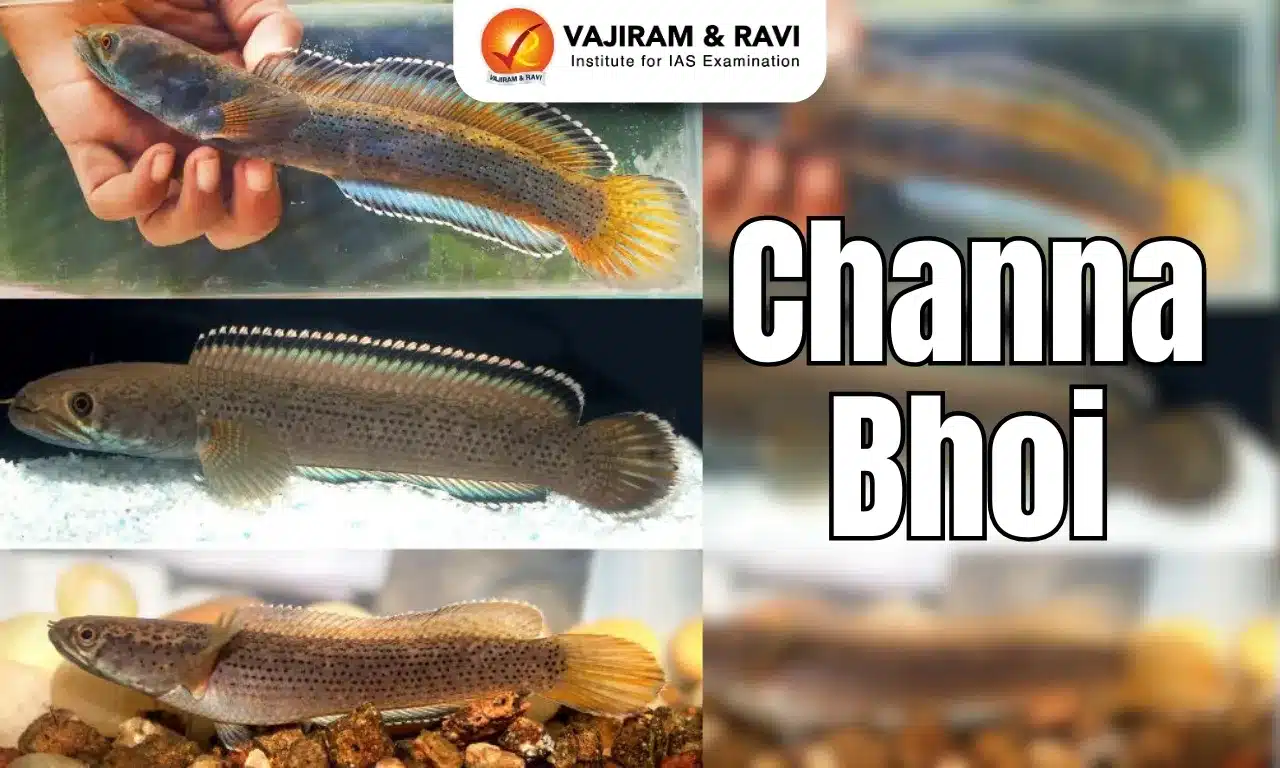
Scientists recently discovered a new species of snakehead fish named Channa bhoi from Meghalaya.

About Channa bhoi

  • It is a new species of snakehead fish.
  • It was discovered from a small mountain stream near Iewmawlong village in the Ri-Bhoi district of Meghalaya.
  • It has been named Channa bhoi, after the indigenous Bhoi people of the Khasi tribe who inhabit the Ri-Bhoi region.
  • It belongs to the “Gachua group” of snakehead fishes, a group known for its high diversity in the Eastern Himalayan region. 
  • It can be distinguished from its close relatives by a unique colour pattern.
  • It is characterised by a bluish-grey body marked with minute black spots on each scale, forming eight to nine horizontal rows of broken lines along the sides. 
  • The fish also exhibits distinctive banding patterns on its pectoral fins.
  • Phylogenetic analysis identified it as a sister species to Channa bipuli, another snakehead found in Northeast India.
  • The discovery brings the total number of Channa species recorded from India to 26.

Source: IS

Channa bhoi FAQs

Q1: What is Channa bhoi?

Ans: It is a newly discovered species of snakehead fish.

Q2: Where was Channa bhoi discovered?

Ans: It was discovered in a small mountain stream near Iewmawlong village in the Ri-Bhoi district of Meghalaya.

Q3: Channa bhoi is named after which community?

Ans: It is named after the indigenous Bhoi people of the Khasi tribe who inhabit the Ri-Bhoi region.

Q4: What is the characteristic body colour of Channa bhoi?

Ans: It has a bluish-grey body with minute black spots forming eight to nine horizontal rows.

National Digital Livestock Mission

National Digital Livestock Mission

National Digital Livestock Mission Latest News

Recently, the Minister of Fisheries, Animal Husbandry and Dairying, Government of India, informed the Lok  Sabha about the National Digital Livestock Mission (NDLM).

About National Digital Livestock Mission

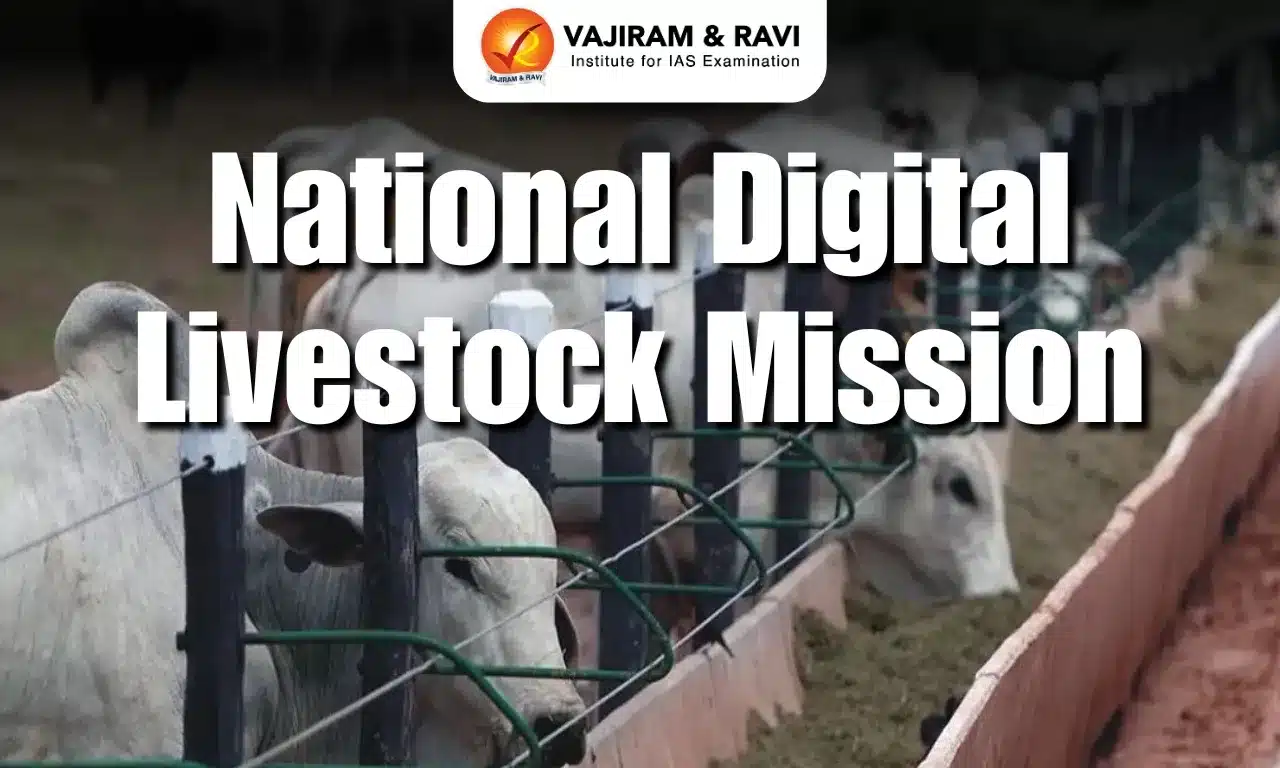
  • It was launched by the Department of Animal Husbandry and Dairying, Government of India for creating a digital database of livestock and related services across the country. 
  • Aims: To enhance livestock productivity and breed improvement, strengthen disease surveillance and control, enable traceability of livestock products and create a farmer-centric digital ecosystem for efficient service delivery. 
  • It has been implemented across all States in India.
  • The digital backbone of the mission is the ‘Bharat Pashudhan’ platform.
    • Bharat Pashudhan’ platform includes mobile and web-based applications used by field workers to record livestock-related activities.
    • Each animal is assigned a unique 12-digit bar-coded ear tag, which serves as its digital identity.
    • Using this system, field workers capture data on animal registration, artificial insemination and breeding, ownership changes, vaccinations, disease reporting, milk recording, ration balancing and e-prescriptions.

Objectives of the National Digital Livestock Mission

  • Improving breeding outcomes suited to India’s diverse agro-climatic conditions.
  • Enabling real-time disease monitoring and control, and establishing a robust traceability mechanism for livestock products.
  • The mission also focuses on empowering farmers by providing easy access to information on government schemes and livestock-related services.

Source: PIB

National Digital Livestock Mission FAQs

Q1: What is the primary objective of National Digital Livestock Mission (NDLM)?

Ans: To create a farmer-centric, technology-enabled ecosystem.

Q2: Which ministry is responsible for implementing NDLM?

Ans: Ministry of Fisheries, Animal Husbandry and Dairying

DHRUV64

DHRUV64

DHRUV64 Latest News

Recently, India unveiled its first fully indigenously developed microprocessor DHRUV64.

About DHRUV64

  • It is a fully indigenously developed microprocessor of India.
  • It is developed by the Centre for Development of Advanced Computing (C-DAC) under the Microprocessor Development Programme (MDP).

Key Features of DHRUV64

  • Processor Core & Speed: It is a 64-bit dual-core processor running at 1.0 GHz, giving it the ability to handle multiple tasks smoothly.
  • Execution Method: It uses superscalar execution, which allows the processor to start more than one instruction in the same moment for better speed.
  • Instruction Handling: It supports out-of-order processing, meaning it can complete instructions that are ready first, improving overall efficiency.
  • Packaging & Integration: It includes built-in communication and control functions inside an advanced FCBGA package, making the chip compact and ready for use in many systems.

Potential Application of DHRUV64

  • It is capable of supporting strategic and commercial applications.
  • DHRUV64 is suitable for sectors such as 5G infrastructure, automotive systems, consumer electronics, industrial automation and the Internet of Things (IoT).
  • It provides homegrown microprocessor technology designed for startups, academia, and industry to build, test, and scale indigenous computing products without relying on foreign processors.
  • DHRUV64 supports prototype development for new system architectures at lower cost.

Source: PIB

DHRUV64 FAQs

Q1: What is the primary application of DHRUVA64?

Ans: It can be used in strategic autonomy and critical infrastructure.

Q2: Who developed DHRUVA64?

Ans: Centre for Development of Advanced Computing (C-DAC)

Natyashastra

Natyashastra

Natyashastra Latest News

The Indira Gandhi National Centre for the Arts (IGNCA) recently organised the academic programme titled ‘Natyashastra – Synthesis of Theory and Praxis’ during the 20th Session of UNESCO’s Intergovernmental Committee for the Safeguarding of Intangible Cultural Heritage at the iconic Red Fort, Delhi.

About Natyashastra

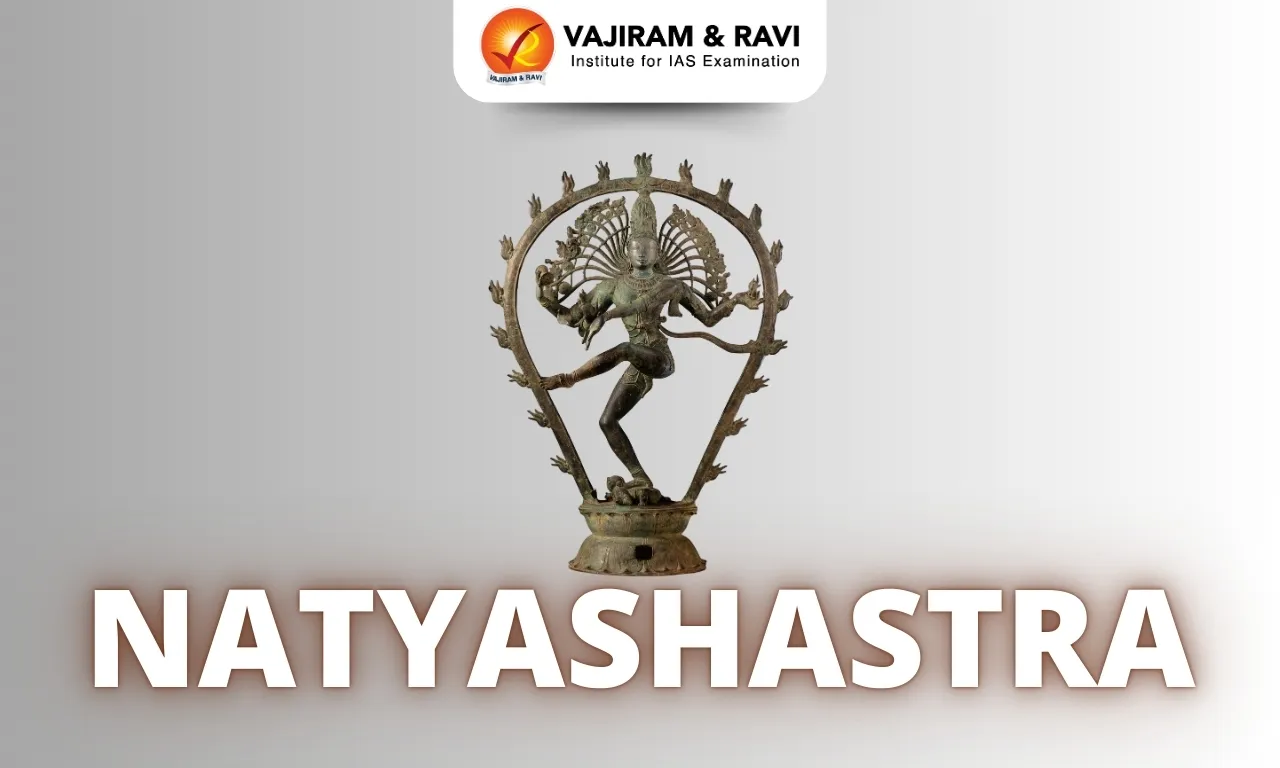
  • It is an ancient Sanskrit treatise on performing arts.
  • The title is a combination of two Sanskrit words – Natya and Shastra. 
    • Natya refers to the technique of dance and drama, and shastra refers to science.
  • It was composed by the sage Bharata Muni.
  • It has been dated to between the second century BCE and the second century CE. 
  • It is the earliest known treatise on performative arts in South Asia. 
  • Its primary importance lies in its justification of Indian drama as a vehicle of religious enlightenment.
  • It comprises around 36,000 verses detailing drama (natya), performance (abhinaya), music (sangita), emotions (bhava), and aesthetic experience (rasa).
  • One of the text's most profound contributions is the articulation of the concept of Rasa, the essential emotional essence that lies at the heart of any great work of art. 
    • Bharata Muni identified eight primary Rasas - Shringara (love), Hasya (humor), Karuna (compassion), Raudra (anger), Veera (heroism), Bhayanaka (fear), Bibhatsa (disgust), and Adbhuta (wonder).
    • He also explained how the skilled performer, through the skillful deployment of bhava (emotional expression), could evoke these sentiments in the audience.
  • UNESCO added Natyashastra to its Memory of the World Register, recognizing its global cultural significance.

Key Facts about Indira Gandhi National Centre for the Arts (IGNCA)

  • It was established as an autonomous body by the Government of India, under the Ministry of Culture.
  • Mandate
    • Document, preserve, conserve and disseminate the Indian arts and cultural heritage.
    • Train competent professionals to work in the specialized field of culture. 
  • The IGNCA has six functional units:
    • Kalanidhi, the multi-form library; 
    • Kalakosa, devoted mainly to the study and publication of fundamental texts, predominantly in Sanskrit; 
    • Janapada Sampada, the division engaged in lifestyle studies; 
    • Kaladarsana, the executive unit which transforms researches and studies emanating from the IGNCA into visible forms through exhibitions; 
    • Cultural Informatics Lab, which applies technology tools for cultural preservation and propagation;
    • Sutradhara, the administrative section that acts as a spine supporting and coordinating all the activities.

Source: PIB

Natyashastra FAQs

Q1: What is the Natyashastra?

Ans: It is an ancient Sanskrit treatise on performing arts.

Q2: Who composed the Natyashastra?

Ans: The Natyashastra was composed by the sage Bharata Muni.

Q3: During which period is the Natyashastra believed to have been composed?

Ans: It is dated between the second century BCE and the second century CE.

Q4: Which aspects of performing arts are discussed in the Natyashastra?

Ans: It discusses drama (natya), performance (abhinaya), music (sangita), emotions (bhava), and aesthetic experience (rasa).

Q5: How many primary Rasas were identified by Bharata Muni?

Ans: He identified eight primary Rasas.

Narpuh Wildlife Sanctuary

Narpuh Wildlife Sanctuary

Narpuh Wildlife Sanctuary Latest News

Recently, scientists warned that Narpuh Wildlife Sanctuary is undergoing conservation challenges particularly from limestone mining and cement factories.

About Narpuh Wildlife Sanctuary

  • Location: It is situated in East Jantia Hills in Jowai, Meghalaya.
  • It was declared a wildlife sanctuary in 2014 and is the only protected area in the Jaintia Hills.
  • The Sanctuary is bounded by Reserve Forests on all sides except a part in South West which shares a boundary with the State of Assam.
  • Rivers: The northern part of the sanctuary is bounded by Lukha River forming a physical barrier.
  • It is prone to extremely heavy rainfall, averaging more than 6,000 mm, from the southwest monsoon.
  • Its climate is favorable for the propagation and sustenance of a rich and wide variety of wild, endangered Flora and Fauna.
  • Vegetation: Some of the tallest evergreen and semi-evergreen forests remaining in Meghalaya are found in this region.
  • Fauna: Hoolock Gibbon, Serow, Slow Loris, Sloth Bear, Large Indian Civet, Leopard Cat, Clouded Leopard, Barking Deer etc are found here.
  • Flora : Castanopsis indica, C. tribuloides, Dysoxylum Sp., Elaeocarpus Sp., Engelhardtia spicata, Syzygium Sp. Etc.

Source: HubNetwork

Narpuh Wildlife Sanctuary FAQs

Q1: Where is Narpuh Wildlife Sanctuary located?

Ans: East Jaintia Hills District, Meghalaya

Q2: What type of forest is found in Narpuh Wildlife Sanctuary?

Ans: Evergreen forest and Semi-evergreen forest are found here.

Nitrofurans

Nitrofurans

Nitrofurans Latest News

Recently, FSSAI launched an egg safety drive after ‘nitrofurans presence’ triggers uproar.

About Nitrofurans

  • Nitrofurans are synthetic broad-spectrum antibiotics.
  • There are four parent compounds that comprise the nitrofuran class: furazolidone, furaltadone, nitrofurazone, and nitrofurantoin.
  • The defining structural component is a furan ring with a nitro group.
  • These were once widely used in poultry, pigs, shrimp and other livestock because they are cheap and highly effective.

Key Features of Nitrofurans

  • These are synthetic chemotherapeutic agents with a broad antimicrobial spectrum.
  • They are active against both gram-positive and gram-negative bacteria, including Salmonella and Giardia spp, trichomonads, amebae, and some coccidial species.
  • They are much more active in acidic environments (a pH of 5.5 is optimal for nitrofurantoin activity). 
  • They are primarily bacteriostatic, but at high doses they are also bactericidal.

Impacts on Human Health

  • Carcinogenic potential: Some nitrofurans have shown carcinogenic effects in animal studies.
  • Toxicity concerns: Potential toxicity and side effects in humans, particularly with prolonged use or high doses.

Source: New India Express

Nitrofurans FAQs

Q1: What is the primary use of Nitrofurans?

Ans: Antibacterial agents

Q2: What is the mechanism of action of Nitrofurans?

Ans: What are the applications of Nitrofurans?

Arun-3 Hydropower Project

Arun-3 Hydropower Project

Arun-3 Hydropower Project Latest News

The Chairman and Managing Director (CMD) of SJVN recently visited the 900 MW Arun-3 hydroelectric project (HEP) in Nepal to review the status of construction and assess progress across key components of the project.

About Arun-3 Hydropower Project

  • It is a 900 MW run-of-the-river hydropower project located on the Arun River in the Sankhuwasabha District of Eastern Nepal. 
    • Arun is a tributary of the Koshi River in Nepal.
  • It envisages about 70 m high concrete gravity dam and Head Race Tunnel (HRT) of 11.74 km with an underground Power House containing four generating units of 225 MW each on the Left Bank.
  • Estimated to cost more than $1.6 bn, the hydropower plant will produce 4,018.87 million units of electricity a year.
  • Once completed, it will be the biggest hydroelectric facility in Nepal.
  • SJVN Arun-III Power Development Company (SAPDC), a wholly-owned subsidiary of India’s Satluj Jal Vidyut Nigam (SJVN), is developing the project on a build-own-operate-transfer (BOOT) basis. 
    • SJVN is a joint venture between the Government of India and the Government of Himachal Pradesh.
  • SAPDC will operate the facility for a period of 25 years, excluding the construction period of five years, before transferring ownership to the Nepal government.
  • Nepal will receive 21.9% of the electricity generated at the power plant as free power during these initial 25 years of commercial operations.
  • The project will provide surplus power to India, strengthening economic linkages with Nepal. 
  • The power from the project shall be exported from Dhalkebar in Nepal to Muzaffarpur in India.

Source: WPM

Arun-3 Hydropower Project FAQs

Q1: What is the Arun-3 Hydropower Project?

Ans: It is a run-of-the-river hydropower project in eastern Nepal.

Q2: The Arun River is a tributary of which major river system?

Ans: It is a tributary of the Koshi River.

Q3: What is the total installed capacity of the Arun-3 project?

Ans: The total installed capacity is 900 MW.

Q4: Which company is developing the Arun-3 project?

Ans: SJVN Arun-III Power Development Company (SAPDC), a wholly-owned subsidiary of India’s Satluj Jal Vidyut Nigam (SJVN)

Apache AH-64E Attack Helicopter

Apache AH-64E Attack Helicopter

AH-64E Apache Attack Helicopter Latest News

The Indian Army recently received the final batch of three AH-64E Apache attack helicopters, completing its six-unit fleet at the 451 Army Aviation Squadron based in Jodhpur, Rajasthan.

About AH-64E Apache Attack Helicopter

  • It is the world’s most advanced multi-role combat helicopter.
  • It is widely used for advanced reconnaissance, precision strikes, and close air support missions globally.
  • Country of Origin: United States
  • Manufacturer: Boeing
  • It is also known as the Apache Guardian.
  • The AH-64E attack helicopter is the latest version of the Apache used by the US Army.
  • Other purchasers: India, Egypt, Greece, Indonesia, Israel, Japan, South Korea, Kuwait, Netherlands, Qatar, Saudi Arabia, Singapore, UAE, and UK.
  • Apache for Indian defence forces: The Indian Air Force has a fleet of 22 AH-64E Apache attack helicopters, and in 2020, Boeing signed an agreement with the Government of India for the acquisition of six more Apache helicopters for the Indian Army.

AH-64E Apache Attack Helicopter Features

  • Length: 17.8 m 
  • Max Speed: 300 kph 
  • It has a maximum operating weight of 10,432 kg and can climb up to more than 2,800 feet per minute.
  • It is a heavily armed, twin-engine ground-attack helicopter.
  • Armed with Hellfire missiles, 70 mm rockets, and a 30 mm chain gun, the helicopter can engage tanks, vehicles, troop concentrations, communications and logistics centres, etc. 
  • It can also fire short-range air-to-air missiles like the Stinger.
  • The AH-64E includes a new integrated infrared laser that allows for easier target designation and enhanced infrared imagery that blends infrared and night vision capabilities.
  • It can track up to 128 targets per minute and prioritise threat levels.

Source: TH

AH-64E Apache Attack Helicopter FAQs

Q1: What is the AH-64E Apache?

Ans: It is the world’s most advanced multi-role combat attack helicopter.

Q2: Which country developed the AH-64E Apache?

Ans: The United States developed the AH-64E Apache.

Q3: Which company manufactures the AH-64E Apache attack helicopter?

Ans: It is manufactured by Boeing.

Q4: How many AH-64E Apache helicopters are currently operated by the Indian Air Force?

Ans: The Indian Air Force operates 22 AH-64E Apache helicopters.

Q5: What are the primary weapons carried by the AH-64E Apache?

Ans: It carries Hellfire missiles, 70 mm rockets, a 30 mm chain gun, and Stinger air-to-air missiles.

Sabka Bima Sabki Raksha Bill 2025 – Strengthening Insurance Regulation

Insurance Regulation

Insurance Regulation Latest News

  • The Union government has introduced the Sabka Bima Sabki Raksha (Amendment of Insurance Laws) Bill, 2025, in the Lok Sabha.

Background: India’s Insurance Sector

  • India’s insurance sector plays a critical role in financial security, risk mitigation, and long-term savings. 
  • Despite steady growth in insurance penetration, the sector has faced persistent challenges such as mis-selling of policies, opaque commission structures, weak enforcement against intermediaries, and delays in grievance redressal.
  • Insurance distribution has expanded rapidly through agents, brokers, banks, NBFCs, fintech platforms, and web aggregators. 
  • However, regulatory capacity has not always kept pace with this expansion, creating gaps in supervision. 
  • The new Bill seeks to address these gaps by strengthening IRDAI’s legal authority and enforcement mechanisms.

Overview of the Sabka Bima Sabki Raksha Bill, 2025

  • The Bill proposes amendments to existing insurance laws to give IRDAI stronger supervisory, investigative, and enforcement powers
  • It marks a shift from a largely compliance-based regulatory model to a more proactive enforcement-driven framework.
  • The proposed changes apply not only to insurance companies but also to a wide range of insurance intermediaries, including agents, brokers, corporate agents (such as banks and NBFCs), web aggregators, third-party administrators (TPAs), surveyors, and insurance marketing firms. 

Expanded Search and Seizure Powers

  • A key feature of the Bill is granting the IRDAI Chairperson the authority to order searches, seizures, and inspections
  • These powers can be exercised when there is reason to believe that regulated entities are:
    • Withholding or concealing information,
    • Failing to produce the required documents, or
    • Attempting to tamper with or destroy records.
  • The Chairperson may authorise senior officers to enter premises, inspect documents, seize records, and even break open locks if keys are unavailable. 
  • This brings IRDAI’s powers closer to those already exercised by regulators such as SEBI. 

Stronger Enforcement and Penalty Framework

  • The Bill also empowers IRDAI to disgorge wrongful gains made by insurers or intermediaries through illegal practices such as excess commissions, rebates, or mis-selling.
  • Further, IRDAI will have enhanced authority to issue binding directions to insurers in the public interest. 
  • These directions may be aimed at protecting policyholders, preventing mismanagement, or ensuring sound corporate governance. 
  • While insurers will be given an opportunity to be heard, compliance with such directions will be mandatory. 

Regulation of Commissions and Intermediaries

  • Another significant provision relates to tighter control over commissions and remuneration paid to agents and intermediaries. IRDAI will be empowered to:
    • Prescribe commission limits,
    • Mandate disclosure norms, and
    • Regulate payment structures.
  • The objective is to curb mis-selling driven by high commissions and ensure that policyholder interests remain central to insurance distribution. 
  • This is particularly important in the context of growing digital and fintech-led insurance platforms. 

Significance for Policyholders and Governance

  • For policyholders, the Bill promises stronger safeguards against fraud, mis-selling, and unfair practices. 
  • Enhanced enforcement powers are expected to improve trust in the insurance system and strengthen grievance redressal mechanisms.
  • From a governance perspective, the Bill reinforces IRDAI’s role as a modern financial regulator capable of proactive supervision rather than post-facto action. 
  • It aligns insurance regulation with global best practices in financial sector oversight.

Challenges and Way Forward

  • While the Bill strengthens regulation, concerns may arise regarding excessive concentration of powers and the need for safeguards against arbitrary use. 
  • Effective implementation will depend on transparency, due process, and institutional capacity within IRDAI.
  • Going forward, regulatory reforms must be complemented by consumer awareness, digital literacy, and faster dispute resolution mechanisms to ensure inclusive insurance growth.

Source: IE | Fortune

Insurance Regulation FAQs

Q1: What is the Sabka Bima Sabki Raksha Bill, 2025?

Ans: It is an amendment Bill aimed at strengthening IRDAI’s regulatory and enforcement powers in the insurance sector.

Q2: Which authority gains search and seizure powers under the Bill?

Ans: The Insurance Regulatory and Development Authority of India (IRDAI).

Q3: Who are covered as insurance intermediaries under the Bill?

Ans: Agents, brokers, banks, NBFCs, fintech platforms, web aggregators, TPAs, surveyors, and insurance marketing firms.

Q4: Why does the Bill regulate commissions more strictly?

Ans: To curb mis-selling and protect policyholder interests.

Q5: How does the Bill benefit insurance consumers?

Ans: It strengthens oversight, reduces unfair practices, and enhances consumer protection.

Revising India’s GDP Framework – Phasing Out ‘Discrepancies’ for Greater Statistical Credibility

Revising India’s GDP Framework

Revising India’s GDP Framework Latest News

  • As part of the ongoing revision of India’s GDP data series, the Ministry of Statistics and Programme Implementation (MoSPI) has proposed eliminating the contentious ‘discrepancies’ component from GDP estimates. 
  • This reform is outlined in MoSPI’s discussion paper on methodological improvements and coincides with the new GDP base year of 2022–23, scheduled for launch on 27 February 2026. 
  • The GDP back series under the revised base year is expected by February 2027.

‘Discrepancies’ in GDP

  • GDP compilation methods: Production (value-added/income) approach; expenditure approach.
  • Reason for discrepancies:
    • Due to differences in data sources, coverage, valuation methods, and time lags, GDP estimates from these two approaches often do not match.
    • This difference is recorded as ‘discrepancies’ under the expenditure-side GDP, which is considered relatively less accurate.
  • Interpretation:
    • Positive discrepancy: Production-side GDP is higher than Expenditure-side GDP
    • Negative discrepancy: Expenditure-side GDP is higher than Production-side GDP

Why are Discrepancies Problematic

  • They obscure the true drivers of GDP growth, complicating macroeconomic analysis. Large discrepancies can lead to significant future revisions in GDP growth rates.
  • Example (July–September quarter):
    • Real GDP growth: 8.2%
    • Discrepancies: ₹1.63 lakh crore (3.3% of GDP) in real terms
    • In nominal terms: (–)₹2.46 lakh crore ([–]2.9% of GDP)
  • The post-pandemic period has seen volatile swings, e.g., (–)3% of GDP (Jan–Mar 2023), +3.3% of GDP (Apr–Jun 2023).

Proposed Reform - Removing Discrepancies

  • MoSPI plans to integrate Supply and Use Tables (SUTs) with annual national accounts. Use SUTs to ensure that total supply is equal to total use for every good and service.
  • It aims to limit discrepancies in early GDP estimates, eliminate them entirely in final estimates once full data becomes available.
  • SUTs:
    • Map domestic production and imports against intermediate consumption, final consumption, capital formation, and exports.
    • Follow System of National Accounts (SNA) accounting constraints.

Expert Opinion

  • Economists view the move positively:
    • Eliminating discrepancies will improve transparency and interpretability of GDP data.
    • Persistent or rising discrepancies in past revisions have undermined confidence in growth estimates.
  • However, concerns remain about data quality, especially reliance on outdated survey data (over a decade old).

Challenges and Way Forward

  • Inherent complexity: Of GDP estimation in a large, informal, and diverse economy. Improve institutional capacity for national accounts compilation.
  • Outdated surveys and data gaps: Particularly in services and informal sectors. Regularly update surveys and base-year datasets.
  • Time lags and uneven quality of administrative data: Strengthen administrative data systems and real-time data collection.
  • Transparency concerns
    • Risk that eliminating discrepancies may involve judgement-based adjustments, raising transparency concerns. 
    • Ensure methodological transparency while adjusting data to remove discrepancies. Align closely with international best practices under SNA.

Conclusion

  • The proposed removal of ‘discrepancies’ from India’s GDP estimates marks a significant methodological reform aimed at enhancing statistical credibility, consistency, and policy relevance. 
  • While integration of Supply and Use Tables can improve accuracy, the success of this reform ultimately depends on robust, updated data sources and transparent statistical practices. 
  • For policymakers, investors, and analysts, a cleaner GDP framework will enable better interpretation of India’s growth dynamics.

Source: IE

Revising India’s GDP Framework FAQs

Q1: What are ‘discrepancies’ in India’s GDP estimates and why do they arise?

Ans: Discrepancies arise due to differences in data sources, coverage, valuation and time lags between the production and expenditure approaches to GDP estimation.

Q2: Why has MoSPI proposed the elimination of ‘discrepancies’ from GDP calculations?

Ans: Because large and volatile discrepancies distort interpretation of growth drivers and lead to significant revisions in GDP estimates.

Q3: How will the integration of Supply and Use Tables (SUTs) help improve GDP estimation in India?

Ans: SUTs ensure balance between total supply and total use of goods and services, thereby limiting and eventually eliminating discrepancies in GDP estimates.

Q4: What risks do large GDP discrepancies pose for economic policymaking?

Ans: Large discrepancies undermine data credibility, obscure sectoral growth trends, and can result in sharp future revisions affecting policy decisions.

Q5: What structural challenges in India’s GDP estimation remain?

Ans: Dependence on outdated survey data, data gaps in the informal sector, etc.

MGNREGS and Farm Labour Availability: What the Data Really Shows

MGNREGS and Farm Labour

MGNREGS and Farm Labour Latest News

  • The Viksit Bharat-Guarantee for Rozgar and Ajeevika Mission Gramin (VB-G RAM G) Bill proposes a 60-day pause on rural employment works during peak sowing and harvesting seasons. 
  • Notified in advance by States, the measure aims to ensure adequate farm labour availability. 
  • The Bill seeks to replace MGNREGA, which has long been criticised for contributing to agricultural labour shortages, a concern earlier raised even by former Agriculture Ministers.

Rural Wages Under MGNREGA: What the Data Show

  • MGNREGA is often credited with tightening rural labour markets and strengthening workers’ bargaining power. 
  • However, this has not translated into a strong or sustained rise in wages.
  • Labour Bureau data covering 25 occupations across 20 States show that all-India rural wage growth for male workers ranged between 3.6% and 6.4% annually over the past decade.
  • In four of the ten years (2015-16, 2019-20, 2021-22 and 2022-23), nominal rural wage growth lagged behind consumer price inflation, implying a fall in real wages. 
    • Real wage growth exceeded 1% only in 2017-18.
  • Agricultural wages grew faster than overall rural wages in eight out of ten years. Only in 2015-16 and 2019-20 did non-farm rural wages grow faster.

Limited Gains Despite MGNREGA

  • Even agricultural wages merely kept pace with inflation, showing no significant surge over the past decade. 
  • Overall, the data suggest that despite MGNREGA, rural wage growth under the current government has remained modest and often inflation-adjusted stagnant.

Why Rural Wage Growth Has Remained Modest

  • A key factor behind tepid rural wage growth is the sharp rise in women’s participation in the rural workforce. 
  • According to the Periodic Labour Force Survey, rural female LFPR rose from 24.6% in 2017-18 to 47.6% in 2023-24 — almost doubling in seven years, significantly expanding labour supply.
    • Labour Force Participation Rate (LFPR) measures the share of people aged 15+ who are working or seeking work.

Role of Government Welfare Schemes

  • The Economic Survey 2023-24 attributes this rise to schemes like Ujjwala, Har Ghar Jal, Saubhagya and Swachh Bharat, which reduced women’s unpaid household burdens by improving access to LPG, water, electricity and sanitation.

Expansion of Rural Labour Supply

  • By freeing women’s time for paid work, these schemes increased the size of the rural workforce. Economically, this “rightward shift” in labour supply exerted downward pressure on wages.

Questioning the Farm Labour Shortage Narrative

  • The data weakens the claim that MGNREGA created a widespread labour shortage. Increased female participation, especially in nearby farm work, may have offset workers drawn into MGNREGA.
  • While farmers face seasonal labour shortages, directly blaming MGNREGA — and justifying work curbs during peak seasons — requires stronger, ground-level evidence rather than broad assumptions.

Alternative Causes of Farm Shortage

  • Low Farm Wages: Agricultural wages are often lower than both MGNREGS wages and non-farm wages, making farm work less attractive.
  • Poor Working Conditions: Farm labourers frequently suffer from health issues like musculoskeletal disorders due to harsh working conditions. MGNREGS work is often perceived as less toilsome with less supervision.
  • Out-migration: A significant cause of labour shortage is the long-standing trend of rural out-migration to urban areas for better-paying jobs and opportunities, a trend that predates the implementation of NREGS.
  • Increased Bargaining Power: MGNREGS has provided a baseline of employment security, increasing the bargaining power of rural workers for better wages in both the farm and non-farm sectors, which some farmers interpret as a "shortage".

Conclusion

  • Policy discussions have explored improved alignment with farm cycles, including temporary work suspensions during peak seasons or permitting MGNREGS activities on private farms for specific agricultural operations.
  • While some farmers attribute labour shortages to MGNREGS, broader evidence points to deeper structural issues in agriculture and the availability of better work options for rural labourers.

Source: IE

MGNREGS and Farm Labour FAQs

Q1: Does MGNREGS significantly increase rural wages?

Ans: Data show rural wage growth remained modest, often below inflation, with real wages declining in several years despite MGNREGS, indicating no major wage surge.

Q2: Why have agricultural wages not risen sharply under MGNREGS?

Ans: Agricultural wages largely tracked inflation, as rising labour supply—especially from increased female participation—offset any tightening effect caused by MGNREGS.

Q3: How has women’s labour force participation affected rural wages?

Ans: Rural female LFPR nearly doubled since 2017–18, expanding labour supply and exerting downward pressure on wages, limiting real wage growth.

Q4: Is MGNREGS the main reason for farm labour shortages?

Ans: Evidence suggests otherwise; structural issues like low farm wages, migration, and working conditions play a larger role than MGNREGS.

Q5: What policy solutions are being discussed?

Ans: Options include aligning MGNREGS work with lean seasons, temporary peak-season pauses, or permitting limited work on private farms for agriculture-related activities.

Post-Maoist India and the Next Phase of Governance in Scheduled Areas

Post-Maoist India

Post-Maoist India Latest News

  • Discussions on the rise of the Maoist movement in the 1990s and early 2000s have largely focused on underdevelopment and structural socio-economic deprivation in India’s Red Corridor. 
  • Most official and scholarly analyses traced the insurgency to poverty and marginalisation, prompting the State to adopt a two-pronged strategy combining security operations with development initiatives. 
  • While governance and justice delivery have occasionally featured in policy debates, there has been limited effort to systematically examine how governance failures, weak institutions, and poor grievance redressal mechanisms deepened and sustained cycles of Maoist insurgency.

Governance Failures in Scheduled Areas

  • The contemporary Maoist insurgency is largely concentrated in Fifth Schedule areas of central and eastern India, regions with significant tribal populations. 
  • These areas were envisaged by the Constitution as a special social contract for Adivasis, recognising their distinct needs and vulnerabilities.

Promise of the Fifth Schedule

  • The Fifth Schedule created a dedicated governance framework for tribal regions.
  • This included Tribal Advisory Councils with substantial Adivasi representation, financial support through the Tribal Sub-Plan, and discretionary powers for Governors to prevent land alienation and safeguard tribal interests.

Reality of State Neglect and Exploitation

  • Despite these safeguards, tribal communities experienced persistent discrimination, exploitation, and marginalisation. 
  • The Planning Commission’s Expert Committee (2008) highlighted how resource-rich regions were reduced to extreme poverty due to weak governance and state neglect. 
  • Social and economic indicators for tribal populations remained far below national averages, with multidimensional poverty levels worse than Sub-Saharan Africa.

Land Alienation and Dispossession

  • The gravest challenge for Adivasis has been the loss of land and forest rights. 
  • Despite constitutional protections, millions were dispossessed, particularly after economic liberalisation. 
  • Studies show that tribal land alienation has been at its highest in the post-liberalisation period.

Structural Governance Deficit

  • Successive governments failed to build governance structures suited to tribal realities. 
  • Colonial-era administrative systems, complex legal processes, and inaccessible justice mechanisms were retained in Scheduled Areas, leaving low-literacy tribal communities unable to effectively assert their rights or benefit from constitutional protections.

Alienation Through Administrative Exclusion

  • A key factor deepening Adivasi alienation in Fifth Schedule areas has been the near-total absence of local representation in administrative structures. 
  • Officials implementing tribal safeguards were overwhelmingly outsiders, often carrying social bias and limited understanding of local realities.

Institutional Failure to Protect Tribal Interests

  • Constitutional and statutory bodies such as the Ministry of Tribal Welfare, the National Commission for Scheduled Tribes, and State Governors—formally entrusted with safeguarding tribal rights—largely failed in practice. 
  • The Mungekar Committee (2009) observed that these institutions did little to curb exploitation, while Governors rarely exercised their discretionary powers in Scheduled Areas. 
  • Weak service delivery in health, education, policing, revenue administration, and the judiciary compounded these failures.

PESA: Promise and Persistent Violations

  • The Panchayat Extension to Scheduled Areas (PESA) Act, 1996, was a notable exception, aiming to promote tribal self-governance and empower Gram Sabhas over land, resources, and livelihoods. 
  • While PESA improved political representation at the grassroots, its core provisions—especially those related to land acquisition—were routinely violated, as highlighted by the Planning Commission’s Expert Committee (2008).

Governance Deficits and Maoist Mobilisation

  • Chronic governance failures, weak grievance redressal, and low political priority accorded to the Fifth Schedule created fertile ground for Maoist mobilisation. 
  • Adivasi frustrations and distrust in state institutions drove many to support Maoist ideology, which promised justice, land rights, and dignity under the slogan Jal, Jungle, Zameen.

Parallel Governance Structures

  • In regions like Dandakaranya, persistent underdevelopment enabled Maoists to establish parallel administrations.
  • They started offering basic services such as healthcare, schooling, food distribution, and swift—though extrajudicial—justice. 
  • These “Janatana Sarkars” filled governance vacuums left by the state, further entrenching Maoist influence.

Reimagining Governance in Post-Maoist Regions

  • Recent years have seen improvements in welfare delivery and core infrastructure—roads, electricity, telecom—across Maoist-affected Fifth Schedule areas, aided by digital platforms and direct benefit transfers. 
    • However, critical institutions—justice, health, education, policing, and revenue—remain weak and understaffed, limiting effective governance.

Structural Bottlenecks and Under-Representation

  • A core paradox persists: local Adivasi under-representation in administration. 
  • Despite quotas at local levels, real power and finances remain with a largely non-tribal permanent bureaucracy, rendering representation largely symbolic and undermining trust.

Erosion of Rights-Based Frameworks

  • Key protective laws face dilution:
    • Forest Rights Act (FRA): Central to Adivasi and forest-dweller livelihoods, its implementation has been weakened by violations, amendments, and judicial interventions.
    • CAF Act, 2016: Expanded compensatory afforestation has diluted safeguards and harmed forest-based livelihoods.
    • PESA: Despite its promise of self-governance, States—especially mineral-rich ones like Chhattisgarh—have undermined Gram Sabha consent powers, particularly for mining and land acquisition.

Political Push Needed

  • Revitalising FRA and PESA requires strong political will from the Centre and States to restore original mandates and enforce safeguards against land alienation and resource extraction without consent.

Toward a New Governance Charter

  • Post-Maoist governance must reverse political and administrative under-representation, empower local institutions with real autonomy and finances, and rebuild trust. 
  • Adapting elements from Sixth Schedule models—Autonomous District/Zonal Councils—could offer a viable path.

Source: TH

Post-Maoist India FAQs

Q1: Why is governance central to understanding Maoist insurgency?

Ans: Beyond poverty, weak institutions, poor justice delivery, and administrative exclusion in Fifth Schedule areas deepened alienation and sustained Maoist mobilisation.

Q2: What was the original promise of the Fifth Schedule?

Ans: It aimed to protect tribal rights through special governance, land safeguards, Tribal Advisory Councils, and Governor oversight, but failed in implementation.

Q3: How did land alienation affect Adivasi communities?

Ans: Despite constitutional protections, large-scale land dispossession—especially post-liberalisation—undermined livelihoods and intensified distrust in state institutions.

Q4: What role did PESA play, and why did it fall short?

Ans: PESA promised tribal self-governance via Gram Sabhas, but routine violations—especially in land acquisition—eroded its effectiveness.

Q5: What reforms are needed in post-Maoist regions?

Ans: India needs a new governance charter focusing on local representation, stronger FRA and PESA enforcement, and possibly adapting Sixth Schedule-style autonomy models.

Daily Editorial Analysis 17 December 2025

Daily Editorial Analysis

India and the U.S.: 2005 versus 2025

Context

  • The trajectory of India–United States relations over the past two decades reflects a fundamental shift in American strategic thinking.
  • In 2005, the relationship was anchored in confidence, optimism, and a belief that the rise of responsible powers strengthened the global order.
  • By contrast, the 2025 U.S. National Security Strategy (NSS) reveals a more inward-looking America, focused on minimising burdens and reassuring itself of relevance.
  • This transformation carries significant implications for India’s strategic choices and expectations.

The Spirit of 2005: Confidence and Strategic Generosity

  • The strategic moment of 2005 was defined by American self-assurance and strategic generosity.
  • Washington’s declaration that it wished to help India become a major world power reflected a worldview in which the ascent of others was not seen as a threat but as a stabilising force.
  • This belief underpinned the civil nuclear agreement and a broader partnership that treated India’s rise as an end in itself.
  • Mutual confidence lay at the core of this engagement. India’s strategic autonomy was accommodated because it was embedded in a shared sense of possibility.
  • Global leadership was viewed as a responsibility to be exercised, not a liability to be avoided. The partnership was expansive, aspirational, and future-oriented.

The 2025 NSS: Retrenchment and National Reassurance

  • The 2025 NSS marks a sharp departure from this earlier outlook. Its tone is assertive yet defensive, saturated with claims of unprecedented achievement.
  • Rather than offering a roadmap for shaping the international system, the strategy functions as an exercise in national reassurance, projecting certainty in a world that increasingly resists American control.
  • Where the language of 2005 emphasised partnership, the language of 2025 emphasises burdens.
  • The declaration that the U.S. will no longer prop up the entire world order like Atlas signals a retreat from confident global leadership.
  • Engagement is framed as a cost to be reduced rather than an investment to be sustained, and leadership becomes conditional and transactional.

India Reframed: From Strategic End to Tactical Means

  • This intellectual shift is most visible in the treatment of India. Cooperation remains important, but it is explicitly instrumental.
  • India is framed less as a civilisational power with intrinsic value and more as a component of America’s China-balancing strategy, particularly within the Indo-Pacific and the Quad framework.
  • In 2005, India’s rise was a strategic objective; in 2025, it is a strategic function. This narrowing reflects a broader retreat from internationalist confidence.
  • The assertion of unilateral autonomy and hemispheric exclusivity highlights an irony: strategic autonomy once questioned when articulated by India is now embraced by the U.S. and labelled realism.

Strategy as Performance and the Limits of Engagement

  • The NSS’s tone reinforces this inward turn. Its enumeration of diplomatic successes across diverse regions reads less as strategic assessment and more as performance aimed at domestic audiences.
  • Strategy becomes a narrative of achievement rather than a framework for managing global complexity.
  • For India, the implications are stark. The U.S. that once sought to expand India’s strategic space is now preoccupied with its own vulnerabilities and burden management.
  • It demands more from partners while offering fewer assurances in return. Shared interests persist, but shared responsibilities are receding, and burden-sharing increasingly resembles burden-shifting.

Recalibrating India’s Strategic Outlook

  • This shift does not negate the value of India–U.S. cooperation; it redefines its basis.
  • India can no longer assume that Washington will invest in India’s rise as a matter of strategic design.
  • The partnership must rest on converging interests rather than expansive expectations.
  • As the NSS itself underscores, partners are expected to assume primary responsibility for their regions, signalling that U.S. support will be selective and conditional.
  • The lesson of 2005 remains instructive. Transformative partnerships require confidence on both sides and a belief that another’s rise reinforces one’s own strength.
  • The 2025 strategy lacks this confidence, shaped instead by grievance over past overreach, scepticism of institutions, and a desire to restore an earlier conception of American primacy.

Conclusion

  • The era of widening horizons that enabled the civil nuclear breakthrough has given way to contracting American ambition and expanding Indian responsibility.
  • India’s emergence as a major world power will depend not on external sponsorship but on its own strategic confidence and material capacity in a fragmented global order.
  • Paradoxically, the narrowing of American commitments creates greater strategic space for others.
  • India’s challenge is not to fill a vacuum but to craft a role aligned with its scale, interests, and civilisational temperament.
  • While the assumptions of 2005 may not return, the aspiration that animated them remains India’s to realise.

India and the U.S.: 2005 versus 2025 FAQs

Q1. How did the U.S. view India’s rise in 2005?
Ans. The United States viewed India’s rise as a strategic objective that would strengthen the global order.

Q2. What core shift does the 2025 U.S. National Security Strategy reflect?
Ans. It reflects a shift from confident international leadership to burden minimisation and strategic retrenchment.

Q3. How is India positioned in the 2025 NSS?
Ans. India is positioned instrumentally, primarily as a partner within the U.S. strategy to balance China in the Indo-Pacific.

Q4. What does the emphasis on burden-sharing imply for U.S. partners?
Ans. It implies that partners are expected to assume greater regional responsibility with more limited U.S. support.

Q5. What determines India’s rise in the current global order?
Ans. India’s rise is determined by its own strategic confidence and material capacity rather than external sponsorship

Source: The Hindu

Daily Editorial Analysis 17 December 2025 FAQs

Q1: What is editorial analysis?

Ans: Editorial analysis is the critical examination and interpretation of newspaper editorials to extract key insights, arguments, and perspectives relevant to UPSC preparation.

Q2: What is an editorial analyst?

Ans: An editorial analyst is someone who studies and breaks down editorials to highlight their relevance, structure, and usefulness for competitive exams like the UPSC.

Q3: What is an editorial for UPSC?

Ans: For UPSC, an editorial refers to opinion-based articles in reputed newspapers that provide analysis on current affairs, governance, policy, and socio-economic issues.

Q4: What are the sources of UPSC Editorial Analysis?

Ans: Key sources include editorials from The Hindu and Indian Express.

Q5: Can Editorial Analysis help in Mains Answer Writing?

Ans: Yes, editorial analysis enhances content quality, analytical depth, and structure in Mains answer writing.

Param Vir Chakra

Param Vir Chakra

Param Vir Chakra Latest News

Portraits of all 21 Param Vir Chakra awardees are now on display at Rashtrapati Bhavan, replacing the previously displayed portraits of 96 British Aide-de-Camps (ADCs).

About Param Vir Chakra

  • It is India’s highest military decoration, awarded for displaying the most exceptional acts of valour, courage, and self-sacrifice during war.
  • It was introduced on January 26, 1950, on the first Republic Day with retrospective effect from 15 August 1947.
  • Literally, Param Vir Chakra means ‘Wheel (or Cross) of the Ultimate Brave’.
  • It can be awarded to officers, men, and women of all ranks of the Army, the Navy, and the Air Force; of any of the Reserve Forces, of the Territorial Army Militia; and of any other lawfully constituted Armed Forces. 
  • It can be, and often has been, awarded posthumously. 
  • It is similar to the British Victoria Cross, the US Medal of Honor, the French Legion of Honor, or the Russian Cross of St. George.
  • Design: 
    • The medal was designed by Mrs. Savitri Khanolkar. 
    • The medal is cast in bronze and circular in shape.
    • In the centre, on a raised circle, is the state emblem, surrounded by four replicas of Indra’s Vajra, flanked by the sword of Shivaji.  
    • On its reverse, it shall have embossed Param Vir Chakra both in Hindi and English with two lotus flowers between Hindi and English.  The fitting will be swivel mounting.
    • The decoration is suspended from a straight swiveling suspension bar and is held by a 32 mm purple ribbon.
  • First winner: Major Somanth Sharma, from the Kumaon regiment.
  • Till now, only 21 people had been given the Param Vir Chakra award, of which 14 are posthumous.

What are Gallantry Awards?

  • They have been instituted by the Government of India to honour the acts of bravery and sacrifice of the officers/personnel of the Armed Forces, other lawfully constituted forces, and civilians.
  • They are announced twice in a year – first on the occasion of the Republic Day and then on the occasion of the Independence Day.
  • All the gallantry awards may be awarded posthumously.
  • India’s Gallantry Awards in the Order of Precedence:
    • Param Vir Chakra
    • Ashoka Chakra
    • Mahavir Chakra
    • Kirti Chakra
    • Vir Chakra
    • Shaurya Chakra.
  • The President awards the gallantry awards to the awardees or their next of kin at the Defence Investiture Ceremony held every year at the Rashtrapati Bhawan.
  • However, the Param Vir Chakra and the Ashoka Chakra are conferred by the President to the awardees on the occasion of the Republic Day Parade at the Rajpath.

Source: TH

Param Vir Chakra FAQs

Q1: What is the Param Vir Chakra?

Ans: It is India’s highest military decoration for exceptional acts of valour, courage, and self-sacrifice during war.

Q2: When was the Param Vir Chakra instituted?

Ans: t was introduced on January 26, 1950, with retrospective effect from 15 August 1947.

Q3: What does the term ‘Param Vir Chakra’ literally mean?

Ans: It means “Wheel of the Ultimate Brave.”

Q4: Can the Param Vir Chakra be awarded posthumously?

Ans: Yes, it can be and has often been awarded posthumously.

Q5: Who designed the Param Vir Chakra medal?

Ans: The medal was designed by Mrs. Savitri Khanolkar.

Enquire Now