Crimean-Congo Hemorrhagic Fever (CCHF)

Crimean-Congo Hemorrhagic Fever

Crimean-Congo Hemorrhagic Fever Latest News

Scientists recently identified multiple targets for antibodies—proteins that protect us when an unwanted substance enters our body—that could one day help treat  Crimean-Congo hemorrhagic fever (CCHF).

About Crimean-Congo Hemorrhagic Fever

  • It is an important zoonotic disease caused by a tick-borne virus (Nairovirus) belonging to the family Bunyaviridae.  
  • The CCHF virus causes severe viral haemorrhagic fever outbreaks, with a case fatality rate of 10–40%. 

Crimean-Congo Hemorrhagic Fever Distribution

  • The disease was first characterized in 1944 in the Crimea. 
  • In 1969, the same pathogen was identified as the cause of a similar disease in the Democratic Republic of the Congo, leading to the combined name used today. 
  • CCHF commonly spreads in (is endemic to) Africa, Asia, the Middle East, and parts of Europe. 
  • Its distribution closely mirrors that of Hyalomma ticks, the primary vectors responsible for transmitting the virus. 

Crimean-Congo Hemorrhagic Fever Transmission

  • It is transmitted by bites from infected ticks or by direct contact with blood or tissues of infected ticks, people, and livestock. 
  • The ticks can also be hosted by migratory birds.
  • People working in livestock industries, slaughterhouses, and veterinary services are considered among the highest-risk groups for infection.

Crimean-Congo Hemorrhagic Fever Symptoms

  • Symptoms start one to 13 days after infection.  Common symptoms include:
    • High fever
    • Muscle, back, or belly pain
    • Headache, often severe
    • Nausea and vomiting
    • Diarrhea
    • Pink eye (conjunctivitis)
    • Low blood pressure (hypotension)
    • Flushing
    • Yellow skin or eyes (jaundice)
    • Nosebleeds or bleeding gums
    • Mood changes
    • Confusion
    • Sensitivity to light (photophobia)
  • Three to five days after the initial symptoms start, you might also have heavier or more widespread bleeding and large bruises. 
  • Some people are infected but don’t have any symptoms.

Crimean-Congo Hemorrhagic Fever Treatment

  • There is no specific treatment or cure for CCHF. 
  • Supportive care includes fluid balance, giving oxygen, managing blood pressure, and treating other infections.
  • An antiviral called Ribavirin has shown some benefits in treating CCHF patients.

News: MEDX

Crimean-Congo Hemorrhagic Fever FAQ's

Q1: What is Crimean-Congo Hemorrhagic Fever (CCHF)?

Ans: CCHF is a serious zoonotic viral disease that causes severe viral haemorrhagic fever.

Q2: What is the case fatality rate of Crimean-Congo Hemorrhagic Fever (CCHF)?

Ans: The case fatality rate of CCHF is approximately 10–40%.

Q3: How is Crimean-Congo Hemorrhagic Fever (CCHF) primarily transmitted to humans?

Ans: It is primarily transmitted through the bite of infected ticks.

Q4: Is there a specific cure for Crimean-Congo Hemorrhagic Fever (CCHF)?

Ans: No, there is currently no specific treatment or cure for CCHF.

Ribociclib

Ribociclib

Ribociclib Latest News

The Kerala High Court recently allowed a breast cancer patient to be impleaded in a petition considering the issue of the ‘exorbitant’ price of ‘life-saving’ breast cancer medication, Ribociclib.

About Ribociclib

  • It is an anticancer medicine used in combination with other medicines to treat certain types of breast cancer. 
  • It belongs to a group of drugs called CDK 4/6 (cyclin-dependent kinase) inhibitors. 
  • These drugs block the action of kinase, which is a protein that helps cells to grow and divide. This stops the growth and spread of cancer. 
  • It is a treatment for breast cancer that has:
    • spread to another part of the body (advanced or metastatic breast cancer)
    • spread to the area and structures surrounding the breast, such as nearby lymph nodes, muscle, and skin, but not to other parts of the body (locally advanced breast cancer)
  • Ribociclib is always given alongside a hormone therapy drug to treat breast cancer. 
  • Since the growth of normal cells may also be affected by the medicine, other unwanted effects will also occur. Some of these may be serious and must be reported to your doctor.

News: TH

Ribociclib FAQs

Q1: What is Ribociclib?

Ans: Ribociclib is an anticancer medicine used in combination with other medicines to treat certain types of breast cancer.

Q2: To which group of drugs does Ribociclib belong?

Ans: Ribociclib belongs to the group of drugs called CDK 4/6 (cyclin-dependent kinase) inhibitors.

Q3: How does Ribociclib work against cancer cells?

Ans: Ribociclib blocks the action of cyclin-dependent kinases 4 and 6, proteins involved in cell growth and division, thereby helping to stop the growth and spread of cancer.

Q4: Why can Ribociclib cause unwanted effects?

Ans: Ribociclib can also affect the growth of normal cells, which may result in unwanted effects.

Regenerative Agriculture

Regenerative Agriculture

Regenerative Agriculture Latest News

Regenerative agriculture is gradually reshaping the future of Indian farming. 

About Regenerative Agriculture

  • It is a holistic farming approach centred on restoring soil health and enhancing biodiversity. 
  • It focuses not merely on sustaining existing farming conditions, but on actively restoring soil health, improving biodiversity and strengthening farms against climate-related stresses.
  • It is based on the following principles
    • Minimizing soil disturbance
    • Protecting the living roots of perennial crops
    • Maintaining soil cover
    • Integrating Livestock
    • Limiting the use of chemical inputs
    • Enhancing biodiversity

Popular Regenerative Agricultural Practices in India

  • Micro-irrigation: Drip and sprinkler systems deliver water closer to plant roots, reducing wastage and improving water-use efficiency.
  • Natural farming: It uses on-farm biological inputs such as Beejamrut, Jeevamrut, GhanJeevamrut, Neemastra and Dashparni. It also encourages multi-cropping, mulching, cover cropping, minimal soil disturbance and livestock integration.
  • Soil health management: Green manuring, cover cropping and mulching can add organic matter, protect soil from erosion, conserve moisture and support nutrient cycling.
  • Integrated Farming Systems: Crops can be combined with livestock, fisheries, horticulture, agroforestry and apiculture. This diversification can reduce the risk of crop failure and create additional livelihood opportunities.
  • Agroforestry: Integrating trees with crops can provide additional income while improving soil moisture, regulating local temperatures and storing carbon.

Source: PIB

Regenerative Agriculture FAQs

Q1: What is the aim of Regenerative Agriculture?

Ans: Restore and improve soil health and ecosystem

Q2: National Mission on Natural Farming in India was launched in which year?

Ans: 2023-24

Periyar Cow

Periyar Cow

Periyar Cow Latest News

Recently, the ICAR National Bureau of Animal Genetic Resources registered Periyar Cow as an indigenous cattle breed. 

About Periyar Cow

  • It is also locally known as 'Periyar Kullan' (Periyar dwarf), is only the second native cattle breed from Keralam to receive national recognition,
  • First was the Vechur cow, which was recognised in 1996.
  • Other names: It is locally known as Kuttampuzha cattle and Andukanni,
  • It is traditionally found across Periyar River basin and adjoining plantation and forest landscapes regions of Ernakulam and Thrissur.
  • Characteristics
    • It has the distinctive ability to thrive under semi-feral, low-input management and agroforestry conditions, with extensive grazing on naturally available vegetation.
    • It has remarkable adaptation, resilience and ecological fitness.
    • It is a compact, medium-sized animal weighing about 150-200 kg and standing approximately 105-110 cm tall.
    • It can have brown, black or grey colouring, with horizontally placed ears, slightly curved horns and a prominent hump in bulls.
    • Its small build and ability to survive on natural grazing make it relatively easy and inexpensive to maintain.
    • Its milk is valued for its nutritional characteristics. Milk is classified as A2 Beta casein, the healthiest variety
    • The lactation period ranges between 160 and 200 days.

Source: NIE

Periyar Cow FAQs

Q1: What is Periyar Kullan?

Ans: Indigenous cattle breed of Kerala

Q2: Periyar Cow is found along banks of which river?

Ans: River Periyar in Ernakulam, Thrissur

Cloud and AI Skilling Initiative

Cloud and AI Skilling Initiative

Cloud and AI Skilling Initiative Latest News

Recently, the government launched the nationwide cloud & AI skilling initiative in collaboration with Amazon Web Services. 

About Cloud and AI Skilling Initiative

  • It aims to provide foundational AI and cloud literacy to 1.5 lakh learners through Amazon Web Services (AWS) digital training content.
  • It offers intensive, job-ready training to 10,000 participants through the AWS re/Start program.
    • AWS re/Start program is a structured training programme covering cloud infrastructure, networking, security, programming, databases and AI fundamentals.
  • It was launched by the National Skill Development Corporation (NSDC) and Cultus Education in collaboration with Amazon Web Services (AWS).
  • It is supported by the Ministry of Skill Development and Entrepreneurship (MSDE).
  • Focus: It will focus on youth in Tier 2 and Tier 3 cities across all states and Union Territories.
  • It addresses the challenges faced by youth including limited access to globally recognised technical training, few connections to technology employers, and an absence of credentials needed to compete for cloud and AI roles.
  • It will be delivered entirely online through Cultus Education, NSDC’s selected delivery partner.
  • The initiative is designed to create meaningful social and economic impact by expanding access to high-quality technology training and employment opportunities for youth across India, particularly in underserved and emerging talent hubs.
    • The initiative will also include a national hackathon, where participants will present cloud and AI projects.

Source: PIB

Cloud and AI Skilling Initiative FAQs

Q1: What is the aim of Cloud and AI Skilling Initiative?

Ans: It aims to provide foundational AI and cloud literacy to 1.5 lakh learners through Amazon Web Services (AWS) digital training content.

Q2: Which ministry is supporting Cloud and AI Skilling Initiative?

Ans: Ministry of Skill Development and Entrepreneurship

Guruvayur Temple

Guruvayur Temple

Guruvayur Temple Latest News

A record 416 marriages were solemnised at Guruvayur Temple on a single day recently. 

About Guruvayur Temple

  • Guruvayur Temple, also known as the Dwarka of the South, is a Hindu temple located in the small town of Guruvayur, in the Thrissur District of Kerala.
  • It is dedicated to Guruvayurappan, a beloved form of Lord Vishnu worshipped as Baby Krishna. 

Guruvayur Temple History

  • It is ascertained that the main presiding deity is 5,000 years old. 
  • In fact, the word ‘’Kuruvayur’’ has been mentioned in the Tamil literature called ‘’Kokasandesam’’ in the 14th century CE. 
  • References to Kuruvayur have also been made in the 16th century C.E. 
  • However, the earliest recorded history of the Guruvayur temple can be traced back to the 17th century C.E. 
  • The present structure, which devotees throng today, was rebuilt in the year 1638 C.E. 
  • In 1716 AD, the Dutch plundered and set fire to the temple. It was rebuilt in 1747 AD.
  • In 1766, Hyder Ali of Mysore captured Kozhikkode (Calicut) and then Guruvayur. He demanded 10,000 fanams in ransom to spare the temple. The ransom was paid, but due to insecurity, pilgrims receded. 
  • Later, in 1789 AD, Tippu destroyed the smaller shrines and set fire to the temple, but it was saved due to timely rain.  
  • Tippu lost to the Travancore and the English in 1792. 
  • The idol, which had been hidden underground in anticipation of Tippu's takeover, was reinstalled in 1792.  
  • In terms of devotees every day, it is the fourth biggest shrine in India.

Guruvayur Temple Features

  • It is renowned for its traditional Kerala style of temple architecture, characterized by its gabled roof, wooden carvings, and intricate sculptures.  
  • Structures like the Nalambalam (temple structure surrounding the sanctum sanctorum), Balikkal (sacrificial stone), and Deepastambam (pillar of lights) are situated on the temple premises.
  • The wall of the sanctum sanctorum is decked with ancient 17th-century murals.
  • Another famous sight here is the Dwajasthamba. It is a flagstaff, around 70 feet tall, fully covered with gold.
  • The Thulabharam is one of the most popular offerings at Guruvayur Temple. In this ritual, devotees are weighed against jaggery, coconuts, sugar, or bananas on a giant set of scales. This quantity is then given to the Lord as an offering.
  • The temple is also noted for being home to a large population of captive male Asian elephants.
  • The Punnathur Kotta elephant sanctuary, where 56 elephants live, is very close to the temple.

News:TOI

Guruvayur Temple FAQs

Q1: Where is Guruvayur Temple located?

Ans: Guruvayur Temple is located in Guruvayur town in Thrissur district, Kerala.

Q2: To whom is Guruvayur Temple dedicated?

Ans: It is dedicated to Guruvayurappan, a form of Lord Vishnu worshipped as Baby Krishna.

Q3: How old is the main presiding deity of Guruvayur Temple believed to be?

Ans: The main presiding deity is believed to be 5,000 years old.

Q4: What is the architectural style of Guruvayur Temple?

Ans: The temple is renowned for its traditional Kerala style of temple architecture.

Vishwamitri River

Vishwamitri River Latest News

A man died after a crocodile attacked him in the Vishwamitri River recently in Talsat village, on the outskirts of Vadodara city. 

About Vishwamitri River

  • It is a small non-perennial river located in Gujarat.
  • Course: 
    • It originates from the western and southern slopes of the Pavagadh hills in eastern Gujarat. 
    • The river flows westward, through Gujarat’s third-largest city, Vadodara, after which it meets the two tributaries of Dhadar and Jambuva before draining into the Arabian Sea via the Gulf of Khambhat.
  • Total Length: 200 km
  • It flows between the Mahi and Narmada rivers.  
  • The highly meandering, sinuous river has a unique ecosystem bearing a plethora of beautiful ravines right from its beginning till its end.
  • Porcupines, the common Indian civet, the jungle cat, cobras, pythons, the checkered keelback, and the Bengal monitor are some of the species found in the ravines on the banks of this river. 
  • Vishwamitri is also where the protected and vulnerable species of the Indian crocodile (Crocodylus palustris), also known as the mugger, resides.
  • A 2025 census recorded 442 mugger crocodiles within a 21-kilometre stretch flowing through Vadodara.
  • Historically, the river has been central to Vadodara’s development, with human settlements along its banks dating back to 1000 B.C.
  • This river system includes the Sayaji Sarovar on the Vishwamitri River near Ajwa, and the Dev Dam on the Dhadhar Branch.

News:TOI

Vishwamitri River FAQs

Q1: Where is the Vishwamitri River located?

Ans: The Vishwamitri River is located in Gujarat.

Q2: Where does the Vishwamitri River originate?

Ans: It originates from the western and southern slopes of the Pavagadh Hills in eastern Gujarat.

Q3: Which major city does the Vishwamitri River flow through?

Ans: It flows through Vadodara, Gujarat's third-largest city.

Q4: Where does the Vishwamitri River ultimately drain?

Ans: It drains into the Arabian Sea via the Gulf of Khambhat.

Q5: Which species of crocodile is found in the Vishwamitri River?

Ans: The mugger crocodile (Crocodylus palustris) is found in the river.

Indian Star Tortoise

Indian Star Tortoise

Indian Star Tortoise Latest News

Recently, 216 rescued Indian Star Tortoises (Geochelone elegans) were successfully rehabilitated in Tadoba Andhari Tiger Reserve (TATR) from Mumbai and Thane. 

About Indian Star Tortoise

  • It is a medium-sized terrestrial tortoise.
  • Their name comes from the star-like pattern on their shell. 
  • These patterns act as camouflage by helping to break up the shell outline so that it more easily blends into its surroundings.
  • Habitat: It inhabits dry areas and scrub forest.
  • Distribution: It is mainly found in the Indian subcontinent, specifically western India and southeastern India (Kerala, Karnataka, and Tamil Nadu), and in Sri Lanka.
  • Features
    • It can grow to 10 inches long. Females are considerably larger than their male counterparts.
    • These are generally crepuscular, which means they are active in the early morning and the late afternoon during dry, hot weather. 
    • Life Span: It has a lifespan of 35 to 80 years in the wild.
    • These solitary animals do not hibernate, but when it is very dry and hot, or very cold, they stay inactive. 
  • Conservation Status: IUCN Red List: Vulnerable

Source: TOI

Indian Star Tortoise FAQs

Q1: What is the scientific name of Indian Star Tortoise?

Ans: Geochelone elegans

Q2: What is the IUCN status of Indian Star Tortoise ?

Ans: Vulnerable (VU)

Nilgiri Biosphere Reserve

Nilgiri Biosphere Reserve

Nilgiri Biosphere Reserve Latest News

Recently, researchers warned that climate change is destabilising Western Ghats’ forest ecosystems in Nilgiri Biosphere Reserve. 

About Nilgiri Biosphere Reserve

  • Location: It is located in the Nilgiri Mountains of the Western Ghats.
  • It encompasses parts of Tamil Nadu, Kerala, and Karnataka.
  • It was the first biosphere reserve in India, established in 1986.
  • Protected areas within this Reserve: Mudumalai Wildlife Sanctuary, Wyanaad Wildlife Sanctuary, Bandipur National Park, Nagarhole National Park, Mukurthi National Park, and Silent Valley are the 
  • Vegetation: It has tropical evergreen forests, Montane sholas and grasslands, semi-evergreen forests, moist deciduous forests, dry deciduous forests, and thorn forests. 
  • Tribal Population: Tribal groups like the Todas, Kotas, Irullas, Kurumbas, Paniyas, Adiyans, Edanadan Chettis, Cholanaickens, Allar, Malayan, etc., are native to the reserve.
  • It is India’s first biosphere reserve under UNESCO’s Man and the Biosphere Programme.
  • Flora: It mainly includes species of Adenoon, Calacanthus, Baeolepis, Frerea, Jarodina, Wagatea, Poeciloneuron, etc.
  • Fauna: It mainly has namely the Nilgiri Tahr and the Lion-tailed macaque and the largest South Indian population of elephant, tiger, gaur, sambar, and chital.

Source: TH

Nilgiri Biosphere Reserve FAQs

Q1: When was Nilgiri BR included in UNESCO World Network of Biosphere Reserves?

Ans: 2000

Q2: Nilgiri Biosphere Reserve is located at trijunction of which states?

Ans: Tamil Nadu, Kerala, Karnataka

Smew

Smew

Smew Latest News

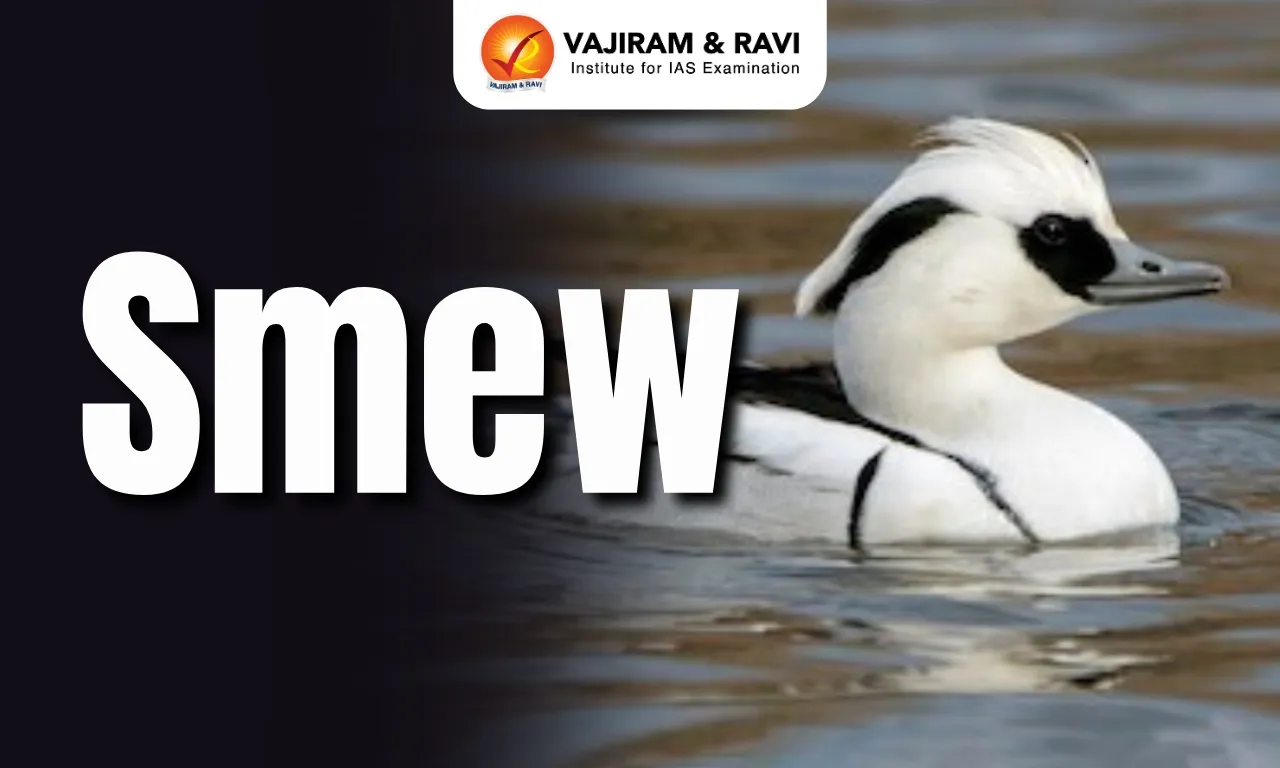
Assam’s Laokhowa Wildlife Sanctuary recently recorded the Smew (Mergellus albellus), a rare migratory waterbird, for the first time.

About Smew

  • It is a medium-sized duck belonging to the family Anatidae. 
  • It was formally described in 1758 by the Swedish naturalist Carl Linnaeus.
  • Scientific Name: Mergellus albellus

Smew Habitat and Distribution

  • The smew species breed in the northern taiga of Europe and Asia. 
  • They winter in sheltered coasts or inland lakes of the Baltic Sea, the Black Sea, Great Britain, Caspian Sea, East China, Korea and Japan. 
  • The smew is an occasional visitor to the Indian Subcontinent. 
  • The smew species inhabit freshwater lakes, reservoirs, flooded woods, ice-free rivers, sheltered bays, estuaries, lagoons and tidal creeks. 

Smew Features

  • It is characterized by its distinctive narrow bill with toothlike edges and a hooked tip, adapted for catching fish. 
  • The male is white with a black mask and a black back, the female is grey with a reddish-brown head and white cheek. 
  • In flight, it shows black and white wings. 
  • It forages by diving from the surface. It is able to swim underwater when pursuing prey. 

Smew Conservation Status

It is classified as 'Least Concern' under the IUCN Red List

Key Facts about Laokhowa Wildlife Sanctuary

  • It is located on the southern part of the Brahmaputra River in the Nagaon District of Assam.
  • It forms an integral part of the Laokhowa-Burachapori ecosystem and is a notified buffer of the Kazairanga Tiger Reserve.
  • It is a part of the Brahmaputra valley.
  • The sanctuary is surrounded by human-dominated areas on all sides except for the north. 
  • Flora: The vegetation composition of Laokhowa can be broadly categorized into alluvial grassland, alluvial forest, moist  deciduous forest, and tropical semi-evergreen forest.
  • Fauna:
    • The sanctuary is home to the great Indian-one horned rhinoceros, elephants, royal Bengal tigers, Asiatic water buffaloes and more than 225 species of birds.
    • Some of the birds spotted here are the spot-billed pelican, little and large cormorant, egret, open-billed stork, brahminy kite, pond heron, etc.

News: IT

Smew FAQs

Q1: What is the smew?

Ans: The smew is a medium-sized duck belonging to the family Anatidae.

Q2: Where does the smew breed?

Ans: The smew breeds in the northern taiga of Europe and Asia.

Q3: Where does the smew winter?

Ans: The smew winters in sheltered coasts or inland lakes around the Baltic Sea, Black Sea, Great Britain, Caspian Sea, East China, Korea and Japan.

Q4: What is a distinctive feature of the smew's bill?

Ans: The smew has a narrow bill with toothlike edges and a hooked tip, adapted for catching fish.

Q5: What is the IUCN Red List status of the smew?

Ans: The smew is classified as Least Concern on the IUCN Red List.

India Taliban Engagement: Five Years After Kabul’s Fall

India Taliban Engagement

India Taliban Engagement Latest News

  • On August 15, the Taliban-controlled Afghanistan embassy in New Delhi celebrated "victory day," marking five years since the Taliban's takeover of Kabul. 
  • The event, attended by Indian and around two dozen foreign diplomats, signalled how far India-Taliban ties have shifted — from New Delhi's hurried evacuation of its Kabul embassy on August 17, 2021, to today's open, if still unofficial, engagement. 
  • Indian officials describe this as "cautious engagement," while critics call it "opportunistic."

Why India Is Deepening Engagement

  • India invested heavily in Afghanistan after the Taliban's fall in 2001. 
  • When the Ashraf Ghani government collapsed in 2021 following the U.S. troop withdrawal announced by President Biden, New Delhi faced the prospect of losing its $2-3 billion developmental investment. 
  • This pushed India to upgrade engagement with the Taliban — without extending formal diplomatic recognition — both to protect this investment for the Afghan people and to build leverage and influence in the country.
  • Three strategic factors accelerated this shift:
    • Pakistan-Taliban rift: Pakistan, once the Taliban's principal benefactor, has turned into an adversary, with repeated border clashes between the two. This fracture created a window of opportunity for India.
    • China's growing footprint: Beijing has been building infrastructure and pursuing natural resources in Afghanistan, filling the vacuum left by Western withdrawal.
    • Russia's parallel engagement: Russia, the only country to have formally established diplomatic ties with the Taliban, has been coordinating with India to monitor Chinese influence in the region.

Timeline of India's Outreach

  • India's engagement evolved incrementally:
    • August 31, 2021: First official contact — India's ambassador to Qatar met the Taliban's political office chief in Doha.
    • September 2021: India acknowledged the Taliban as those "in positions of power and authority" in Afghanistan.
    • December 2021: India sent its first medicine consignment, distinguishing the Taliban regime from the Afghan people.
    • June 2022: First official Indian visit to Kabul post-takeover to oversee humanitarian aid delivery.
    • January 2025: Foreign Secretary Vikram Misri held a substantive meeting with Taliban Foreign Minister Muttaqi in Dubai.
    • May 2025: EAM S. Jaishankar spoke to Muttaqi by phone after India-Pakistan agreed to halt strikes during Operation Sindoor; the Taliban had condemned the Pahalgam terror attack.
    • October 2025: Muttaqi visited India; both sides upgraded missions to embassy level and appointed chargé d'affaires.

Security Concerns

  • India's guiding principle remains that Afghan territory must not be used for anti-India activities or terrorism. 
  • A UN Security Council 1267 sanctions committee report noted that the terrorist threat from Afghanistan remains largely unchanged, with groups like ISIL-K and Al-Qaeda still active despite Taliban efforts to contain them. 
  • Notably, the report made no mention of anti-India groups like Lashkar-e-Taiba or Jaish-e-Mohammad — a relief for New Delhi, though it remains watchful. 
  • Taliban officials have sought to project Afghanistan as a hub for regional economic connectivity rather than terrorism, framing this as a message to both India and Pakistan.

The Human Rights Question

  • India has delivered substantial humanitarian aid since 2021, including 50,000 metric tons of wheat and over 445 tons of medicines and disaster relief material. 
  • However, human rights, women's rights, and minority rights — once part of India's stated concerns — are no longer publicly emphasised.
  • The Taliban has systematically curtailed rights for Afghanistan's 22 million women: barring girls over 12 from school, restricting unaccompanied travel, and enabling child marriage. 
  • India had earlier voiced concern — including in December 2022 over university bans on women — and had backed a UN Security Council resolution (adopted August 30, 2021, under India's presidency) calling for inclusive governance and equal rights for women and girls. 
  • India has since dropped insistence on these red lines, instead moving forward with development cooperation and visas for Afghans for medical treatment, business, and education. 

Current Status

  • Afghan missions in Delhi, Mumbai, and Hyderabad are now staffed by Taliban-appointed diplomats, though formal diplomatic recognition remains withheld.
  • This is symbolised by the Delhi embassy's flagpole still flying the former Afghan Republic's tricolour rather than the Taliban's flag.

Conclusion

  • India's Taliban engagement reflects pragmatic recalibration driven by strategic competition with Pakistan and China, rather than ideological alignment. 
  • While New Delhi has protected its economic stakes and security interests, its retreat from earlier human rights and women's rights positions marks a significant, if quiet, shift — raising questions about the balance between strategic necessity and India's traditional foreign policy values.

Source: IE

India Taliban Engagement FAQs

Q1: What is India Taliban Engagement?

Ans: India Taliban Engagement refers to New Delhi's cautious but expanding interaction with Afghanistan's Taliban authorities without extending formal diplomatic recognition to the regime.

Q2: Why is India Taliban Engagement increasing?

Ans: India Taliban Engagement is increasing to protect India's development investments, counter Pakistan and China's influence, address security concerns and maintain strategic relevance in Afghanistan.

Q3: Does India Taliban Engagement mean India recognises the Taliban government?

Ans: No, India Taliban Engagement has expanded significantly, but India continues to withhold formal diplomatic recognition despite Taliban-appointed diplomats staffing Afghan missions in India.

Q4: What are the security concerns surrounding India Taliban Engagement?

Ans: India Taliban Engagement is shaped by concerns that Afghan territory should not be used for terrorism, particularly amid continued activity by ISIL-K and Al-Qaeda.

Q5: How has India Taliban Engagement affected human rights concerns?

Ans: India Taliban Engagement increasingly prioritises strategic interests and development cooperation, while concerns regarding women's rights, minority rights and inclusive governance receive less public emphasis.

Elephant Corridors in India: Why They Matter for Conservation

Elephant Corridors in India

Elephant Corridors in India Latest News

  • Recently, a Supreme Court bench headed by Chief Justice of India directed the Union government to conduct a fresh survey of elephant corridors, ruling that these corridors cannot be blocked over fears of crop damage since elephant herds naturally travel long distances. 
  • The bench was hearing an ongoing writ petition on managing human-elephant conflict, which had earlier also sought a ban on using fireballs, spikes, and similar methods to drive elephants away. 
  • The Court asked the Centre to report on steps taken to prohibit such "coercive measures" that divert elephants' natural movement.

Why Do Elephants Move Long Distances?

  • Asian elephants are highly mobile, social mammals. A male elephant's home range — the area used for food, water, and shelter — typically spans 50 to 300 square kilometres, expanding further depending on resource availability. 
  • Elephants move through their range either in herds or individually, with home ranges varying by habitat type, food and water availability, population density, and human disturbance.
  • According to studies by the National Centre for Biological Sciences and the Wildlife Institute of India, elephant movement is strongly shaped by seasonal food and water distribution. 
  • For instance, elephants migrate into Kerala during dry months, drawn to the relatively moist forests of the Western Ghats. 
  • Historically, climate change and drought have also driven such migrations. Corridors are essential to this movement, enabling elephants to find food, disperse naturally, and move seasonally.
  • But these routes are increasingly disrupted by infrastructure, mining, and farmland expansion.

India's Elephant Landscapes and Population

  • India has four principal elephant landscapes:
    • Western Ghats — 11,934 elephants (53.2%), across Karnataka (6,013), Tamil Nadu (3,136), and Kerala (2,785)
    • North-Eastern Hills and Brahmaputra floodplains — 6,559 elephants (29.2%)
    • Shivalik Hills and Gangetic plains — 2,062 elephants (9.2%)
    • Central India and Eastern Ghats — 1,891 elephants (8.4%)
  • India's total elephant population stands at 22,446 (SAIEE 2021-25).

Fragmentation of Corridors: Region-Wise Challenges

  • Western Ghats: Once a contiguous elephant habitat, this landscape is rapidly fragmenting due to changing land use, coffee and tea plantations, invasive plant species, and farmland fencing — a concern flagged in the latest all-India elephant population estimation report.
  • Shivalik and Brahmaputra plains: Similar fragmentation has been recorded here, chiefly driven by railway lines, roads, power infrastructure, and other land-use changes.
  • Central India and Eastern Ghats: This landscape presents the biggest conservation challenge, with elephant numbers rising steadily since the mid-to-late 1980s. 
    • Movement here began with El Niño-linked drought in erstwhile southern Bihar and later intensified due to iron ore mining in Jharkhand and Odisha. 
    • Over the past two decades, elephants have moved into Chhattisgarh from Jharkhand and Odisha owing to habitat loss and mining pressure, further expanding into Umaria and Shahdol (Madhya Pradesh) and Gadchiroli (Maharashtra).

Why Corridors Matter

  • Corridors provide more than physical connectivity — they enable genetic exchange between fragmented elephant populations, maintaining genetic diversity. 
  • They also give elephants access to food and water during seasonal changes, reducing the likelihood of crop raiding and human-elephant conflict.

Corridor Mapping and Key Findings

  • The government's last major corridor-mapping exercise in 2023 documented 150 elephant corridors across 15 States within the four major landscapes. 
  • A subsequent report on human-elephant conflict in South India identified bottlenecks across 32 corridors in the region, citing highways, railway projects (such as the Bengaluru-Chennai line), hydel projects, high-tension power lines, electric fences, quarries, corridor narrowing, tea and coffee estates, resorts, and ashrams as key obstructions.
  • West Bengal recorded the highest number of corridors — 26 across its northern and southern regions. 
  • Corridor sizes vary widely; the Charmar-Jingol corridor, largely in Chhattisgarh, is a notable example at 20 km long and 2.5 km wide, facilitating movement of an estimated 80-100 elephants from Odisha into Chhattisgarh's interior.

Conclusion

  • Elephant corridors are vital lifelines connecting fragmented habitats, enabling seasonal movement, genetic exchange, and reduced human-elephant conflict. 
  • With infrastructure, mining, and land-use change increasingly obstructing these pathways, the Supreme Court's intervention signals growing judicial recognition that safeguarding corridors is essential — not just for elephant conservation, but for long-term conflict mitigation between humans and India's largest terrestrial mammal.

Source: IE | TH

Elephant Corridors in India FAQs

Q1: What are Elephant Corridors in India?

Ans: Elephant Corridors in India are natural pathways connecting fragmented habitats, allowing elephant herds to move seasonally in search of food, water, shelter and breeding opportunities.

Q2: Why are Elephant Corridors in India important?

Ans: Elephant Corridors in India maintain habitat connectivity, enable genetic exchange, support seasonal migration and help reduce crop raiding and human-elephant conflict across landscapes.

Q3: What threatens Elephant Corridors in India?

Ans: Elephant Corridors in India face threats from highways, railway lines, mining, power infrastructure, plantations, farmland fencing, resorts and other land-use changes.

Q4: Why has the Supreme Court intervened in Elephant Corridors in India?

Ans: The Supreme Court intervened to protect Elephant Corridors in India, stressing that natural elephant movement cannot be blocked merely because herds may cause crop damage.

Q5: How many Elephant Corridors in India have been documented?

Ans: The latest major mapping exercise documented 150 Elephant Corridors in India across 15 States, covering the country's four major elephant landscapes.

Daily Editorial Analysis 24 August 2026

Daily-Editorial-Analysis

Not ‘Delulu’ — An AI Tutor for Every Child in India 

Context

  • India has a vast pool of academically capable students, but access to quality test preparation remains unequal.
  • The test-preparation market is estimated at $14.8 billion in FY26 and may reach $23-26 billion by FY30, with nearly 2,00,000 coaching centres.
  • Around 17–20 million students in Classes 9-12 participate in private coaching, imposing a substantial financial burden on families.
  • The central challenge is not a shortage of educational material but unequal access to quality instruction, personalised mentoring, doubt-solving and credible assessment.
  • Artificial Intelligence (AI), combined with Digital Public Infrastructure (DPI), can make high-quality preparation accessible without replacing private coaching.

The Need for Better Learning Outcomes

  • The goal should not be to eliminate the private coaching industry but to ensure that students unable to afford expensive coaching receive comparable opportunities.
  • A free AI-powered coach and tutor could provide personalised academic support, especially to students dependent on costly or poor-quality coaching.
  • No single private platform can serve India's enormous student population. Therefore, the solution should be a platform-and-network model rather than a vendor contract.
  • The government should become the market-maker, infrastructure provider and trust layer, while private companies, teachers and institutions compete to provide content and mentoring.

Public Infrastructure, Private Innovation

  • India's experience with UPI and ONDC demonstrates how open digital networks can challenge closed platforms.
  • Education can adopt a similar model. The government should provide identity, discovery, payments, credentialing, standards and interoperability, while private providers supply lessons, tests, doubt-solving and mentoring.
  • Traditional coaching bundles content, mentoring, peer learning, discipline and quality signalling.
  • Digital infrastructure can unbundle these services, reducing the cost of content and AI-based doubt-solving while allowing students to choose specialised services.
  • An education-focused not-for-profit institution, potentially modelled on NPCI, could steward the network and establish common standards.

Begin with JEE and NEET

  • The initiative should initially focus on JEE and NEET, India's major competitive entrance examinations.
  • Their standardised syllabi, objective questions and machine-gradable assessments make them particularly suitable for an AI-enabled preparation network.
  • The government need not create all content itself. High-quality material already exists across digital platforms.
  • What is scarce is trusted discovery, personalised learning, reliable assessment and effective doubt-solving.
  • An open content registry could organise lessons, problem sets and mock examinations according to a common JEE/NEET taxonomy.
  • Educational companies and individual teachers could contribute material and compete on mentoring and specialised services.

Interoperability and Student Ownership

  • The foundation of the network should be content and data portability. Students must be able to change providers without losing their learning history.
  • A government reference application with open APIs could allow DIKSHA, State education applications and other platforms to access approved resources.
  • An AI recommendation engine could identify weaknesses and direct students to the best available module, irrespective of its provider.
  • A student-owned learning wallet and progress ledger could record lessons, mock scores and topic-wise mastery.
  • Aadhaar/DigiLocker could support authentication, while APAAR could connect learning records with academic credentials, subject to appropriate consent and privacy safeguards.

Ensuring Equity and Accountability

  • The system must reach students without smartphones or reliable internet.
  • Data-light streaming, downloadable content, school computer laboratories and Common Service Centres can extend access to disadvantaged communities.
  • The government should publish provider- and module-level outcome data, enabling students to judge resources through actual performance rather than advertising.
  • Independent accreditation should verify content quality and prevent misleading claims. A strict no-lock-in rule should guarantee portability of student data.
  • Basic preparation should remain free, while premium services such as live mentoring and graded assignments could be offered through affordable payments or government-funded vouchers.

AI as the Personal Tutor

  • AI's greatest value lies in personalised practice, instant doubt-solving and adaptive learning.
  • Affordable AI models can provide continuous academic assistance at a fraction of the cost of conventional tutoring.
  • AI can identify weaknesses, generate targeted questions, explain errors and adjust difficulty according to individual performance.
  • Human teachers would continue to provide advanced mentoring, motivation and complex conceptual guidance, while AI could serve as an always-available first layer of academic support.
  • The government should enable AI tutors rather than build one itself.
  • Its responsibility should be to create standards, infrastructure, interoperability, accreditation and universal access.

Conclusion

  • India's coaching economy reflects enormous demand for examination preparation but also a serious access and affordability gap.
  • The solution is neither government-controlled coaching nor displacement of private providers, but an open education network built on public digital infrastructure.
  • By aggregating demand, establishing standards, enabling interoperable content, protecting student-owned data and deploying AI for personalised tutoring, India can transform test preparation from an expensive paywall into a free, competitive and high-quality digital public service.

Not ‘Delulu’ — An AI Tutor for Every Child in India FAQs

Q1. What is the main problem with India’s coaching system?
Ans. India’s coaching system suffers from high costs and unequal access to quality preparation.

Q2. Why should the government create an open education network?
Ans. The government should create an open network to provide affordable, high-quality preparation to every student.

Q3. Why should JEE and NEET be the starting point?
Ans. JEE and NEET are suitable because they have standardised syllabi and objective, machine-gradable examinations.

Q4. How can AI improve test preparation?
Ans. AI can provide personalised practice, instant doubt-solving and adaptive learning.

Q5. What should be the government’s role?
Ans. The government should build digital infrastructure, ensure interoperability and regulate quality rather than become the teacher.

Source: The Hindu


A Civilisational Approach to Social Media 

Context

  • The debate over banning social media for minors has become a major policy issue in the digital age.
  • Countries such as Australia and the U.K. are introducing or considering restrictions, while the U.S. follows varied approaches.
  • India faces a similar choice. Concerns about addiction, cyberbullying, manipulation, harmful content and privacy risks are genuine, but bans may not provide a lasting solution.
  • The larger challenge is preparing young people for a world increasingly shaped by social media, artificial intelligence and digital technologies.

Why Fear is Not the Answer

  • Lessons from Earlier Communication Revolutions

    • Every major communication revolution has generated anxiety.
    • The printing press, radio, television and the Internet were once viewed as threats to established social structures.
    • Yet societies gradually learned that the objective should not be to prevent information from flowing, but to promote its responsible use.
  • The Digital Transformation

    • The smartphone has combined the functions of a printing press, library, classroom, marketplace and public square.
    • Social media and AI are accelerating this transformation. Young people are growing up amid technological disruption, economic uncertainty, geopolitical tensions and social instability, making fear a powerful influence on policy.
  • Limits of Technological Restrictions

    • Fear should not become the principal basis for regulation. Protecting children is essential, but child safety and technological innovation need not be opposing goals.
    • Governments should create safeguards without discouraging innovation.
    • Technological restrictions are also increasingly difficult to enforce. VPNs, encrypted applications, alternative platforms and AI-enabled tools can help users circumvent barriers.
    • Completely isolating young people from digital platforms is therefore becoming increasingly impractical.
  • Beyond Social Media: The AI Challenge

    • The debate may soon extend beyond social media. Children will increasingly interact with AI systems capable of educating, entertaining, advising and influencing them.
    • The real question is not how to keep young people away from technology, but how to prepare them to use it safely, intelligently and responsibly.
  • Regulation with Responsibility

    • Government regulation remains necessary, but regulation alone cannot solve the problem. Authorities should ensure platform transparency, child protection and privacy while combating online crime.
    • At the same time, families, schools and society must develop the judgment, self-control and resilience required to navigate the digital world.

The Role of Government and Regulation

  • Authorities should demand greater transparency from technology platforms, establish effective child-protection standards, strengthen privacy safeguards, combat online criminal activity and encourage responsible innovation.
  • However, regulation alone cannot address a problem that is simultaneously social, cultural, educational and psychological.
  • Laws can establish boundaries, but they cannot create judgment, self-control or resilience. India therefore needs a broader strategy combining sensible regulation with strong human institutions.

Drawing from One’s Roots

  • India has a long tradition of transmitting knowledge, values and responsibility across generations. Families, educational institutions and cultural traditions historically helped young people navigate uncertainty.
  • The guru-shishya tradition emphasised not merely knowledge but also character, discipline, responsibility and ethical development.
  • These principles can be adapted to the digital age. Parents should become more digitally literate and actively engage with their children’s online lives.
  • Schools should teach digital citizenship, critical thinking, ethical reasoning, online safety and resilience, alongside technical skills.
  • Religious and cultural organisations can contribute by engaging constructively with technology rather than retreating from it.
  • Technology companies, educators, parents and civil society should cooperate to promote responsible digital behaviour.

Building Digital Resilience

  • The ultimate objective should be to develop young people capable of navigating technology responsibly rather than simply avoiding it.
  • Children must learn to identify manipulation, evaluate information, protect privacy, manage screen use and respond appropriately to harmful online experiences.
  • India’s ability to absorb external influences while preserving its cultural core offers an important advantage.
  • As a rapidly expanding digital society, India can demonstrate that technological progress and cultural continuity can coexist.

Conclusion

  • A social-media ban for minors may appear attractive because it offers a simple response to complex dangers.
  • Yet blanket restrictions cannot adequately address rapidly evolving technologies. India should pursue a balanced framework combining regulation, platform accountability, parental involvement and education.
  • The goal should not be to build a larger digital firewall, but to create capable, resilient and responsible digital citizens.
  • The future will favour societies that learn to govern technology while preserving human judgment, values and responsibility.

A Civilisational Approach to Social Media FAQs

Q1. Why is banning social media for minors controversial?
Ans. A ban may protect children temporarily but cannot prepare them for a technology-driven future.

Q2.  Why are technological restrictions difficult to enforce?
Ans. Technological tools such as VPNs and alternative platforms can help users bypass restrictions.

Q3. What should be the primary focus of digital education?
Ans. Digital education should develop critical thinking, ethical reasoning and responsible online behaviour.

Q4. How can India draw from its traditional values?
Ans. India can adapt the guru-shishya tradition to promote character, discipline and responsibility in the digital age.

Q5. What should India’s overall approach to social media be?
Ans. India should combine regulation, parental involvement, education and platform accountability to build responsible digital citizens.

Source: The Hindu


Rethinking India’s Manufacturing Growth - Data, Deflators and Diverging Indicators

Context

  • China’s manufacturing surge is intensifying competitive pressure on India, making it crucial to accurately assess the health, productivity and competitiveness of Indian manufacturing.
  • While the government has promoted Make in India and Production-Linked Incentive (PLI) schemes, conflicting signals from manufacturing data raise three questions.
  • The Ministry of Statistics and Programme Implementation (MoSPI) has undertaken substantial revisions under the new GDP methodology.
  • Hence, there is the need to analyse whether the sector is actually growing as strongly as the latest national accounts suggest, as problems with the earlier manufacturing data series were widely recognised.

Q1: Why is the Manufacturing GVA Deflator Showing Negative Growth?

  • The new estimates show the manufacturing Gross Value Added (GVA) deflator recording negative growth for nine consecutive quarters between 2023 and 2025.
  • This is puzzling because -
    • Core CPI inflation remained positive.
    • The Wholesale Price Index (WPI) was negative only for some quarters.
    • The GVA deflator should broadly capture changes in prices relevant to manufacturing output.
  • The GVA deflator is not identical to either CPI or WPI; it is intended to capture price movements associated with the value added generated by a sector.
  • Therefore, divergences from consumer or wholesale inflation do not automatically imply an error, but unusually persistent divergence warrants methodological scrutiny.
  • The issue is important because real GVA is obtained by deflating nominal GVA for price changes.
  • If the deflator is unusually low or negative, real manufacturing growth can be significantly overstated.

Q2: Why Has Real Manufacturing GVA Diverged from IIP?

  • The second concern is the growing gap between real manufacturing GVA and the Index of Industrial Production (IIP).
  • Using 2022-23 as the common base (=100), by 2025-26,
    • Real manufacturing GVA was at least 15 percentage points above IIP.
    • Average manufacturing growth between 2022-23 and 2025-26 was approximately 11% according to GVA, compared with about 6% according to IIP.
  • The two indicators, however, measure different things. GVA measures the economic value created after deducting intermediate consumption, while IIP is primarily an index of industrial production volumes.
  • Real GVA can therefore grow faster than physical output if firms improve productivity, efficiency or the value generated from intermediate inputs.
  • The informal sector is sometimes cited as an explanation because real GVA includes informal manufacturing while IIP largely captures the organised/formal sector.
  • However, this explanation appears insufficient, because recent GVA estimates are increasingly benchmarked using formal-sector data.

Q3: Why Has the Correlation Between GVA and IIP Weakened?

  • Before the 2011-12 methodology change, IIP and real manufacturing GVA moved broadly together, with a correlation of around 0.8.
  • Afterwards, the relationship weakened substantially and appears to have become even more divergent in the latest data.
  • Since September 2022, the two series have behaved very differently: real GVA has shown strong growth while IIP has remained relatively stable.
  • Though this does not prove that the new GDP series is flawed, the absence of convincing explanations makes it difficult to confidently interpret the recent manufacturing revival.

Broader Implications

  • The reliability of manufacturing statistics matters beyond statistical methodology.
  • India’s efforts to counter Chinese manufacturing competition, deepen domestic value chains and attract investment depend on an accurate understanding of manufacturing performance.
  • The debate also affects assessment of recent government interventions, including Make in India, PLI schemes and other industrial-policy measures.
  • If output, value addition and productivity are sending substantially different signals, policymakers need to identify the reasons before claiming a structural manufacturing transformation.

Way Forward

  • India needs greater transparency in national accounts methodology, including detailed documentation of deflators, sectoral estimates and the relationship between GVA and IIP.
  • Better reconciliation of different datasets would strengthen confidence in economic policymaking.

Conclusion

  • India’s manufacturing revival may be real, but the magnitude and sustainability of that revival require careful scrutiny.
  • Manufacturing is central to India’s employment generation, export competitiveness, import substitution and strategic economic resilience.
  • Therefore, improving the credibility and interpretability of manufacturing data is as important as improving manufacturing itself.

Rethinking India’s Manufacturing Growth FAQs

Q1. Why has the manufacturing GVA deflator raised concerns about India’s growth estimates?

Ans. Its negative growth raises questions about the measurement of price changes and the estimation of real manufacturing GVA.

Q2. Why is real manufacturing GVA growing faster than IIP?

Ans. While IIP measures physical output volumes, GVA measures value added.

Q3. What explains the divergence between real manufacturing GVA and IIP?

Ans. Differences in coverage, methodology and the treatment of the formal and informal sectors.

Q4. Why is the weakening correlation between IIP and manufacturing GVA significant?

Ans. Their growing divergence creates uncertainty about the magnitude of manufacturing growth.

Q5. How can India improve the credibility of manufacturing growth estimates?

Ans. By ensuring greater transparency in national accounts methodology, improve documentation of deflators, etc.

Source: IE

Daily Editorial Analysis 2026 FAQs

Q1: What is editorial analysis?

Ans: Editorial analysis is the critical examination and interpretation of newspaper editorials to extract key insights, arguments, and perspectives relevant to UPSC preparation.

Q2: What is an editorial analyst?

Ans: An editorial analyst is someone who studies and breaks down editorials to highlight their relevance, structure, and usefulness for competitive exams like the UPSC.

Q3: What is an editorial for UPSC?

Ans: For UPSC, an editorial refers to opinion-based articles in reputed newspapers that provide analysis on current affairs, governance, policy, and socio-economic issues.

Q4: What are the sources of UPSC Editorial Analysis?

Ans: Key sources include editorials from The Hindu and Indian Express.

Q5: Can Editorial Analysis help in Mains Answer Writing?

Ans: Yes, editorial analysis enhances content quality, analytical depth, and structure in Mains answer writing.

Enquire Now