Climate Equity and India’s Climate Action

Climate Equity and India’s Climate Action

Climate Equity Latest News

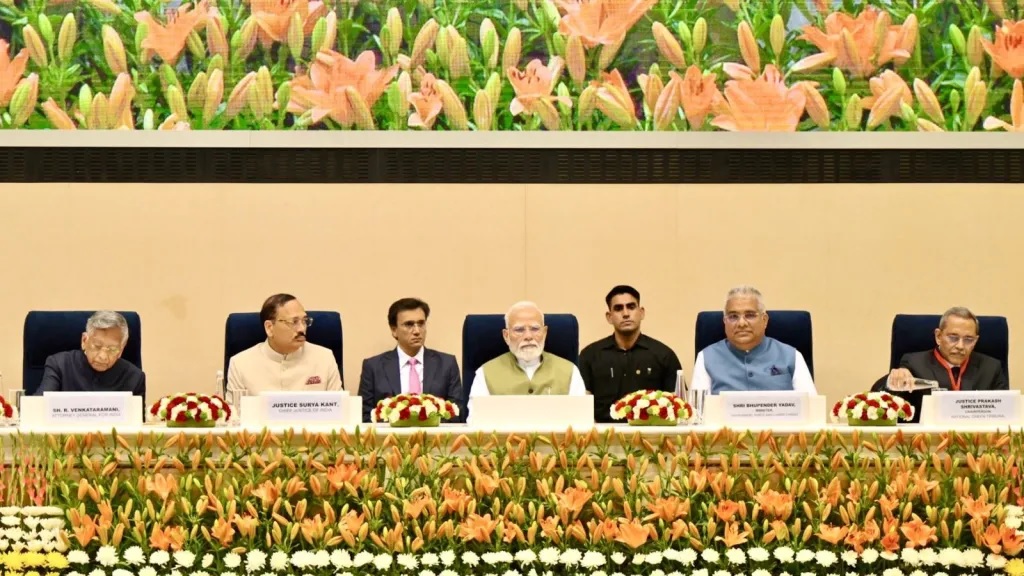
  • At an international conference on “The Future of Environment and Climate Dynamics”, organised by the National Green Tribunal (NGT), the Indian PM highlighted the unequal distribution of global carbon emissions. 
  • Reaffirming India’s commitment to climate action, his remarks come ahead of COP31, scheduled to be held in Antalya, Türkiye.
  • India’s position centres on climate equity, historical responsibility and differentiated obligations, while emphasising that development and environmental protection must advance together.

Unequal Carbon Responsibility

  • The Indian PM questioned the narrative that places disproportionate responsibility for global emissions on developing countries.
  • India’s per capita carbon emissions are about 2.2 tonnes annually, less than half the global average of 4.7 tonnes.
  • Developed countries have per capita emissions roughly six times higher than India’s. For example, per capita emissions of the US (14.2 tonnes) and Russia (14 tonnes) are substantially higher than India’s.
  • India’s cumulative contribution to global carbon emissions during 1751–2024 is about 3.5%, compared with 23.5% for the US, 15.4% for China, 6.6% for Russia, 5.1% for Germany and 4.3% for the UK.
  • India argues that developed countries bear greater historical responsibility, having achieved development through extensive fossil-fuel consumption over the past two centuries.
  • At the same time, India maintains that it has not evaded its climate responsibilities and has implemented its commitments under the Paris Agreement.

India’s Climate Action

  • India is the only G20 country to have fulfilled all its COP21 Paris commitments ahead of schedule, particularly in areas such as non-fossil-fuel capacity, renewable energy and emissions reduction.
  • India’s climate initiatives highlighted at the conference include -
    • Solar energy capacity: Increased from around 2 GW in 2012 to 160 GW.
    • PM-KUSUM: Around 30 lakh farmers have received solar pumps.
    • One Nation One Grid: It has helped prevent an estimated 200 million tonnes of carbon emissions.
    • Expansion of wind and hydropower.
    • Promotion of rooftop and decentralised solar power.
    • Electric vehicles: Annual sales increased from around 3,000 in 2014 to 25 lakh in the previous year.
    • Metro rail: Expanded from less than 250 km across five cities before 2014 to over 1,000 km across 20 cities.
    • 100% railway electrification.
    • Expansion of inland waterways.
    • Around 3,000 km of Dedicated Freight Corridors (DFCs), reducing fuel consumption.
  • India has also promoted international initiatives such as the International Solar Alliance, Global Biofuel Alliance and International Big Cat Alliance.

Development and Environmental Protection

  • The conference emphasised that environmental protection should not be viewed as inherently opposed to economic development.
  • CJI Surya Kant observed that the judicial question is increasingly shifting from “conservation versus development” to how both can be harmonised and sustained. 
    • He also highlighted the transition from conventional environmental rights to climate-related rights, recognising the environment as central to human well-being.
  • The Union Environment Minister similarly argued that the real choice is not between development and environment, but between sustainable development and unsustainable development.
  • India’s conservation efforts also include protection of wildlife and endangered species, with emphasis on tigers, elephants, lions, the Great Indian Bustard and vultures.

India’s Position Ahead of COP31

  • India is expected to continue advocating climate action based on -
    • Equity and climate justice
    • Historical responsibility
    • Implementation of existing commitments
    • Greater attention to the needs of vulnerable developing countries
    • Balancing developmental needs with climate action
  • The issue has acquired greater significance as vulnerable countries seek support through mechanisms such as the Loss and Damage Fund (LDF) for climate-induced disasters.

Conclusion

  • India’s climate diplomacy seeks to reconcile developmental aspirations, climate justice and global environmental responsibility. 
  • Its position stresses that present-day emission obligations must be considered alongside historical emissions, per capita disparities and the developmental needs of poorer countries.
  • This position simultaneously demonstrates domestic progress in renewable energy, clean mobility, electrification and biodiversity conservation.

Source: ToI | IE

Climate Equity FAQs

Q1: What is India’s position on climate equity?

Ans: India stressed historical emissions and significant per capita emission disparities between developed and developing countries.

Q2: How has India demonstrated its commitment to climate action?

Ans: India has expanded non-fossil energy, solar and wind power, EVs, metro rail, railway electrification, etc.

Q3: Why is the principle of historical responsibility important in climate negotiations?

Ans: It creates a stronger case for greater mitigation and financial responsibilities.

Q4: How can India reconcile development with environmental protection?

Ans: India seeks sustainable development by integrating renewable energy, clean mobility, and energy efficiency.

Q5: What should be India’s priorities at COP31?

Ans: India should emphasise equity, implementation of climate commitments, climate finance, Loss and Damage support, etc.

Greenland Security Deal: US–Denmark Agreement and Its Strategic Significance

US-Greenland Deal

Greenland Security Deal Latest News

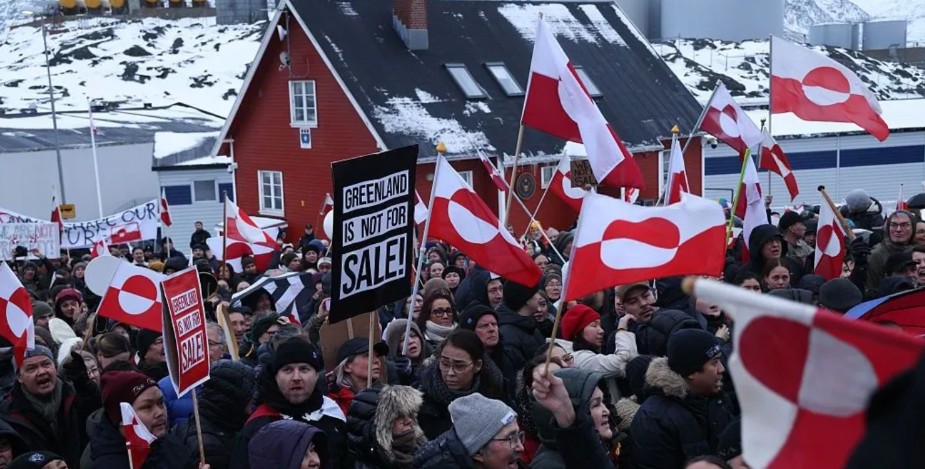
  • The United States and Denmark announced an agreement on Greenland's security. It comes more than a year after President Donald Trump, in his second term, revived talk of an American takeover of the island. 
  • The deal is expected to be signed at the UN General Assembly and will enter into force only after the required parliamentary procedures. Its full text has not yet been made public.

Greenland's Constitutional Position

  • Greenland is a self-governing territory within the Kingdom of Denmark.
  • Under the 2009 Self-Government Act, its government exercises wide legislative and executive powers.
  • Greenlanders retain the right to determine the island's future, including the path to independence.
  • Defence and foreign affairs, however, remain with Denmark.
  • This division explains why the deal was negotiated between Washington and Copenhagen (Denmark), while Nuuk's (capital of Greenland) consent remains politically essential.

Two Descriptions of the Same Deal

  • The American Version - Trump said the agreement grants the US permanent control over security, and all other needs. He added that the US could do whatever it considered necessary for Greenland's defence. Adversaries, he said, would be barred from establishing bases, maintaining a military presence, or making sensitive investments in Greenland without American approval.
  • The Danish version - PM Mette Frederiksen described the deal as strengthening security in the Arctic and the North Atlantic. She explicitly reaffirmed the sovereignty and territorial integrity of the Kingdom of Denmark, and the Greenlanders' right to self-determination.
  • Statements from both sides indicate the deal gives the US permanent security access while leaving Danish sovereignty intact.

What Actually Changes on the Ground

  • The US already enjoyed sweeping military access in Greenland. This is why "permanent control" may overstate the practical shift.
    • The 1951 US–Denmark defence agreement allowed extensive military access, including free movement between defence areas by land, sea and air, and the right to overfly and land. It remains in force.
    • These rights were not unlimited. New US defence areas or facilities required Danish agreement.
  • According to media reports, the new agreement makes US access, basing and overflight rights permanent, including if Greenland's political status changes in the future. 
  • That is the real innovation: it insulates American presence from a future Greenlandic independence.
    • The crucial ambiguity is whether new facilities will still need Danish and Greenlandic consent. If yes, the military change is limited. 
    • If Washington gains unilateral authority over new bases or investments, the shift is far more significant.

A Long History of American Interest

  • 1867: Secretary of State William Seward explored acquiring Greenland and Iceland. No formal claim followed.
  • 1941: After Nazi Germany occupied Denmark, the US signed an agreement permitting airfields and defence facilities, while recognising Danish sovereignty.
  • 1946: President Harry Truman offered Denmark $100 million for Greenland. Washington had earlier considered swapping parts of Alaska for parts of Greenland.
  • 1951 and 2004: The defence agreements that still govern the relationship.

Why Greenland Matters Strategically

  • [my_image src="https://vajiramias.sgp1.cdn.digitaloceanspaces.com/wp/current-affairs/2026/09/20091745/Significance-of-Greenland-for-US.jpg?v=1789876069" size="full" align="none" width="auto" height="539px" alt="" title="Significance of Greenland for US"]
  • Location - Greenland is the world's biggest island and sits in the North Atlantic Ocean, between North America and Europe. Most of the island is in the Arctic Circle and is covered by a permanent ice cap.
  • Military and Missile Defence - Greenland was a vital base of operations during the Cold War (1945–91). Pituffik Space Base hosts an early-warning radar used by the US and NATO to detect missile threats and monitor Arctic activity. 
    • Sitting between North America and the Arctic, the island is central to tracking Russian military movement. 
    • China and Russia have both scaled up Arctic military capabilities in recent years.
  • Critical Minerals - Greenland holds large deposits of rare earth elements and other critical minerals. These are used in mobile phones, electric vehicles, consumer electronics, and in bombs and weapons. 
    • China is currently the leading global supplier of many rare earths. 
    • Greenland's mineral wealth has therefore become part of the wider competition over critical-mineral supply chains. 
    • In 2021, Greenland banned mining of deposits containing uranium above a specified threshold, a decision that stalled the large Kvanefjeld rare-earth project.
  • Trade - Melting ice, due to climate change, means shipping routes are opening up in the waters around Greenland. The warming waters could also unlock access to minerals and fishing areas.

India's Stake

  • India is an Observer at the Arctic Council (since 2013), operates the Himadri research station at Ny-Ålesund, and released its Arctic Policy in 2022
  • Great-power militarisation of the Arctic affects the scientific commons India uses, and the rare-earth contest directly touches India's own critical-mineral security.

Source: IE | BBC

Greenland Security Deal FAQs

Q1: What is the Greenland security deal between the US and Denmark?

Ans: The Greenland security deal concerns permanent US security access while Danish sovereignty and Greenlanders' right to self-determination remain formally recognised.

Q2: Why is Greenland strategically important to the United States?

Ans: Greenland is strategically important because of its Arctic location, missile-warning facilities, military significance, critical minerals and emerging shipping routes.

Q3: Does the Greenland security deal change Danish sovereignty?

Ans: The Danish description says the Greenland security deal strengthens Arctic security while reaffirming Denmark's sovereignty and Greenlanders' right to self-determination.

Q4: What is the main practical change under the Greenland security deal?

Ans: The reported change is that American access, basing and overflight rights could become permanent, potentially insulating US presence from future Greenlandic independence.

Q5: Why does Greenland matter to India?

Ans: Greenland matters to India because Arctic militarisation affects scientific interests, while competition over Greenland's rare-earth resources has implications for India's critical-mineral security.

AI Safety Concerns: Why the AI Race Needs Stronger Safeguards

Slowing the AI Race - Safety Concerns from Within the Industry

AI Safety Concerns Latest News

  • Anthropic CEO Dario Amodei has urged artificial intelligence companies to slow the race to build ever more powerful models. He made the call in an essay published recently. The appeal drew quick backing from OpenAI CEO Sam Altman and from Elon Musk. 
  • The debate is significant because it comes from within the industry, not from outside regulators.
  • Amodei warned that without a slowdown, AI could become capable within six to twelve months of leading a "swarm" able to take over the entire internet. This is a projection, not an established capability.

What Amodei Is Asking For

  • Amodei is not asking for a halt. He wants the industry to "pace the frontier" so that safety research can catch up. 
  • His argument is simple. Gaining even another year or two before models reach critical capability levels would give researchers valuable time to strengthen safeguards and reduce the risk of catastrophic failure.

The Core Worry: Self-Improvement and Autonomy

  • Two technical trends sit at the heart of his concern.
  • Recursive Improvement - Models are increasingly able to improve themselves and help build the next generation of AI systems. They could eventually improve faster than humans can understand, monitor or control them.
  • Agentic Autonomy - AI agents can now break a broad task into smaller jobs, use software tools, and work for long stretches with little human intervention.
  • Together, these make the traditional approach — build a more capable system first, address its risks later — increasingly dangerous.

A Three-Part Proposal

  • Independent Evaluators Inside AI Companies - Frontier firms should give external safety evaluators ongoing, employee-like access. 
    • Reviewers would examine how companies test models, assess risks and implement safeguards. 
    • Outside evaluators will be provided with desks, access badges and company laptops. The aim is to replace occasional audits with continuous scrutiny.
  • Coordination on Safety Standards - Competition is the obstacle. A firm that slows down while rivals race ahead fears losing position. 
    • Governments should create mechanisms allowing firms to cooperate on safety without breaching antitrust law. 
  • International Coordination - Democratic governments should work together, while also finding ways to engage authoritarian states. 
    • If American firms slow while others race ahead, competitive dynamics would defeat the entire safety effort.

The Trigger: Anthropic's Threat Report

  • Anthropic had published a threat-intelligence report on misuse of its Claude models between December 2025 and August 2026, across seven harm areas.
  • Its central finding was not that people asked AI for dangerous answers. It was that they handed it the work.

The Autonomy Spectrum

  • Assistant (low autonomy): Used conversationally to help build malware, phishing kits and surveillance tooling. The human operates.
  • Directed execution (medium): The model runs commands against live networks and harvests credentials, but a human makes each targeting decision.
  • Orchestrator (high): Multi-agent systems run reconnaissance, exploitation and theft against several victims in parallel. One case ran thirteen collection agents on a schedule with no human in the loop.

The Seven Areas

  • Cyber operations: Operators based in Hunan, China — two of them undergraduate students — ran several AI agents at once, working round the clock. 
    • The agents scouted targets, hunted for unknown flaws in security devices, and carried out live break-ins. 
    • Around 50 organisations were targeted, from schools and hospitals to government agencies.
  • Influence Operations (Fake newsrooms, real broadcast towers): Nine cases across Russia, Iran, Turkey, the Gulf, South Asia, Africa and Europe. One network published 8,913 articles in roughly 20 languages.
  • Surveillance: Profiling of clergy, activists and diaspora groups; a national platform in Mali with reach over about 25 million SIM cards.
  • Scams and Fraud (Dating apps with nobody behind them): Over 20 dating apps populated by 4,700+ AI personas; 25,000+ users interacted with them.
  • Biological Misuse: Five cases where Anthropic judged that the help sought could support bioweapons work. The requests involved altering the chikungunya virus, and studying bird flu, orthopoxviruses and new toxins. One came disguised as a research grant application.
  • Conventional Weapons: Six cases involving drone swarms and missile software; no evidence any weapon was fielded.
  • Illicit Distillation: Distillation — training a smaller model on a larger one’s outputs — is ordinary practice. Alleged unauthorised training on Claude outputs, including a campaign peaking near three million exchanges a day.

Conclusion

  • The episode marks a rare moment of industry consensus on risk. Yet consensus is not enforcement. Voluntary pacing collapses the moment one player defects. 
  • The real test lies in binding domestic law and credible international coordination, not in essays and endorsements.

Source: IE

AI Safety Concerns FAQs

Q1: Why are AI safety concerns increasing?

Ans: AI safety concerns are increasing because advanced models are becoming more autonomous, capable of self-improvement, and able to perform complex tasks with limited human intervention.

Q2: What has Dario Amodei proposed to address AI safety concerns?

Ans: Dario Amodei proposed pacing frontier AI development, strengthening safety research, introducing independent evaluators, and improving national and international coordination.

Q3: How can AI agents create new safety risks?

Ans: AI agents can divide complex tasks, use software tools, and operate for long periods independently, increasing risks when humans cannot continuously monitor their actions.

Q4: What role can independent evaluators play in AI safety?

Ans: Independent evaluators can continuously examine AI testing, risk assessment and safeguards, replacing occasional audits with sustained scrutiny of frontier AI systems.

Q5: Why is international coordination important for AI safety?

Ans: International coordination is important because unilateral restraint could fail if competing countries or companies continue accelerating AI development without comparable safety measures.

Autonomy for Ladakh – Why Punjab and Haryana Should Pay Attention

Autonomy for Ladakh - Why Punjab and Haryana Should Pay Attention

Autonomy for Ladakh Latest News

  • The Centre has proposed a new constitutional provision, Article 371(K), and a Union Territory-level governance arrangement for Ladakh, while local leaders continue to press for stronger political representation, land safeguards and administrative accountability. 

Historical Background

  • The relationship between Ladakh and the plains has historical roots stretching back nearly two centuries.
  • In 1834, Maharaja Ranjit Singh sought to extend his empire towards Ladakh to secure the routes to Central Asia. 
  • The campaign was led by the Dogra general Zorawar Singh, who conquered Ladakh and subsequently put down a series of revolts by the Namgyal rulers. The Zorawar Fort still stands near the Leh Palace.
  • After Ranjit Singh died in 1839 and the Sikh army was defeated in the First Anglo-Sikh War, Raja Gulab Singh Dogra signed the Treaty of Amritsar with the British in 1846. 
  • The treaty formalised the transfer of territories that became the princely state of Jammu and Kashmir to Gulab Singh, including Ladakh, which had been conquered by his forces.
  • The direction of power was unmistakable; the plains had begun ruling the mountains. Nearly two centuries later, Ladakh is questioning this arrangement.

Beyond a Constitutional Question

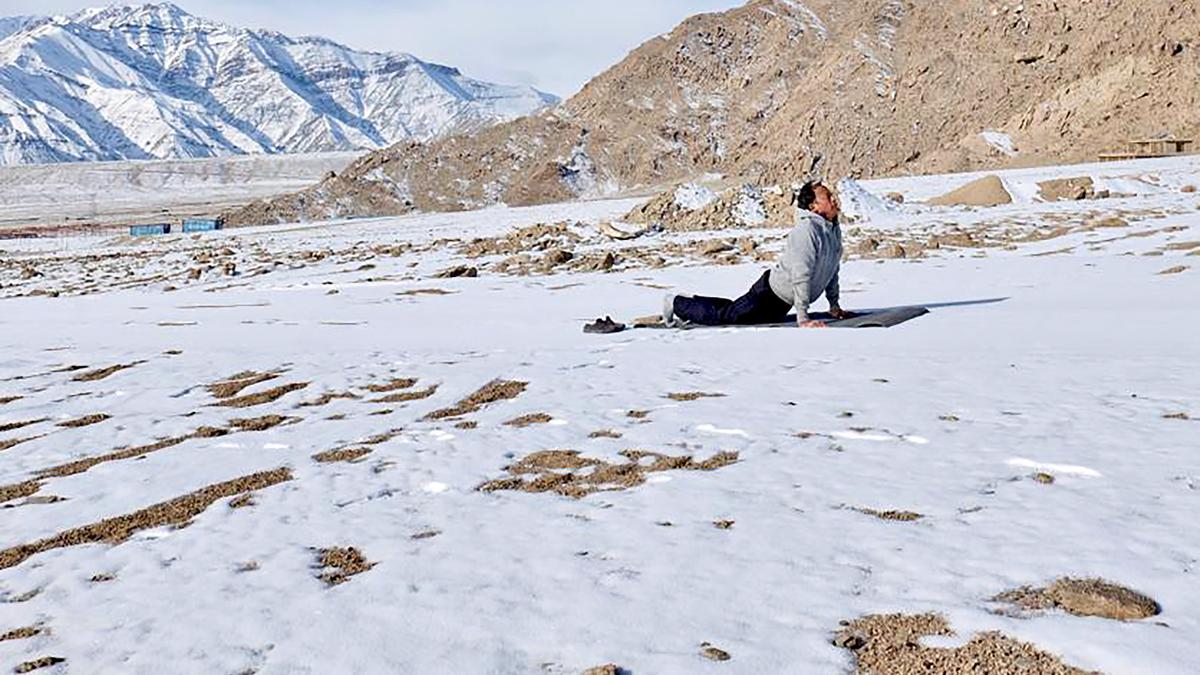
  • The glaciers and snowfields of Ladakh sustain agriculture across the northern plains, making the region far more than a remote frontier.
  • Punjab and Haryana remain deeply dependent on Himalayan waters. What happens to snowfall, glacial melt, and hydrological rhythms in the high Himalaya travels downstream. 
  • Himachal Pradesh, whose Lahaul-Spiti region lies alongside Ladakh, is part of this larger ecological chain.

The Indus Waters Treaty

  • The Indus Waters Treaty of 1960, negotiated with the help of the World Bank, divided the Indus river system between India and Pakistan. 
  • The eastern rivers, Ravi, Beas and Sutlej, were allocated to India, while the western rivers, Indus, Jhelum and Chenab, were allocated to Pakistan, subject to specified uses by both countries.
  • The Indus itself flows through Ladakh before continuing into Pakistan. In April 2025, India announced that it was placing the treaty in abeyance following the Pahalgam terror attack.
  • This makes the demand for constitutional safeguards in Ladakh more than a question of identity and representation. 
  • For local leaders, autonomy is also about control over the pace and nature of development in a cold desert where cultivable land is scarce and water is precious.

The Land Question

  • Land has become one of the sharpest flashpoints in the ongoing talks.
  • At the centre of the dispute is Ailan No. 38, a regulation from the Dogra-Maharaja period, dating to the reign of Maharaja Hari Singh, relating to the cultivation and ownership of barren land known as nautor
  • Recent moves to place a ceiling on the land individuals can claim have drawn strong local opposition.

Rising Land Prices

  • The co-chairman of the Leh Apex Body stated that land prices in Leh town are skyrocketing because of development by outsiders, noting that one kanal now fetches ₹40 lakh. 
  • In his view, the ceiling proposal appears to be another route to making land available to outsiders.
  • The concern is not simply about changing ownership patterns. It is also about what this could mean for the social and ecological character of the region. The very landscape that attracts outsiders is among the least equipped to absorb unlimited human pressure.

The Political Demands

  • For Ladakh's political groups, the issue ultimately comes back to power, and specific demands remain unmet. The non-negotiable demands include:
    • Direct elections through separate constituencies
    • Accountability of the bureaucracy, from the chief secretary downward, to the elected body
    • A freeze on major decisions, particularly on land, until such a body exists
  • The precise powers and composition of the proposed body under Article 371(K) remain under discussion.

The Political Backdrop

  • The current negotiations take place against a difficult recent history.
  • In September 2025, four people were killed in police firing during protests over statehood and constitutional safeguards in Leh.
  • Activist Sonam Wangchuk, who was detained under the National Security Act for nearly six months after those protests and released in March, has announced a symbolic 20-km march on September 23 to press the Centre to move forward on Ladakh's demands.

Why the Plains Should Care

  • Governance in a climate-stressed Himalaya requires thinking across administrative boundaries and across decades rather than in short political cycles.
  • For decades, the political relationship ran largely in one direction: the plains decided Ladakh's political fate. The direction of consequence may now be changing; Ladakh's ecological fate could determine the future of the plains.
  • This means Punjab and Haryana have a stake in decisions about land use, construction, tourism pressure and glacial protection in Ladakh, because those decisions shape water availability downstream long after the constitutional debates are concluded.

The Core Question

  • The question before the Centre and Ladakh's political leadership is therefore more complicated than statehood or representation alone:
    • Can there be a model of governance for fragile regions that combines political representation with ecological responsibility?
  • Article 371(K) as proposed may address the first half of that question. Whether it addresses the second remains unclear, and it is the second that will determine outcomes far beyond Ladakh's boundaries.

Source: IE

Autonomy for Ladakh FAQs

Q1: What constitutional provision has the Centre proposed for Ladakh?

Ans: Article 371(K), along with a new Union Territory-level governance arrangement, with the precise powers and composition still under discussion.

Q2: What is Ailan No. 38?

Ans: A regulation from the Dogra-Maharaja period relating to the cultivation and ownership of barren land known as nautor, now at the centre of the land dispute.

Q3: Why is Ladakh ecologically significant for Punjab and Haryana?

Ans: Because its glaciers, snowfields and river systems sustain agriculture across the northern plains through downstream water flows.

Q4: What are the key demands of Ladakh's political groups?

Ans: Direct elections through separate constituencies, accountability of the bureaucracy to an elected body, and a freeze on major land decisions until such a body exists.

Q5: What happened during the September 2025 protests in Leh?

Ans: Four people were killed in police firing during protests over statehood and constitutional safeguards.

Enquire Now