Supreme Court Rules 24-Hour Detention Limit Starts Before Formal Arrest

Supreme Court 24-Hour Detention Ruling

The Supreme Court of India, in November 2026, ruled that the 24-hour period for producing a detained person before a Magistrate begins from the time their liberty is actually curtailed, and not from the time the police formally records the arrest. The judgment in Sujit Das v. Union of India reaffirmed the constitutional protection against detention without timely judicial oversight under Article 22(2).

What is the Supreme Court's 24-Hour Detention Ruling?

A Bench comprising Justice Ujjal Bhuyan and Justice Atul S. Chandurkar held that the distinction between arrest and detention cannot be used to delay the production of a person before a Magistrate.

  • Actual detention is the starting point: The 24-hour period begins when a person is taken under the control of the authorities and their liberty is effectively curtailed.
  • No artificial distinction: Authorities cannot exclude the period of custody before formal arrest by describing it as inquiry, interrogation, investigation or search and seizure.
  • Limited exclusion: Only the time necessary for the journey from the place of arrest to the Magistrate's court can be excluded while calculating the 24-hour period.
  • Violation of the safeguard: If detention continues beyond 24 hours without production before a Magistrate, the person must be released from custody.

Background of the Case

The case arose from an NDPS investigation in Tripura involving four persons detained during a search and seizure operation on 29 September 2025, at around 2 PM.

  • The authorities formally recorded their arrests only on 30 September 2025, at 11 AM and 11:15 AM, respectively.
  • They were produced before a Judicial Magistrate at 4:45 PM on 30 September, exceeding the 24-hour constitutional limit calculated from their initial detention.
  • The Supreme Court held that the detention period began at 2 PM on 29 September, when their liberty was first curtailed. It therefore found a violation of Article 22(2) and Section 58 of the BNSS.
  • The Court set aside the Tripura High Court's order and directed their production before the jurisdictional Special Court within seven days, followed by release on bail subject to appropriate conditions.

Article 22(2) of the Constitution

Article 22 provides protection against arrest and detention in certain cases.

  • It requires every person who is arrested and detained in custody to be produced before the nearest Magistrate within 24 hours of arrest.
  • The time necessary for the journey from the place of arrest to the Magistrate's court is excluded.
  • No person can be detained beyond this period without the authority of a Magistrate.

Section 58 of the Bharatiya Nagarik Suraksha Sanhita (BNSS), 2023

Section 58 corresponds to Section 57 of the erstwhile Code of Criminal Procedure (CrPC), 1973.

  • It prohibits the detention of a person arrested without a warrant for longer than is reasonable under the circumstances.
  • Such detention cannot exceed 24 hours, excluding the time necessary for the journey to the Magistrate's court, unless authorised by a Magistrate under Section 187 of the BNSS.
  • It therefore provides both an outer limit of 24 hours and a requirement that detention within this period must remain reasonable.

What are the Key Observations of the Supreme Court?

The Supreme Court clarified the scope of Article 22(2) and laid down important directions for investigating authorities and Magistrates.

  • Arrest begins with restraint on liberty: Arrest is not limited to the formal recording of an arrest. It begins when an authority assumes control over a person and prevents them from moving freely.
  • No constitutional buffer period: The period spent in custody for inquiry, interrogation or search and seizure cannot be excluded merely because formal arrest has not been recorded.
  • Reasonable period of detention: Even when detention is within the 24-hour limit, it must not exceed what is reasonable under the circumstances, as required by Section 58 of the BNSS.
  • Role of Magistrates: Magistrates must record the actual date and time when a person's liberty was curtailed and independently examine whether the detention complies with the 24-hour requirement.
  • Remand is not automatic: A Magistrate may refuse remand if the detention has continued for longer than is reasonable, even when the 24-hour limit has not technically been crossed.
  • Earlier High Court decisions: The Supreme Court held that the views taken by the Orissa High Court in Aryaman Pattnayak, the Madras High Court in Kannan and the Kerala High Court in Arun K. Thomas did not lay down the correct law on Article 22(2). It approved the approach taken by the Kerala High Court in Biswajit Mandal.

Why is the Supreme Court's 24-Hour Detention Ruling Significant?

The judgment strengthens constitutional safeguards against arbitrary detention and misuse of investigative powers.

  • Protection of personal liberty: Prevents investigating agencies from delaying formal arrest to keep individuals in custody without judicial oversight.
  • Prevention of custodial violence: Reduces the possibility of custodial abuse during prolonged interrogation or unrecorded detention.
  • Strengthening judicial oversight: Ensures that Magistrates examine the actual duration and circumstances of detention rather than relying only on the formal arrest memo.
  • Accountability of investigating agencies: Requires authorities to maintain transparency regarding the time and circumstances in which a person's liberty is curtailed.
  • Rule of law: Reaffirms that procedural requirements under special laws, including the NDPS Act, cannot be used to dilute constitutional safeguards.

Supreme Court 24-Hour Detention Ruling FAQs

Q1: What did the Supreme Court rule about the 24-hour arrest period?

Ans: The 24-hour period for producing a detained person before a Magistrate begins when their liberty is effectively curtailed, not when the formal arrest is recorded.

Q2: Which constitutional provision deals with production of an arrested person before a Magistrate within 24 hours?

Ans: Article 22(2) of the Indian Constitution deals with production of an arrested person before a Magistrate within 24 hours.

Q3: Which provision of the BNSS deals with the 24-hour detention limit?

Ans: Section 58 of the Bharatiya Nagarik Suraksha Sanhita, 2023 deals with the 24-hour detention limit.

Q4: Which Supreme Court judgment clarified the 24-hour detention rule in 2026?

Ans: Sujit Das and Others v. Union of India (2026 INSC 1195), decided on 5 November 2026.

Q5: What is the only period excluded while calculating the 24-hour limit?

Ans: The time necessary for the journey from the place of arrest to the Magistrate's court is excluded while calculating the 24-hour limit.

CAPEX Support Scheme: Cabinet Approves ₹2,814 Crore for Lithium and Nickel Processing

CAPEX Support Scheme to Promote Critical Mineral Processing

CAPEX Support Scheme to Promote Critical Mineral Processing Latest News

Recently, the CAPEX Support Scheme to Promote Critical Mineral Processing has been approved by the Union Cabinet.  

About CAPEX Support Scheme to Promote Critical Mineral Processing

  • It provides targeted capital expenditure (CAPEX) support for establishing domestic critical mineral processing facilities.
  • Time Period: It will run for five years, from FY 2026-27 to FY 2030-31.
  • Nodal Ministry:Ministry of Mines, Government of India
  • Objectives
    • Promote domestic processing capacity: Help set up high-purity Lithium and Nickel processing plants.
      • Lithium plants will process ores and concentrates (excluding brines) into battery-grade products, while nickel plants will produce Class-1 nickel or battery-grade nickel sulphate, with cobalt recovery.
    • Build a resilient value chain: Strengthen the Lithium and Nickel value chain by filling the missing link in processing.
  • Financial Outlay and Support
    • Total outlay: ₹2,814 crore.
    • The scheme offers a capital subsidy of 30% of eligible investment for setting up four processing plants.
    • These include two Lithium plants of at least 30 kt capacity each and two Nickel plants of at least 50 kt capacity each.
    • Support is capped at ₹500 crore per Lithium beneficiary and ₹900 crore per Nickel beneficiary.
  • Selection and disbursement
    • Beneficiaries will be selected through a two-stage process: technical qualification followed by financial bidding.
    • Two beneficiaries will be selected for each mineral based on the least-cost criterion, prioritising bidders seeking the lowest government support.
    • Incentives will be disbursed in three tranches linked to the achievement of specified milestones.

Source: PIB

CAPEX Support Scheme to Promote Critical Mineral Processing FAQs

Q1: What is the aim of CAPEX Support Scheme to Promote Critical Mineral Processing ?

Ans: It provides targeted capital expenditure (CAPEX) support for establishing domestic critical mineral processing facilities.

Q2: What is the nodal ministry of CAPEX Support Scheme to Promote Critical Mineral Processing ?

Ans: Ministry of Mines, Government of India

Liocheles similipalensis

Liocheles similipalensis

Liocheles similipalensis Latest News

Researchers recently discovered a new scorpion species named Liocheles similipalensis  in Odisha. 

About Liocheles similipalensis

  • It is a new species of scorpion.
  • It was discovered in Odisha’s Similipal Tiger Reserve.
  • The species was recorded at an elevation of approximately 1,000 metres above sea level in a tropical moist deciduous forest within the reserve.  
  • The species is lithophilic, meaning it prefers rocky habitats. The specimens were predominantly found in rock crevices and taking shelter beneath rocks. 
  • At present, it is known only from its type locality in Similipal. 
  • The scorpions were classified under the genus Liocheles based on the presence of setae (small hair-like structures) beneath tarsomere II, a segment of their legs. 
  • It marks the first confirmed record of the genus Liocheles in Odisha.
  • Measuring between 44 and 53 mm in length, the scorpion has a predominantly dark black body with a glossy, iridescent bluish sheen. 
  • It also differs from the six previously known Liocheles species in several physical features. 
    • These include variations in the patterns of ridges and rough surfaces on different body parts, as well as the proportions of its median eyes.

News: MD

Liocheles similipalensis FAQs

Q1: What is Liocheles similipalensis?

Ans: It is a newly discovered species of scorpion.

Q2: Where was Liocheles similipalensis discovered?

Ans: It was discovered in the Similipal Tiger Reserve in Odisha.

Q3: What type of forest habitat does Liocheles similipalensis inhabit?

Ans: It inhabits tropical moist deciduous forests.

Q4: What is the characteristic body colour of Liocheles similipalensis?

Ans: It has a predominantly dark black body with a glossy, iridescent bluish sheen.

INS Amini: Indian Navy Receives Indigenous Anti-Submarine Warfare Ship

INS Amini

INS Amini Latest News

The Indian Navy recently formally inducted 'Amini', the fifth of eight Anti-Submarine Warfare Shallow Water Craft (ASW-SWC) being built to strengthen India's coastal defence and underwater surveillance capabilities.

About INS Amini

  • It is the fifth of eight Anti-Submarine Warfare Shallow Water Craft (ASW-SWC) being built by Kolkata-based Garden Reach Shipbuilders and Engineers (GRSE) for the Indian Navy.
  • The newly launched ASW ships belong to the Arnala class of vessels and replaced the Abhay class of anti-submarine warfare corvettes.  
  • Amini becomes the 119th warship designed and constructed by the defence public sector undertaking GRSE and the 81st delivered directly to the Indian Navy.
  • Designed for operations in coastal waters, ‘Amini’ is equipped to undertake comprehensive subsurface surveillance, search and attack missions, and coordinated anti-submarine warfare operations in conjunction with aircraft. 

INS Amini Features

  • The submarine hunter measures nearly 77.6 metres in length and a displacement of 900 tons.
  • It is powered by marine diesel engines coupled with waterjets, providing enhanced agility and manoeuvrability. 
  • It has a maximum speed of 25 knots (29 miles per hour) and an endurance of approximately 1,800 nautical miles (2,100 miles). 
  • With a draught requirement of approximately 2.7 metres, the warship is ideally suited for littoral operations.
  • Equipped with an advanced Combat Management System, lightweight torpedoes and anti-submarine warfare rockets, the warship is capable of detecting, tracking and engaging underwater threats.
  • It also carries an indigenously manufactured 30 mm naval surface gun developed by GRSE for protection against surface threats. 
  • Its integrated systems will allow it to coordinate with naval aircraft during anti-submarine missions.

News: IT

INS Amini FAQs

Q1: What is INS Amini?

Ans: It is the fifth of eight Anti-Submarine Warfare Shallow Water Craft (ASW-SWC) being built for the Indian Navy.

Q2: Which shipyard is constructing INS Amini?

Ans: Garden Reach Shipbuilders and Engineers (GRSE), Kolkata.

Q3: What is the primary operational role of INS Amini?

Ans: It is designed for anti-submarine warfare and subsurface surveillance in coastal waters.

Q4: Which major weapons and systems are equipped on INS Amini for anti-submarine warfare?

Ans: An advanced Combat Management System, lightweight torpedoes and anti-submarine warfare rockets.

Namika La Pass: 2 Army Personnel Killed in 600-Foot Gorge Accident in Ladakh

Namika La Pass

Namika La Pass Latest News

Two Army personnel were killed after their vehicle plunged into a 600-foot-deep gorge at Namika La Pass on the Kargil-Leh national highway recently.

About Namika La Pass

  • It is a high mountain pass located in the Union Territory of Ladakh. 
  • Also known as the ‘Pillar of the Sky Pass’, it lies in the Zanskar Range of the Himalayas.
  • It sits at a very high elevation, about 3,700 meters (or 12,139 feet) above sea level. 
  • Located on the Srinagar-Leh Highway (NH-1), the Namika La Pass is situated on the way to the Mulbek Valley.  
  • It is one of the 2 high passes that connect Kargil and Leh, the other being the higher Fotu La Pass.  
  • On the way to the Namika La Pass, there is the famous Chambal statue of Maitreya Buddha as well as a Gompa which attracts the tourists.

News: ET

Namika La Pass FAQs

Q1: Where is Namika La Pass located?

Ans: It is a high mountain pass located in the Union Territory of Ladakh.

Q2: In which mountain range is Namika La Pass located?

Ans: It is located in the Zanskar Range of the Himalayas.

Q3: What is the approximate elevation of Namika La Pass?

Ans: It is situated at an elevation of approximately 3,700 metres (12,139 feet) above sea level.

Q4: On which highway is Namika La Pass located?

Ans: It is located on the Srinagar–Leh Highway (NH-1).

Malabar Tree Toad: Karnataka Becomes First Indian State to Declare State Amphibian

Malabar Tree Toad

Malabar Tree Toad Latest News

Recently, the Karnataka Forest, Ecology and Environment Department signed the orders and declared Malabar Tree Toad (Malenadina Mara Gantikappe) as the state amphibian.

About Malabar Tree Toad  

  • It is the only species in the monotypic genus Pedostibes.
  • It is locally known as Malenadina Mara Gantikappe or Petu.
  • It was first discovered in 1876 and the species was not sighted for more than 100 years. 
  • It was later rediscovered in 1980 at Silent Valley National Park in Kerala.
  • Habitat: It can be found along streams, on trees, and in tree cavities and in evergreen to moist deciduous forests at an altitude ranging from 50 m to over 1000 m above sea level.
  • Distribution: It is endemic to India’s Western Ghats.
  • Characteristics
    • It is the only arboreal species in India, having the unique capability to climb trees and dwell unlike the majority of the toads in the region that are ground-dwelling. 
    • Breeding: It comes to the ground to breed in water pools at the edges of the streams generated during the monsoon.
    • Its breeding cycle is from March to June, before the onset of monsoon. 
  • Conservation Status
    • IUCN Red List: Endangered
    • Wildlife (Protection) Act, 1972: Schedule II 

Source: NIE

Malabar Tree Toad FAQs

Q1: Where do we find Malabar Tree Toad ?

Ans: It is endemic to India’s Western Ghats.

Q2: What is the unique feature of Malabar Tree Toad ?

Ans: It is the only arboreal species in India, having the unique capability to climb trees and dwell unlike the majority of the toads in the region that are ground-dwelling. 

Self-Reliant India (SRI) Fund Supports 824 MSMEs, Boosts Women-Led Enterprises

Self Reliant India (SRI) Fund

Self-Reliant India Fund Latest News

The Ministry of Micro, Small and Medium Enterprises (MSME), Government of India, organised an “Awareness Workshop on the Self-Reliant India (SRI) Fund for Supporting Women-Led MSMEs”.

About Self-Reliant India Fund

  • It has been set up to infuse Rs. 50,000 crore as equity funding in those MSMEs which have the potential and viability to grow and become large units. 
    • Under this fund of Rs. 50,000 crore, there is a provision of Rs. 10,000 Crore from the Government of India and Rs. 40,000 Crore through Private Equity/Venture Capital funds.
  • It operates through a mother-fund and daughter-fund structure for equity or quasi-equity investments. 
  • It is being implemented by NSIC Venture Capital Fund Limited (NVCFL), which is an Alternative Investment Fund (AIF) of Category II registered with SEBI. 
  • The Government of India through the Ministry of Micro, Small and Medium Enterprises (MoMSME) is the anchor investor.
  • SRI fund is oriented to provide the funding support through NVCFL to the Daughter Funds for onward provision to MSMEs as growth capital, in the form of equity or quasi-equity, for the following:
    • Enhancing equity/equity-like financing to MSMEs and listing of MSMEs on stock exchanges.
    • Supporting faster growth of MSME businesses and thereby ignite the economy and create employment opportunities.
    • Supporting enterprises which have the potential to graduate beyond the MASME bracket and become National/International Champions.
    • Supporting MSSMEs, which help make India self-reliant by producing relevant technologies, goods, and services.
  • The Daughter Funds shall invest at least 5 times the amount of capital contribution received from SRI Fund (net of fees and expenses) in MSMEs, covered under the Micro, Small & Medium Enterprises Development Act, 2006.

Source: PIB

Self-Reliant India Fund FAQs

Q1: What is the financial outlay under Self-Reliant India Fund ?

Ans: It has been set up to infuse Rs. 50,000 crore as equity funding in those MSMEs which have the potential and viability to grow and become large units. 

Q2: How is Self-Reliant India Fund is being implemented?

Ans: It is being implemented by NSIC Venture Capital Fund Limited (NVCFL), which is an Alternative Investment Fund (AIF) of Category II registered with SEBI. 

Atomic Energy Regulatory Board Approves Major Equipment Installation at Kudankulam Units 5 and 6

Atomic Energy Regulatory Board

Atomic Energy Regulatory Board Latest News

Chairperson, Atomic Energy Regulatory Board (AERB) recently sought to allay concerns regarding the entry of private players into the country’s sensitive nuclear energy sector, asserting that there will be no compromise on safety aspects.

About Atomic Energy Regulatory Board 

  • It is India’s premier regulatory authority for nuclear and radiation safety.
  • Background: 
    • The AERB was constituted on November 15, 1983, by the President of India by exercising the powers conferred by the Atomic Energy Act, 1962.
    • The regulatory authority of AERB is derived from the rules and notifications promulgated under the Atomic Energy Act and the Environment (Protection) Act, 1986.
  • Objective: To ensure the use of ionizing radiation and nuclear energy in India does not cause undue risk to the health of people and the environment.
  • Headquarters: Mumbai.

Atomic Energy Regulatory Board Composition

  • It comprises six members, of which two are full-time members including the chairman. 
  • The other whole-time member is the executive director of the AERB Secretariat, who is an ex-officio member of the Board. 
  • The other four members are eminent experts from various disciplines relevant to the mandate of the board.
  • The Board reports to the Atomic Energy Commission (AEC), which in turn reports to the Prime Minister. 
  • Regional Regulatory Centres (RRCs) of AERB set up at Kolkata, Chennai, and New Delhi carry out regular surveillance of the radiation facilities in eastern, southern, and northern zones, respectively. 
  • AERB has a Safety Research Institute (SRI) located at Kalpakkam, Tamil Nadu, which carries out research in safety-related topics. 

Atomic Energy Regulatory Board Functions

  • Develop safety policies in nuclear, radiation, and industrial safety areas for facilities under its purview.
  • Develop Safety Codes, Guides, and Standards for siting, design, construction, commissioning, operation, and decommissioning of different types of nuclear and radiation facilities.
  • Grant consents for siting, construction, commissioning, operation, and decommissioning, after an appropriate safety review and assessment, for the establishment of nuclear and radiation facilities.
  • Ensure compliance with the regulatory requirements prescribed by AERB during all stages of consenting through a system of review and assessment, regulatory inspection, and enforcement.
  • Prescribe the acceptance limits of radiation exposure to occupational workers and members of the public and acceptable limits of environmental releases of radioactive substances.
  • Review the emergency preparedness plans for nuclear and radiation facilities and during transport of large radioactive sources, irradiated fuel, and fissile material.
  • Review the training program, qualifications, and licensing policies for personnel of nuclear and radiation facilities and prescribe the syllabi for training of personnel in safety aspects at all levels.
  • Take such steps as necessary to keep the public informed on major issues of radiological safety significance.
  • Maintain liaison with statutory bodies in the country as well as abroad regarding safety matters.
  • Promote research and development efforts in the areas of safety.
  • Review the nuclear and industrial safety aspects in nuclear facilities under its purview.
  • Notifying the public of the 'nuclear incident', occurring in the nuclear installations in India, as mandated by the Civil Liability for Nuclear Damage Act, 2010.

News: TH

Atomic Energy Regulatory Board FAQs

Q1: What is the Atomic Energy Regulatory Board (AERB)?

Ans: It is India's premier regulatory authority for nuclear and radiation safety.

Q2: Under which legislation was the AERB constituted?

Ans: The Atomic Energy Act, 1962.

Q3: What is the primary objective of the Atomic Energy Regulatory Board?

Ans: To ensure that the use of ionizing radiation and nuclear energy in India does not cause undue risk to human health and the environment.

Q4: Where is the headquarters of the Atomic Energy Regulatory Board located?

Ans: Mumbai, Maharashtra.

Q5: To which authority does the Atomic Energy Regulatory Board report?

Ans: The Board reports to the Atomic Energy Commission (AEC), which in turn reports to the Prime Minister.

Gaia Mission: ESA Retires Space Telescope After Mapping Nearly 2 Billion Stars

GAIA Mission

GAIA Mission Latest News

Recently, a team led by Indian astronomers redefined star cluster UBC 63 as a double cluster system spotted after close flyby using data from the European Space Agency's (ESA) Gaia mission.

About GAIA Mission

  • It was originally named Global Astrometric Interferometer for Astrophysics (GAIA), later simplified to Gaia.
  • It was launched in 2013 by the European Space Agency (ESA).
  • It aimed to create the most precise 3D map of the Milky Way through astrometry.
  • It is placed at Lagrange Point 2 (L2), 1.5 million km from Earth (behind Earth when viewed from the Sun).
  • Scientific Instruments
    • Twin Telescopes: Captured light from different directions.
    • Digital Camera: Nearly 1 billion pixels, the largest ever flown in space.
  • Three Key Instruments
    • Astrometer: Measures precise locations of celestial bodies.
    • Photometer: Determines brightness and temperature of stars.
    • Spectrometer: Identifies chemical composition and motion of objects.

What is UBC 63?

  • It is a poorly populated group of stars, bound loosely by gravity (Galactic open cluster) about 4892 light years away from the Earth.
  • It was previously identified as a single star cluster, and has now been found to be composed of two distinct star clusters.

Source: PIB

GAIA Mission FAQs

Q1: Which organisation launched the GAIA Mission?

Ans: It was launched in 2013 by the European Space Agency (ESA).

Q2: What was the aim of GAIA Mission?

Ans: It aimed to create the most precise 3D map of the Milky Way through astrometry.

Right to Internet Access for Children – Constitutional Framework and Online Safety

Right to Internet Access

Right to Internet Access Latest News

  • The Supreme Court, in Just Rights for Children Alliance v. S. Harish (2026), recognised the importance of internet access for children and emphasised the need to balance digital freedom with age-appropriate safeguards.

Internet Access as a Fundamental Right

  • Access to the internet has become essential for education, information, communication, creativity and participation in modern society. 
  • The Supreme Court's observations in Just Rights for Children Alliance v. S. Harish (2026) reinforce the importance of internet access, particularly for children, as a gateway to knowledge, creativity and self-expression.
  • The constitutional basis for this right can be understood through the following provisions:
    • Article 19(1)(a): Guarantees freedom of speech and expression, which includes the ability to access, receive and communicate information through the internet.
    • Article 19(1)(g): Protects the freedom to practise any profession or carry on any occupation, trade or business, including activities conducted through the internet.
    • Article 21: Protects life and personal liberty, encompassing the broader right to live with dignity and access essential opportunities in a digital society

Constitutional Framework: Authority-Liberty Coordination

  • A constitutional democracy must maintain a balance between the authority of the State and the liberty of citizens. This principle can be described as authority-liberty coordination.
  • Reasonable restrictions are necessary to reconcile individual freedoms with wider social interests. The Constitution places limits on both State authority and the exercise of individual liberty.
  • Excessive State interference can lead to authoritarian tendencies and undermine fundamental freedoms.
  • Unrestrained exercise of individual rights can disregard legitimate social interests and public safety.
  • The objective is to ensure that restrictions remain constitutionally justified, proportionate and consistent with democratic principles.
  • In the context of children's internet access, this means protecting children from harmful online experiences without unnecessarily restricting their fundamental freedoms.

Global Approaches to Children's Online Safety

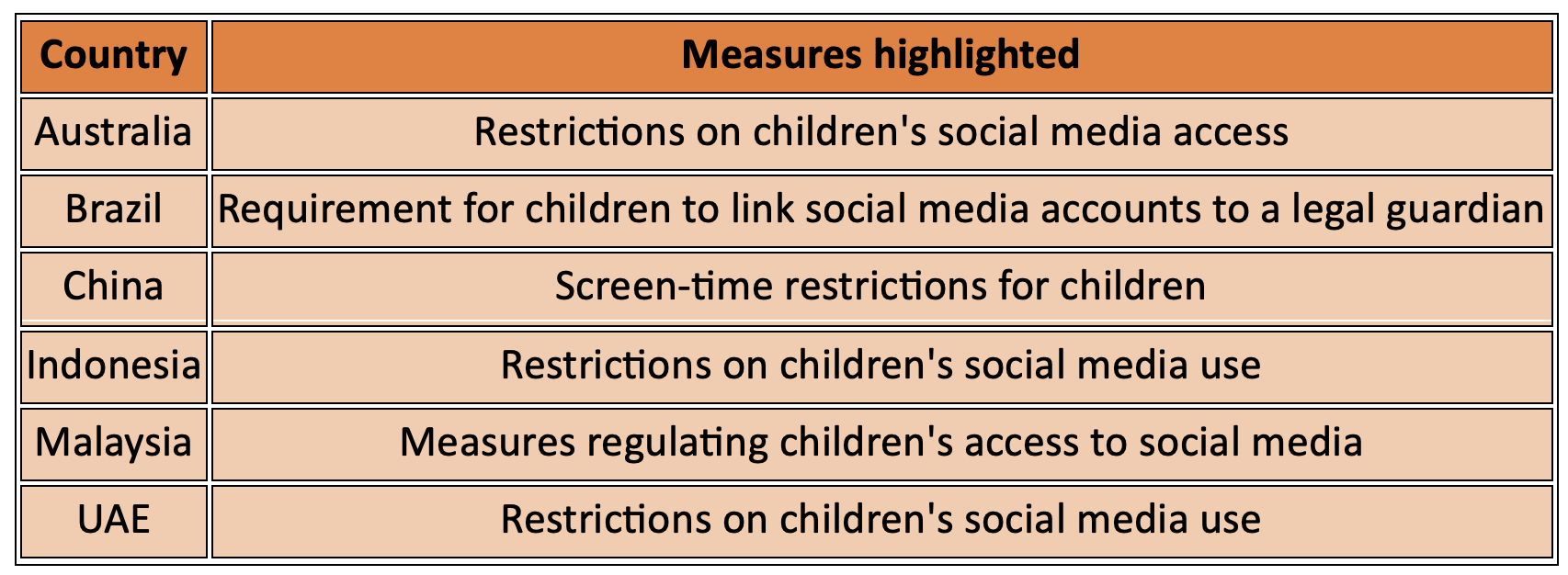
  • Several countries have introduced restrictions or safeguards to regulate children's access to social media and digital platforms.

Global Approaches to Children's Online Safety

  • In India, States such as Andhra Pradesh and Karnataka have also considered measures to regulate children's screen time.
  • These approaches reflect growing concerns about excessive screen exposure, harmful online content and the vulnerability of children in digital spaces.
  • However, regulatory approaches adopted by other countries cannot automatically be replicated in India. Restrictions must be evaluated in light of India's constitutional framework, social conditions and the importance of digital inclusion.

Judicial Developments on Internet Access and Digital Rights

  • The Supreme Court has progressively recognised the relationship between digital access and fundamental rights through several important judgments.
  • Anuradha Bhasin v. Union of India (2020)
    • The Supreme Court held that freedom of speech and expression under Article 19(1)(a), and the freedom to carry on trade or business under Article 19(1)(g), are protected when exercised through the internet.
    • The judgment also emphasised that restrictions on internet services must satisfy constitutional requirements and be subject to judicial scrutiny.
  • Pragya Prasun v. Union of India (2025)
    • The Supreme Court held that excluding persons with disabilities from digital Know Your Customer (KYC) procedures violated Article 21.
    • It recognised digital access as an intrinsic component of the right to life, highlighting the State's responsibility to ensure that digital systems are accessible and inclusive.
  • Secretary, Ministry of Information and Broadcasting v. Cricket Association of Bengal (1995)
    • The Court recognised that Article 19(1)(a) includes the right to know, receive and impart information and ideas.
    • This principle provides an important foundation for understanding access to information as an essential component of freedom of expression.
  • Just Rights for Children Alliance v. S. Harish (2026)
    • The judgment highlighted the importance of internet access for children and challenged the assumption that safety and freedom are necessarily contradictory.
    • It emphasised that protecting children does not automatically require restricting their digital freedom. Instead, the focus should be on creating an environment in which children can explore the internet safely while exercising their fundamental rights.

Balancing Digital Freedom with Online Safety

  • The central challenge is to ensure that protective measures do not unnecessarily undermine children's access to information and opportunities.
  • A blanket prohibition on internet or social media access may prevent children from benefiting from educational resources, digital services and opportunities for self-expression.
  • Instead, a preventive and collaborative approach involving multiple stakeholders is necessary.
  • Role of Parents and Guardians
    • Parents should encourage responsible internet use, establish age-appropriate boundaries and help children recognise online risks. Digital awareness should focus on informed decision-making rather than excessive restrictions.
  • Role of Government
    • The government should establish appropriate regulatory frameworks to restrict harmful content, protect children's privacy and ensure accountability of digital platforms.
  • Role of Educational Institutions
    • Schools and educational institutions should integrate digital literacy and cyber safety awareness into education, enabling children to identify risks and use online resources responsibly.
  • Role of Digital Service Providers
    • Technology companies and online platforms should strengthen content moderation, privacy safeguards, age-appropriate settings and mechanisms for reporting harmful activities.
    • The emphasis should be on preventive safeguards and shared responsibility rather than restricting children's fundamental rights as a corrective measure after harm has occurred.

Source: TH

Right to Internet Access FAQs

Q1: Which constitutional provision protects freedom of expression through the internet?

Ans: Article 19(1)(a) protects freedom of speech and expression, including the ability to receive and communicate information through the internet.

Q2: What is authority-liberty coordination?

Ans: It refers to maintaining a constitutional balance between State authority and individual liberty through reasonable and constitutionally justified restrictions.

Q3: What did Anuradha Bhasin v. Union of India (2020) establish?

Ans: The Supreme Court held that freedom of speech and expression under Article 19(1)(a) and the freedom to carry on trade or business under Article 19(1)(g) are protected when exercised through the internet.

Q4: What was the significance of Pragya Prasun v. Union of India (2025)?

Ans: The judgment recognised digital access as an intrinsic component of Article 21 and held that excluding persons with disabilities from digital KYC procedures violated their rights.

Q5: Why are blanket restrictions on children's internet access problematic?

Ans: They can restrict access to educational resources, information, digital opportunities and freedom of expression, potentially undermining children's development and digital inclusion.

ECI’s Special Summary Revision (SSR) and Internal Administrative Reorganisation

Special Summary Revision

Special Summary Revision (SSR) Latest News

  • The Election Commission of India (ECI) has announced the Special Summary Revision (SSR) of electoral rolls in six States and Union Territories following the completion of the third phase of the Special Intensive Revision (SIR). 
  • Simultaneously, it has issued a revised work-allocation order to strengthen administrative oversight of its Information Technology (IT) division amid concerns over the centralisation of electoral roll management.

Special Summary Revision (SSR) of Electoral Rolls

  • Objective: To ensure accurate, inclusive and updated electoral rolls by enrolling eligible voters, particularly young and first-time electors.
  • Key features and timeline:
    • Coverage: Arunachal Pradesh, Mizoram, Odisha, Sikkim, Chandigarh and Dadra and Nagar Haveli and Daman and Diu.
    • Advance enrolment: Eligible citizens who will attain 18 years on April 1, July 1 and October 1, 2027, can submit advance applications.
    • Polling station Rationalisation: Rearrangement of polling stations must be completed by November 20.
    • Draft electoral rolls: Scheduled for publication on November 30.
    • Claims and objections: Accepted from November 30 to December 30.
    • Disposal of claims: To be completed by January 16.
    • Final electoral rolls: Scheduled for publication on January 21, 2027.
  • Chief Secretaries have been directed to ensure adequate manpower and administrative resources for the exercise.

Safeguards Against Arbitrary Deletions

  • To prevent wrongful exclusion of voters -
    • Applications for deletion involving repeated or multiple entries must undergo field verification.
    • Electoral Registration Officers (EROs) must personally cross-check deletions exceeding 2% of electors at a polling station.
    • Furnishing Aadhaar details in Forms 6 (new enrolment) and 8 (correction, shifting or replacement of EPIC) remains voluntary.
    • No application for voter enrolment can be rejected merely because the applicant has not provided Aadhaar details.
  • Significance: These safeguards seek to balance electoral roll accuracy with the constitutional principle of universal adult suffrage under Article 326.

Delay and Transparency Issues

  • Concerns:
    • The delay in conducting SSR in States where SIR had been completed became a point of disagreement within the ECI.
    • Election Commissioners Sukhbir Singh Sandhu and Vivek Joshi reportedly raised concerns, including difficulties faced by citizens attaining voting age in registering themselves.
  • Changes made:
    • A significant transparency-related change is the provision of readable PDF copies of draft and final electoral rolls, without elector photographs, free of cost to political parties, alongside physical copies.
    • Candidates will also be provided alphabetically arranged readable PDF electoral rolls in electronic storage devices on payment at the time of elections.
  • Significance: 
    • This partially addresses the Opposition's demand for machine-readable electoral rolls to facilitate comparison with previous lists and identify anomalies. 
    • Earlier, the ECI had expressed concerns that providing such data could compromise electoral roll integrity and enable manipulation.

ECI’s Revised Work Allocation and IT Oversight

  • Background: 
    • The ECI's internal functioning came under scrutiny following a work-allocation order that reassigned IT and Information and Communication Technology (ICT) responsibilities.
    • The order placed Director General (IT) Seema Khanna's work directly under the Election Commission, removing the earlier layer of oversight by a Deputy Election Commissioner (DEC).
    • Election Commissioners objected to the order, arguing that it had been issued without the Commission's approval.
    • They raised the matter with Cabinet Secretary T. V. Somanathan, citing concerns over administrative functioning and access to electoral management systems.
  • Concerns regarding centralisation:
    • The ECI's IT division manages two important digital platforms -
    • ECINet: Facilitates citizen engagement and participation in the electoral process.
    • ERONet: Supports election officials in managing electoral registration and related processes.
    • The two Election Commissioners reportedly expressed concerns that field-level officers were not receiving adequate access to ERONet, potentially resulting in the centralisation of electoral roll management.

Revised Work Allocation

  • The latest order seeks to reaffirm the existing oversight structure -
    • Senior DEC Pawan Kumar Sharma has been assigned responsibility for IT/ICT.
    • DG (IT) Seema Khanna will route files concerning these functional divisions through the Senior DEC.
    • The ECI maintains that the revised arrangement reflects a unanimous decision and that the DG (IT) has always reported to a DEC-level officer.
    • The earlier order was reportedly never implemented following the joint direction issued by the two Election Commissioners.
  • Additional administrative changes: The revised order also assigns responsibilities to the newly appointed DEC Prakash Rajpurohit -
    • Election planning, Model Code of Conduct (MCC) and delimitation have been assigned to him, among other subjects.
    • He will support Senior DEC Maneesh Garg on election planning.

Significance for Electoral Governance

  • Electoral inclusiveness: Timely revision and advance registration can reduce the exclusion of young and first-time voters.
  • Transparency and accountability: Readable electoral rolls facilitate scrutiny by political parties and improve public confidence in electoral processes.
  • Institutional accountability: Clear reporting structures and collective decision-making within the ECI are essential for maintaining institutional integrity and preventing excessive administrative centralisation.
  • Important legal - constitutional provisions underpinned:
    • Article 324: Vests the superintendence, direction and control of elections in the ECI.
    • Article 326: Provides for elections based on universal adult suffrage.
    • Section 21 of the Representation of the People Act (RPA), 1950: It provides the statutory basis for the preparation and revision of electoral rolls.
    • Democratic principle: Electoral integrity requires both the inclusion of every eligible voter and the exclusion of ineligible entries, without arbitrary disenfranchisement.

Source: ToI | DH | IE

Special Summary Revision (SSR) FAQs

Q1: How does the Special Summary Revision (SSR) strengthen electoral inclusiveness?

Ans: SSR facilitates enrolment of eligible and first-time voters, thereby strengthening universal adult suffrage under Article 326.

Q2: What safeguards are necessary to prevent arbitrary deletion of voters from electoral rolls?

Ans: Field verification of duplicate entries, ERO scrutiny and voluntary Aadhaar disclosure.

Q3: How can technology enhance transparency and efficiency in India's electoral process?

Ans: Platforms such as ECINet and ERONet improve citizen engagement and electoral administration.

Q4: Why is institutional accountability important for the independent functioning of the ECI?

Ans: It prevents excessive centralisation and strengthens the institutional credibility of the ECI under Article 324.

Q5: How can the ECI balance electoral roll accuracy with democratic inclusiveness?

Ans: By combining periodic revisions, transparent verification, accessible enrolment procedures, etc.

BPaL Patent Rejection in India: Boost for Affordable TB Treatment

BPaL Patent Rejection in India

BPaL Patent Rejection in India Latest News

  • The Indian Patent Office has rejected a patent application for BPaL — a combination of three tuberculosis drugs (bedaquiline, pretomanid, linezolid) — filed by the US-based TB Alliance. 
  • Experts have welcomed this as a major step toward making drug-resistant TB treatment more affordable in India, which bears nearly a quarter of the world’s TB burden, with an incidence rate of 187 cases per 100,000 people (2024).

What Is BPaL?

  • A six-month, all-oral treatment regimen recommended by the WHO for eligible drug-resistant TB patients.
  • Combines three drugs: Bedaquiline, Pretomanid and Linezolid.
  • A related regimen, BPaLM, adds a fourth drug, moxifloxacin, recording an 89% success rate — far higher than the 52–75% success of older regimens.
  • Over 15,000 patients have already started BPaLM treatment under India’s National TB Programme.
  • Unlike older regimens requiring many months of antibiotics and painful injections, BPaL offers a shorter, oral course — reducing physical, financial and emotional burden.

Why Was the Patent Rejected?

  • The rejection followed two pre-grant oppositions filed in 2020 — formal legal challenges allowing individuals/organisations to contest a patent before it’s granted. 
  • With this ruling, every bedaquiline-related patent application challenged in India has now been refused — including the salt form (2023), paediatric formulation (2024), long-acting injectable, and now BPaL.
  • Experts call this a win against “evergreening” — the practice of seeking additional patents on minor modifications of existing drugs to extend exclusivity and delay generic competition.

What Does This Mean for Patients?

  • No single company can now claim exclusive rights over the BPaL combination in India.
  • Any TB drug manufacturer can produce it for India’s national programme and for export.
  • This removes a legal barrier to competition — but doesn’t automatically lower prices or guarantee universal availability.
  • Actual impact depends on: number of quality-assured suppliers, government procurement, and uninterrupted supply chains.
  • Who Benefits Most - Patients with multidrug-resistant or rifampicin-resistant TB (MDR/RR-TB), especially those facing financial hardship, treatment delays, or poor access to treatment centres.

Will Treatment Become Cheaper?

  • Patients under India’s public health system already receive TB medicines free of cost — so the immediate financial benefit accrues to the government, which procures these drugs.
  • Precedent exists: after the 2023 rejection of the bedaquiline salt patent, a six-month BPaLM course cost dropped from $588 (2022) to $284.
  • Lower procurement costs mean the same budget could treat more patients, and greater competition could ensure more reliable supply.
  • However, patients still face out-of-pocket costs for travel, additional tests, nutrition, and lost income — lower drug prices alone won’t eliminate these burdens.

Important Distinctions to Note

  • Patent approval ≠ drug regulatory approval: A patent decides exclusivity rights; India’s CDSCO (Central Drugs Standard Control Organisation) separately decides if a drug can be marketed.
  • CDSCO has already approved bedaquiline and pretomanid for use under the National TB Elimination Programme (NTEP); linezolid and moxifloxacin are older, already-used antibiotics.
  • WHO prequalification (assessing quality/safety/efficacy) also does not substitute for Indian regulatory marketing permission.
  • Rejection of the patent is not automatic permission for unrestricted commercial sale.

Quality Concerns

  • Generic medicines must contain the same active pharmaceutical ingredients and meet regulatory standards.
  • Experts stress that quality checks must continue even as more manufacturers enter the market.

Conclusion

  • India’s rejection of the BPaL patent marks a significant victory against pharmaceutical “evergreening” and reinforces India’s role as the “pharmacy of the developing world.” 
  • While it opens the door to generic competition and potential cost savings for the government’s TB programme, real impact for patients will depend on scaling up access, ensuring reliable supply chains, and maintaining drug quality — essential steps if India is to meaningfully advance its fight against drug-resistant tuberculosis.

Source: IE

BPaL patent rejection in India FAQs

Q1: What is BPaL used for in tuberculosis treatment?

Ans: BPaL is a six-month, all-oral regimen combining bedaquiline, pretomanid and linezolid for eligible patients with drug-resistant tuberculosis.

Q2: Why was the BPaL patent rejected in India?

Ans: The BPaL patent rejection in India followed pre-grant oppositions and was welcomed as a step against evergreening and prolonged pharmaceutical exclusivity.

Q3: How will the BPaL patent rejection in India benefit patients?

Ans: The BPaL patent rejection in India removes an exclusivity barrier, allowing manufacturers to produce the combination and potentially improve access through competition.

Q4: Will the BPaL patent rejection in India automatically make treatment cheaper?

Ans: No. The BPaL patent rejection in India enables competition, but actual savings depend on quality-assured suppliers, government procurement and uninterrupted supply chains.

Q5: Does patent rejection mean BPaL can be sold freely in India?

Ans: No. The BPaL patent rejection in India does not replace CDSCO marketing approval; patent rights and drug regulatory permissions are separate processes.

Agnipath Scheme Revamp: 100% Absorption and Changes in Recruitment

Agnipath Scheme Revamp

Agnipath Scheme Revamp Latest News

  • Recently, the Centre approved a major overhaul of the Agnipath scheme, allowing all Agniveers undergoing training to eventually join the armed forces as regular soldiers. 
  • The change comes as the first batch of Agniveers nears completion of their four-year tenure this month. However, officials clarify this is not a return to pre-Covid regular recruitment — it retains the scheme’s core structure with modifications.

Agnipath Scheme

  • Introduced in 2022, Agnipath recruits candidates aged 17.5 to 21 years into the Army, Navy, and Air Force for a four-year tenure.
  • Recruits are called Agniveers.

What Has Changed?

  • 25% of Agniveers continue to be selected on merit for absorption as regular soldiers after four years — unchanged from the original scheme.
  • The remaining 75%, who earlier exited with the Seva Nidhi package, will now get an additional two-year engagement (total six years), after which they too can join as regular soldiers — subject to willingness and meeting selection criteria.
  • Net effect: 100% of Agniveers now get a pathway to permanent service, though not simultaneously or automatically.

The Seva Nidhi Package

  • A compulsory retirement-cum-transition fund: 30% of an Agniveer’s salary is deducted monthly and deposited into the Agniveer Corpus Fund, matched by the government.
  • On completing four years, Agniveers receive a tax-exempt lump sum of ~₹11.71 lakh (with interest).
  • Those opting for the two-year extension get enhanced pay and an enhanced Seva Nidhi package if they later choose not to join the forces.
  • Trade-off: Agniveers serving the extended term lose eligibility for reserved quotas in paramilitary forces, PSUs, and state government jobs.
  • No Agniveer receives monthly pension or gratuity.

Scale of Impact

  • Over 3 lakh Agniveers are currently training across the three services.
  • Army: ~2.8 lakh Agniveers, with ~19,000 completing their four-year tenure this round.
  • Navy: ~2,500 completing tenure this month.
  • Air Force: ~2,900 completing training as the first IAF batch, next month.

Why This Isn’t “Regular Recruitment”

  • Chief of Defence Staff General N.S. Raja Subramani clarified that Agnipath continues, only with modifications:
    • Only 25% are selected as regular soldiers immediately after four years, on merit.
    • The rest must complete a total of six years before becoming eligible.
    • Seniority-wise, those joining after the two-year extension rank below batchmates absorbed after four years.

How It Differs from Pre-Covid Recruitment

  • Agniveers thus retain the choice to leave or continue at two stages — a flexibility absent in the old system — backed by the Seva Nidhi cushion if they exit.
  • [my_image src="https://vajiramias.sgp1.cdn.digitaloceanspaces.com/wp/current-affairs/2026/11/06083456/Agniveer-Vs-Pre-Covid.jpg?v=1793934295" size="full" align="none" width="auto" height="187px" alt="" title="Agniveer Vs Pre Covid"]

Benefits for the Military

  • No major pension savings, even with 100% absorption, since benefits still apply.
  • Helps address the personnel shortage caused by halted recruitment during Covid-19 — critical given post-Galwan and post-Operation Sindoor security demands.
  • Fosters competitive spirit, as Agniveers strive to be among the top 25% selected early.
  • Creates a blended force: experienced soldiers alongside a youthful Agniveer cohort.
  • Those who leave after service gain transferable skills and training for civilian careers.

Conclusion

  • The revamped Agnipath scheme expands opportunity without abandoning its core philosophy of selective, merit-based, staggered absorption. 
  • By offering all Agniveers a pathway to permanence — rather than guaranteeing it — the government balances the armed forces’ need for a youthful, cost-effective force with addressing personnel shortages and improving retention incentives, while preserving the competitive, choice-driven structure that distinguishes Agnipath from the pre-Covid system.

Source: IE

Agnipath scheme revamp FAQs

Q1: What is the Agnipath scheme?

Ans: The Agnipath scheme revamp retains the 2022 recruitment model, which inducts candidates aged 17.5 to 21 into the Army, Navy and Air Force.

Q2: What has changed under the Agnipath scheme revamp?

Ans: The Agnipath scheme revamp allows the 75% not initially selected to undertake a two-year extension, after which they may qualify for regular service.

Q3: Does the Agnipath scheme revamp guarantee permanent absorption for every Agniveer?

Ans: No. The Agnipath scheme revamp provides every Agniveer a pathway to permanence, subject to willingness, selection criteria and completion of the required tenure.

Q4: What is the Seva Nidhi package under the Agnipath scheme?

Ans: Under the Agnipath scheme revamp, Agniveers completing four years receive a tax-exempt lump sum of approximately ₹11.71 lakh, including interest.

Q5: How does the Agnipath scheme revamp differ from pre-Covid recruitment?

Ans: The Agnipath scheme revamp retains conditional, staggered entry and allows Agniveers to leave or continue at two decision points, unlike pre-Covid recruitment.

Exercise Malabar 2026: India, US, Japan and Australia Begin Joint Naval Drills

Exercise Malabar

Exercise Malabar 2026 Latest News

Recently, INS Sahyadri reached Yokosuka Naval Base in Japan to participate in the multilateral naval exercise MALABAR 2026.

About Exercise Malabar 2026

  • It is a multilateral naval exercise.
  • Participating Countries:  India, Japan, the United States and Australia
  • Background
    • It was started in 1992 as a bilateral naval exercise between India and US navy.
    • The first Malabar Exercise in the Bay of Bengal took place in 2007.
    • It was expanded into a trilateral format with the inclusion of Japan in 2015.
    • In 2020, the Australian Navy joined the Malabar Exercise, making it a quadrilateral naval exercise.
    • It takes place annually in the Indian Ocean and Pacific Oceans alternatively.
  • MALABAR 2026 provides an opportunity for participating maritime forces to enhance operational coordination, strengthen interoperability and exchange professional expertise through a series of engagements in harbour and at sea.
  • Phases
  • Harbour Phase: It will include professional interactions and coordinated planning, followed by the sea phase involving INS Sahyadri and participating units of the United States, Australia and Japan.

Source: PIB

Exercise Malabar 2026 FAQs

Q1: Which countries participate in Exercise Malabar?

Ans: India, Japan, the United States and Australia

Q2: Where is Exercise Malabar 2026 is taking place?

Ans: Yokosuka Naval Base in Japan

Daily Editorial Analysis 6 November 2026

Daily-Editorial-Analysis

The Ecological Fallout of Israel’s War in Gaza

Context

  • They devastate ecosystems, deplete natural resources, contaminate water bodies and destroy agricultural land, creating consequences that may persist for generations.
  • Recognising this concern, the United Nations General Assembly (UNGA) designated November 6 as the International Day for Preventing the Exploitation of the Environment in War and Armed Conflict in 2001.
  • The environmental crisis in Gaza raises serious questions about international humanitarian law, environmental justice, state responsibility and the rights of occupied populations.

The Devastation in Gaza

  • Destruction of Agricultural Resources

    • The United Nations Environment Programme (UNEP), in its September 23, 2025 report, Environmental Impact of the Conflict in the Gaza Strip, documented unprecedented ecological destruction resulting from prolonged hostilities.
    • The findings reveal that Gaza has lost 97% of its tree crops, 95% of its shrubland and 82% of its annual crops since 2023.
    • This destruction has severely undermined agricultural production, threatened livelihoods and intensified food insecurity.
  • Contamination of Water and Marine Ecosystems

    • Freshwater resources have become critically scarce, with much of the remaining supply contaminated.
    • The destruction of sewage treatment facilities and piped water systems has aggravated pollution of underground aquifers.
    • Marine and coastal ecosystems are also likely to have suffered contamination.
    • These developments threaten public health and weaken the ecological foundations necessary for sustainable recovery.
  • Destruction of Infrastructure and Soil Degradation

    • Approximately 78% of Gaza's buildings have been damaged or destroyed, generating nearly 61 million tonnes of debris.
    • The destruction of vegetation and soil compaction caused by military activities reduce water absorption, increase flood risks and restrict groundwater recharge.
    • These environmental consequences will complicate reconstruction and affect future generations.

Violations of Environmental Obligations

  • International Legal Framework under PERAC

    • The ILC adopted 27 draft principles in 2022 under its report, Protection of the Environment in Relation to Armed Conflicts.
    • The UNGA formally took note of these principles on December 7, 2022.
    • The first principle establishes that environmental protection obligations apply before, during and after armed conflicts, including situations of occupation.
    • Environmental protection is therefore a continuing responsibility rather than merely a wartime obligation.
  • Responsibilities of an Occupying Power

    • Under international law, an occupying power must administer and utilise natural resources for the benefit of the occupied population while ensuring environmental protection.
    • It must also integrate environmental considerations into the administration of occupied territory.
    • The ICJ's July 19, 2024 advisory opinion concerning Israel's policies and practices in the Palestinian Territory addressed the legal consequences of prolonged occupation, including resource-related practices.

International Responsibility and Reparation

  • Principle 9 of PERAC establishes that a state committing an internationally wrongful act connected with armed conflict, resulting in environmental damage, bears international responsibility and must provide full reparation.
  • Reparation must include damage to the environment itself.
  • In Gaza, restoration would require rehabilitating agricultural land, rebuilding water and sanitation infrastructure, removing hazardous debris, addressing soil contamination and reviving damaged ecosystems.
  • The ICJ's 2024 advisory opinion provides an important legal foundation for assessing the consequences of Israel's policies in the occupied territory.
  • Accountability and environmental restoration are essential to preventing ecological destruction from becoming permanent.

Conclusion

  • The environmental devastation in Gaza demonstrates that armed conflicts have consequences extending far beyond immediate military operations.
  • The destruction of agricultural land, freshwater resources, sanitation systems and ecosystems threatens public health, human survival and sustainable development.
  • The PERAC principles, international humanitarian law and ICJ jurisprudence provide important foundations for establishing state responsibility and securing reparation.
  • However, effective implementation, independent environmental assessments and accountability remain essential.

The Ecological Fallout of Israel’s War in Gaza FAQs

Q1. When is the International Day for Preventing the Exploitation of the Environment in War and Armed Conflict observed?

Ans. It is observed on November 6 every year.

Q2. What is the PERAC framework?

Ans. PERAC is a set of 27 principles adopted by the International Law Commission in 2022 to protect the environment in relation to armed conflicts.

Q3. What percentage of Gaza's annual crops has been lost since 2023?

Ans. Gaza has lost 82% of its annual crops since 2023.

Q4. What does Principle 9 of PERAC establish?

Ans. Principle 9 establishes that states responsible for internationally wrongful acts causing environmental damage must provide full reparation.

Q5. What are the major environmental consequences of the conflict in Gaza?

Ans. The conflict has caused agricultural destruction, water contamination, soil degradation, ecosystem damage and massive infrastructure destruction.

Source: The Hindu


Science Should Move Past ‘Top 2%’ Label

Context

  • Scientific research advances knowledge, addresses societal challenges and strengthens national development.
  • Indian scientists deserve recognition for their contributions, and international visibility is one form of appreciation.
  • However, the growing presence of Indian researchers in the top 2% scientists’ database should not become the ultimate measure of scientific excellence.
  • The real value of research lies in its originality, quality, innovation and societal impact. Treating rankings as definitive indicators risks overlooking meaningful scientific contributions.

Understanding the Top 2% Scientists’ Database

  • Purpose and Methodology

    • Developed by John Ioannidis and his collaborators, the database uses publication and citation records from Scopus to identify influential researchers across scientific disciplines.
    • However, its creators caution against treating inclusion as conclusive evidence of research excellence.
  • Limitations of the Database

    • First, it relies on publication and citation records without independently verifying research originality.
    • Second, inaccuracies in author profiles and disciplinary classification can affect rankings. Third, research published in regional languages remains inadequately represented.
    • Its impact scores also depend partly on authorship positions in multi-author publications, although authorship conventions differ across disciplines.
    • Moreover, citation counts cannot establish whether a research paper is appreciated, criticised or merely mentioned.
    • An analysis by John Philip in 2023 found that 12 of 71 Physics Nobel laureates and two of 66 Chemistry Nobel laureates from 1998–2022 were missing from the database.
    • This demonstrates that exclusion does not necessarily indicate a lack of scientific merit.

Implications for Research

  • Distinguishing Scientific Research from Scientific Communication

    • A 2026 study published in Scientometrics identified science journalists Clare Dyer and Jacqui Wise in the 2025 database.
    • Although science journalism deserves recognition, its contribution differs from original scientific investigation.
    • The same study identified an author associated with 217 retracted papers in the database.
    • These examples raise concerns about the database's ability to distinguish research quality, scientific communication and research integrity.
  • Pressure on Young Researchers

    • Excessive emphasis on rankings could influence research priorities in India.
    • Young scientists may prefer popular subjects that attract citations rather than pursue intellectually challenging questions aligned with their interests.
    • Fundamental research requires patience, sustained investment and long-term commitment, as discoveries often take years to produce measurable results.
    • Similarly, applied research requires prolonged experimentation and technological development.
    • Prioritising immediate recognition could discourage innovative and unconventional research.

The Way Forward: Towards a Comprehensive Research Assessment Framework

  • Balancing Fundamental and Applied Research

    • India needs both fundamental research and applied scientific innovation.
    • Fundamental research expands knowledge and lays the foundation for future discoveries, while applied research converts scientific understanding into practical solutions.
    • Therefore, research assessment must recognise different objectives and timelines instead of rewarding publications and citations alone.
    • Making database inclusion a primary target could undermine meaningful scientific progress.
  • Learning from International Practices

    • International research assessment initiatives are increasingly moving away from excessive dependence on quantitative indicators.
    • For instance, the Swiss National Science Foundation asks applicants not to include citation counts, journal rankings or institutional rankings in their CVs.
    • This approach encourages evaluators to assess the actual quality and significance of research.
    • India should adopt a similar framework incorporating originality, scientific integrity, innovation, collaboration and societal relevance.
    • Peer evaluation and qualitative assessment must complement quantitative indicators.
  • Recognising Diverse Scientific Contributions

    • India's scientific achievements demonstrate why excellence must be recognised beyond individual rankings.
      • Chandrayaan-3: Its successful landing near the Moon's south polar region demonstrated collective scientific expertise, advanced engineering and technological capabilities.
      • SHAKTI microprocessors: Developed at IIT Madras, they represent progress towards indigenous semiconductor technology.
      • NexCAR19 cancer therapy: Developed through collaboration involving IIT Bombay, Tata Memorial Centre and ImmunoACT, it demonstrates India's capabilities in advanced cancer treatment.
      • Indigenous 4G technology stack: It reflects domestic innovation and technological self-reliance.
      • CERVAVAC vaccine: Developed by the Serum Institute, it represents an important contribution to affordable healthcare.
    • These achievements highlight the importance of teamwork, interdisciplinary collaboration and indigenous innovation.
    • Scientists, engineers, technicians and institutions deserve recognition irrespective of their inclusion in international databases.

Conclusion

  • India needs a scientific recognition system that values genuine contributions rather than numerical rankings.
  • International databases can provide useful information about research visibility but should remain supplementary assessment tools.
  • A strong scientific ecosystem must recognise those who discover, innovate, develop technologies, communicate knowledge and enable scientific progress.
  • Encouraging intellectual independence, long-term research and socially relevant innovation will strengthen India's scientific capabilities.
  • Ultimately, the true measure of scientific excellence is the advancement of knowledge and its contribution to humanity, not inclusion in a global ranking.

Science Should Move Past ‘Top 2%’ Label FAQs

Q1. What is the top 2% scientists’ database?

Ans. It is a database developed by John Ioannidis and his collaborators using Scopus publication and citation records to identify influential researchers.

Q2. What are the major limitations of the database?

Ans. It does not adequately verify research originality, regional-language publications, author profiles or disciplinary differences.

Q3. How can rankings affect young researchers?

Ans. They may encourage young researchers to choose popular, highly cited topics instead of pursuing meaningful research.

Q4. What approach does the Swiss National Science Foundation follow?

Ans. It evaluates research quality without requiring citation counts, journal rankings or institutional rankings in applicants' CVs.

Q5. What should be the true measure of scientific excellence?

Ans. Scientific excellence should be measured by originality, innovation, advancement of knowledge and contributions to society.

Source: The Hindu

Daily Editorial Analysis 2026 FAQs

Q1: What is editorial analysis?

Ans: Editorial analysis is the critical examination and interpretation of newspaper editorials to extract key insights, arguments, and perspectives relevant to UPSC preparation.

Q2: What is an editorial analyst?

Ans: An editorial analyst is someone who studies and breaks down editorials to highlight their relevance, structure, and usefulness for competitive exams like the UPSC.

Q3: What is an editorial for UPSC?

Ans: For UPSC, an editorial refers to opinion-based articles in reputed newspapers that provide analysis on current affairs, governance, policy, and socio-economic issues.

Q4: What are the sources of UPSC Editorial Analysis?

Ans: Key sources include editorials from The Hindu and Indian Express.

Q5: Can Editorial Analysis help in Mains Answer Writing?

Ans: Yes, editorial analysis enhances content quality, analytical depth, and structure in Mains answer writing.

Enquire Now