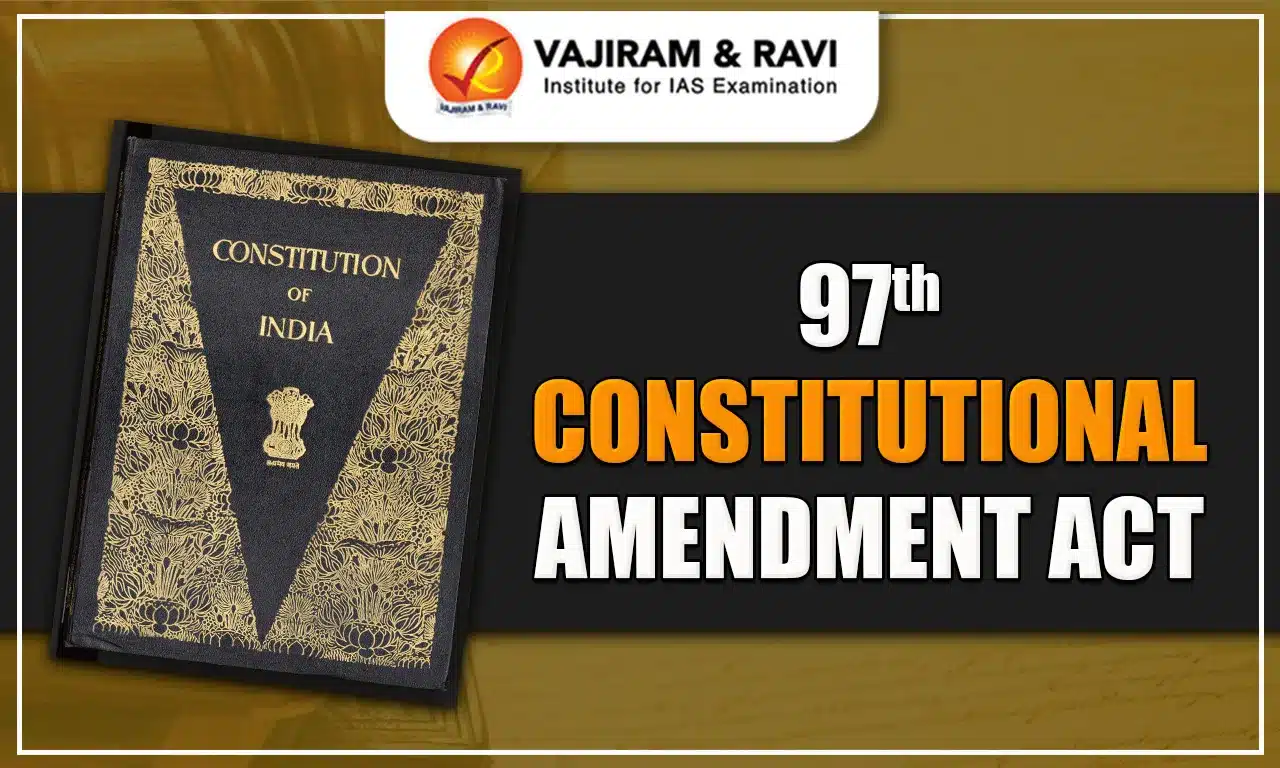
After confirmation from the Supreme Court to a decision by Gujarat High Court in 2013 which invalidated some parts of the 97th Constitutional Amendment Act in 2011. Part IX was introduced to elaborate the terms of existing cooperative society. The act basically focused on overcoming the challenges and hurdles experienced by cooperative societies and tried to install effective techniques to manage them. Under the act, amendments were added to the words or co-operative societies after the words or unions in Article 19(i). Other than this, Article 43B was included to Part IV of the Indian Constitution which mentions that “the State shall endeavour to promote voluntary formation, autonomous functioning, democratic control, and professional management of cooperative societies” and “the State shall endeavour to promote voluntary formation, autonomous functioning, democratic control, and professional management of cooperative societies”. Part IX-B was added after IX-A. Article 243ZH through 243ZT was added to Part IX-B.
Also Check: 103rd Constitutional Amendment Act
97th Constitutional Amendment Act
The 97th Constitutional Amendment Act came into existence in 2011, for the first time, cooperative societies were given formal constitutional backing, elevating their status in the country’s political and economic framework. This amendment did three key things which includes, It made the right to form cooperative societies a fundamental right under Article 19(1)(c), putting it on par with the right to form unions or associations, It added Article 43B to the Directive Principles of State Policy, stating that the state shall promote voluntary formation, autonomous functioning, democratic control, and professional management of cooperative societies. It introduced Part IX-B (Articles 243-ZH to 243-ZT), which lays out the framework for how cooperative societies should function covering everything from the composition of their boards to their elections, audits, and dispute resolution.


 Last updated on Oct, 2026
→ UPSC 2027 Notification will be released on 13 January 2027 at upsconline.nic.in.
→ Asian Games 2026 are being held in Aichi-Nagoya, Japan, from 19 September to 4 October.
→ Check Nobel Prize 2026 Winners List here.
→ Download PIB PRiSM Monthly Magazine 2026 here.
→ Check UPSC Monthly Current Affairs Magazine The Recitals here.
→ Check out the latest UPSC Syllabus here.
→ Download UPSC Model Answers for Mains 2026
→ UPSC Mains Question Paper 2026 is out now for Essay & GS Paper 1, 2, 3 & 4.
→ UPSC Calendar 2027 has been released.
→ Enroll in Vajiram & Ravi’s UPSC Mains Test Series 2027 for structured answer writing practice, expert evaluation, and exam-oriented feedback.
→ Join Vajiram & Ravi’s UPSC Mentorship Program 2027 for personalized guidance, strategy planning, and one-to-one support from experienced mentors.
→ Go through the UPSC Mains Previous Year Papers to enhance your preparation.
→ UPSC has released UPSC Toppers List 2025 with the Civil Services final result on its official website.
→ Also check Best UPSC Coaching in India
97th Constitutional Amendment Act FAQs
Q1. What is the 97th Constitutional Amendment Act?+
Q2. When did the 97th Constitutional Amendment come into force?+
Q3. What was the main objective of the 97th Amendment?+
Q4. Which part of the Constitution was amended by the 97th Amendment?+
Q5. What article was inserted into the Fundamental Rights by this amendment?+
Tags: 97th constitutional amendment act