Why in news: The recently released NFHS-6 (2023-24) highlights a worrying rise in obesity and lifestyle-related diseases in India.
Current Status of Adolescent Malnutrition in India
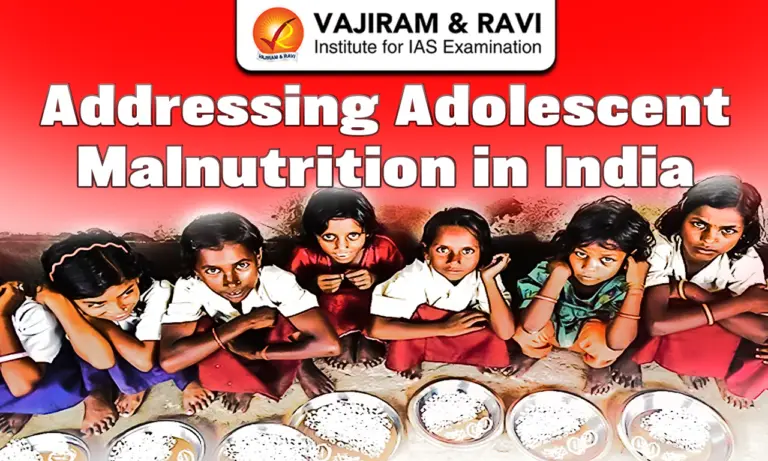
Adolescence is a critical stage for physical and cognitive development, making nutrition interventions during this period essential for achieving the goals of Viksit Bharat, SDG-2 (Zero Hunger) and SDG-3 (Good Health and Well-being). India is facing a double burden of malnutrition, where undernutrition coexists with rising overweight and obesity.
- According to NFHS-6 (2023-24), obesity among women (15-49 years) increased from 24% to 30.7%, while among men it rose from 22.9% to 27.3%.
- High blood sugar among men (15+ years) increased from 15.6% to 20.9%, and among women from 13.5% to 17.8%, indicating growing metabolic disorders.
- According to the Comprehensive National Nutrition Survey (CNNS), 2019, 27.4% of Indian adolescents are stunted, reflecting persistent nutritional deficiencies.
- India is witnessing the ‘thin-fat’ phenotype, where many children appear lean but carry excess body fat and face a higher risk of diabetes and cardiovascular diseases.
- Around 35% of stunted children under five already exhibit adult-level triglycerides, highlighting early metabolic risk.
- A 2025 Lancet study projects that by 2050, India will have 21.8 crore overweight men and 23.1 crore overweight women, with the fastest rise expected among the 15-24 years age group.
Causes of Adolescent Malnutrition in India
India’s growing burden of adolescent malnutrition is driven by changing dietary patterns, unhealthy lifestyles and inadequate nutrition awareness.
- Poor Dietary Diversity: Studies among Delhi school adolescents show inadequate intake of milk, dairy products, green leafy vegetables and fruits, while cereal-dominated diets remain common.
- Rising Consumption of Ultra-Processed Foods (UPFs): According to the World Health Organization (WHO), consumption of Ultra-Processed Foods (UPFs) in India is increasing by over 13.7% annually, replacing healthier traditional diets.
- Excess Sugar Intake: High consumption of free sugar during adolescence increases the long-term risk of obesity, diabetes and cardiovascular diseases.
- Physical Inactivity: Sedentary lifestyles, excessive screen time and declining participation in sports contribute to obesity and metabolic disorders.
- Urban Lifestyle Changes: Processed diets, stress and reduced physical activity, once confined to cities, are now rapidly spreading to rural India.
- Nutrition Transition: Shift from traditional balanced diets to calorie-dense, nutrient-poor foods has increased the burden of both undernutrition and obesity.
- Lack of Nutrition Literacy: Limited awareness about balanced diets, food labels, portion sizes and hidden sugar content encourages unhealthy food choices.
- Inadequate Healthy Food Environment: Easy availability of HFSS foods and sugary beverages in and around schools promotes unhealthy eating habits.


Role of Schools in Addressing Adolescent Malnutrition in India
Schools are the most effective platform for preventing malnutrition by promoting healthy eating habits and active lifestyles during adolescence.
- Improve Mid-Day Meals: Provide balanced meals with adequate proteins, fruits, vegetables and micronutrients instead of cereal-heavy diets.
- Promote Healthy School Canteens: Replace HFSS foods and sugary beverages with nutritious, locally available food options.
- Develop Nutrition Literacy: Teach students to prepare balanced plates, read food labels, understand portion sizes and identify hidden sugars.
- Organise Food Demonstrations: Conduct practical sessions to encourage healthy cooking and informed food choices.
- Promote Fruits and Vegetables: Introduce fruit breaks, school gardens and seasonal local produce in line with the Dietary Guidelines for Indians, 2024, which recommend half the plate should consist of fruits and vegetables.
- Discourage Sugary Foods: Display “sugar boards” showing hidden sugar content in popular beverages and processed foods while discouraging their consumption.
- Create UPF-Free School Zones: Restrict the sale and promotion of Ultra-Processed Foods (UPFs) and HFSS foods within and around schools.
- Ensure Daily Physical Activity: Make sports and structured physical activity compulsory rather than optional to tackle sedentary lifestyles.
- Adopt Skill-Based Nutrition Education: Move beyond textbook learning by teaching food label reading, healthy cooking, recognising food marketing tactics and making informed dietary choices.
- Promote Continuous Behavioural Change: Reinforce healthy habits through regular awareness activities rather than one-time campaigns.
- Transform Schools into Health-Promoting Institutions: Integrate nutrition, physical activity and healthy food environments to reduce future burden of obesity and non-communicable diseases.
Government Initiatives
The Government of India has launched several policy, nutrition and awareness initiatives to improve adolescent nutrition and create healthier food environments.
- POSHAN Abhiyaan: Promotes a life-cycle approach to improve nutritional outcomes through convergence, behavioural change and technology-driven monitoring.
- PM POSHAN (Mid-Day Meal) Scheme: Provides nutritious cooked meals in schools to improve nutritional status, reduce classroom hunger and encourage school attendance.
- Saksham Anganwadi and POSHAN 2.0: Focuses on improving nutrition among children, adolescent girls and women through supplementary nutrition and health services.
- Anaemia Mukt Bharat (AMB): Aims to reduce anaemia among children, adolescents and women through iron-folic acid supplementation, deworming and behaviour change.
- Rashtriya Kishor Swasthya Karyakram (RKSK): Addresses adolescent health through nutrition counselling, mental health support, reproductive health education and healthy lifestyle promotion.
- Eat Right India Campaign (FSSAI): Encourages healthy eating habits, safe food practices and consumer awareness through schools and communities.
- Dietary Guidelines for Indians, 2024 (ICMR-NIN): Recommend balanced diets, including making fruits and vegetables occupy nearly half of the plate by volume while reducing sugar, salt and unhealthy fats.
- Let’s Fix Our Food (LFOF) Initiative: Led by ICMR-NIN, it promotes healthier food environments through nutrition literacy, policy recommendations, food-label reading kits, regulation of HFSS food advertising and taxation of unhealthy beverages.
- School Health and Wellness Programme (Ayushman Bharat): Integrates nutrition education, physical activity, mental health and healthy lifestyle promotion within schools.
Challenges
Despite increasing awareness, several institutional and systemic challenges continue to hinder efforts to improve adolescent nutrition in India.
- Effective Policy Implementation: Nutrition and school health programmes often suffer from uneven implementation, weak monitoring and poor convergence among health, education and nutrition departments.
- Double Burden of Malnutrition: Simultaneous prevalence of undernutrition among children and rising obesity among adolescents complicates policy design and programme delivery.
- School Food Environment: Many schools continue to have unhealthy canteens and easy availability of HFSS foods and sugary beverages, weakening healthy eating habits.
- Weak Nutrition Education: Nutrition education remains largely theoretical, with limited focus on practical life skills such as reading food labels, understanding portion sizes and making healthy food choices.
- Inadequate Physical Activity: Sports and structured physical activity are often treated as optional rather than essential components of school education.
- Limited Behavioural Change: One-time awareness campaigns have limited impact, whereas sustained reinforcement is needed to convert nutrition knowledge into lifelong healthy practices.
- Rapid Commercialisation of Food: Aggressive marketing and advertising of HFSS foods and Ultra-Processed Foods (UPFs), particularly among children and adolescents, encourage unhealthy consumption patterns.
- Rising Burden of Non-Communicable Diseases (NCDs): Increasing adolescent obesity is leading to early-onset Type-2 diabetes, hypertension and cardiovascular diseases, imposing a growing healthcare burden.
- Rural Spread of Lifestyle Diseases: Sedentary behaviour, processed diets and obesity are no longer confined to urban areas but are increasingly affecting rural populations as well.
- Future Public Health Burden: Without timely interventions during adolescence, India faces rising healthcare expenditure and reduced human capital due to increasing nutrition-related diseases.
Way Forward
- Adopt a Life-Cycle Approach: Integrate nutrition interventions from adolescence into reproductive health and adult wellness to break the intergenerational cycle of malnutrition.
- Target High-Risk Groups: Focus on vulnerable adolescents, especially girls, rural populations and economically weaker sections through targeted nutrition support.
- Strengthen Growth Monitoring: Conduct regular BMI screening, nutrition assessment and early detection of obesity, anaemia and other deficiencies in schools.
- Build Health-Promoting Schools: Institutionalise comprehensive school health policies that integrate nutrition, mental health, hygiene and physical fitness.
- Improve Food Regulation: Strengthen front-of-pack food labelling and enforce stricter standards on the sale and marketing of unhealthy foods to children.
- Promote Local and Nutritious Foods: Encourage the consumption of traditional, locally available and diverse foods to improve dietary diversity and reduce dependence on processed foods.
- Enhance Research and Data Systems: Strengthen nutrition surveillance and periodic assessments to enable evidence-based policymaking and timely interventions.
- Increase Community Participation: Engage parents, teachers, local bodies and civil society to create supportive environments for healthy dietary and lifestyle practices.
- Invest in Preventive Healthcare: Shift policy focus from treating lifestyle diseases to preventing them through early nutrition interventions during adolescence.
- Build a Healthy Demographic Dividend: Prioritise adolescent nutrition as an investment in India’s future workforce, productivity and long-term human capital development.

 Last updated on Sep, 2026
→ UPSC 2027 Notification will be released on 13 January 2027 at upsconline.nic.in.
→ UPSC Mains Question Paper 2026 is out now for Essay & GS Paper 1, 2, 3 & 4.
→ UPSC Mains GS Paper 1 2026 is out now.
→ UPSC Mains GS Paper 2 2026 is out now.
→ UPSC Mains GS Paper 3 2026 is out now.
→ UPSC Mains GS Paper 4 2026 is out now.
→ UPSC Mains Indian Language Paper & English Compulsory Paper are out now.
→ Check out the latest UPSC Syllabus 2026 here.
→ UPSC Mains Admit Card 2026 is now out.
→ Enroll in Vajiram & Ravi’s UPSC Mains Test Series 2027 for structured answer writing practice, expert evaluation, and exam-oriented feedback.
→ Join Vajiram & Ravi’s UPSC Mentorship Program 2027 for personalized guidance, strategy planning, and one-to-one support from experienced mentors.
→ Go through the UPSC Mains Previous Year Papers to enhance your preparation.
→ Download UPSC Mains Essay Paper 2025, UPSC Mains GS Paper-I 2025, UPSC Mains GS Paper-II 2025, UPSC Mains GS Paper-III 2025, UPSC Mains GS Paper-IV 2025, UPSC Mains English (Compulsory) Paper 2025, UPSC Mains Hindi (Qualifying) Paper 2025 here.
→ UPSC has released UPSC Toppers List 2025 with the Civil Services final result on its official website.
→ UPSC Calendar 2027 has been released.
→ Also check Best UPSC Coaching in India
Addressing Adolescent Malnutrition in India FAQs
Q1. What is the current status of adolescent nutrition in India?+
Q2. Why is adolescence considered a critical stage for nutrition?+
Q3. What is meant by the “double burden of malnutrition” in India?+
Q4. What role can schools play in addressing adolescent malnutrition?+
Q5. What are the major government initiatives to improve adolescent nutrition?+
Q6. What are the major challenges in improving adolescent nutrition in India?+
Tags: addressing adolescent malnutrition in india