SIR of Electoral Rolls Latest News
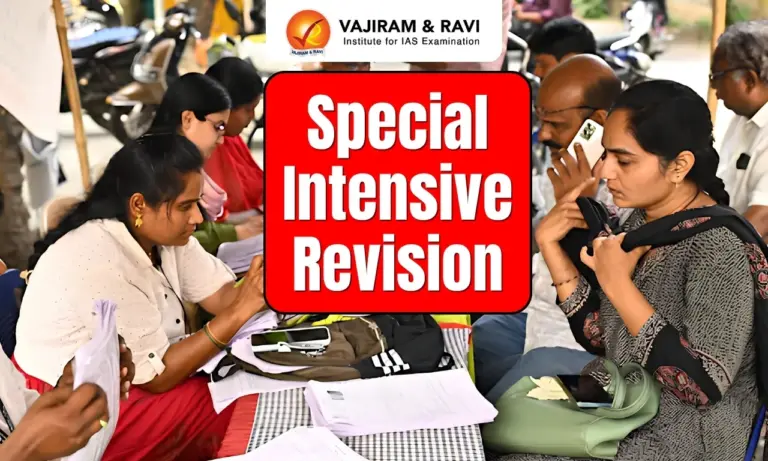
- The ongoing debate over the Special Intensive Revision of electoral rolls has renewed scrutiny of the current process, particularly in comparison with the procedures followed during the 2002-04 revision.
Overview of the Special Intensive Revision
- The Special Intensive Revision (SIR) is an exercise conducted by the Election Commission of India (ECI) to comprehensively review and update electoral rolls.
- Section 21(3) of the Representation of the People Act, 1950, authorises the ECI to conduct a special revision of the electoral roll for any constituency or part of a constituency in a manner it considers appropriate.
- The objective is to maintain accurate electoral rolls by identifying deceased electors, duplicate entries, changes of residence and eligible voters whose names may have been omitted.
- The ECI initiated a nationwide SIR in June 2025, beginning with Bihar.


SIR Process During 2002-04
- The previous SIR, conducted between 2002 and 2004, followed detailed procedures for household verification, supervision and the treatment of electors who had changed residence.
- Door-to-door enumeration
- Enumerators conducted household visits using a preliminary electoral roll. Elected Panchayat members could voluntarily assist with the process.
- Multi-level supervision
- The guidelines prescribed substantial supervisory checks:
- Supervisors were required to randomly verify at least 25% of the households covered by enumerators.
- Supervisors had to personally verify houses reported as locked after repeated visits.
- Assistant Electoral Registration Officers (AEROs), Electoral Registration Officers (EROs) and District Election Officers were required to check at least 12%, 5% and 2% of households, respectively.
- Treatment of shifted electors
- Electors who had changed residence were treated as transfers rather than immediate deletions. Their entries were retained in the preliminary list and marked with an “S” to indicate that they had shifted.
- Enumerators were required to record information about the reported shift and the elector’s new address or constituency. Where an entire family had moved, supervisors had to verify the case personally.
- Since enumeration took place across areas during the same exercise, shifted electors could be enrolled at their new addresses. The Chief Electoral Officer coordinated the removal of old entries from the final roll.
- Citizenship verification and objections
- The guidelines placed the burden of proving citizenship on applicants seeking first-time inclusion, while also referring to Supreme Court guidance requiring EROs to give adequate evidentiary value to an applicant’s presence on an existing electoral roll.
- Bulk claims and objections submitted by individuals, organisations or political parties were to be rejected summarily. The final electoral roll was to be prepared only after all claims and objections had been disposed of.
Key Concerns Regarding the 2025-26 SIR
- Exclusion of Electors: Electors unavailable during enumeration or who failed to submit forms were excluded from draft rolls, including previous voters. Unlike the 2002-04 exercise, shifted electors were not necessarily enrolled at their new addresses. This raises concerns about compliance with the ECI’s 2023 Manual on Electoral Rolls, which prescribes notice before deleting untraceable shifted electors.
- Reduced Supervisory Verification: Random verification by supervisors was reduced to 10% in the Bihar SIR notification, compared with 25% during 2002-04, potentially increasing enumeration errors.
- Burden of Establishing Eligibility: Electors were required to trace their or their parents’ names in earlier electoral rolls or submit citizenship documents, raising concerns about excessive responsibility being placed on voters.
- Software-Generated Discrepancies: Automated flags, including spelling variations, more than six voters linked to one ancestor, and parent-child age gaps outside 15-45 years, reportedly contributed to eligible voters’ exclusion without adequate verification.
- Bulk Objections and Appeals: Bulk Form 7 objections raised concerns about potential misuse, prompting the ECI to limit the number of objections an individual could file on October 9. Concerns also persist regarding Form 6 declarations, re-enrolment of omitted electors and delays in resolving appeals.
Scale and Implications of Voter Deletions
- Approximately 13.3 crore voter entries were deleted across the three phases of the current SIR.
Image Caption: Categories of Deleted Voters
- The largest category comprises electors classified as absent, shifted or falling under other reasons. Most of these individuals could remain eligible for re-enrolment once the revision process.
Reform Priorities for Electoral Roll Integrity
- Experts recommend a set of measures to improve the accuracy, transparency and fairness of the SIR process.
- Detailed audit: Conduct an audit of electoral rolls finalised so far to identify procedural errors and potential wrongful exclusions.
- Door-to-door verification: Make household enumeration a prescribed procedure in States where the SIR is ongoing.
- Expedited re-enrolment: Process eligible claims quickly through home visits, verification and timely updating of rolls.
- Effective supervision: Strengthen field-level monitoring and verification to reduce errors during enumeration.
- Timely disposal of claims: Finalise electoral rolls only after all claims and objections have been duly considered.
- Continuity of electoral rolls: The proviso to Section 21(3) of the Representation of the People Act, 1950, allows existing pre-SIR rolls to remain in force for upcoming State elections while the revision is completed through due process.
Source: TH

 Last updated on Oct, 2026
→ UPSC 2027 Notification will be released on 13 January 2027 at upsconline.nic.in.
→ Check Nobel Prize 2026 Winners List here.
→ Download PIB PRiSM Monthly Magazine 2026 here.
→ Check UPSC Monthly Current Affairs Magazine The Recitals here.
→ Check out the latest UPSC Syllabus here.
→ Download UPSC Model Answers for Mains 2026
→ UPSC Mains Question Paper 2026 is out now for Essay & GS Paper 1, 2, 3 & 4.
→ UPSC Calendar 2027 has been released.
→ Enroll in Vajiram & Ravi’s UPSC Mains Test Series 2027 for structured answer writing practice, expert evaluation, and exam-oriented feedback.
→ Join Vajiram & Ravi’s UPSC Mentorship Program 2027 for personalized guidance, strategy planning, and one-to-one support from experienced mentors.
→ Go through the UPSC Mains Previous Year Papers to enhance your preparation.
→ UPSC has released UPSC Toppers List 2025 with the Civil Services final result on its official website.
→ Also check Best UPSC Coaching in India
SIR of Electoral Rolls FAQs
Q1. What is the Special Intensive Revision (SIR)?+
Q2. Which law authorises the ECI to conduct SIR?+
Q3. How did the 2002–04 SIR treat voters who had shifted residence?+
Q4. What are the main concerns regarding the current SIR?+
Q5. What measures can improve the SIR process?+
Tags: mains articles SIR of Electoral Rolls upsc current affairs upsc mains current affairs