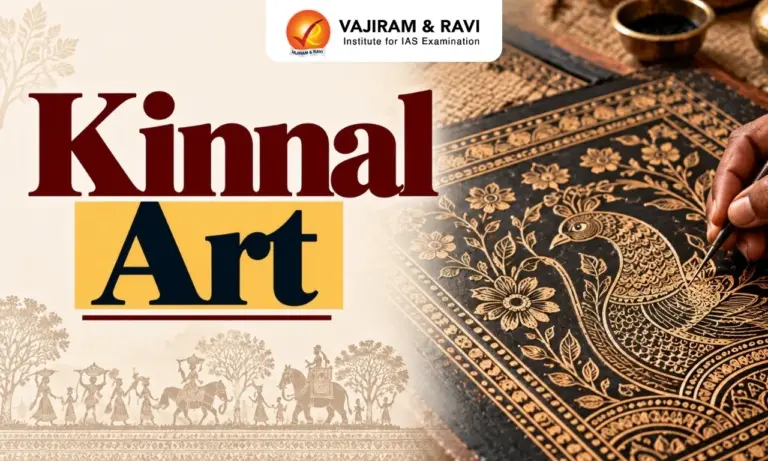
Kinnal art is a traditional wooden craft from Kinhal village in Koppal district, Karnataka. It is known for its colourful wooden toys, idols and decorative figures. The craft reflects Karnataka’s rich artistic heritage and traditional woodworking skills.
History and Origin of Kinnal Art
- Historical roots: Kinnal art has a long history, with its origins traditionally associated with the Vijayanagara period.
- Vijayanagara Empire: The craft gained prominence during the 15th and 16th centuries, when artisans worked for royal courts and temples, particularly around Hampi.
- Temple connections: Traditional Chitragara artisans were associated with painting murals and creating wooden carvings for temples, including the Virupaksha and Pampapateshwara temples.
- Traditional heritage: The craft has been passed down through generations of artisans in Kinhal village.
Features of Kinnal Art
- Wooden craftsmanship: Artisans create toys, religious idols, figurines and decorative objects.
- Intricate designs: The products feature detailed ornamentation, jewellery and traditional motifs.
- Vibrant colours: Bright colours enhance the visual appeal of the finished products.
- Traditional techniques: Artisans use specialised methods of joining, smoothing, embossing and painting wooden components.
Also Read:- Indian Paintings


Materials and Making Process
- Wood: Lightweight local wood known as Polki Marra or Ponki Marra is traditionally used.
- Joining materials: Artisans use traditional pastes to join different wooden components.
- Kitta: A mixture involving jute rags, sawdust and tamarind-seed preparation is used to smooth and prepare surfaces.
- Embossing: Fine decorative details are created using pebble powder mixed with liquid gum.
- Painting: The objects are painted in vibrant colours to create their characteristic appearance.
Geographical Indication (GI) Tag
Kinnal toys and dolls have received a Geographical Indication (GI) tag, recognising their association with Kinhal and their distinctive traditional craftsmanship. The recognition helps protect the craft’s regional identity and supports the preservation of its cultural heritage.
Preservation of Kinnal Art
Kinnal art faces the challenge of sustaining traditional skills and artisan livelihoods amid changing markets and production practices. Community workshops, cultural documentation and initiatives by organisations such as the Gitanjali Maini Foundation help promote awareness and preserve this heritage.
Supporting traditional artisans and encouraging demand for handcrafted products can help ensure the continuity of Kinnal art.
Conclusion
Kinnal Art is an important example of Karnataka’s traditional wooden craftsmanship. Its historical association with the Vijayanagara period, distinctive production techniques and GI recognition make it a valuable part of India’s cultural heritage.

 Last updated on Oct, 2026
→ UPSC 2027 Notification will be released on 13 January 2027 at upsconline.nic.in.
→ Check Nobel Prize 2026 Winners List here.
→ Download PIB PRiSM Monthly Magazine 2026 here.
→ Check UPSC Monthly Current Affairs Magazine The Recitals here.
→ Check out the latest UPSC Syllabus here.
→ Download UPSC Model Answers for Mains 2026
→ UPSC Mains Question Paper 2026 is out now for Essay & GS Paper 1, 2, 3 & 4.
→ UPSC Calendar 2027 has been released.
→ Enroll in Vajiram & Ravi’s UPSC Mains Test Series 2027 for structured answer writing practice, expert evaluation, and exam-oriented feedback.
→ Join Vajiram & Ravi’s UPSC Mentorship Program 2027 for personalized guidance, strategy planning, and one-to-one support from experienced mentors.
→ Go through the UPSC Mains Previous Year Papers to enhance your preparation.
→ UPSC has released UPSC Toppers List 2025 with the Civil Services final result on its official website.
→ Also check Best UPSC Coaching in India
Kinnal Art FAQs
Q1. What is Kinnal art?+
Q2. Where does Kinnal art originate?+
Q3. Which dynasty is associated with the development of Kinnal art?+
Q4. Which materials are used in Kinnal art?+
Q5. Does Kinnal art have a GI tag?+
Q6. What are the main products of Kinnal art?+
Q7. How is Kinnal art preserved?+
Tags: kinnal kinnal art