About Offshore Areas Minerals (Development and Regulation) Amendment Bill, 2023:
- The Bill amends the Offshore Areas Mineral (Development and Regulation) Act, 2002.
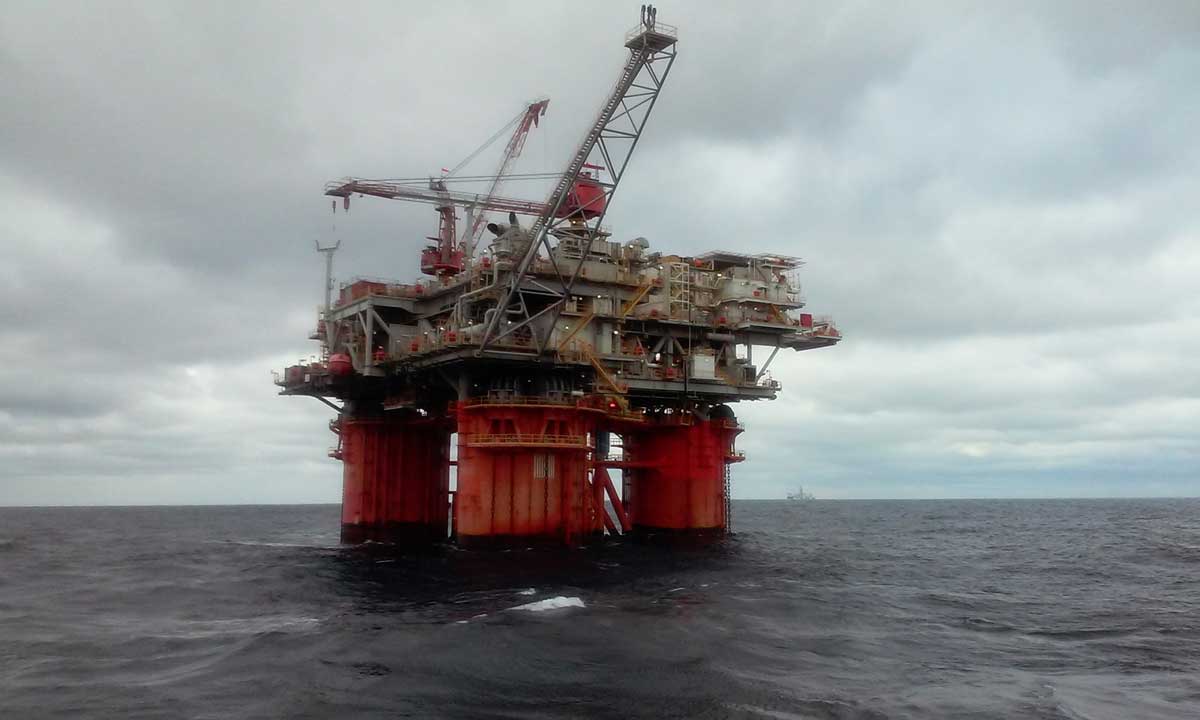
- The new bill regulates mining in maritime zones of India.
- Highlights of the Bill:
- It allows the government to reserve offshore areas that are not held under any operating rights.
- The Bill also allows the administering authority to grant a composite licence or production lease to the government or a government company.
- It proposes to remove the provision for renewal of production lease and provide a fixed period of fifty years for production lease similar to the provisions of the Mines and Minerals (Development and Regulation) Act 1957.
- It also seeks to provide for the grant of production lease to the private sector only through auction by competitive bidding.
- It also provides for grant of operating rights without competitive bidding to a government or a government company, or a corporation in the mineral-bearing areas reserved by the central government.
- In the case of atomic minerals, the grant of exploration licence or production lease shall be made only to a government or a government or corporation.
- It aims to introduce a four-year timeline for commencement of production and dispatch after the execution of composite licence or production lease under and timeline of two years (extendable by one year) for re-commencement of production and dispatch after discontinuation.
- It will enable the central government to frame rules for the conservation and systematic development of minerals in offshore areas and for the protection of the environment by preventing or controlling any pollution which may be caused by exploration or production operations.
Q1) What is a Mineral?
A mineral is a naturally occurring homogeneous solid with a definite chemical composition and a highly ordered atomic arrangement. It is usually formed by inorganic processes. There are several thousand known mineral species, about 100 of which constitute the major mineral components of rocks; these are the so-called rock-forming minerals. Examples of minerals include quartz, feldspar minerals, calcite, sulfur and the clay minerals such as kaolinite and smectite.
Source: Lok Sabha passes Bill to provide fixed 50-year production lease for offshore minerals


 Last updated on Oct, 2026
→ UPSC 2027 Notification will be released on 13 January 2027 at upsconline.nic.in.
→ Check Nobel Prize 2026 Winners List here.
→ Download PIB PRiSM Monthly Magazine 2026 here.
→ Check UPSC Monthly Current Affairs Magazine The Recitals here.
→ Check out the latest UPSC Syllabus here.
→ Download UPSC Model Answers for Mains 2026
→ UPSC Mains Question Paper 2026 is out now for Essay & GS Paper 1, 2, 3 & 4.
→ UPSC Calendar 2027 has been released.
→ Enroll in Vajiram & Ravi’s UPSC Mains Test Series 2027 for structured answer writing practice, expert evaluation, and exam-oriented feedback.
→ Join Vajiram & Ravi’s UPSC Mentorship Program 2027 for personalized guidance, strategy planning, and one-to-one support from experienced mentors.
→ Go through the UPSC Mains Previous Year Papers to enhance your preparation.
→ UPSC has released UPSC Toppers List 2025 with the Civil Services final result on its official website.
→ Also check Best UPSC Coaching in India