Why in the news?
- It is the first time this innovative instrument (Insurance Surety Bond) is being utilized as a Bank Guarantee (BG) in the road infrastructure sector for monetization of bids.
- NHAI has been working closely with Highway Operators Association of India (HOAI), SBI General Insurance and AON India Insurance to implement this initiative.
About Insurance Surety Bond
- These bonds can be defined in their simplest form as a written agreement to guarantee compliance, payment, or performance of an act.
- These are instruments where insurance companies act as ‘Surety’ and provide the financial guarantee that the contractor will fulfil its obligation as per the agreed terms.
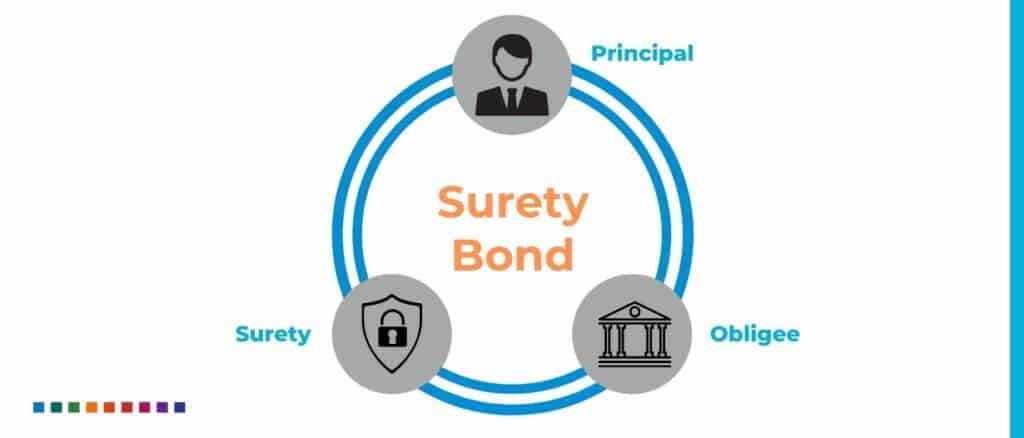
- Surety is a unique type of insurance because it involves a three-party agreement.
- The three parties in a surety agreement are:
- Principal: The party that purchases the bond and undertakes an obligation to perform an act as promised.
- Surety: The insurance company or surety company that guarantees the obligation will be performed. If the principal fails to perform the act as promised, the surety is contractually liable for losses sustained.
- Obligee: The party who requires and often receives the benefit of the surety bond. For most surety bonds, the obligee is a local, state or federal government organisation.
- Significance
- It will act as a security arrangement for infrastructure projects and will insulate the contractor as well as the principal.
- The product gives the principal a contract of guarantee that contractual terms and other business deals will be concluded in accordance with the mutually agreed terms.
- In case the contractor doesn’t fulfil the contractual terms, the Principal can raise a claim on the surety bond and recover the losses they have incurred.
- Unlike a bank guarantee, the Surety Bond Insurance does not require large collateral from the contractor, thus freeing up significant funds for the contractor, which they can utilise for the growth of the business.
- The product will also help in reducing the contractors’ debts to a large extent, thus addressing their financial worries.
Q1) What are Green bonds?
These are a specific type of bond that is issued to raise capital for projects with environmental benefits. The proceeds from green bonds are earmarked for projects and activities that promote environmental sustainability and climate change mitigation. These projects can include renewable energy initiatives, energy efficiency projects, clean transportation, sustainable water management, and other environmentally friendly activities.


 Last updated on Oct, 2026
→ UPSC 2027 Notification will be released on 13 January 2027 at upsconline.nic.in.
→ Asian Games 2026 are being held in Aichi-Nagoya, Japan, from 19 September to 4 October.
→ Check Nobel Prize 2026 Winners List here.
→ Download PIB PRiSM Monthly Magazine 2026 here.
→ Check UPSC Monthly Current Affairs Magazine The Recitals here.
→ Check out the latest UPSC Syllabus here.
→ Download UPSC Model Answers for Mains 2026
→ UPSC Mains Question Paper 2026 is out now for Essay & GS Paper 1, 2, 3 & 4.
→ UPSC Calendar 2027 has been released.
→ Enroll in Vajiram & Ravi’s UPSC Mains Test Series 2027 for structured answer writing practice, expert evaluation, and exam-oriented feedback.
→ Join Vajiram & Ravi’s UPSC Mentorship Program 2027 for personalized guidance, strategy planning, and one-to-one support from experienced mentors.
→ Go through the UPSC Mains Previous Year Papers to enhance your preparation.
→ UPSC has released UPSC Toppers List 2025 with the Civil Services final result on its official website.
→ Also check Best UPSC Coaching in India