


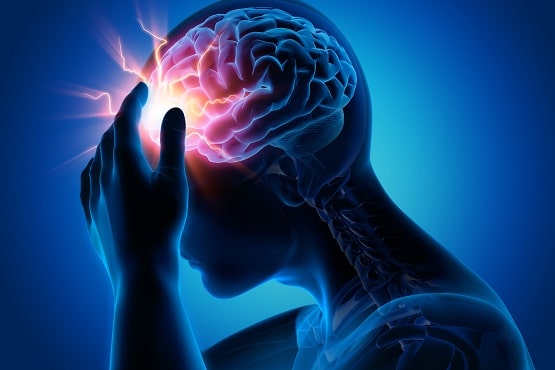
About Epilepsy:
- Epilepsy — also known as a seizure disorder — is a chronic brain disorder where nerve cells don’t signal properly, that causes recurring seizures.
- During a seizure,many neurons send signals at the same time, much faster than normal.
- This surge of excessive electrical activity may cause involuntary movements, sensations, emotions, and/or behaviors.
- The disturbance of normal nerve cell activity may cause a loss of awareness.
- Some people recover immediately after a seizure, while others may take minutes to hours to feel like themselves again.
- Causes:
- Epilepsy has many possible causes, but about half of people living with epilepsy do not know the cause.
- In some cases, epilepsy is clearly linked to genetic factors, developmental brain abnormalities, infection, traumatic brain injury (TBI), stroke, brain tumors, or other identifiable problems.
- Seizure symptoms can vary widely:
- Some people may lose awareness during a seizure while others don’t.
- Some people stare blankly for a few seconds during a seizure.
- Others may repeatedly twitch their arms or legs, movements known as convulsions.
- Having a single seizure doesn’t mean you have epilepsy. Epilepsy is diagnosed if you’ve had at least two unprovoked seizures at least 24 hours apart.
- Anyone can develop epilepsy. It affects both men and women of all races, ethnic backgrounds, and ages.
- Around 50 million people worldwide have epilepsy, making it one of the most common neurological diseases globally.
- Treatment:
- Treatment with medicines or sometimes surgery can control seizures for most people with epilepsy.
- Some people require lifelong treatment. For others, seizures go away.
- Some children with epilepsy may outgrow the condition with age.
Q1: What are neurons?
A neuron, also known as a nerve cell, is a specialized cell in the nervous system that is responsible for transmitting information through electrical and chemical signals. Neurons are the basic building blocks of the nervous system and play a crucial role in processing and transmitting information within the body.
News: National Epilepsy Day 2024: History, Seizure Types, Symptoms & Prevention Tips


 Last updated on Oct, 2026
→ UPSC 2027 Notification will be released on 13 January 2027 at upsconline.nic.in.
→ Check Nobel Prize 2026 Winners List here.
→ Download PIB PRiSM Monthly Magazine 2026 here.
→ Check UPSC Monthly Current Affairs Magazine The Recitals here.
→ Check out the latest UPSC Syllabus here.
→ Download UPSC Model Answers for Mains 2026
→ UPSC Mains Question Paper 2026 is out now for Essay & GS Paper 1, 2, 3 & 4.
→ UPSC Calendar 2027 has been released.
→ Enroll in Vajiram & Ravi’s UPSC Mains Test Series 2027 for structured answer writing practice, expert evaluation, and exam-oriented feedback.
→ Join Vajiram & Ravi’s UPSC Mentorship Program 2027 for personalized guidance, strategy planning, and one-to-one support from experienced mentors.
→ Go through the UPSC Mains Previous Year Papers to enhance your preparation.
→ UPSC has released UPSC Toppers List 2025 with the Civil Services final result on its official website.
→ Also check Best UPSC Coaching in India








