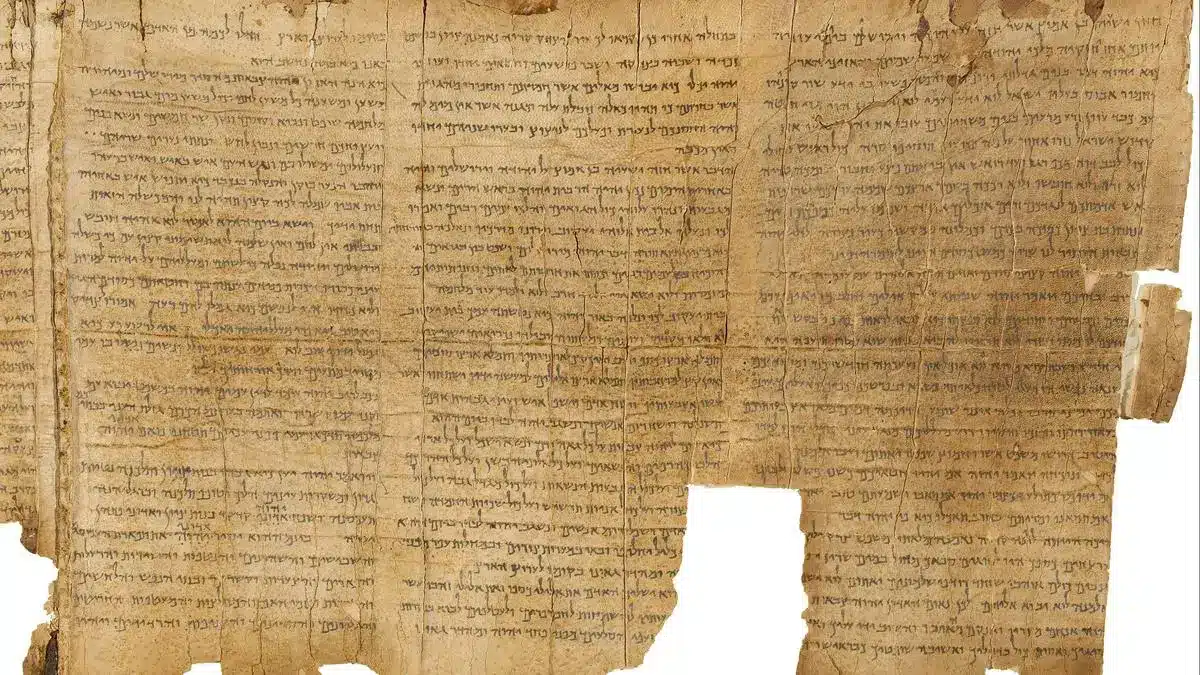
About Radiocarbon dating
- Dating is a method by which the age of an object can be determined. Radiocarbon dating refers to a method that does this using radiocarbon, a name for the isotope carbon-14.
- How does carbon-14 form?
- It is created in the earth’s atmosphere when cosmic rays – energetic streams of charged particles coming from sources in outer space – slam into the atoms of the gases and release neutrons.
- When these neutrons interact with the nitrogen-14 nitrogen isotope, they can produce carbon-14.
- Since cosmic rays are ceaselessly passing through the earth’s atmosphere, carbon-14 is created constantly there.
- It is readily combined with atmospheric oxygen to form radioactive carbon dioxide.
- This compound then enters the bodies of plants (via photosynthesis), animals (when they consume plants), and other biomass through the carbon cycle.
- It is in the form of carbon dioxide and other carbon compounds, would have to be able to diffuse into the earth’s various ecosystems such that the concentration of carbon-14 in the atmosphere was comparable to the concentration of carbon-14 in the planet’s other biospheres.
How does radiocarbon dating work?
- When an organic entity – like the human body – is ‘alive’, it constantly exchanges carbon with its surroundings by breathing, consuming food, defecating, shedding skin, etc.
- Through these activities, carbon-14 is both lost from the body as well as replenished, so its concentration in the body is nearly constant and in equilibrium with its surroundings.
- When this individual dies, the body no longer performs these activities and the concentration of carbon-14 in the body begins to dwindle through radioactive decay.
- The more time passes, the more the amount of carbon-14 lost, and the less there will remain. This decay rate can be predicted from theory.
- Radiocarbon dating dates an object by measuring the amount of carbon-14 left, which scientists and/or computers can use to calculate how long ago the body expired.
- The modern radiocarbon dating setup is more sophisticated and one of the most sensitive dating setups uses accelerator mass spectrometry (AMS), which can work with organic samples as little as 50 mg.
Q1) What are Isotopes?
Atoms with the same number of protons but different numbers of neutrons are called isotopes. They share almost the same chemical properties, but differ in mass and therefore in physical properties. There are stable isotopes, which do not emit radiation, and there are unstable isotopes, which do emit radiation.
Source: What is radiocarbon dating? | Explained


 Last updated on Oct, 2026
→ UPSC 2027 Notification will be released on 13 January 2027 at upsconline.nic.in.
→ Check Nobel Prize 2026 Winners List here.
→ Download PIB PRiSM Monthly Magazine 2026 here.
→ Check UPSC Monthly Current Affairs Magazine The Recitals here.
→ Check out the latest UPSC Syllabus here.
→ Download UPSC Model Answers for Mains 2026
→ UPSC Mains Question Paper 2026 is out now for Essay & GS Paper 1, 2, 3 & 4.
→ UPSC Calendar 2027 has been released.
→ Enroll in Vajiram & Ravi’s UPSC Mains Test Series 2027 for structured answer writing practice, expert evaluation, and exam-oriented feedback.
→ Join Vajiram & Ravi’s UPSC Mentorship Program 2027 for personalized guidance, strategy planning, and one-to-one support from experienced mentors.
→ Go through the UPSC Mains Previous Year Papers to enhance your preparation.
→ UPSC has released UPSC Toppers List 2025 with the Civil Services final result on its official website.
→ Also check Best UPSC Coaching in India