About Tropical Cyclone:
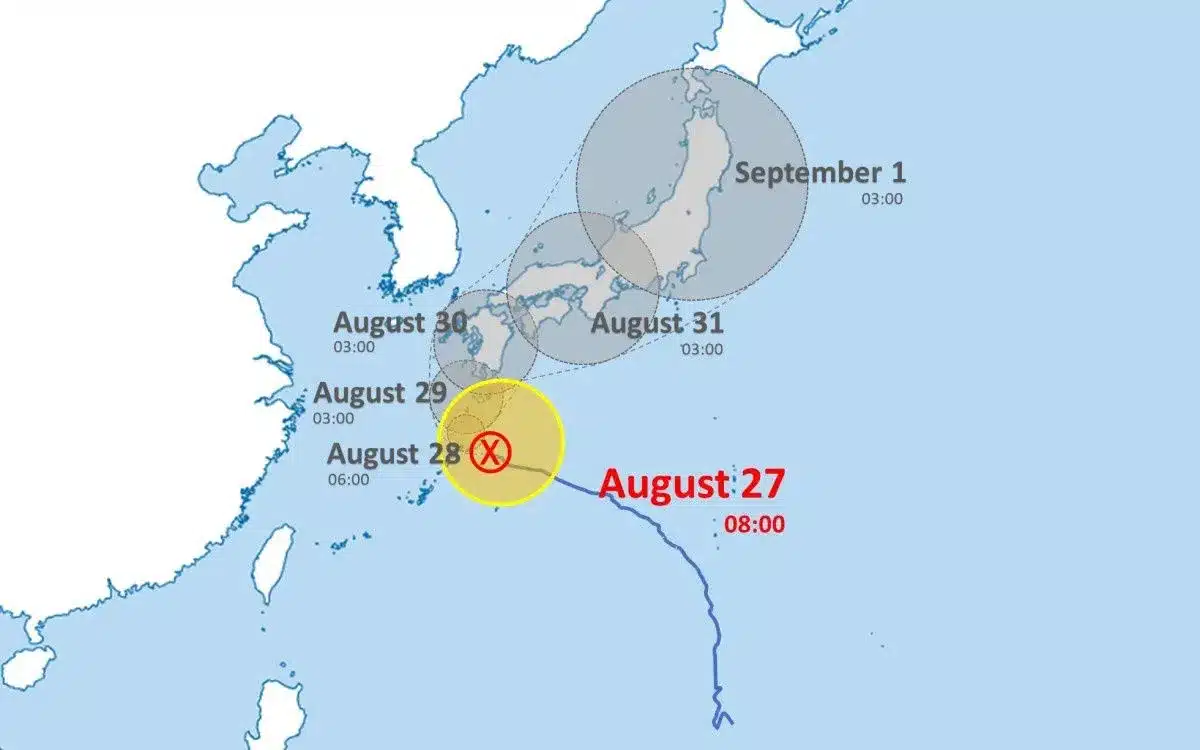
- A tropical cyclone is a significant weather phenomenon.
- Formation: These cyclones originate over warm ocean waters near the equator. Warm, moist air rises from the ocean surface, creating a low-pressure area.
- Surrounding higher-pressure air moves towards this low-pressure zone, causing the air to warm up and rise further. As the rising air cools, it forms clouds.
- This system of spinning clouds and wind intensifies with the ocean’s heat. As wind speeds increase, an eye forms at the centre.
Characteristics of a Tropical Cyclone:
- Calm centre: The cyclone’s centre is typically calm and clear, with very low air pressure.
- Speed: The average wind speed is around 120 km/h.
- Closed isobars: These cyclones have closed isobars, leading to higher wind velocities. Isobars are imaginary lines on a weather map that connect points of equal atmospheric pressure.
- Origin: They form exclusively over oceans and seas.
- Movement: Tropical cyclones move from east to west, are influenced by trade winds, and are seasonal.
Classification of Cyclones:
- Cyclones are categorised by the Indian Meteorological Department (IMD)based on wind speeds:
- Depression: Wind speeds between 31–49 km/h
- Deep depression: Wind speeds between 50-61 km/h
- Cyclonic storm: Wind speeds between 62–88 km/h
- Severe cyclonic storm: Wind speeds between 89-117 km/h
- Very severe cyclonic storm: Wind speeds between 118-166 km/h
- Extremely severe cyclonic storm: Wind speeds between 166-221 km/h
- Super cyclonic storm: Wind speeds above 222 km/h
Naming of Tropical Cyclones:
- Tropical cyclones are named by one of five regional bodies:
- ESCAP/WMO Typhoon Committee
- WMO/ESCAP Panel on Tropical Cyclones
- RA I Tropical Cyclone Committee
- RA IV Hurricane Committee
- RA V Tropical Cyclone Committee
In the Indian Ocean, the WMO/ESCAP Panel on Tropical Cyclones is responsible for naming cyclones.
Q1. Which country has given the name to Cyclone Mandous?
The name, ‘Mandous’, was suggested by the United Arab Emirates (UAE) in 2020 as a member of the World Meteorological Organisation (WMO).


 Last updated on Oct, 2026
→ UPSC 2027 Notification will be released on 13 January 2027 at upsconline.nic.in.
→ Asian Games 2026 are being held in Aichi-Nagoya, Japan, from 19 September to 4 October.
→ Check Nobel Prize 2026 Winners List here.
→ Download PIB PRiSM Monthly Magazine 2026 here.
→ Check UPSC Monthly Current Affairs Magazine The Recitals here.
→ Check out the latest UPSC Syllabus here.
→ Download UPSC Model Answers for Mains 2026
→ UPSC Mains Question Paper 2026 is out now for Essay & GS Paper 1, 2, 3 & 4.
→ UPSC Calendar 2027 has been released.
→ Enroll in Vajiram & Ravi’s UPSC Mains Test Series 2027 for structured answer writing practice, expert evaluation, and exam-oriented feedback.
→ Join Vajiram & Ravi’s UPSC Mentorship Program 2027 for personalized guidance, strategy planning, and one-to-one support from experienced mentors.
→ Go through the UPSC Mains Previous Year Papers to enhance your preparation.
→ UPSC has released UPSC Toppers List 2025 with the Civil Services final result on its official website.
→ Also check Best UPSC Coaching in India