Understanding Antibiotic Resistance (AR)
- Definition: AR is a type of antimicrobial resistance where bacteria evolve to withstand the effects of antibiotics, making infections harder to treat.
- Mechanism: It occurs primarily due to genetic changes that allow bacteria to neutralize or evade drugs designed to kill them.
Key Findings of the Study
- Impact on Gut Microbiome: Nanoplastics can transform Lactobacillus acidophilus, a beneficial gut microbiota, into a carrier of AR genes.
- These AR genes can be transferred to pathogenic bacteria, exacerbating the AR crisis.
- Horizontal Gene Transfer (HGT):
- Polyethylene terephthalate bottle-derived nanoplastics (PBNPs) facilitate the transfer of AR genes from E. coli to Lactobacillus acidophilus via HGT.
- HGT involves gene transfer across different bacterial species, unlike vertical gene transfer, which occurs from parent to offspring.
- Mechanisms of AR Gene Transfer:
- Direct Transformation Pathway: PBNPs act as physical carriers, transporting AR plasmids across bacterial membranes. This facilitates direct gene transfer between bacteria.
- OMV-Induced Transfer Pathway: PBNPs induce oxidative stress, triggering an increased secretion of outer membrane vesicles (OMVs). These OMVs, loaded with AR genes, serve as potent vectors for gene transfer between bacterial species, including beneficial and pathogenic bacteria.
What Are Nanoplastics?
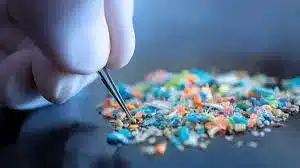
- Definition: Nanoplastics are solid particles of synthetic or heavily modified natural polymers, ranging in size from 1 nm to 1000 nm.
- Types:
- Primary Nanoplastics: Intentionally produced for specific applications.
- Secondary Nanoplastics: Generated from the fragmentation of larger plastics, often released unintentionally into the environment.
Q1: What are nanoparticles, and why are they important?
Nanoparticles are ultra-small particles with dimensions typically between 1 and 100 nanometers. Due to their tiny size and high surface area-to-volume ratio, they exhibit unique physical, chemical, and biological properties, making them valuable in diverse fields like medicine, electronics, environmental science, and materials engineering.
News: Nano-plastics identified as emerging agents in spread of antibiotic resistance.


 Last updated on Sep, 2026
→ UPSC 2027 Notification will be released on 13 January 2027 at upsconline.nic.in.
→ Asian Games 2026 are being held in Aichi-Nagoya, Japan, from 19 September to 4 October.
→ Check out the latest UPSC Syllabus here.
→ Download UPSC Model Answers for Mains 2026
→ UPSC Mains Question Paper 2026 is out now for Essay & GS Paper 1, 2, 3 & 4.
→ UPSC Calendar 2027 has been released.
→ Enroll in Vajiram & Ravi’s UPSC Mains Test Series 2027 for structured answer writing practice, expert evaluation, and exam-oriented feedback.
→ Join Vajiram & Ravi’s UPSC Mentorship Program 2027 for personalized guidance, strategy planning, and one-to-one support from experienced mentors.
→ Go through the UPSC Mains Previous Year Papers to enhance your preparation.
→ UPSC has released UPSC Toppers List 2025 with the Civil Services final result on its official website.
→ Also check Best UPSC Coaching in India