About Stem Cells:
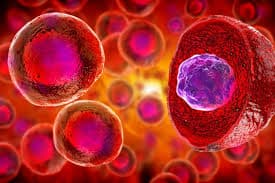
- These are cells with the potential to develop into many different types of cells in the body.
- Under the right conditions in the body or a laboratory, stem cells divide to form more cells called daughter cells.
- These daughter cells become either new stem cells or specialized cells (differentiation) with a more specific function, such as blood cells, brain cells, heart muscle cells or bone cells.
- No other cell in the body has the natural ability to generate new cell types.
- They serve as a repair system for the body.
- Stem cells are present inside different types of tissue. Scientists have found stem cells in tissues, including the brain, bone marrow, blood, and blood vessels, etc.
- There are two types of stem cells.
- Embryonic stem cells:
- These stem cells come from embryos that are 3 to 5 days old.
- At this stage, an embryo is called a blastocyst and has about 150 cells.
- These are pluripotent stem cells, meaning they can divide into more stem cells or can become any type of cell in the body.
- This versatility allows embryonic stem cells to be used to regenerate or repair diseased tissue and organs.
- Adult stem cells:
- These stem cells are found in small numbers in most adult tissues, such as bone marrow or fat.
- Compared with embryonic stem cells, adult stem cells have a more limited ability to give rise to various cells of the body.
- Embryonic stem cells:
What is Induced pluripotent stem cells?
- These are adult stem cells that have been changed in a lab to be more like embryonic stem cells.
- These cells behave in a similar way to embryonic stem cells, so they could be useful for developing a range of therapies.
Q1) What is a blastocyst?
A blastocyst is a cluster of dividing cells made by a fertilized egg. It’s the early stage of an embryo.A blastocyst forms about five to six days after a sperm fertilizes an egg. Layers of cells in the blastocyst divide and separate. They eventually become the structures that protect and nourish the developing fetus.
Source: Kanpur’s GSVM becomes 1st institute to cure blindness through stem cell transplants


 Last updated on Oct, 2026
→ UPSC 2027 Notification will be released on 13 January 2027 at upsconline.nic.in.
→ Asian Games 2026 are being held in Aichi-Nagoya, Japan, from 19 September to 4 October.
→ Check Nobel Prize 2026 Winners List here.
→ Download PIB PRiSM Monthly Magazine 2026 here.
→ Check UPSC Monthly Current Affairs Magazine The Recitals here.
→ Check out the latest UPSC Syllabus here.
→ Download UPSC Model Answers for Mains 2026
→ UPSC Mains Question Paper 2026 is out now for Essay & GS Paper 1, 2, 3 & 4.
→ UPSC Calendar 2027 has been released.
→ Enroll in Vajiram & Ravi’s UPSC Mains Test Series 2027 for structured answer writing practice, expert evaluation, and exam-oriented feedback.
→ Join Vajiram & Ravi’s UPSC Mentorship Program 2027 for personalized guidance, strategy planning, and one-to-one support from experienced mentors.
→ Go through the UPSC Mains Previous Year Papers to enhance your preparation.
→ UPSC has released UPSC Toppers List 2025 with the Civil Services final result on its official website.
→ Also check Best UPSC Coaching in India