What’s in today’s article?
- Why in News?
- What is the Cheetah Reintroduction Plan/Project Cheetah?
- What is the Significance of Bringing Back Cheetahs?
- Why are Cheetahs Coming from Southern Africa and Challenges?
- News Summary Regarding the Findings of Namibian Researchers
Why in News?
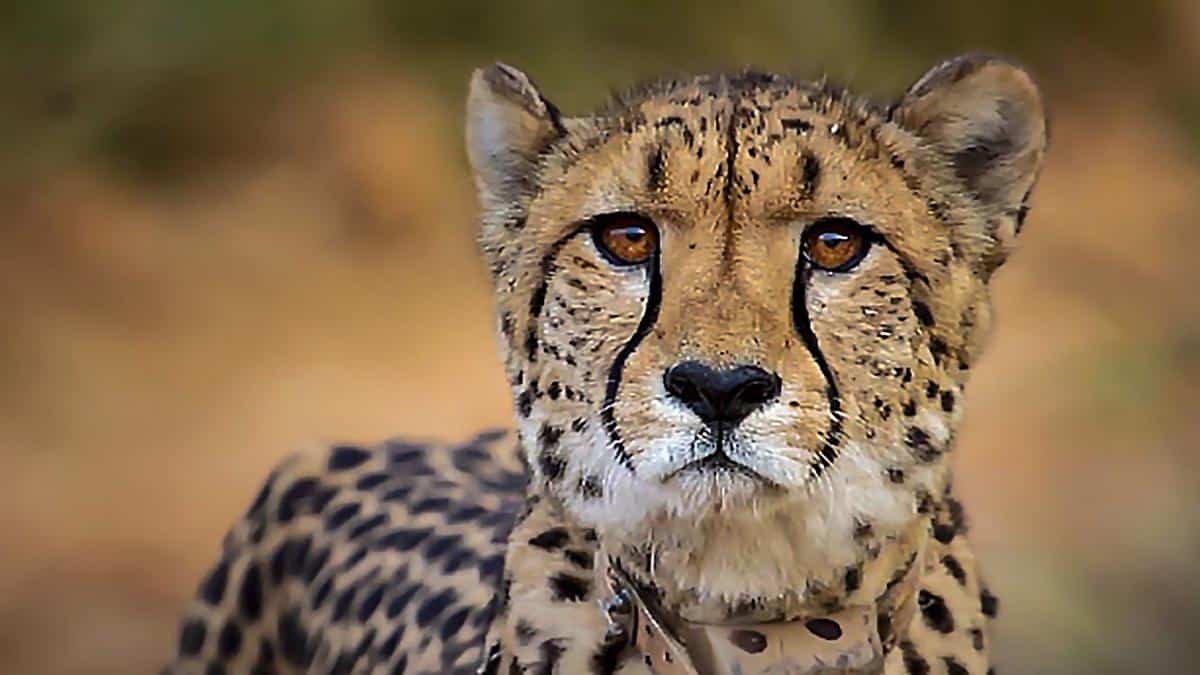
- According to Namibian researchers, Project Cheetah overestimated the carrying capacity of Kuno National Park and did not factor in the unique spatial requirement of the species before flying in 20 spotted cats from Africa.
- Spatial ecology addresses the fundamental effects of space on the movement of individual species and on the stability of multispecies communities.
What is the Cheetah Reintroduction Plan/Project Cheetah?
- Discussions to bring the Cheetah back to India were initiated in 2009 by the Wildlife Trust of India.
- Under the ‘Action Plan for Reintroduction of Cheetah in India’, 50 cheetahs will be brought from African countries to various national parks over 5 years.
- Most suitable site – Kuno Palpur National Park (KNP) in Madhya Pradesh:
- Amongst the surveyed sites of the central Indian states, KNP has been rated the highest, because of its suitable habitat and adequate prey base.
- It is assessed to be capable of supporting 21 Cheetahs and is likely the only wildlife site in the country where villages have been completely relocated from within the park.
- Kuno also provides the possibility of harbouring four of India’s big cats – tiger, lion, leopard and Cheetah, enabling them to coexist as they have in the past.
- The other sites recommended are – Nauradehi Wildlife Sanctuary, Madhya Pradesh; Gandhi Sagar Wildlife Sanctuary – Bhainsrorgarh Wildlife Sanctuary complex, Madhya Pradesh; Shahgarh bulge in Jaisalmer, Rajasthan; Mukundara Tiger Reserve, Rajasthan.
- As part of this project, 20 Cheetahs (8 from Namibia and 12 from South Africa) were Introduced in the KNP (since last year) to establish a free-ranging population for the first time since their extinction in India 70 years ago.


What is the Significance of Bringing Back Cheetahs?
- Besides conserving the big cat, the initiative in itself is a boon to the ecosystem.
- In saving Cheetahs, it is necessary to save not just its prey base (including certain threatened species), but also other endangered species of grasslands.
- They are not a threat to humans and do not attack large livestock either.
Why are Cheetahs Coming from Southern Africa and Challenges?
- Reasons behind re-introducing cheetah from southern Africa:
- The locally extinct Cheetah-subspecies of India is found in Iran and is categorised as critically endangered.
- Since it is not possible to source the critically endangered Asiatic Cheetah from Iran without affecting this subspecies, India will source Cheetahs from Southern Africa.
- Southern African Cheetahs have the highest observed genetic variety among extant Cheetah lineages, which is critical for a founding population stock.
- Furthermore, Southern African Cheetahs have been determined to be the ancestors of all other Cheetah lineages, making them suitable for India’s reintroduction programme.
- Challenges of bringing back Cheetahs:
- Based on the evidence available, it is impossible to conclude that the choice to bring the African Cheetah into India is scientifically sound.
- As a result, the Supreme Court of India (in 2020) permitted an experimental release of Cheetahs in a suitable habitat.
News Summary Regarding the Findings of Namibian Researchers:
- In southern Africa, cheetahs live in a stable socio-spatial system with widely spread territories and densities of less than one individual per 100 km².
- Therefore, the carrying capacity is usually between 0.2 and 1 adult per 100 km² for cheetahs under natural conditions.
- The plan for cheetahs in KNP assumes that the high prey density will sustain high cheetah densities, even though there is no evidence for that.
- It also ignores important aspects of the cheetah socio-spatial system.
- As KNP is small (~750 km², density 3 individuals per 100 km²), it is likely that the released animals will move far beyond the park’s boundaries and cause conflicts with neighbouring villages.
Q1) What is the Wildlife Trust of India (WTI)?
It is an Indian nature conservation organisation formed in 1998 in New Delhi as a response to the rapidly deteriorating condition of wildlife in India. WTI is a registered charity in India (under Section 12A of the Income Tax Act, 1961).
Q2) When was Project Elephant started in India?
Project Elephant was launched in 1992 by the Government of India Ministry of Environment and Forests to provide financial and technical support to wildlife management efforts by states for their free-ranging populations of wild Asian Elephants.
Source: Cheetah project overestimated carrying capacity of Kuno, say Namibia experts | TH

 Last updated on Sep, 2026
→ UPSC 2027 Notification will be released on 13 January 2027 at upsconline.nic.in.
→ Asian Games 2026 are being held in Aichi-Nagoya, Japan, from 19 September to 4 October.
→ Check out the latest UPSC Syllabus here.
→ Download UPSC Model Answers for Mains 2026
→ UPSC Mains Question Paper 2026 is out now for Essay & GS Paper 1, 2, 3 & 4.
→ UPSC Calendar 2027 has been released.
→ Enroll in Vajiram & Ravi’s UPSC Mains Test Series 2027 for structured answer writing practice, expert evaluation, and exam-oriented feedback.
→ Join Vajiram & Ravi’s UPSC Mentorship Program 2027 for personalized guidance, strategy planning, and one-to-one support from experienced mentors.
→ Go through the UPSC Mains Previous Year Papers to enhance your preparation.
→ UPSC has released UPSC Toppers List 2025 with the Civil Services final result on its official website.
→ Also check Best UPSC Coaching in India