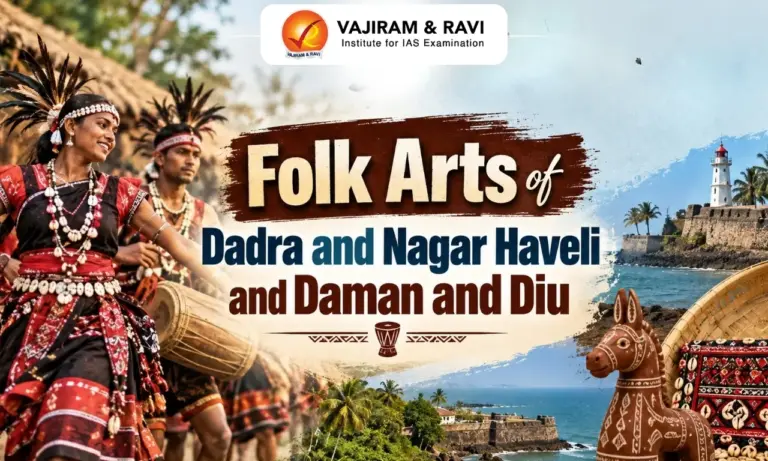
Folk Arts of Dadra and Nagar Haveli and Daman and Diu 2026 reflect tribal traditions, Portuguese influence and coastal culture. The region has diverse communities, languages and artistic practices. Warli painting, folk dances, traditional music, handicrafts and colonial architecture form important parts of its cultural heritage. These traditions are closely linked with festivals, marriages, harvests, religious ceremonies and everyday community life across the Union Territory.
Folk Arts of Dadra and Nagar Haveli and Daman and Diu 2026
Folk Arts of Dadra and Nagar Haveli and Daman and Diu show the cultural diversity of tribal communities and coastal settlements. Dadra and Nagar Haveli has tribes such as Warli, Kokna, Dhodia, Kathodi and Koli. Daman and Diu also reflect Gujarati, Saurashtrian, Portuguese and coastal cultural influences. This diversity appears in paintings, dances, music, crafts, architecture, festivals and community traditions.
Famous Folk Arts of Dadra and Nagar Haveli and Daman and Diu List
The Major Folk Arts of Dadra and Nagar Haveli and Daman and Diu include painting, dance, music, crafts and distinctive architectural traditions.
Paintings of Dadra and Nagar Haveli and Daman and Diu 2026
- Warli Painting: Warli painting originated among tribal communities of Maharashtra’s North Sahyadri Range and is also practised in Silvassa. It uses simple forms, mainly white colour made from ground rice.
- Warli Themes: Warli paintings contain symbolic and repetitive themes. Palghat, the marriage god, is often shown with a horse representing the bride and groom during marriage ceremonies.
- Warli Technique: Traditional Warli paintings rarely use straight lines. Artists traditionally create lines through dots and dashes on a mud base, while modern works increasingly use straight lines.
- Modern Warli Art: Warli artists now create paintings on paper and cloth and include modern objects such as bicycles. Large wall murals remain important for presenting traditional Warli themes.
- Cultural Role: Warli painting has social and religious importance. Traditional belief associates these paintings with invoking divine powers. The art also represents the community’s customs and cultural worldview.
Dance of Dadra and Nagar Haveli and Daman and Diu 2026
- Tarpa Dance: Warli communities perform Tarpa Dance during the post monsoon harvest season. Dancers move in a circle around the Tarpa, a traditional wind instrument used during the performance.
- Bhawada Dance: Kokna and Warli communities perform Bhawada during Holi. It combines dance, music and community participation and forms part of traditional festive entertainment.
- Bohada Dance: Kokna, Warli and Mahadeo Koli communities associate Bohada with Chaitra Purnima. Traditional masks are an important part of this community performance.
- Gherria Dance: Warli and Kokna men perform Gherria during the Holi period. Its traditional performance period extends from Phalgun Purnima to Rang Panchami.
- Dhol Dance: Warli, Kokna, Dhodia and Kathodi communities perform Dhol Dance during weddings. Traditional drums provide the main rhythmic accompaniment during these celebrations.
- Tur and Thali Dance: The Dhodia community performs Tur and Thali Dance during Diwali. It forms part of the community’s traditional festive practices and cultural expression.
- Warli Tribal Dance: The Warli community performs its traditional dance during marriage rituals. The practice highlights the importance of folk performance in major social ceremonies.
- Kokna Folk Dance: The Kokna community performs Kokna Folk Dance during Akhatrij, also known as Akshay Tritiya. It forms part of seasonal community celebrations.
- Dhodia Community Dance: The Dhodia community performs its traditional dance during Dhodia New Year, known as Diwaso. The practice reflects the community’s distinctive cultural identity.
- Kathodi Tribal Dance: The Kathodi or Katkari community performs Kathodi Tribal Dance during Diwali. It forms part of the community’s traditional festive celebrations.
- Koli Folk Dance: Mahadev Koli and Son Koli communities perform Koli Folk Dance during Narali Purnima. The festival is also associated with Coconut Day celebrations.
- Mando Dance: Mando is a traditional song and dance performance associated with Diu. It expresses themes of love and romance and uses the ghumol percussion instrument and sometimes a violin.
- Verdigao and Vira Dances: Verdigao and Vira are traditional folk dances of Diu. Both younger and older community members participate, helping preserve local traditions across generations.
Music of Dadra and Nagar Haveli and Daman and Diu 2026
- Folk Music: Folk songs and traditional musical instruments are important forms of community entertainment. Music accompanies dances and ceremonies connected with childbirth, weddings, festivals and other important occasions.
- Traditional Instruments: Local musical instruments are traditionally made using materials such as gourd, bamboo and clay. These instruments support folk performances and reflect locally available craftsmanship.
- Dance Music Tradition: Folk music and dance are closely connected in tribal communities. People wear colourful traditional attire and perform together during important social, religious and seasonal occasions.
Handicrafts of Dadra and Nagar Haveli and Daman and Diu 2026
- Bamboo Baskets: Bamboo basket making is among the traditional crafts associated with Dadra and Nagar Haveli. The craft uses locally available bamboo and forms part of the region’s material culture.
- Mat Weaving: Mat weaving is a centuries old craft associated with Daman. Artisans create patterned mats using traditional designs, preserving a craft passed through generations.
- Leather Slippers: Leather slippers are among the traditional handicrafts associated with Dadra and Nagar Haveli. They represent the region’s locally practised craft traditions and handmade products.
- Tortoise Shell Craft: Artisans along the seashores of Diu traditionally created decorative household objects from tortoise shells. These objects formed part of the region’s distinctive coastal handicraft traditions.
- Ivory Carving: Ivory carving is described as a traditional craft of Diu, where artisans created artefacts and jewellery with distinct designs. Such articles were displayed in local handicraft stores.
Architecture of Dadra and Nagar Haveli and Daman and Diu 2026
- Church of Our Lady of Piety: Built by the Portuguese in the latter part of the 18th century, the church is noted for Gothic architecture, grey stone exteriors, stained glass and a decorated altar.
- Church Art: The Church of Our Lady of Piety contains a mural depicting the Last Supper. Its wooden pews and stained glass windows add to its artistic and architectural character.
- Swaminarayan Temple: The Swaminarayan Temple stands on the banks of the Daman Ganga River. Its structure contains extensive sculptures and is surrounded by a large garden.
- Om Nikhileshwar Mahadev Mandir: The Om shaped temple at Kudacha village in Silvassa covers 40,000 square feet. Construction began on April 21, 2004, with approximately 400 pillars.
- Temple Construction: Om Nikhileshwar Mahadev Mandir contains 126 deities in addition to Lord Shiva. According to the provided tradition, no steel was used because it is a Mahadev Temple.
- Colonial Architecture: Portuguese influence is visible in the region’s historic churches and monuments. The Church of Our Lady of Piety particularly represents the colonial architectural heritage of Dadra and Nagar Haveli.
Festivals and Cultural Arts of Dadra and Nagar Haveli and Daman and Diu 2026
- Festival Performances: Folk dances are performed during childbirth, weddings, festivals and important ceremonies. These occasions bring together different tribal communities through traditional dress, music and collective performances.
- Nariyal Poornima: Nariyal Poornima is celebrated in the Union Territory, with colourful water sports in the creek between Moti and Nani Daman. A Coconut Food Festival is also associated with the celebration.
- Christmas Traditions: Christmas celebrations in Daman include Portuguese dances that preserve local cultural traditions. Houses are decorated with colourful Christmas lamps during the festive period.


Folk Arts of Dadra and Nagar Haveli and Daman and Diu Significance
Folk Arts of Dadra and Nagar Haveli and Daman and Diu preserve tribal identity, community memory and the region’s mixed cultural heritage.
- Tribal Identity: Warli, Kokna, Dhodia, Kathodi and Koli traditions connect artistic practices with community identity. Their dances and rituals preserve customs passed between generations.
- Cultural Diversity: The region has diverse linguistic and cultural influences. Gujarati, Hindi, Marathi, Konkani, Bhili and other languages are used across different communities, reflecting its cultural mosaic.
- Portuguese Heritage: Churches and colonial era architecture preserve memories of Portuguese rule. The Church of Our Lady of Piety remains an important example of this architectural influence.
- Social Functions: Folk arts are closely connected with everyday social life. Weddings, childbirth, harvests, festivals and religious ceremonies provide important occasions for traditional performances.
- Living Traditions: These art forms continue to adapt while retaining traditional elements. Warli artists, for example, now use paper and modern subjects while continuing established visual motifs.
- Regional Identity: Diu reflects the Kathiawad Cultural Zone through its language, dress, food habits, customs and other cultural elements. Its Mando, Verdigao and Vira traditions add to regional diversity.
- Cultural Continuity: Folk dances involving younger and older community members support transmission of traditional knowledge. Practices such as Mando, Tarpa and community dances therefore remain important cultural markers.
- Heritage Value: The combined presence of tribal art, folk music, handicrafts, festivals and Portuguese architecture gives Dadra and Nagar Haveli and Daman and Diu a distinct cultural character.

 Last updated on Oct, 2026
→ UPSC 2027 Notification will be released on 13 January 2027 at upsconline.nic.in.
→ Check Nobel Prize 2026 Winners List here.
→ Download PIB PRiSM Monthly Magazine 2026 here.
→ Check UPSC Monthly Current Affairs Magazine The Recitals here.
→ Check out the latest UPSC Syllabus here.
→ Download UPSC Model Answers for Mains 2026
→ UPSC Mains Question Paper 2026 is out now for Essay & GS Paper 1, 2, 3 & 4.
→ UPSC Calendar 2027 has been released.
→ Enroll in Vajiram & Ravi’s UPSC Mains Test Series 2027 for structured answer writing practice, expert evaluation, and exam-oriented feedback.
→ Join Vajiram & Ravi’s UPSC Mentorship Program 2027 for personalized guidance, strategy planning, and one-to-one support from experienced mentors.
→ Go through the UPSC Mains Previous Year Papers to enhance your preparation.
→ UPSC has released UPSC Toppers List 2025 with the Civil Services final result on its official website.
→ Also check Best UPSC Coaching in India
Folk Arts of Dadra and Nagar Haveli and Daman and Diu 2026 FAQs
Q1. What is the famous folk art of Dadra and Nagar Haveli and Daman and Diu?+
Q2. Which are the major folk dances of Dadra and Nagar Haveli and Daman and Diu?+
Q3. What is Tarpa Dance of Dadra and Nagar Haveli and Daman and Diu 2026?+
Q4. What is Warli Painting of Dadra and Nagar Haveli and Daman and Diu 2026?+
Q5. What are the traditional crafts of Daman and Diu?+
Q6. Which tribes are associated with the folk arts of Dadra and Nagar Haveli?+
Q7. Which folk dance is associated with Diu?+
Q8. Which folk dance is performed during Diwali in Dadra and Nagar Haveli?+
Q9. What is the cultural importance of Warli painting?+
Q10. Which traditional art forms reflect Portuguese influence in the region?+
Tags: folk arts of dadra and nagar haveli and daman and diu