What’s in Today’s Article?
- Why in News?
- Background
- What is the Production-Linked Incentive (PLI) Programme?
- PLI Programme for Smartphone Manufacturing Industry
- Former RBI Governor Raghuram Rajan’s Argument
- Union Government’s Response
- Conclusion
Why in News?
- Over the last few months, former RBI governor Raghuram Rajan and the Minister of State for Electronics Rajeev Chandrasekhar have sparred over how well a Central government scheme to boost electronics manufacturing has been faring.


Background:
- Former RBI governor Raghuram Rajan, along with two other economists, had released a brief discussion paper arguing that the Production-Linked Incentive (PLI) programme isn’t really pushing India towards becoming a self-sufficient manufacturing powerhouse.
- They argued that the government is using taxpayer money to create an ecosystem of low-level assembly jobs that will still depend heavily on imports.
What is the Production-Linked Incentive (PLI) Programme?
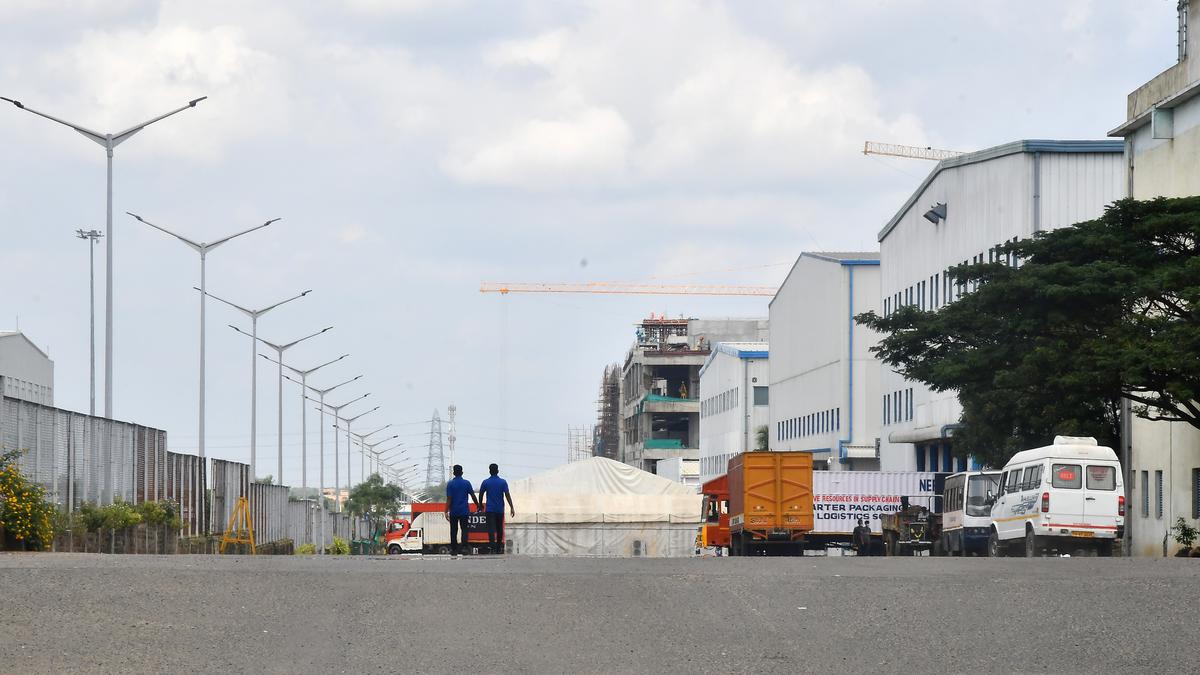
- Around five years ago, the Government of India decided it wanted more companies to make things in India.
- Manufacturing is a key ingredient to economic growth and also comes with what economists call a multiplier effect — every job created and every rupee invested in manufacturing has a positive cascading effect on other sectors in the economy.
- To boost manufacturing in India, the Government introduced the production-linked incentive (PLI) scheme.
- Under PLI, the government gives money to foreign or domestic companies that manufacture goods here.
- The annual pay-out is based on a percentage of revenue generated for up to five years.
PLI Programme for Smartphone Manufacturing Industry:
- The industry that has shown the most enthusiasm for the scheme is smartphone manufacturing.
- Companies like Micromax, Samsung, and Foxconn (which makes phones for Apple) can get up to 6% of their incremental sales income through the PLI programme.
- With the scheme, mobile phone exports jumped from $300 million in FY2018 to an astounding $11 billion in FY23.
- Imports – while India imported mobile phones worth $3.6 billion in FY2018, it dropped to $1.6 billion in FY23.
- Central government Ministers, including Mr. Chandrasekhar, have regularly cited this data as proof of the PLI’s scheme’s success.
Former RBI Governor Raghuram Rajan’s Argument:
- In his paper, the former Central bank governor argued that while imports of fully put-together mobile phones have come down, the imports of mobile phone components — including display screens, cameras, batteries, printed circuit boards — shot up between FY21 and FY23.
- Incidentally, these are the same two years when mobile phone exports jumped the most.
- He said that manufacturers aren’t really making mobile phones in India in the traditional sense which would involve their supply chain also moving to India and making most of the components here as well.
- All that the companies are doing is importing all of the necessary parts and assembling them in India to create a ‘Made in India’ product.
- Another criticism is that low-level assembly work doesn’t produce well-paying jobs and doesn’t nearly have anywhere the same multiplier effect that actual manufacturing might provide.
Union Government’s Response:
- Minister of State for Electronics Rajeev Chandrasekhar’s argument is two-fold.
- First, he said, Mr. Rajan wrongly assumed that all imports of screens, batteries, etc. are used to make mobile phones.
- It is possible these items are used also for computer monitors, DSLR cameras, electric vehicles etc.
- He also argued that not all mobile phone production in India is supported by the PLI scheme, only around 22% so far.
- The Minister’s overarching point is that the import dependency isn’t as bad as Mr. Rajan says it is.
Conclusion:
- Former RBI Governor argued that even if only 60% of imports are used for production, India’s net exports will still be negative.
- That is, even if only 60% of screens, batteries, etc. are used to make mobile phones, the final import tally would still beat the final export tally.
- The main divide is over whether the PLI programme will be able to create long-lasting jobs and firmly establish India as a manufacturing and supply hub that adds value to the production process.
- The Union Government believes that it will take time for the PLI Scheme’s results to show.
Q1) What items feature in India’s top exports?
The top exports of India are Refined Petroleum ($49B), Diamonds ($26.3B), Packaged Medicaments ($19.2B), Jewellery ($10.7B), and Rice ($10B).
Q2) What items feature in India’s top imports?
The top imports of India are Crude Petroleum ($93.5B), Gold ($58.4B), Coal Briquettes ($28.4B), Diamonds ($26B), and Petroleum Gas ($21.9B).
Source: Explained | The debate over India’s smartphone manufacturing dreams | ET

 Last updated on Sep, 2026
→ UPSC 2027 Notification will be released on 13 January 2027 at upsconline.nic.in.
→ Check out the latest UPSC Syllabus here.
→ Download UPSC Model Answers for Mains 2026
→ UPSC Mains Question Paper 2026 is out now for Essay & GS Paper 1, 2, 3 & 4.
→ UPSC Calendar 2027 has been released.
→ Enroll in Vajiram & Ravi’s UPSC Mains Test Series 2027 for structured answer writing practice, expert evaluation, and exam-oriented feedback.
→ Join Vajiram & Ravi’s UPSC Mentorship Program 2027 for personalized guidance, strategy planning, and one-to-one support from experienced mentors.
→ Go through the UPSC Mains Previous Year Papers to enhance your preparation.
→ UPSC has released UPSC Toppers List 2025 with the Civil Services final result on its official website.
→ Also check Best UPSC Coaching in India