What’s in Today’s Article?
- Egg Mayonnaise Ban Tamil Nadu Latest News
- Mayonnaise
- Raw Eggs Can Be Dangerous
- Impact on the Food Industry
- Egg Mayonnaise Ban Tamil Nadu FAQs
Egg Mayonnaise Ban Tamil Nadu Latest News
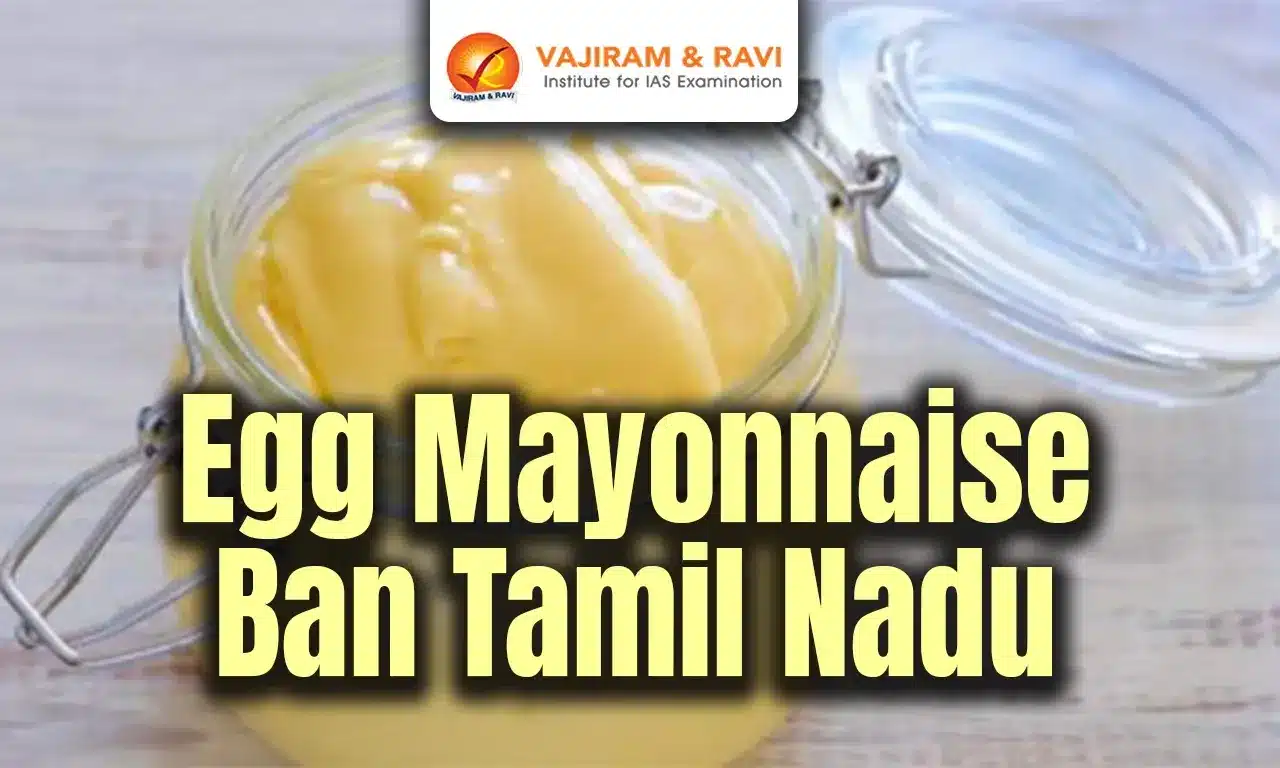
- The Tamil Nadu government has imposed a one-year ban, effective from April 8, on the manufacture, storage, distribution, and sale of mayonnaise made with raw eggs, citing public health concerns.


Mayonnaise
- Mayonnaise is a semi-solid emulsion made from egg yolk, vegetable oil, vinegar, and seasonings.
- It is traditionally prepared using three basic ingredients: oil, egg yolk, and an acid like lemon juice or vinegar.
How It’s Made
- Egg yolks and seasonings are mixed with oil to form a thick, pale yellow sauce.
- An acid is then added. The protein in the egg acts as an emulsifier, helping blend the oil and water content into a stable mixture.
Origin and Global Use
- Though its origins are traced to France or Spain, mayonnaise is now widely used in fast food globally.
- It serves as a popular spread in sandwiches and burgers and accompanies various foods like shawarmas and momos.
Raw Eggs Can Be Dangerous
- Raw eggs can carry harmful pathogens that are normally destroyed during cooking.
- In mayonnaise, which is often made using raw eggs, these pathogens remain active, posing health risks.
Risk in Indian Conditions
- The Tamil Nadu government noted that raw egg-based mayonnaise is a high-risk food, especially in India’s hot and humid climate.
- Improper preparation and storage increase the likelihood of contamination by bacteria like Salmonella and E. coli.
About Salmonella and E. Coli
- Salmonella bacteria thrive in warm, moist conditions and are a major cause of foodborne illness globally.
- Symptoms include diarrhoea, vomiting, and stomach cramps.
- E. coli bacteria, while mostly harmless, have certain strains that can cause serious infections in the gut, urinary tract, and other areas.
Vulnerable Groups
- Children, the elderly, and immunocompromised individuals are especially at risk of severe illness from these bacteria.
Expert Opinion
- Experts support the ban, stating that although mayonnaise is energy-dense, using raw eggs can expose consumers to Salmonella, making the government’s decision a wise public health measure.
Impact on the Food Industry
- Mayonnaise has become a common ingredient in urban Indian fast food.
- The ban in Tamil Nadu will likely push food businesses to use eggless or pasteurised-egg alternatives, at least until a detailed risk assessment is completed.
- Fortunately, the Indian market is already dominated by eggless mayonnaise.
Not an Isolated Move
- Tamil Nadu is not the first state to impose such a ban—Telangana enforced a similar one-year ban on egg-based mayonnaise in November.
- TN’s decision aligns with earlier bans on gutka and paan masala, which were also deemed hazardous to health.
Broader Public Health Trend
- This move is part of a growing trend of public health interventions.
- For instance, Punjab recently banned the sale of caffeinated energy drinks to children and near schools due to potential health risks.
- A scientific study is underway there to evaluate its effects on minors.
Egg Mayonnaise Ban Tamil Nadu FAQs
Q1. Why did Tamil Nadu ban egg mayonnaise?
Ans. Due to health risks from raw eggs in hot, humid Indian climate.
Q2. What bacteria are involved?
Ans. Salmonella and E. coli, both cause severe foodborne illness.
Q3. Who is most vulnerable?
Ans. Children, elderly, and immunocompromised individuals face the highest risk.
Q4. Will the food industry adapt?
Ans. Yes, many businesses will shift to eggless or pasteurised alternatives.
Q5. Is this a unique move?
Ans. No, Telangana had already imposed a similar ban earlier.

 Last updated on Sep, 2026
→ UPSC 2027 Notification will be released on 13 January 2027 at upsconline.nic.in.
→ Check out the latest UPSC Syllabus here.
→ Download UPSC Model Answers for Mains 2026
→ UPSC Mains Question Paper 2026 is out now for Essay & GS Paper 1, 2, 3 & 4.
→ UPSC Calendar 2027 has been released.
→ Enroll in Vajiram & Ravi’s UPSC Mains Test Series 2027 for structured answer writing practice, expert evaluation, and exam-oriented feedback.
→ Join Vajiram & Ravi’s UPSC Mentorship Program 2027 for personalized guidance, strategy planning, and one-to-one support from experienced mentors.
→ Go through the UPSC Mains Previous Year Papers to enhance your preparation.
→ UPSC has released UPSC Toppers List 2025 with the Civil Services final result on its official website.
→ Also check Best UPSC Coaching in India