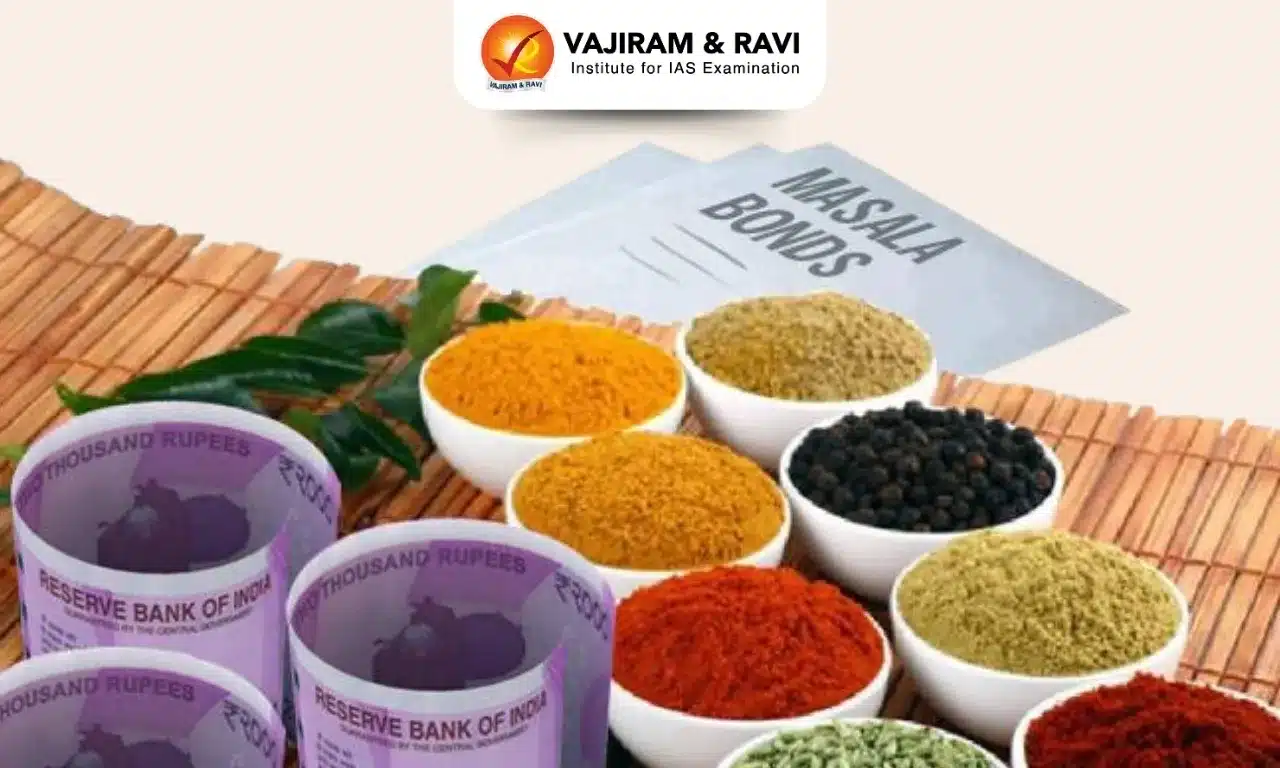
Masala Bonds Latest News
The Enforcement Directorate’s (ED) recent decision to issue notices to the Kerala Chief Minister in the KIIFB masala bond investigation marks a significant escalation in a long-running conflict between the LDF government and central agencies over the state’s financing model.
About Masala Bonds
- They are rupee-denominated bonds issued outside India by Indian entities.
- The International Finance Corporation (IFC), an arm of the World Bank, issued the first masala bonds in October 2013 as part of its $2 billion dollar offshore rupee programme.
- They are debt instruments which help to raise money in local currency from foreign investors.
- That means the currency risk—if exchange rates change—is on the investor, not the issuer. This helps Indian companies manage their risks better.
- To offset the risk of exchange rate fluctuations, bonds typically offer attractive interest rates that are frequently greater than those offered in the investors’ home countries.
- Both the government and private entities can issue these bonds.
- Who Can Invest?
- Investors outside India who would like to invest in assets in India can subscribe to these bonds.
- Any resident of that country can subscribe to these bonds which are members of the Financial Action Task Force (FATF).
- That includes individuals, institutions, and even financial organisations from countries that follow international standards for fair and secure investing, like those under IOSCO (International Organisation of Securities Commissions).
- It also covers multilateral and regional financial institutions of which India is a member.
- Maturity Period:
- It depends on the size of the bond.
- For bonds up to USD 50 million, the maturity is usually 3 years.
- For larger amounts, it can go up to 5 years, giving investors more flexibility based on their goals.
- What Can The Money Be Used For?
- The funds raised through Masala bonds are generally earmarked for productive and regulated purposes.
- The proceeds can fund affordable housing, infrastructure, refinance rupee loans, or meet corporate working capital requirements.
- Activities like buying land, investing in the stock market, or funding real estate projects are off-limits—unless they’ve received specific government approvals.
Source: OI


 Last updated on Oct, 2026
→ UPSC 2027 Notification will be released on 13 January 2027 at upsconline.nic.in.
→ Check Nobel Prize 2026 Winners List here.
→ Download PIB PRiSM Monthly Magazine 2026 here.
→ Check UPSC Monthly Current Affairs Magazine The Recitals here.
→ Check out the latest UPSC Syllabus here.
→ Download UPSC Model Answers for Mains 2026
→ UPSC Mains Question Paper 2026 is out now for Essay & GS Paper 1, 2, 3 & 4.
→ UPSC Calendar 2027 has been released.
→ Enroll in Vajiram & Ravi’s UPSC Mains Test Series 2027 for structured answer writing practice, expert evaluation, and exam-oriented feedback.
→ Join Vajiram & Ravi’s UPSC Mentorship Program 2027 for personalized guidance, strategy planning, and one-to-one support from experienced mentors.
→ Go through the UPSC Mains Previous Year Papers to enhance your preparation.
→ UPSC has released UPSC Toppers List 2025 with the Civil Services final result on its official website.
→ Also check Best UPSC Coaching in India
Masala Bonds FAQs
Q1. What do you mean by Masala bond?+
Q2. Who issued the first Masala bond in India?+
Q3. Masala Bonds are issued in which currency?+
Q4. Who bears the exchange-rate (currency) risk in Masala Bonds?+
Tags: masala bonds prelims pointers upsc current affairs upsc prelims current affairs