Trump’s Global Tariff Surcharge Latest News
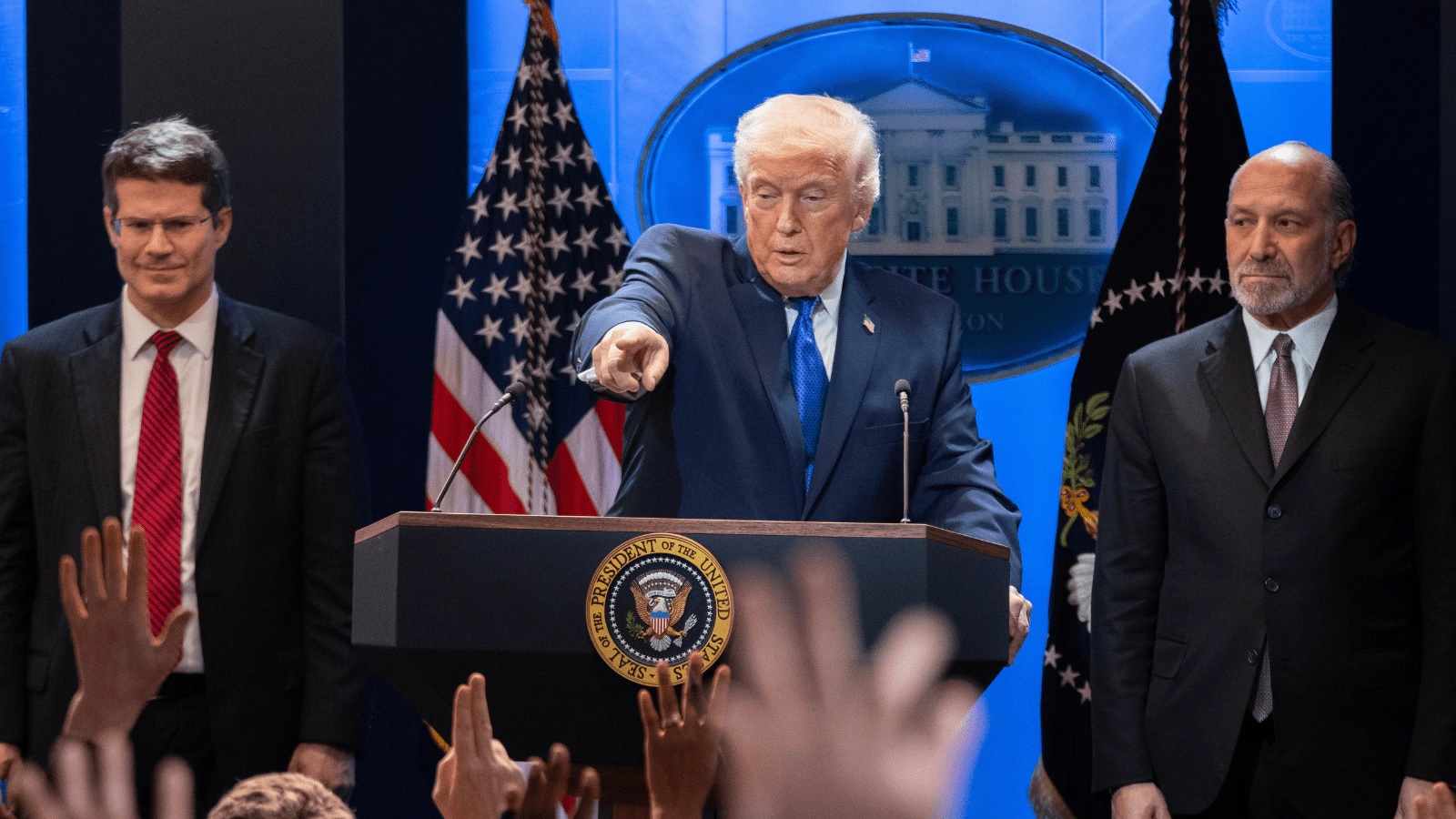
- Following the judicial setback to his tariff policy, U.S. President Donald Trump announced a temporary blanket tariff surcharge of 15% (from 10% earlier) on global imports for 150 days, invoking powers under the Trade Act of 1974.
- The move came a day after the Supreme Court of the United States invalidated his sweeping reciprocal tariffs imposed under the International Emergency Economic Powers Act (IEEPA).
- The decision has significant implications for India–U.S. trade relations, global trade flows, and the ongoing negotiations for a bilateral trade agreement.
Background
- Supreme Court verdict:
- The U.S. Supreme Court struck down the administration’s reciprocal tariff regime under IEEPA, ruling that the legal basis for broad tariff imposition was inadequate.
- The verdict would have reduced the average U.S. tariff rate from 15.3% to 8.3%.
- To circumvent the ruling, the U.S. administration invoked Section 122 of the Trade Act, 1974, which allows temporary import surcharges to address international payments imbalances.
- New tariff regime:
- 15% ad valorem surcharge on imports, to be effective from February 24, and valid for 150 days.
- It applies uniformly to all countries, including India.


Legal Basis and Exemptions
- Section 122 of the Trade Act, 1974:
- It empowers the U.S. President to impose temporary import surcharges, restrict imports, and address balance-of-payments problems.
- The proclamation justified the tariffs as necessary to correct global trade imbalances.
- Goods exempted from tariffs:
- Certain sectors were excluded due to domestic economic needs, For example,
- Strategic, industrial, and technology goods
- Critical minerals and metals
- Energy and energy products
- Natural resources and fertilizers
- Aerospace products
- Certain electronics
- Pharmaceuticals and ingredients
- Vehicles and vehicle components
- Agricultural products
- Beef, Tomatoes, Oranges
- These exemptions reflect U.S. supply-chain dependencies and industrial priorities.
- Certain sectors were excluded due to domestic economic needs, For example,
Impact on India
- Tariff changes:
- The new tariff rate (15%) is lower as compared to the previous rate (18%).
- Earlier effective tariff under IEEPA (~22.3%).
- Potential tariff after court verdict (without surcharge) – ~8.2%.
- Thus, India benefits compared to earlier tariffs, but loses potential gains from the court ruling.
- Government response: India’s Commerce Ministry stated that it is studying implications, assessing impact on exports and trade negotiations.
- Implications for India–U.S. trade deal:
- Changing negotiation dynamics: India and the U.S. are negotiating an interim trade agreement. The Supreme Court ruling has altered tariff expectations. The U.S. administration has signalled –
- India will continue to pay tariffs
- The U.S. expects market access concessions
- Strategic significance: The tariff policy may influence market access negotiations, rules of origin, supply-chain diversification, and strategic economic alignment.
- Changing negotiation dynamics: India and the U.S. are negotiating an interim trade agreement. The Supreme Court ruling has altered tariff expectations. The U.S. administration has signalled –
Global Trade Implications
- Major exporters such as China, India, Brazil, Indonesia, and Vietnam would have seen double-digit reductions in tariff burden.
- Smaller economies like Myanmar, Laos, Serbia, and Tunisia would have experienced over 20 percentage point reductions.
- The surcharge therefore preserves higher U.S. tariff protection levels.
Challenges
- Trade uncertainty: Frequent policy changes increase unpredictability for exporters. Temporary tariffs complicate long-term contracts.
- Protectionism: Expansion of tariff tools indicates rising economic nationalism. Risks fragmentation of global trade.
- Impact on Indian exporters: Affected sectors may include engineering goods, textiles, chemicals, and auto components.
- Legal and institutional concerns: Tension between executive power and judicial oversight in U.S. trade policy.
- Negotiation pressure: Tariffs may be used as leverage in India–U.S. trade negotiations.
Way Forward
- For India: Accelerate conclusion of India–U.S. trade agreement. Diversify export markets (EU, ASEAN, Africa). Strengthen domestic manufacturing competitiveness. Use WTO-compatible trade diplomacy.
- For global trade: Strengthen rules-based trade order. Reduce unilateral tariff actions. Enhance multilateral cooperation through WTO reform.
Conclusion
- The U.S. administration’s decision to impose a temporary 15% global tariff surcharge after the Supreme Court verdict reflects the growing use of domestic legal tools to pursue protectionist trade policies.
- While India faces a lower tariff rate than before, it loses the opportunity for significantly reduced duties.
- The development underscores the increasing role of geopolitics and economic nationalism in shaping global trade, making strategic trade diplomacy essential for India’s economic interests.
Source: IE

 Last updated on Oct, 2026
→ UPSC 2027 Notification will be released on 13 January 2027 at upsconline.nic.in.
→ Check Nobel Prize 2026 Winners List here.
→ Download PIB PRiSM Monthly Magazine 2026 here.
→ Check UPSC Monthly Current Affairs Magazine The Recitals here.
→ Check out the latest UPSC Syllabus here.
→ Download UPSC Model Answers for Mains 2026
→ UPSC Mains Question Paper 2026 is out now for Essay & GS Paper 1, 2, 3 & 4.
→ UPSC Calendar 2027 has been released.
→ Enroll in Vajiram & Ravi’s UPSC Mains Test Series 2027 for structured answer writing practice, expert evaluation, and exam-oriented feedback.
→ Join Vajiram & Ravi’s UPSC Mentorship Program 2027 for personalized guidance, strategy planning, and one-to-one support from experienced mentors.
→ Go through the UPSC Mains Previous Year Papers to enhance your preparation.
→ UPSC has released UPSC Toppers List 2025 with the Civil Services final result on its official website.
→ Also check Best UPSC Coaching in India
Trump’s Global Tariff Surcharge FAQs
Q1. What legal mechanisms are available to the U.S. President for imposing tariffs?+
Q2. What are the implications of the recent U.S. tariff surcharge for India–U.S. trade relations?+
Q3. How do protectionist trade measures by major economies affect developing countries like India?+
Q4. Why was the U.S. Supreme Court verdict on tariffs significant for global trade dynamics?+
Q5. What is the strategic importance of tariff exemptions in modern trade policy?+
Tags: mains articles trump’s global tariff surcharge upsc current affairs upsc mains current affairs