La Nina is the cool phase of the El Nino-Southern Oscillation (ENSO), marked by colder-than-normal sea surface temperatures in the central and eastern Pacific, which influence weather and rainfall patterns worldwide.
About La Nina
La Nina is a climate phenomenon marked by the cooling of the central and eastern Pacific Ocean. It is the cool phase of the El Nino Southern Oscillation (ENSO), which is a natural cycle involving the Pacific Ocean and the atmosphere. La Nina is the opposite of El Nino, which involves warming of the Pacific waters. This phenomenon affects global weather, ocean currents, and monsoon patterns, influencing rainfall, temperature, and storms across the world.
Causes of La Niña
The causes of La Nina are as follows:
- Strengthened Trade Winds: During La Nina, the easterly trade winds blow stronger than usual, pushing warm surface water toward the western Pacific near Indonesia and Australia.
- Upwelling of Cold Water: As warm water moves west, cold, nutrient-rich water rises to the surface in the eastern Pacific, lowering sea temperatures.
- Atmosphere-Ocean Interaction: The combination of cooler sea surface temperatures and changes in atmospheric pressure (Southern Oscillation) sustains La Nina conditions for months or even years.
- Walker Circulation: The east-west atmospheric circulation becomes stronger, causing more rainfall in the western Pacific and drier conditions in the east.


Characteristics of La Nina
Major Characteristics of La Nina are:
- Cooler Sea Surface Temperatures: The central and eastern Pacific waters become colder than normal.
- Enhanced Rainfall in Western Pacific: Countries like Indonesia and Australia often see increased rainfall.
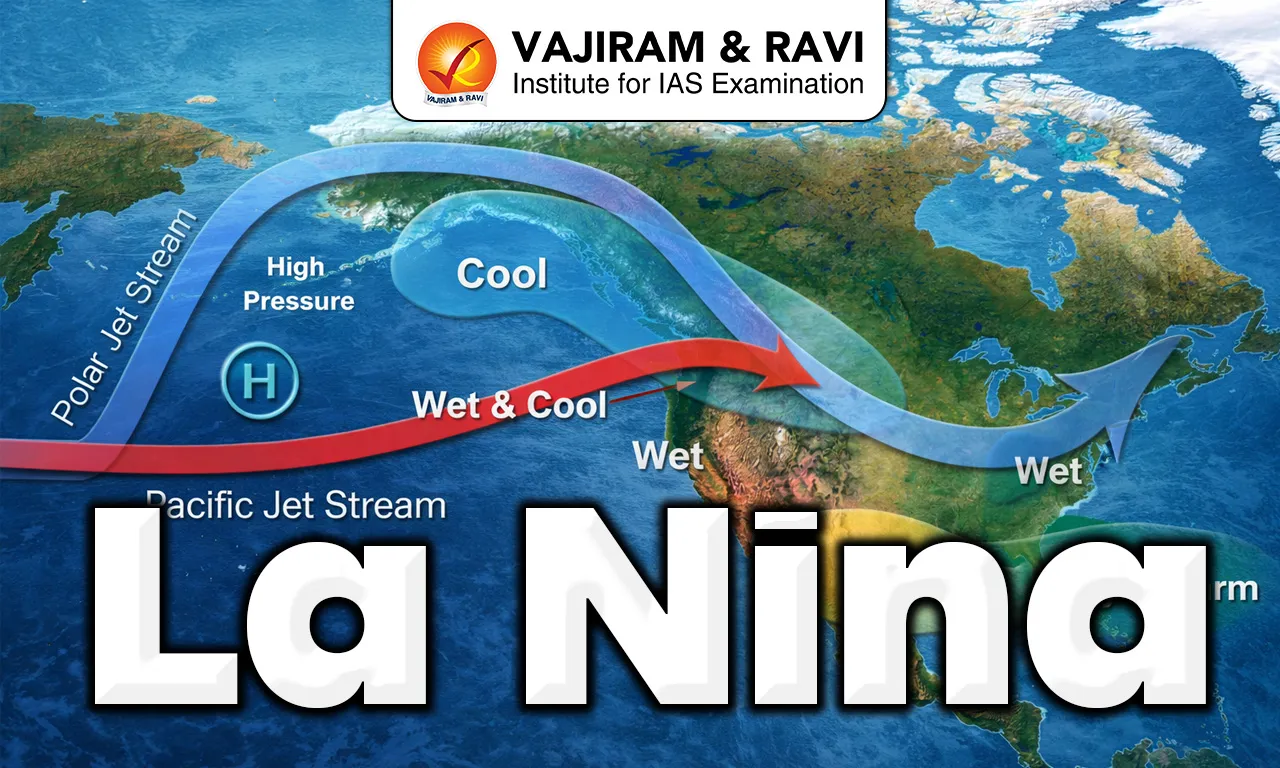
- Altered Global Weather Patterns: La Nina can change jet streams and winds, affecting weather far from the Pacific.
- Duration: Typically lasts 9-12 months, but strong events can continue for up to 2 years.
Global Impacts of La Nina
The global impacts of La Nina are observed across different regions, affecting rainfall, temperature, and weather patterns worldwide.
- Asia and India: La Nina usually strengthens the southwest monsoon in India, bringing above-average rainfall. While this benefits water resources and crops like rice, it can also cause floods in eastern India and Bangladesh.
- Australia and Southeast Asia: Countries in this region experience higher rainfall, sometimes causing floods, while supporting agriculture such as rice and palm oil production.
- North and South America: Southwestern United States and parts of South America often experience drier conditions. La Nina can also increase hurricane activity in the Atlantic. Northern parts of South America, such as Colombia and Venezuela, may face heavier rainfall.
- Africa: East Africa can experience drought, affecting crops, while Southern Africa generally receives more rainfall, which supports agriculture but may also cause floods.
Economic and Environmental Impacts
- Agriculture: Crops are highly sensitive to changes in rainfall. Excess or deficient precipitation can reduce yields.
- Water Resources: Reservoirs may overflow due to heavy rain or dry out during droughts.
- Fisheries: Upwelling of cold, nutrient-rich waters in the eastern Pacific boosts fish stocks, benefiting local fisheries.
- Disaster Preparedness: Governments and communities need to prepare for floods, cyclones, droughts, and storms during La Nina events.

 Last updated on Oct, 2026
→ UPSC 2027 Notification will be released on 13 January 2027 at upsconline.nic.in.
→ Check Nobel Prize 2026 Winners List here.
→ Download PIB PRiSM Monthly Magazine 2026 here.
→ Check UPSC Monthly Current Affairs Magazine The Recitals here.
→ Check out the latest UPSC Syllabus here.
→ Download UPSC Model Answers for Mains 2026
→ UPSC Mains Question Paper 2026 is out now for Essay & GS Paper 1, 2, 3 & 4.
→ UPSC Calendar 2027 has been released.
→ Enroll in Vajiram & Ravi’s UPSC Mains Test Series 2027 for structured answer writing practice, expert evaluation, and exam-oriented feedback.
→ Join Vajiram & Ravi’s UPSC Mentorship Program 2027 for personalized guidance, strategy planning, and one-to-one support from experienced mentors.
→ Go through the UPSC Mains Previous Year Papers to enhance your preparation.
→ UPSC has released UPSC Toppers List 2025 with the Civil Services final result on its official website.
→ Also check Best UPSC Coaching in India
La Nina FAQs
Q1. What is La Nina?+
Q2. How often does La Nina occur and how long does it last?+
Q3. Why does La Nina happen?+
Q4. How does La Nina affect global weather?+
Q5. How does La Nina affect the Indian monsoon?+
Tags: la nina