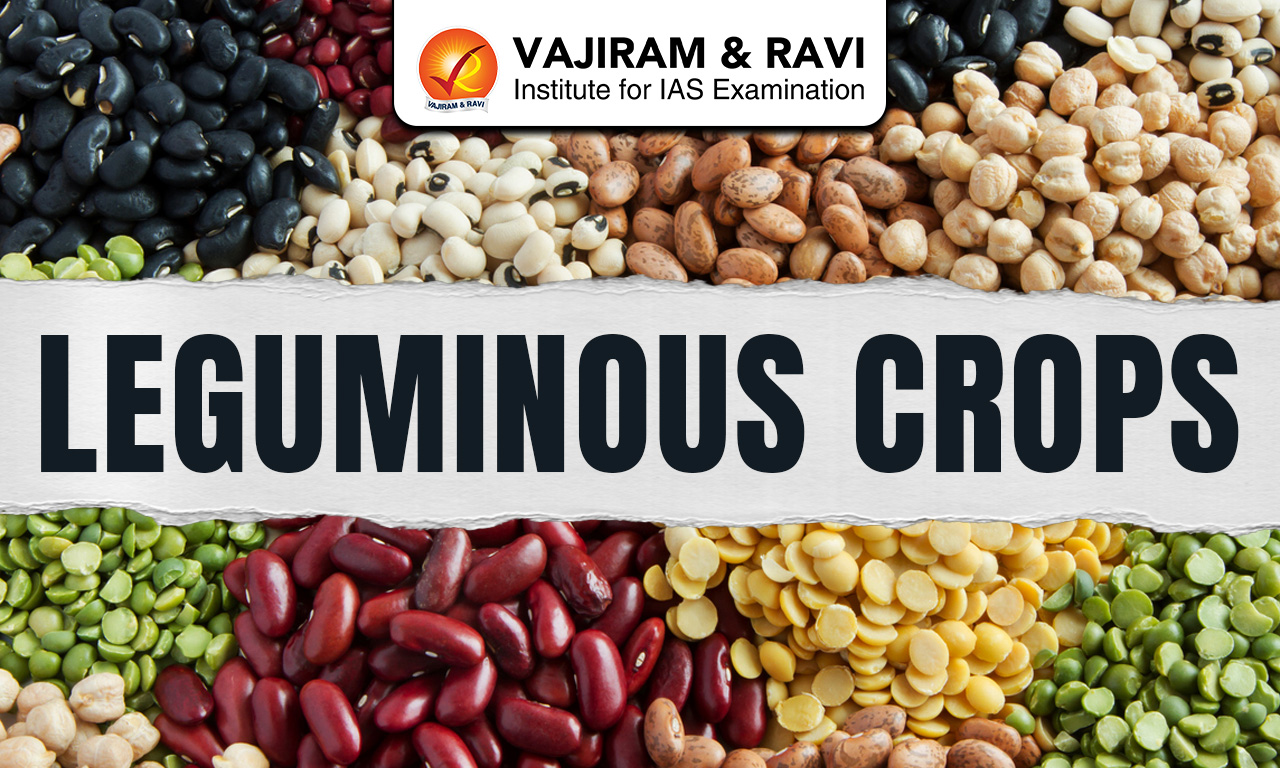
Leguminous crops are plants that produce seeds in pods, such as beans, peas, and lentils. They are an important part of agriculture and human diet due to their high nutritional value. These crops are also beneficial for the soil, as they help improve its fertility. Leguminous crops are widely grown and play a key role in farming and food supply.
About Leguminous Crops
- Leguminous plants are those plants that produce seeds inside pods, such as beans, peas, and lentils. A special feature of these plants is that they can improve soil fertility. They have tiny nodules in their roots that contain helpful bacteria called Rhizobium. These bacteria take nitrogen from the air and convert it into a form that plants can use for growth.
- Due to this nitrogen-fixing ability, leguminous plants reduce the need for chemical fertilizers and make the soil healthier for other crops as well. They are therefore very important in agriculture, crop rotation, and sustainable farming. In addition, many leguminous plants are rich in protein and are an important part of the human diet.
Leguminous Crops Types and Examples
- Leguminous crops can be classified based on their uses:
- Pulses: These are grown mainly for human consumption and are rich in protein. Examples include gram (chickpea), lentil, pigeon pea (arhar), and green gram.
- Oilseeds: Crops like groundnut and soybean are used for extracting edible oils and also serve as protein-rich food.
- Fodder Crops: Crops such as clover and alfalfa are used as nutritious feed for livestock.
- India is the largest producer and consumer of pulses, and these crops play an important role in ensuring food and nutritional security.


Benefits of Leguminous Plants
Leguminous plants are very useful for both the environment and agriculture. They provide several important benefits:
- Nitrogen Fixation: They improve soil fertility by adding nitrogen to the soil with the help of bacteria in their roots, which reduces the need for chemical fertilizers.
- Crop Rotation: They are ideal for crop rotation because they restore essential nutrients in the soil, helping the next crop grow better.
- Erosion Control: Many leguminous plants spread over the ground and protect the soil from being washed away by wind or water.
- Biodiversity Support: They help maintain ecological balance by supporting useful insects and microorganisms in the soil.
- Sustainable Agriculture: By reducing the use of synthetic fertilizers, they promote eco-friendly and sustainable farming practices.
- Soil Improvement: They enhance soil structure, increase organic matter, and improve water retention capacity.
- Low Input Cost: Farmers spend less on fertilizers, making cultivation more economical.
Importance in Agriculture
- Leguminous crops improve soil fertility by fixing nitrogen from the air, reducing the need for chemical fertilizers and lowering cultivation costs.
- They are essential in crop rotation, restoring nutrients in the soil for the next crop and supporting sustainable farming.
- These crops enhance soil structure, increase organic matter, and help prevent soil erosion and land degradation.
- Leguminous plants support mixed farming systems by providing both food for humans and fodder for livestock, contributing to overall agricultural productivity.
Role of Leguminous Plants in Nitrogen Enrichment
- Plants cannot use nitrogen directly from the atmosphere. Leguminous plants help by converting atmospheric nitrogen (N₂) into a form they and other plants can use, such as ammonia (NH₃).
- This happens through a natural process called nitrogen fixation, which involves a symbiotic relationship with Rhizobium bacteria.
- These bacteria form small nodules on the roots of leguminous plants. Inside these nodules, they convert nitrogen gas into ammonia, which the plant uses for growth. In return, the plant provides the bacteria with carbohydrates and a safe environment.
- This process naturally enriches the soil, reduces the need for chemical fertilizers, and benefits other crops grown in the same field.
Nutritional Value and Uses
- Leguminous crops are an excellent source of plant-based protein, making them vital for countries like India where many people follow a vegetarian diet. They are also rich in fiber, vitamins, and minerals like iron and calcium.
- Pulses (e.g., lentils, chickpeas) are consumed as food in various forms.
- Oilseed legumes (e.g., soybean, groundnut) are used to produce edible oils.
- Fodder legumes (e.g., clover, alfalfa) are used to feed livestock.
- Apart from food, some leguminous crops are used in industries like food processing, animal feed production, and soil conservation practices. By improving soil fertility and providing nutritious food, these crops are crucial for sustainable agriculture and human nutrition.

 Last updated on Sep, 2026
→ UPSC 2027 Notification will be released on 13 January 2027 at upsconline.nic.in.
→ Asian Games 2026 are being held in Aichi-Nagoya, Japan, from 19 September to 4 October.
→ Check out the latest UPSC Syllabus here.
→ Download UPSC Model Answers for Mains 2026
→ UPSC Mains Question Paper 2026 is out now for Essay & GS Paper 1, 2, 3 & 4.
→ UPSC Calendar 2027 has been released.
→ Enroll in Vajiram & Ravi’s UPSC Mains Test Series 2027 for structured answer writing practice, expert evaluation, and exam-oriented feedback.
→ Join Vajiram & Ravi’s UPSC Mentorship Program 2027 for personalized guidance, strategy planning, and one-to-one support from experienced mentors.
→ Go through the UPSC Mains Previous Year Papers to enhance your preparation.
→ UPSC has released UPSC Toppers List 2025 with the Civil Services final result on its official website.
→ Also check Best UPSC Coaching in India
Leguminous Crops FAQs
Q1. What are leguminous crops?+
Q2. What is special about leguminous plants?+
Q3. What are the main types of leguminous crops?+
Q4. How do leguminous crops benefit soil and agriculture?+
Q5. How do leguminous plants fix nitrogen?+
Tags: environment environment notes leguminous crops