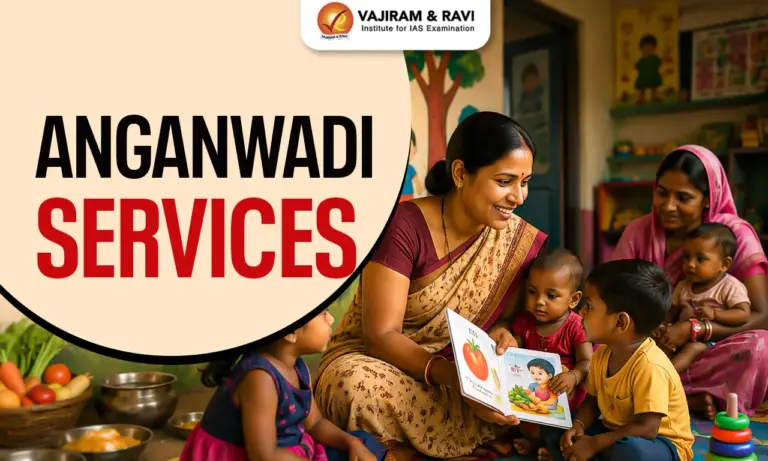
Anganwadi Services is one of India’s most important welfare programmes aimed at improving the health, nutrition, and early childhood development of children, pregnant women, and lactating mothers. The scheme is implemented under the umbrella of the Integrated Child Development Services (ICDS) and serves as the foundation of India’s efforts to combat malnutrition, child mortality, and poor maternal health.
The word “Anganwadi” means “courtyard shelter” in Hindi. Anganwadi Centres act as grassroots-level institutions that provide nutrition, healthcare, preschool education, and awareness services to communities, especially in rural and disadvantaged areas.
Anganwadi Services Objectives
Anganwadi Services aim to address multiple dimensions of child and maternal development.
- Improve Nutritional Status of children below six years of age.
- Reduce Malnutrition among infants, young children, and mothers.
- Promote Maternal Health during pregnancy and lactation.
- Provide Early Childhood Care and Education (ECCE) to children aged 3–6 years.
- Reduce Infant Mortality Rate (IMR) and Maternal Mortality Ratio (MMR).
- Enhance School Readiness among children before entering primary education.
- Promote Health Awareness regarding nutrition, hygiene, and childcare.
- Support Physical, Cognitive, Emotional, and Social Development of children.
Target Beneficiaries of Anganwadi Services
Anganwadi Services are designed to support the nutritional, health, and developmental needs of vulnerable groups, particularly young children, women, and families, through a comprehensive package of welfare services.
- Children Below 6 Years of Age (0–6 Years) – The primary beneficiaries of the scheme, who receive supplementary nutrition, growth monitoring, health check-ups, immunization support, and early childhood care and education to ensure healthy physical and mental development.
- Children Aged 3–6 Years – These children are provided pre-school non-formal education at Anganwadi Centres, helping them develop basic language, cognitive, social, and motor skills before entering formal schooling.
- Children Under 3 Years of Age – Special attention is given to infants and toddlers through nutrition support, regular health monitoring, and counselling for parents on proper feeding practices and child care.
- Pregnant Women – They receive supplementary nutrition, health and nutrition counselling, antenatal care support, and awareness regarding safe pregnancy practices to improve maternal and child health outcomes.
- Lactating Mothers (Nursing Mothers) – Anganwadi Services provide nutritional support and guidance on breastfeeding practices, postnatal care, and maternal nutrition to ensure the healthy growth of newborns.
- Severely Malnourished Children – Children identified as suffering from Severe Acute Malnutrition (SAM) or other nutritional deficiencies receive additional nutritional support, regular monitoring, and referrals for specialized treatment when required.
- Adolescent Girls (under specific nutrition initiatives) – In convergence with other government programmes, adolescent girls may receive nutrition education, health awareness, and support aimed at preventing malnutrition and anemia.
- Women of Reproductive Age – Awareness programmes conducted through Anganwadi Centres educate women about nutrition, maternal health, family welfare, and childcare practices.


Saksham Anganwadi and POSHAN 2.0
Saksham Anganwadi and POSHAN 2.0 is an integrated nutrition support programme launched by the Government of India to strengthen the country’s nutrition ecosystem and improve the health and nutritional status of children, adolescent girls, pregnant women, and lactating mothers.
- Focus on Nutritional Improvement by addressing major challenges such as stunting, wasting, underweight children, and anemia among women and children.
- Integrated Nutrition Strategy that combines the efforts of different ministries and departments to deliver nutrition-related services more effectively.
- Strengthening Anganwadi Centres through infrastructure upgrades, better facilities, and improved service delivery mechanisms.
- Modernization of Anganwadis into Saksham Anganwadis equipped with improved buildings, smart learning tools, clean drinking water, sanitation facilities, and child-friendly environments.
- Supplementary Nutrition Programme (SNP) to provide nutritious food to children, pregnant women, and lactating mothers for combating malnutrition.
- Promotion of Early Childhood Care and Education (ECCE) to ensure holistic physical, cognitive, emotional, and social development of children.
- Use of Technology and Digital Monitoring through the POSHAN Tracker, enabling real-time monitoring of beneficiaries, nutrition services, and growth indicators.
- Community Participation and Jan Andolan Approach to encourage public involvement in nutrition awareness and behavioural change campaigns.
Role of Anganwadi Workers
Anganwadi Workers (AWWs) are the frontline functionaries of the Anganwadi Services programme.
- Providing Supplementary Nutrition – Distribute nutritious meals and take-home rations to eligible beneficiaries, including children, pregnant women, and lactating mothers, to address malnutrition and nutrient deficiencies.
- Monitoring Child Growth and Development – Regularly measure the height, weight, and growth indicators of children to identify cases of undernutrition, stunting, wasting, or developmental delays at an early stage.
- Conducting Pre-School Education Activities – Provide Early Childhood Care and Education (ECCE) for children aged 3–6 years through play-based learning, storytelling, songs, and educational activities that prepare them for formal schooling.
- Supporting Immunization Programmes – Assist health departments by mobilizing families, maintaining records, and ensuring that children and mothers receive timely vaccinations.
- Facilitating Health Check-Ups – Coordinate with healthcare workers such as ASHAs and ANMs to organize regular health examinations for children, pregnant women, and nursing mothers.
- Identifying and Referring High-Risk Cases – Detect cases of severe malnutrition, illness, disabilities, or pregnancy-related complications and refer beneficiaries to appropriate healthcare facilities for specialized treatment.
- Providing Nutrition and Health Education – Conduct awareness sessions on balanced diets, breastfeeding, childcare practices, maternal health, hygiene, and sanitation to promote healthy lifestyles.
- Conducting Home Visits – Visit households to counsel families on infant feeding practices, child development, maternal care, and the utilization of government welfare schemes.
- Maintaining Beneficiary Records – Keep accurate records of births, immunization status, nutritional indicators, attendance, and service delivery for effective monitoring and evaluation.
- Organizing Village Health and Nutrition Days (VHNDs) – Help organize community-level events focused on health services, nutrition counselling, and awareness generation.
- Contributing to National Nutrition Goals – Play a key role in reducing stunting, wasting, underweight prevalence, and anemia, thereby supporting the country’s broader nutrition and health objectives.
Achievements of Anganwadi Services
Over the years, Anganwadi Services have emerged as one of India’s largest community-based child welfare programmes, significantly improving the nutritional status, health outcomes, and early childhood development of millions of children and women across the country.
- Operational Scale and Nationwide Reach – The programme operates through more than 14.03 lakh functional Anganwadi Centres (AWCs) across the country, making it one of the largest community-based child development and nutrition networks in the world.
- Digitization and Last-Mile Service Delivery – Significant progress has been made in digital governance through the Poshan Tracker platform. More than 95% of beneficiaries have been Aadhaar-verified, improving transparency and ensuring that benefits reach the intended recipients. The government has also introduced QR coding for Take-Home Rations (THR) and facial recognition systems to strengthen monitoring and ensure accurate delivery of nutritional support.
- Massive Nutrition Awareness Campaigns – Between 2018 and early 2026, over 9.8 crore Community-Based Events (CBEs) were organized under nutrition initiatives such as POSHAN Abhiyaan.
- Infrastructure Modernization Through Saksham Anganwadi – Thousands of conventional Anganwadi Centres have been upgraded into Saksham Anganwadis with improved infrastructure, child-friendly learning spaces, better sanitation facilities, clean drinking water, digital devices, and smart learning tools to enhance service quality and early childhood education outcomes.
- Improvement in Child Nutrition Indicators – Continuous nutrition interventions, supplementary feeding, and growth monitoring have contributed to improvements in child nutrition outcomes. According to the National Family Health Survey (NFHS-5, 2019–21):
- Stunting among children under five declined from 38.4% (NFHS-4) to 35.5%.
- Underweight prevalence reduced from 35.8% to 32.1%.
- Improvements have been observed in several states due to targeted nutrition programmes.
- Expansion of Pre-School Education – Millions of children aged 3–6 years receive Early Childhood Care and Education (ECCE) through Anganwadi Centres every year, helping improve school readiness and foundational learning skills.
- Contribution to Sustainable Development Goals (SDGs) – Anganwadi Services support several SDGs, particularly:
- SDG 2 – Zero Hunger
- SDG 3 – Good Health and Well-being
- SDG 4 – Quality Education
- SDG 5 – Gender Equality
- Women Empowerment and Employment Generation – The programme has created livelihood opportunities for approximately 25 lakh Anganwadi Workers and Helpers, empowering women and strengthening grassroots governance.

 Last updated on Oct, 2026
→ UPSC 2027 Notification will be released on 13 January 2027 at upsconline.nic.in.
→ Check Nobel Prize 2026 Winners List here.
→ Download PIB PRiSM Monthly Magazine 2026 here.
→ Check UPSC Monthly Current Affairs Magazine The Recitals here.
→ Check out the latest UPSC Syllabus here.
→ Download UPSC Model Answers for Mains 2026
→ UPSC Mains Question Paper 2026 is out now for Essay & GS Paper 1, 2, 3 & 4.
→ UPSC Calendar 2027 has been released.
→ Enroll in Vajiram & Ravi’s UPSC Mains Test Series 2027 for structured answer writing practice, expert evaluation, and exam-oriented feedback.
→ Join Vajiram & Ravi’s UPSC Mentorship Program 2027 for personalized guidance, strategy planning, and one-to-one support from experienced mentors.
→ Go through the UPSC Mains Previous Year Papers to enhance your preparation.
→ UPSC has released UPSC Toppers List 2025 with the Civil Services final result on its official website.
→ Also check Best UPSC Coaching in India
Anganwadi Services FAQs
Q1. What are Anganwadi Services?+
Q2. Under which ministry are Anganwadi Services implemented?+
Q3. What is the main objective of Anganwadi Services?+
Q4. What is an Anganwadi Centre?+
Q5. Who is an Anganwadi Worker?+
Tags: anganwadi services home science