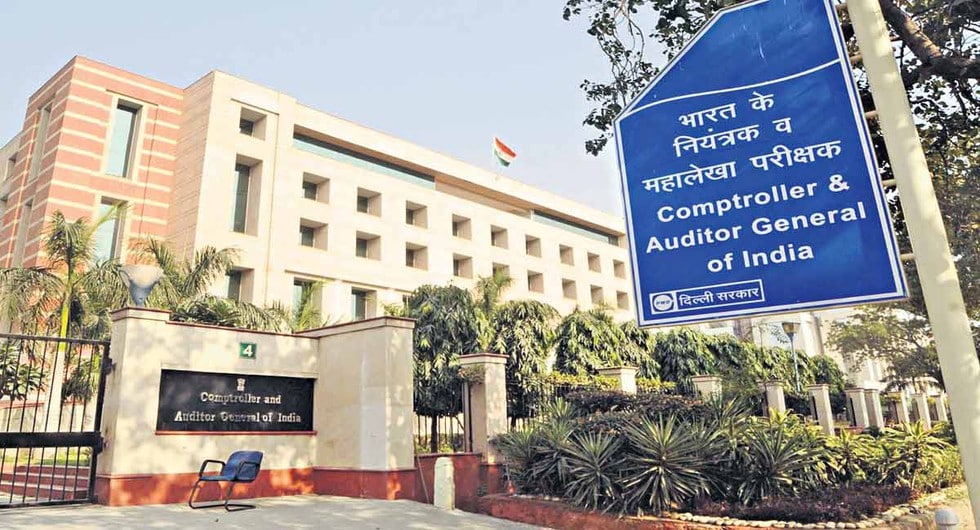
About Comptroller and Auditor General of India (CAG):
- The Comptroller and Auditor General of India (CAG), under Article 148 of the Indian Constitution, plays a pivotal role in the financial administration of the country.
- The CAG is the guardian of the public purse, ensuring accountability and transparency in the management of public funds at both the Central and State levels.
- The CAG safeguards the Constitution and parliamentary laws, upholding financial discipline.
- It is a key institution for promoting accountability and ensuring checks and balances in a democratic system.
Constitutional and Legal Provisions for the CAG
- Article 148:
- Appointment: The President appoints the CAG under his/her hand and seal.
- Tenure and Conditions: Determined by Parliament; CAG cannot hold further office under Central or State governments.
- Independence: Salary, allowances, and pensions are charged to the Consolidated Fund of India (CFI), ensuring autonomy.
- Duties and Powers (Article 149): Parliament prescribes the CAG’s powers and functions.
- Form of Accounts (Article 150): Prescribes the manner of keeping accounts for the Union and States on the President’s advice.
- Submission of Reports (Article 151): Reports on Union accounts are submitted to the President and placed before Parliament. Reports on State accounts are submitted to the Governor and placed before the respective State Legislature.
- Certification of Net Proceeds (Article 279): CAG certifies the net proceeds of taxes and duties, which is final and binding.
- CAG’s (Duties, Powers, and Conditions of Service) Act, 1971:
- Tenure: Six years or until the age of 65, whichever is earlier.
- Removal: Follows the procedure for removing a Supreme Court judge.
- Resignation: Addressed to the President.
- Service Conditions: Cannot be varied to the CAG’s disadvantage after appointment.
Q1. What are the 11 constitutional bodies?
The 11 constitutional bodies in India are ECI, UPSC, SPSC, FCI (Finance Commission), GST Council, NCSC, NCST, NCBC, Special Officer for Linguistic Minorities, CAG and AGI.
Q2. How do constitutional bodies differ from statutory bodies?
Constitutional bodies are established by the Constitution and derive their powers from it, while statutory bodies are created by laws passed by Parliament or state legislatures.
Source: TH


 Last updated on Oct, 2026
→ UPSC 2027 Notification will be released on 13 January 2027 at upsconline.nic.in.
→ Check Nobel Prize 2026 Winners List here.
→ Download PIB PRiSM Monthly Magazine 2026 here.
→ Check UPSC Monthly Current Affairs Magazine The Recitals here.
→ Check out the latest UPSC Syllabus here.
→ Download UPSC Model Answers for Mains 2026
→ UPSC Mains Question Paper 2026 is out now for Essay & GS Paper 1, 2, 3 & 4.
→ UPSC Calendar 2027 has been released.
→ Enroll in Vajiram & Ravi’s UPSC Mains Test Series 2027 for structured answer writing practice, expert evaluation, and exam-oriented feedback.
→ Join Vajiram & Ravi’s UPSC Mentorship Program 2027 for personalized guidance, strategy planning, and one-to-one support from experienced mentors.
→ Go through the UPSC Mains Previous Year Papers to enhance your preparation.
→ UPSC has released UPSC Toppers List 2025 with the Civil Services final result on its official website.
→ Also check Best UPSC Coaching in India