About Drugs and Magic Remedies (Objectionable Advertisements) Act, 1954
- It is a legislative framework to control the advertisement of drugs and prohibit claims of magical qualities in remedies.
- It encompasses various forms of advertisements, including written, oral, and visual mediums.
- Under the Act, the term “drug” refers to medicines intended for human or animal use, substances for diagnosis or treatment of diseases, and articles affecting the body’s functions.
- Other than articles meant for consumption, the definition for “magic remedy” under this Act also extends to talismans, mantras, and charms that allegedly possess miraculous powers for healing or influencing bodily functions.
- It imposes strict regulations on the publication of advertisements related to drugs.
- It prohibits advertisements that give false impressions, make false claims, or are otherwise misleading.
- Violations of these provisions can result in penalties, including imprisonment or fines, upon conviction.
- The term “advertisement,” under the Act, extends to all notices, labels, wrappers, and oral announcements.
- Who comes under the Magic Remedies Act?
- The Act applies to all individuals and entities involved in the publication of advertisements, including manufacturers, distributors, and advertisers.
- The Act can hold both individuals and companies accountable for contraventions.
- If a company violates the act, individuals in charge of its business operations may also be deemed guilty unless they can prove lack of knowledge or demonstrate due diligence in preventing the offense.
- Directors, managers, or officers of the company may also be held liable if they consented to or neglected the offense.
- Punishment
- Violating the Act can result in imprisonment, fines, or both.
- If this is the first conviction for the violator, they may face up to six months in prison, fines or both.
- For subsequent conviction, imprisonment may extend to one year, fine, or both.
- The Act does not include any limits for the fines that may be imposed on individuals or organisations.
Q1) What is Active Pharmaceutical Ingredient (API)?
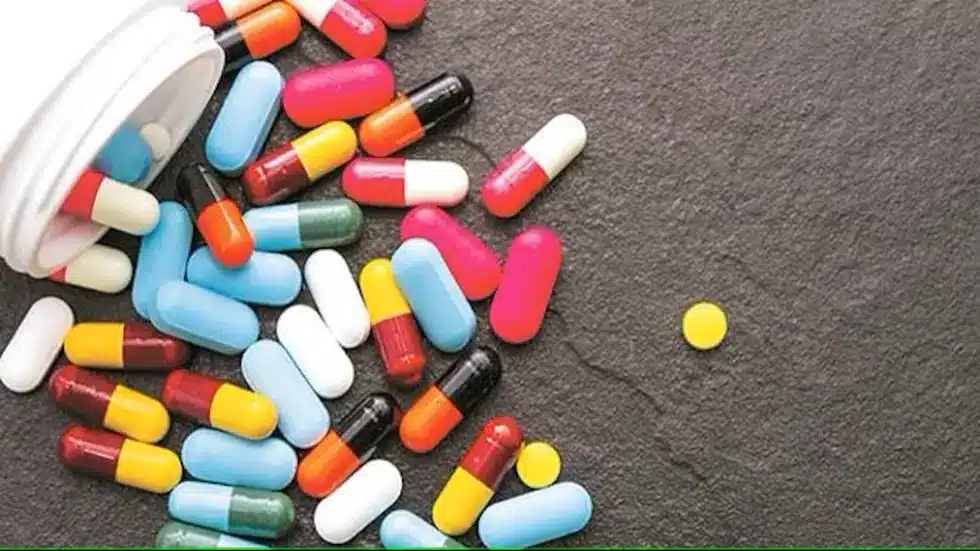
It is the biologically active component of a drug product (tablet, capsule, cream, injectable) that produces the intended effects. APIs find application in high quality drugs that treat diseases pertaining to oncology, cardiology, CNS and neurology, orthopaedic etc.
Source: Supreme Court’s ban on Patanjali ads | Explained


 Last updated on Oct, 2026
→ UPSC 2027 Notification will be released on 13 January 2027 at upsconline.nic.in.
→ Check Nobel Prize 2026 Winners List here.
→ Download PIB PRiSM Monthly Magazine 2026 here.
→ Check UPSC Monthly Current Affairs Magazine The Recitals here.
→ Check out the latest UPSC Syllabus here.
→ Download UPSC Model Answers for Mains 2026
→ UPSC Mains Question Paper 2026 is out now for Essay & GS Paper 1, 2, 3 & 4.
→ UPSC Calendar 2027 has been released.
→ Enroll in Vajiram & Ravi’s UPSC Mains Test Series 2027 for structured answer writing practice, expert evaluation, and exam-oriented feedback.
→ Join Vajiram & Ravi’s UPSC Mentorship Program 2027 for personalized guidance, strategy planning, and one-to-one support from experienced mentors.
→ Go through the UPSC Mains Previous Year Papers to enhance your preparation.
→ UPSC has released UPSC Toppers List 2025 with the Civil Services final result on its official website.
→ Also check Best UPSC Coaching in India