


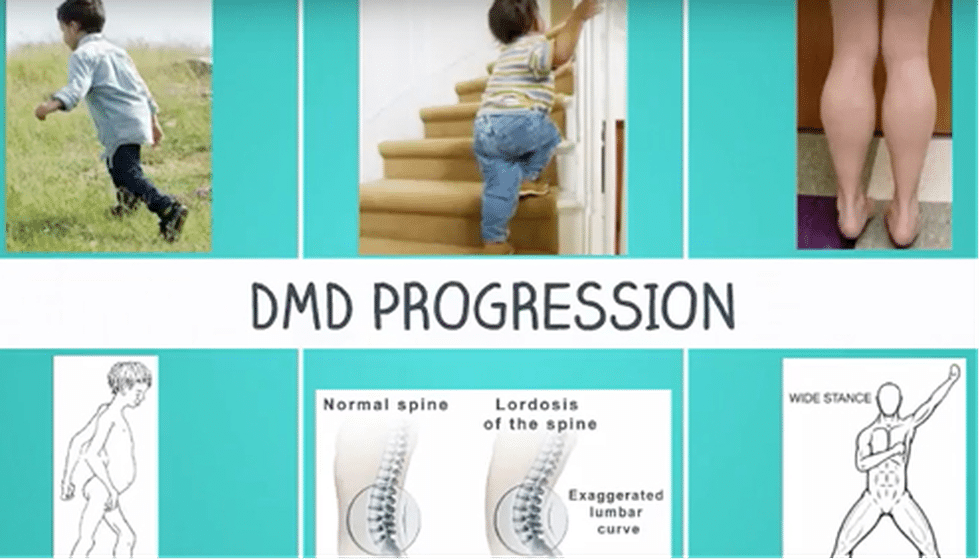
What is Duchenne Muscular Dystrophy (DMD)?
- It is the most common and fatal type of muscular dystrophy marked by progressive muscle degeneration and weakness due to alterations of a protein called “dystrophin” that helps keep muscle cells intact.
- Patients (usually children) have reduced bone density and an increased risk of developing fractures.
- India has over 5 lakh patients in the country suffering from DMD and the condition is predominantly seen in boys, but in rare cases, it can also affect girls.
- It can begin as early as age 2 or 3, first affecting the proximal muscles (those close to the core of the body) and later affecting the distal limb muscles (those close to the extremities).
- Symptoms: Enlargement of calves, a waddling gait, and lumbar lordosis (an inward curve of the spine)
- The current therapeutic options available to treat DMD are minimal and highly expensive treatment and are mostly imported from abroad.
Q1) What is a genetic disorder?
A genetic disorder is a disease caused in whole or in part by a change in the DNA sequence away from the normal sequence. This can be caused by a mutation in one gene or multiple genes.


 Last updated on Oct, 2026
→ UPSC 2027 Notification will be released on 13 January 2027 at upsconline.nic.in.
→ Check Nobel Prize 2026 Winners List here.
→ Download PIB PRiSM Monthly Magazine 2026 here.
→ Check UPSC Monthly Current Affairs Magazine The Recitals here.
→ Check out the latest UPSC Syllabus here.
→ Download UPSC Model Answers for Mains 2026
→ UPSC Mains Question Paper 2026 is out now for Essay & GS Paper 1, 2, 3 & 4.
→ UPSC Calendar 2027 has been released.
→ Enroll in Vajiram & Ravi’s UPSC Mains Test Series 2027 for structured answer writing practice, expert evaluation, and exam-oriented feedback.
→ Join Vajiram & Ravi’s UPSC Mentorship Program 2027 for personalized guidance, strategy planning, and one-to-one support from experienced mentors.
→ Go through the UPSC Mains Previous Year Papers to enhance your preparation.
→ UPSC has released UPSC Toppers List 2025 with the Civil Services final result on its official website.
→ Also check Best UPSC Coaching in India








