Minority communities in india:
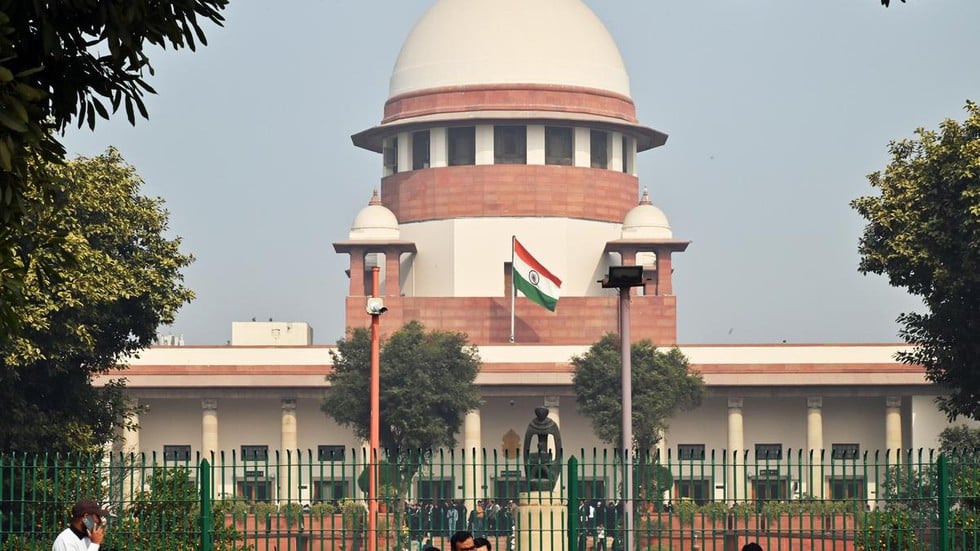
- Muslims, Sikhs, Christians, Buddhists, Jains and Zoroastrians (Parsis) have been notified as minority communities under Section 2 (c) of the National Commission for Minorities (NCM) Act, 1992.
Who gives minority status in India?
- The Central Government decides who gets the minority community status in India.
- It is done under the National Commission for Minorities Act, 1992.
- Only those belonging to the communities notified under Section 2(c) of the 1992 law are regarded as minority citizens.
- The central government has notified only six communities as having the minority status at the national level. Five of them were declared minority communities in October 1993 Muslims, Christians, Sikhs, Buddhists and Parsis. In January 2014, the Centre added Jains to the list.
- States generally don’t have their separate lists of the minority communities. But there are exceptions. For example, Maharashtra has notified Jews as a minority community in the state.


Constitutional provisions with regard to minorities
- Article 29 and Article 30 guarantee certain rights to the minorities.
- Article 29 protects the interests of the minorities by making a provision that any citizen / section of citizens having a distinct language, script or culture have the right to conserve the same
- Article 29 mandates that no discrimination would be done on the ground of religion, race, caste, language or any of them
- While Article 30 and Article 29 of the Constitution do not specify ‘minorities’ in India, it is classified into religious minorities and linguistic minorities.
- Religious Minorities in India: The basic ground for a community to be nominated as a religious minority is the numerical strength of the community.
- Linguistic Minorities: Class or group of people whose mother language or mother tongue is different from that of the majority groups is known as the linguistic minorities.
Q1) What is the composition of the National Commission for Minorities?
The National Commission for Minorities (NCM) is a statutory body established by the Government of India under the National Commission for Minorities Act, 1992. The Commission consists of a Chairperson, a Vice-Chairperson and five Members, all of whom are appointed by the President of India.
Source: The Hindu

 Last updated on Oct, 2026
→ UPSC 2027 Notification will be released on 13 January 2027 at upsconline.nic.in.
→ Check Nobel Prize 2026 Winners List here.
→ Download PIB PRiSM Monthly Magazine 2026 here.
→ Check UPSC Monthly Current Affairs Magazine The Recitals here.
→ Check out the latest UPSC Syllabus here.
→ Download UPSC Model Answers for Mains 2026
→ UPSC Mains Question Paper 2026 is out now for Essay & GS Paper 1, 2, 3 & 4.
→ UPSC Calendar 2027 has been released.
→ Enroll in Vajiram & Ravi’s UPSC Mains Test Series 2027 for structured answer writing practice, expert evaluation, and exam-oriented feedback.
→ Join Vajiram & Ravi’s UPSC Mentorship Program 2027 for personalized guidance, strategy planning, and one-to-one support from experienced mentors.
→ Go through the UPSC Mains Previous Year Papers to enhance your preparation.
→ UPSC has released UPSC Toppers List 2025 with the Civil Services final result on its official website.
→ Also check Best UPSC Coaching in India