Farmer ID Scheme Latest News
- India achieved its target of creating 11 crore Farmer IDs on October 23, 2026, five months ahead of the March 31, 2027 deadline under the Digital Agriculture Mission.
Overview of the Farmer ID Scheme
- The Farmer ID Scheme is an initiative under the Union Government’s Digital Agriculture Mission to provide farmers with a unique digital identity linked to verified agricultural and land records.
- The Farmer ID functions as an Aadhaar-like identity for agricultural service delivery. It is dynamically linked to State land records and contains information such as demographic details, land ownership and crops sown.
- The database created through these identities is known as the Farmers’ Registry, which forms part of Agri-Stack, the digital public infrastructure being developed for India’s agricultural sector.
- The Union Cabinet approved the Digital Agriculture Mission in 2024, with the objective of improving agricultural service delivery through digital technologies.


Key Components of Agri-Stack
- Agri-Stack comprises three core digital registries designed to strengthen agricultural data management and policy implementation.
- Farmers’ Registry: Maintains farmers’ digital identities and associated agricultural information.
- Geo-referenced Village Maps: Provides geographically referenced village-level information to support agricultural planning.
- Crop Sown Registry: Records information about crops cultivated across agricultural areas.
- Together, these registries can help integrate agricultural data, improve coordination between government departments and support more informed decision-making.
Benefits of the Farmer ID Scheme
- The Farmer ID is intended to reduce administrative burdens and make agricultural support more transparent and accessible.
- Simplified access to schemes: Reduces repeated submission of documents and verification for different government programmes.
- Agricultural credit: Can facilitate access to bank loans and Kisan Credit Card services.
- Crop insurance: Supports more transparent assessment and disbursement of compensation under the Pradhan Mantri Fasal Bima Yojana.
- Disaster relief: Helps identify eligible beneficiaries and accelerate assistance during emergencies.
- MSP procurement: Can improve transparency in procurement and reduce the role of intermediaries.
- Policy planning: Verified data can improve the monitoring of schemes, coordination among departments and agricultural policymaking.
- The system is also intended to reduce duplication and fraud, helping government benefits reach eligible farmers more efficiently.
Challenges and Inclusion Priorities
- The effectiveness of the Farmer ID Scheme depends on the accuracy of records and the inclusion of cultivators who may not appear as landowners.
- Tenant farmers and sharecroppers: Actual cultivators may lack formal ownership records, making their identification and registration essential.
- Forest Rights holders: Farmers cultivating land under recognised forest rights need to be included through appropriate mechanisms.
- Data accuracy: Errors or outdated land records may affect registration and access to benefits.
- Digital accessibility: Farmers with limited digital literacy or access to technology may require assistance.
- Privacy and governance: Agricultural databases require appropriate safeguards for data security, access and responsible use.
- States and Union Territories are developing mechanisms, in accordance with applicable rules, to include eligible tenants, sharecroppers and other actual cultivators.
News Summary
- The Ministry of Agriculture and Farmers’ Welfare announced that India had created 11 crore Farmer IDs by the night of October 23, five months ahead of the March 31, 2027 deadline.
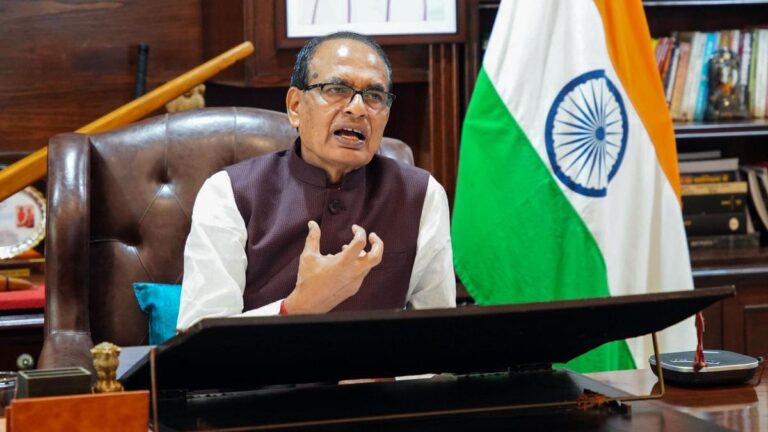
- Agriculture Minister Shivraj Singh Chouhan described the achievement as a major milestone in digital agriculture.
- The government stated that more than 6 crore farmers had already received direct benefits under various schemes through the Farmer ID-based service delivery system.
- The initiative is expected to simplify access to agricultural credit, crop insurance, disaster relief and Minimum Support Price procurement by reducing repeated documentation and verification.
- The milestone was attributed to coordination between the Central Government, State governments, Union Territory administrations and field-level officials.
Farmer Registry: Demographic Profile and Inclusion of Cultivators
- The Farmers’ Registry, one of the three core registries under Agri-Stack, contains digital identities linked to land records, demographic information, ownership details and crop data.
- The reported profile of registered farmers shows that:
- Women: Approximately 26% of the 11 crore registered farmers are women.
- Small and marginal farmers: Around 81% belong to small and marginal operational-holding categories.
- Older farmers: Approximately 15% are aged 70 or above.
- Young farmers: Around 7.5% are below 30 years of age.
- A key priority is to include actual cultivators who are not recorded as landowners. According to the reported data, 28,680 cultivators, including eligible tenants and sharecroppers, have been registered in Uttar Pradesh, Telangana, Andhra Pradesh, Chhattisgarh and Assam through State-specific identification mechanisms.
- Additionally, 3,14,298 Forest Rights holder registrations have been recorded across Assam, Maharashtra, Andhra Pradesh, Telangana, Madhya Pradesh and Tripura.
- The integration of Agri-Stack with artificial intelligence, satellite data and weather forecasts could also support more accurate crop production estimates, personalised agricultural advisories, improved market intelligence and faster disaster response.
Way Forward
- The next phase should focus on converting large-scale registration into reliable and inclusive agricultural services.
- Expand inclusion: Ensure eligible tenants, sharecroppers and Forest Rights holders can register through transparent State-level procedures.
- Improve data quality: Regularly update land, crop and demographic records to reduce errors.
- Strengthen digital access: Provide assistance through local agricultural offices and field-level workers.
- Protect personal data: Establish appropriate safeguards for data security, access and use.
- Integrate digital services: Use verified information and emerging technologies to improve crop forecasting, insurance, credit access and disaster response.

 Last updated on Oct, 2026
→ UPSC 2027 Notification will be released on 13 January 2027 at upsconline.nic.in.
→ Check Nobel Prize 2026 Winners List here.
→ Download PIB PRiSM Monthly Magazine 2026 here.
→ Check UPSC Monthly Current Affairs Magazine The Recitals here.
→ Check out the latest UPSC Syllabus here.
→ Download UPSC Model Answers for Mains 2026
→ UPSC Mains Question Paper 2026 is out now for Essay & GS Paper 1, 2, 3 & 4.
→ UPSC Calendar 2027 has been released.
→ Enroll in Vajiram & Ravi’s UPSC Mains Test Series 2027 for structured answer writing practice, expert evaluation, and exam-oriented feedback.
→ Join Vajiram & Ravi’s UPSC Mentorship Program 2027 for personalized guidance, strategy planning, and one-to-one support from experienced mentors.
→ Go through the UPSC Mains Previous Year Papers to enhance your preparation.
→ UPSC has released UPSC Toppers List 2025 with the Civil Services final result on its official website.
→ Also check Best UPSC Coaching in India
Farmer ID Scheme FAQs
Q1. What is the Farmer ID Scheme?+
Q2. What is Agri-Stack?+
Q3. How can Farmer IDs benefit farmers?+
Q4. Why is the registration of tenant farmers important?+
Tags: Farmer ID Scheme mains articles upsc current affairs upsc mains current affairs